
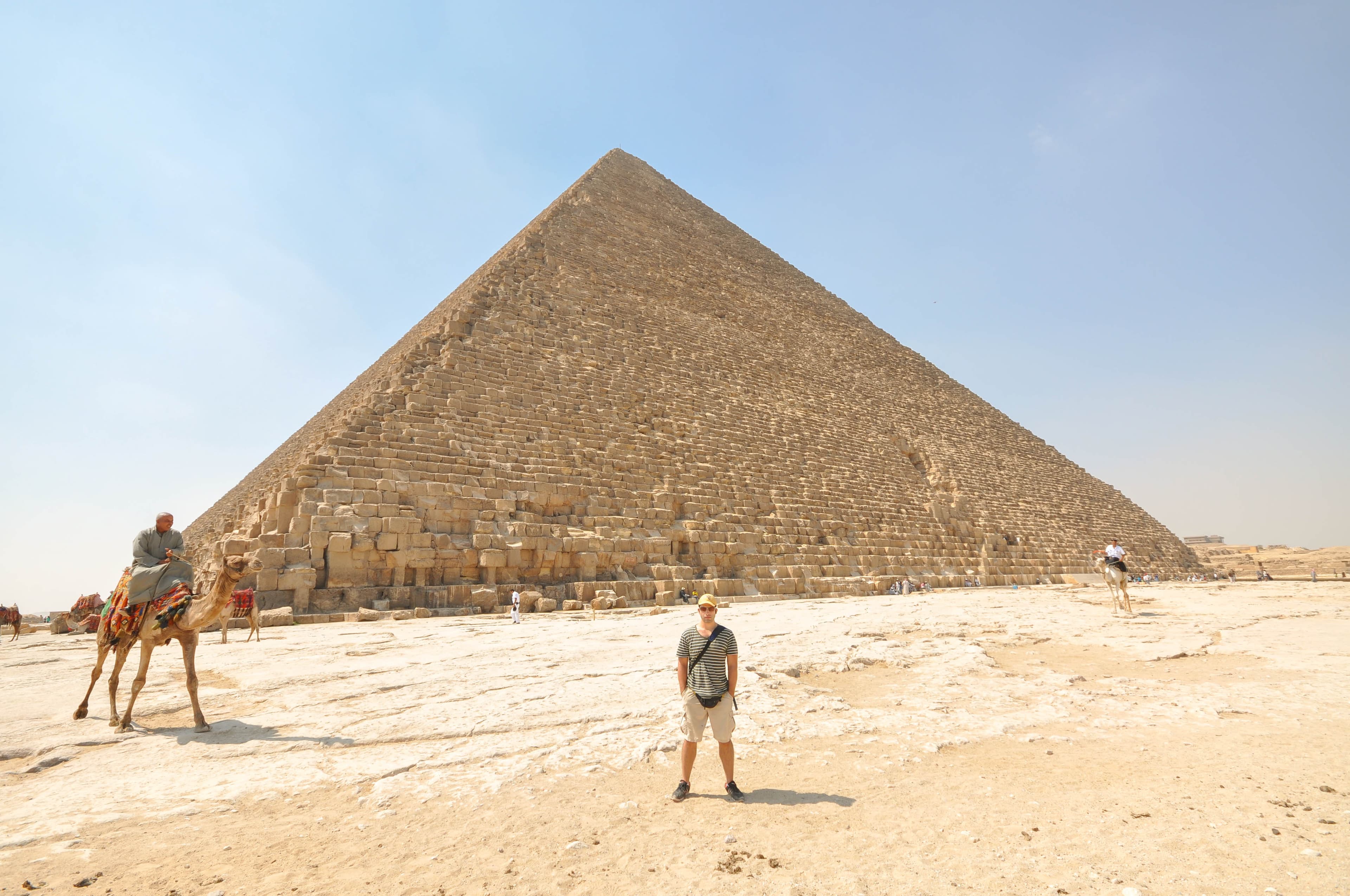

The Pyramid of Khufu, or the Great Pyramid as many call it, isn't just an ancient structure; it's a colossal statement. Standing tall on the Giza plateau, it completely dominates the landscape, a true marvel of ancient engineering and sheer human will. For over 3,800 years, this massive stone mountain, completed around 2600 BC after about 26 years of intense labor, was the tallest human-made structure on Earth. It originally soared to 146.6 meters (481 feet) – only surpassed in height by the steeple of Old St. Paul's Cathedral in London, and that wasn't until 1221 CE!
No matter what you call it – the Great Pyramid or Cheops' pyramid – this ancient wonder is mind-boggling. Imagine: roughly 2.3 million massive stone blocks, weighing in at about 6 million tons combined. Its base stretches an impressive 230.3 meters (755.6 ft) on each side, making for a total volume of around 2.6 million cubic meters. What really gets me is the precision involved; the four sides differ by just 4.4 cm (1¾ inches). Think about how they achieved that with no modern tools or technology! It's an extraordinary display of skill and determination. We're going to dig into how this oldest surviving wonder of the ancient world came to be, from its very beginnings, through its complex design, and right into its mysterious heart.
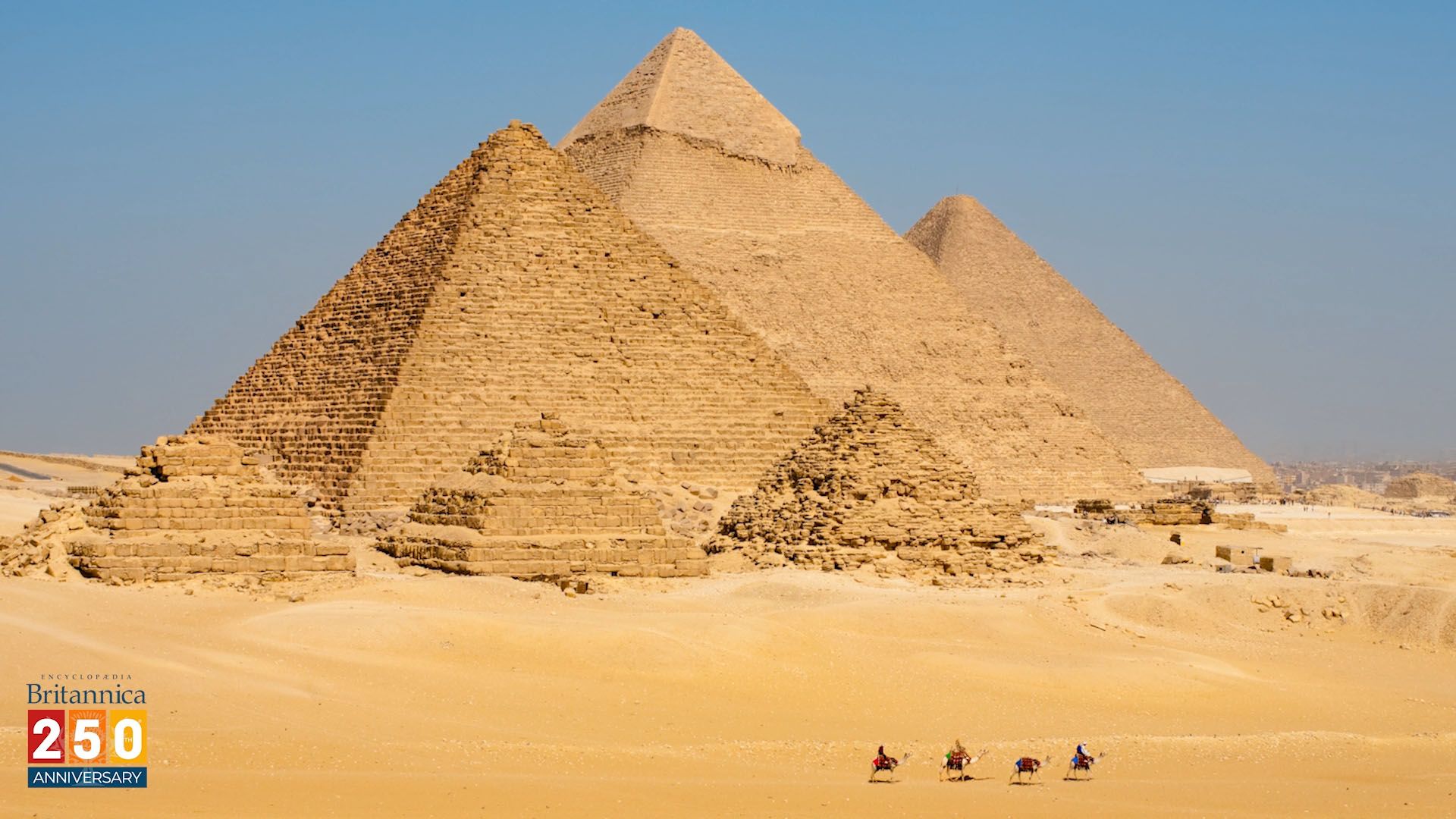 Khufu, the son of Snefru and Queen Hetepheres, was the second king of Egypt's Fourth Dynasty, reigning from about 2589 to 2566 BCE. The Greeks knew him as Cheops, and he's the pharaoh who commissioned what would become the oldest surviving wonder of the ancient world. His full name, 'Khnum-Khufu,' literally means 'Khnum protects me,' honoring the ram-headed deity of fertility and water.
Now, the ancient Egyptians didn't call it the Pyramid of Khufu. They called this magnificent structure 'Akhet Khufu,' which translates to 'Horizon of Khufu.' That name carried immense meaning; it wasn't just a tomb, but Khufu's ultimate gateway to paradise, his spiritual launching pad. They built it on the highest point of the Giza plateau, not just for grandeur but to ensure its visibility from vast distances, a beacon connecting earth and sky.
Its primary purpose, of course, was Khufu's royal tomb. Egyptian funerary customs were intricate, serving four key functions: housing the pharaoh's body, symbolizing his immense power, maintaining his supreme social status even in death, and providing a sacred space for offerings to ensure his eternal journey. While the Greek historian Herodotus painted Khufu as a harsh ruler, Egyptian records often portray him as a wise, effective leader. His funeral cult, in fact, gained significant popularity and strength well into Roman times. The pyramid's nearly perfect alignment with the cardinal directions and its original shimmering white limestone casing linked it deeply to the sun god Re, perfectly encapsulating Egyptian beliefs about life, death, and the divine nature of their kings.
Khufu, the son of Snefru and Queen Hetepheres, was the second king of Egypt's Fourth Dynasty, reigning from about 2589 to 2566 BCE. The Greeks knew him as Cheops, and he's the pharaoh who commissioned what would become the oldest surviving wonder of the ancient world. His full name, 'Khnum-Khufu,' literally means 'Khnum protects me,' honoring the ram-headed deity of fertility and water.
Now, the ancient Egyptians didn't call it the Pyramid of Khufu. They called this magnificent structure 'Akhet Khufu,' which translates to 'Horizon of Khufu.' That name carried immense meaning; it wasn't just a tomb, but Khufu's ultimate gateway to paradise, his spiritual launching pad. They built it on the highest point of the Giza plateau, not just for grandeur but to ensure its visibility from vast distances, a beacon connecting earth and sky.
Its primary purpose, of course, was Khufu's royal tomb. Egyptian funerary customs were intricate, serving four key functions: housing the pharaoh's body, symbolizing his immense power, maintaining his supreme social status even in death, and providing a sacred space for offerings to ensure his eternal journey. While the Greek historian Herodotus painted Khufu as a harsh ruler, Egyptian records often portray him as a wise, effective leader. His funeral cult, in fact, gained significant popularity and strength well into Roman times. The pyramid's nearly perfect alignment with the cardinal directions and its original shimmering white limestone casing linked it deeply to the sun god Re, perfectly encapsulating Egyptian beliefs about life, death, and the divine nature of their kings.
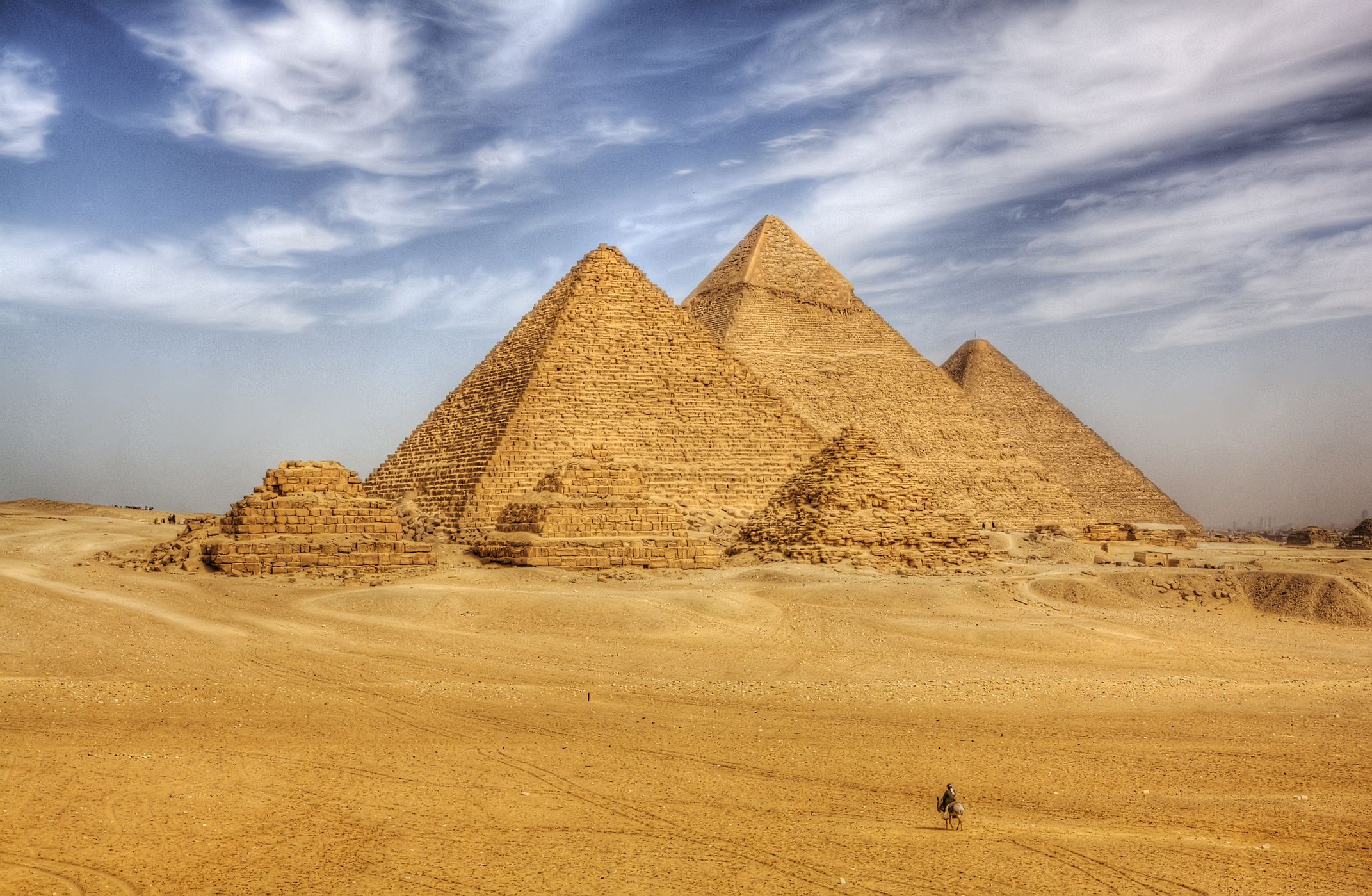 Constructing something as massive as the Pyramid of Khufu wasn't a whim; it required obsessive planning of every single material, every worker, and every design detail. The main building material was local limestone, quarried right there on the Giza plateau. But for that dazzling outer casing, they brought in fine white limestone from the Tura quarries, about 13-17 kilometers away. The most precious parts – the King's Chamber, some key passages, and the Pharaoh's sarcophagus – were fashioned from granite, specifically transported from Aswan, an incredible 934 kilometers upstream along the Nile. Just think about that journey!
Forget the myth of 100,000 slaves that Herodotus spoke of. Modern archaeology tells a much more nuanced story. The core workforce was comprised of about 4,000 highly skilled workers, true artisans who meticulously quarried stone, hauled materials, and crafted the masonry. Alongside them were some 16,000 to 20,000 support workers, handling everything from tool-making to providing food and supplies. These laborers weren't enslaved; they were paid, often in daily rations that included ten loaves of bread and beer – a valuable commodity back then.
Construction teams were structured with military precision, organized into a clear hierarchy. Two major divisions, in turn, split into smaller groups of around 200 men each. DNA evidence has even shown that these workers hailed from all corners of Egypt, making this truly a national endeavor, one that undoubtedly fostered unity across the land. They managed to move stones weighing 2.5 tons or more by placing them on sledges, then wetting the sand underneath. This clever trick reduced friction by a whopping 50 percent! The Nile River and a sophisticated network of artificial waterways were their highways for transporting these colossal blocks. The accuracy they achieved is genuinely baffling – the pyramid's sides align with true north, with a deviation of only 2'28'.
Who pulled all this off? Khufu's vizier and nephew, a man named Hemiunu, is credited as the chief architect for this monumental undertaking.
Constructing something as massive as the Pyramid of Khufu wasn't a whim; it required obsessive planning of every single material, every worker, and every design detail. The main building material was local limestone, quarried right there on the Giza plateau. But for that dazzling outer casing, they brought in fine white limestone from the Tura quarries, about 13-17 kilometers away. The most precious parts – the King's Chamber, some key passages, and the Pharaoh's sarcophagus – were fashioned from granite, specifically transported from Aswan, an incredible 934 kilometers upstream along the Nile. Just think about that journey!
Forget the myth of 100,000 slaves that Herodotus spoke of. Modern archaeology tells a much more nuanced story. The core workforce was comprised of about 4,000 highly skilled workers, true artisans who meticulously quarried stone, hauled materials, and crafted the masonry. Alongside them were some 16,000 to 20,000 support workers, handling everything from tool-making to providing food and supplies. These laborers weren't enslaved; they were paid, often in daily rations that included ten loaves of bread and beer – a valuable commodity back then.
Construction teams were structured with military precision, organized into a clear hierarchy. Two major divisions, in turn, split into smaller groups of around 200 men each. DNA evidence has even shown that these workers hailed from all corners of Egypt, making this truly a national endeavor, one that undoubtedly fostered unity across the land. They managed to move stones weighing 2.5 tons or more by placing them on sledges, then wetting the sand underneath. This clever trick reduced friction by a whopping 50 percent! The Nile River and a sophisticated network of artificial waterways were their highways for transporting these colossal blocks. The accuracy they achieved is genuinely baffling – the pyramid's sides align with true north, with a deviation of only 2'28'.
Who pulled all this off? Khufu's vizier and nephew, a man named Hemiunu, is credited as the chief architect for this monumental undertaking.
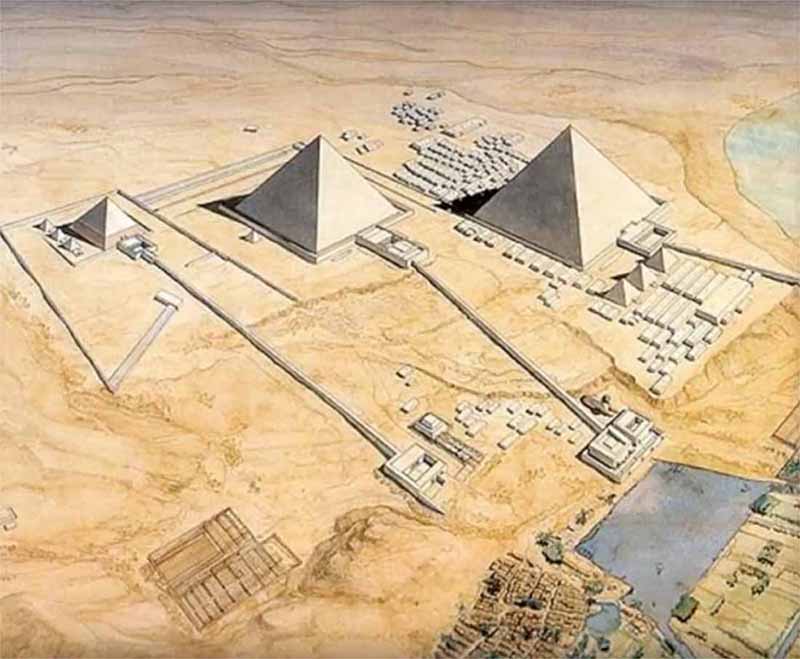 The Pyramid of Khufu isn't just a monumental structure; it's a living testament to the sheer ingenuity and boundless ambition of the ancient Egyptians. For 4,500 years, its remarkable precision, incredible scale, and enduring presence have captivated scholars, explorers, and travelers alike. Building something so massive, so perfectly, without any of our modern tools or technology, speaks volumes about the extraordinary skills of those ancient architects and laborers.
The Man Behind the Monument: Pharaoh Khufu
Khufu, the son of Snefru and Queen Hetepheres, was the second king of Egypt's Fourth Dynasty, reigning from about 2589 to 2566 BCE. The Greeks knew him as Cheops, and he's the pharaoh who commissioned what would become the oldest surviving wonder of the ancient world. His full name, 'Khnum-Khufu,' literally means 'Khnum protects me,' honoring the ram-headed deity of fertility and water.
Now, the ancient Egyptians didn't call it the Pyramid of Khufu. They called this magnificent structure 'Akhet Khufu,' which translates to 'Horizon of Khufu.' That name carried immense meaning; it wasn't just a tomb, but Khufu's ultimate gateway to paradise, his spiritual launching pad. They built it on the highest point of the Giza plateau, not just for grandeur but to ensure its visibility from vast distances, a beacon connecting earth and sky.
Its primary purpose, of course, was Khufu's royal tomb. Egyptian funerary customs were intricate, serving four key functions: housing the pharaoh's body, symbolizing his immense power, maintaining his supreme social status even in death, and providing a sacred space for offerings to ensure his eternal journey. While the Greek historian Herodotus painted Khufu as a harsh ruler, Egyptian records often portray him as a wise, effective leader. His funeral cult, in fact, gained significant popularity and strength well into Roman times. The pyramid's nearly perfect alignment with the cardinal directions and its original shimmering white limestone casing linked it deeply to the sun god Re, perfectly encapsulating Egyptian beliefs about life, death, and the divine nature of their kings.
Built to Last: Materials, Labor, and Design
Constructing something as massive as the Pyramid of Khufu wasn't a whim; it required obsessive planning of every single material, every worker, and every design detail. The main building material was local limestone, quarried right there on the Giza plateau. But for that dazzling outer casing, they brought in fine white limestone from the Tura quarries, about 13-17 kilometers away. The most precious parts – the King's Chamber, some key passages, and the Pharaoh's sarcophagus – were fashioned from granite, specifically transported from Aswan, an incredible 934 kilometers upstream along the Nile. Just think about that journey!
Forget the myth of 100,000 slaves that Herodotus spoke of. Modern archaeology tells a much more nuanced story. The core workforce was comprised of about 4,000 highly skilled workers, true artisans who meticulously quarried stone, hauled materials, and crafted the masonry. Alongside them were some 16,000 to 20,000 support workers, handling everything from tool-making to providing food and supplies. These laborers weren't enslaved; they were paid, often in daily rations that included ten loaves of bread and beer – a valuable commodity back then.
Construction teams were structured with military precision, organized into a clear hierarchy. Two major divisions, in turn, split into smaller groups of around 200 men each. DNA evidence has even shown that these workers hailed from all corners of Egypt, making this truly a national endeavor, one that undoubtedly fostered unity across the land. They managed to move stones weighing 2.5 tons or more by placing them on sledges, then wetting the sand underneath. This clever trick reduced friction by a whopping 50 percent! The Nile River and a sophisticated network of artificial waterways were their highways for transporting these colossal blocks. The accuracy they achieved is genuinely baffling – the pyramid's sides align with true north, with a deviation of only 2'28'.
Who pulled all this off? Khufu's vizier and nephew, a man named Hemiunu, is credited as the chief architect for this monumental undertaking.
Inside the Pyramid: Chambers, Passages, and Enduring Mysteries
Khufu's pyramid isn't just an imposing exterior; it hides a complex network of passages and chambers within, still puzzling archaeologists today. This monument stands apart from simpler pyramids because of its three main chambers, all connected by an intricate system of corridors. Navigating it today, you can't use the original entrance (now sealed). Instead, visitors typically enter through 'Al-Mamun's forced tunnel,' carved in the 9th century CE. The first thing you'll encounter is a descending passage that leads to an unfinished underground chamber, quite literally carved into the bedrock itself.The Grand Gallery and the Royal Chambers
The Grand Gallery is, without a doubt, the pyramid's most spectacular interior feature. This ancient engineering marvel is a striking ascending passage, stretching 46.71 meters long. Its granite walls and magnificent corbelled ceiling soar to 8.74 meters high, creating an almost cathedral-like space. This impressive corridor eventually connects to what's somewhat misleadingly called the 'Queen's Chamber,' and ultimately culminates at the heart of the pyramid: the 'King's Chamber,' built entirely from rose granite hauled all the way from Aswan.Mysterious Shafts and the Granite Sarcophagus
Inside the King's Chamber, perched squarely in the center, is an empty granite sarcophagus. Two narrow 'air shafts' extend from this chamber directly to the pyramid's exterior. Interestingly, the Queen's Chamber also has two similar shafts, but these unexpectedly stop before ever reaching the outside. They're a baffling architectural choice.Want to explore Pyramid of Khufu: The Oldest Wonder of the Ancient World?
Let us design the perfect private itinerary for you. From expert local guides to seamless luxury cruises, we craft custom trips that show you the real Egypt.
Customize via WhatsAppDiscoveries Through Modern Technology
Even after millennia, this pyramid keeps revealing secrets, largely thanks to modern technology. In 2016, scientists used muon radiography to discover a vast, previously unknown void stretching at least 30 meters long, situated directly above the Grand Gallery. More recently, in 2022, researchers identified a corridor-shaped structure hidden behind the northern entrance. It's a reminder that even the most studied sites still have more to tell.Structural Engineering: The Relieving Chambers
Perhaps one of the most brilliant architectural features is the series of five 'relieving chambers' located directly above the King's Chamber. These weren't decorative; they were a genius feat of engineering, designed to distribute the immense weight of the stone *above* the King's Chamber, preventing it from collapsing under the colossal load.Pyramid of Khufu: An Eternal Testament to Genius
The Pyramid of Khufu isn't just a monumental structure; it's a living testament to the sheer ingenuity and boundless ambition of the ancient Egyptians. For 4,500 years, its remarkable precision, incredible scale, and enduring presence have captivated scholars, explorers, and travelers alike. Building something so massive, so perfectly, without any of our modern tools or technology, speaks volumes about the extraordinary skills of those ancient architects and laborers.
The Spiritual Purpose of 'Akhet Khufu'
Even with limited historical records of his reign, this pyramid tells us so much about Pharaoh Khufu. It was never just a tomb; it was his ultimate gateway to the afterlife. Its name, 'Akhet Khufu' – 'Horizon of Khufu' – beautifully captured its profound spiritual role as a connection between worlds, an unmissable landmark dominating the very landscape of ancient Egypt.Want to explore Pyramid of Khufu: The Oldest Wonder of the Ancient World?
Let us design the perfect private itinerary for you. From expert local guides to seamless luxury cruises, we craft custom trips that show you the real Egypt.
Customize via WhatsAppThe Workforce and National Collaboration
It's important to remember that this wonder was built by skilled, paid workers, not slaves. It was a national project of incredible organization, where teams moved colossal stone blocks across vast distances. This collaborative effort wasn't just about building a tomb; it united people from all parts of Egypt and achieved engineering feats that remained unsurpassed for thousands of years.Architectural Symbolism and Unsolved Mysteries
Look inside, and the pyramid's internal design unfolds with fascinating features: its network of intricate passages, the magnificent Grand Gallery, and those chambers that hold so many mysteries. Every single architectural element had a specific role within Egyptian funerary traditions, all while showcasing brilliant engineering. Even today, questions linger about elements like the unfinished chambers and those curiously stopping shafts.The Enduring Legacy of the Oldest Wonder
With new technology, this ancient wonder constantly reveals fresh secrets. Recent discoveries of hidden voids and previously unknown corridors remind us that even after centuries of intensive study, the pyramid still guards some of its deepest mysteries. The world's oldest wonder – it's more than just a site; it's a profound connection to our distant past, a stirring reminder of the extraordinary capabilities of our ancestors.Ready to turn this guide into reality?
Our local experts can create a custom itinerary based on these recommendations. Just send us a quick message!
Customize via WhatsApp