
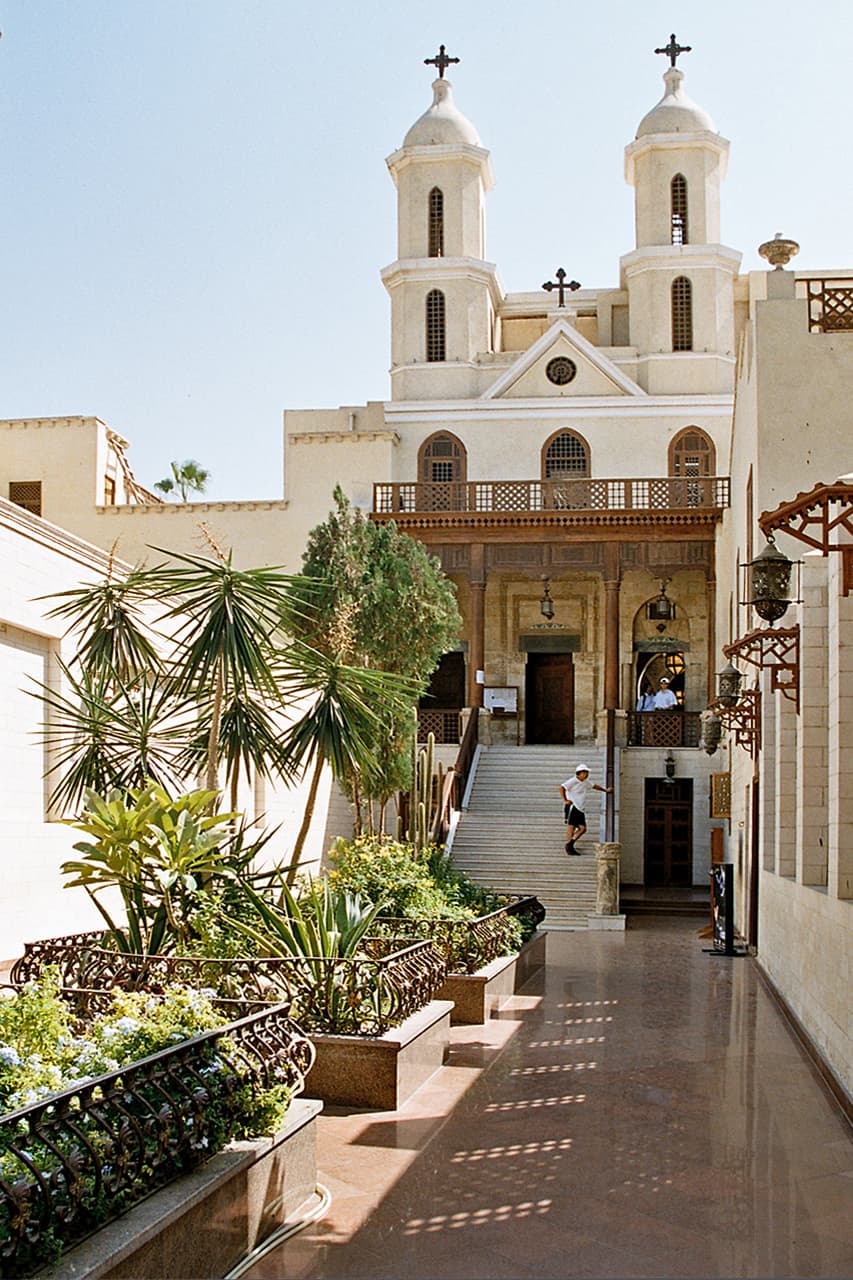

Já se perguntou como é caminhar por ruas onde a Sagrada Família pode ter buscado refúgio? Onde colossais fortalezas romanas uma vez estiveram de guarda? Onde algumas das comunidades mais antigas do cristianismo construíram igrejas tão magníficas que ainda permanecem de pé hoje? Bem-vindo ao Antigo Cairo, ou como os locais o chamam, Misr Al-Qadima ('Egito Antigo') – é verdadeiramente o coração pulsante do Cairo, repleto de profundidade espiritual.
O Antigo Cairo não é apenas 'antigo'; é realmente antigo, muito antigo. Muito antes de nossas icônicas pirâmides se tornarem ímãs turísticos, ou antes de o Cairo islâmico ganhar proeminência, este mesmo local na margem leste do Nilo era um centro movimentado. Hoje, é um tesouro condensado de igrejas copta, impressionantes ruínas romanas, uma herança judaica profundamente enraizada e locais islâmicos primordiais – todos maravilhosamente caminháveis.
Este é um lugar onde três das religiões mais influentes do mundo vivem lado a lado em notável harmonia. Imagine isso: em poucos minutos, você pode passar de uma igreja do século IV para uma sinagoga do século IX, e depois para uma mesquita do século VII. O Antigo Cairo não apenas narra a épica do Egito; ele entrelaça a narrativa mais ampla da humanidade sobre fé, cultura e civilização duradoura.
Entendendo o Antigo Cairo: Um Sentido de Lugar e Tempo
Onde Exatamente Fica o Antigo Cairo?
O Antigo Cairo (Misr Al-Qadima) está situado distintamente ao sul do moderno centro do Cairo, bem na margem leste do Nilo, diretamente em frente à Ilha Roda. Pense nisso como o bairro original do Cairo—o lugar que existiu muito antes que alguém pensasse em chamar a cidade maior de 'Cairo'.
- Fortaleza de Babilônia (uma fortificação romana construída por volta de 30 a.C.)
- Estação de Metrô Mar Girgis (provavelmente seu ponto de entrada fácil)
- Mesquita Amr ibn al-As (a primeira mesquita do Egito)
- Museu Copta (a joia cultural da área)
Por que 'Antigo' Cairo? Bem, quando os fatímidas estabeleceram 'Al-Qahira' (Cairo moderno) ao norte em 969 d.C., este assentamento já próspero tornou-se 'Antigo Cairo' em comparação. Mas lembre-se, suas raízes se estendem por muitos milênios antes disso!
Camadas de História que Você Pode Tocar
Período Romano (30 a.C. - 641 d.C.): O Imperador Augusto viu a importância estratégica, estabelecendo a Fortaleza de Babilônia aqui por volta de 30 a.C. Seu propósito? Proteger o crucial canal que liga o Nilo ao Mar Vermelho – uma linha de vida para o comércio de Roma com seus territórios orientais.
Período Cristão Primitivo (séculos I-VII d.C.): O cristianismo encontrou seu caminho para o Egito cedo, notoriamente através de São Marcos, o Evangelista. No século IV, o Egito era amplamente cristão, e o Antigo Cairo floresceu como um importante centro cristão, com numerosas igrejas aninhadas dentro e ao redor da formidável Fortaleza de Babilônia.
A Conexão da Sagrada Família: A tradição cristã nos conta que José, Maria e o bebê Jesus buscaram refúgio no Egito, fugindo da perseguição do Rei Herodes. Muitos locais no Antigo Cairo comemoram sua suposta jornada, adicionando uma profunda camada espiritual à experiência.
Período Islâmico (641 d.C. em diante): Quando o comandante árabe Amr ibn al-As conquistou o Egito em 641 d.C., ele fundou Fustat, adjacente à Fortaleza de Babilônia, como a nova capital islâmica. Este momento realmente fez do Cairo Antigo o vibrante cruzamento do Egito cristão e islâmico.

A Fortaleza de Babilônia: O Legado Duradouro de Roma no Egito
A História de um Reduto Militar
Esta fortaleza foi construída por volta de 30 a.C. sob o imperador Augusto, principalmente para proteger o canal do Nilo ao Mar Vermelho e controlar o acesso ao Alto Egito. Grande parte dela está enterrada sob séculos de terra acumulada – o nível das ruas do Cairo na verdade subiu de 20 a 30 pés ao longo do tempo! No entanto, remanescentes impressionantes ainda permanecem como um testemunho de seu passado.
As Torres Gêmeas: Ao chegar ao Cairo Antigo, duas enormes torres romanas o cumprimentarão. Esses bastiões cilíndricos uma vez marcaram o portão de água da fortaleza, permitindo que barcos entrassem para carga e descarga.
Por que Isso Importa: A Fortaleza de Babilônia demonstra vividamente o extenso alcance de Roma no Egito. Estas não são reconstruções modernas; são genuínas paredes romanas de mais de 2.000 anos atrás que você pode literalmente tocar!
Uma Experiência Interativa: Reserve um tempo para caminhar pelo perímetro, tentando imaginar o layout original da fortaleza. Você notará quantas igrejas e edifícios incorporam perfeitamente essas antigas paredes romanas. Sinta as pedras antigas – você está tocando as mesmas superfícies que os soldados romanos tocaram!
Quer explorar Cairo Antigo e Cairo Copta: Uma Jornada Através do Tempo e da Fé?
Deixe-nos desenhar o roteiro privado perfeito para você. De guias locais experientes a cruzeiros de luxo, criamos viagens personalizadas que revelam o Egito real.
Cairo Copta: No Coração do Cristianismo Egípcio
O que 'Copta' Realmente Significa
O termo 'copta' vem do grego 'Aigyptios' (que significa egípcio) e se refere especificamente aos cristãos egípcios e suas tradições únicas e antigas. O cristianismo copta é um dos ramos mais antigos do cristianismo, traçando suas origens diretamente de volta à era apostólica.
- A Igreja Copta foi estabelecida por São Marcos em Alexandria no século I d.C.
- Eles preservaram tradições cristãs antigas por mais de 2.000 anos.
- A liturgia deles ainda apresenta a língua copta, um descendente direto do egípcio antigo.
- Hoje, os cristãos copta representam cerca de 10-15% da população do Egito.
Uma Coleção de Igrejas: Maravilhas Arquitetônicas
A Igreja Suspensa (Al-Muallaqa):
Situada no topo das torres romanas gêmeas da Fortaleza de Babilônia, esta igreja realmente parece 'suspensa' acima da rua. Embora suas origens remontem ao século III-IV, a estrutura atual data em grande parte do século IX, tornando-a um dos locais cristãos mais antigos do Egito.
- Olhe para o belo teto de madeira, moldado como a arca de Noé (um casco de navio invertido).
- Admire os intrincados painéis de marfim e ébano.
- Descubra mais de 110 ícones, alguns incrivelmente antigos.
- Veja o púlpito de mármore apoiado por 13 pilares, simbolizando Cristo e seus 12 apóstolos.
- Não perca o Ícone do Século X: O ícone da Virgem e do Menino, com suas características faciais distintamente egípcias, é um poderoso lembrete das profundas raízes africanas do cristianismo!
Igreja de São Sérgio (Abu Serga):
Esta igreja marca o local lendário onde José, Maria e o bebê Jesus supostamente descansaram durante sua fuga para o Egito. Uma cripta sob o altar é acreditada para mostrar seu exato local de descanso. Embora a verificação histórica da lenda da Sagrada Família seja impossível, a igreja atual definitivamente data do século V.
Por que Visitar: Mesmo aqueles que são céticos muitas vezes acham a cripta comovente. Estar neste espaço antigo, onde gerações acreditaram que a Sagrada Família descansou, cria uma conexão profunda com a tradição cristã, independentemente da crença pessoal.
Igreja de Santa Bárbara:
Nomeada em homenagem à mártir do século III Santa Bárbara, cujas relíquias foram transferidas para cá da Igreja Suspensa em 1072 d.C. Esta igreja oferece uma variedade de belos ícones e uma atmosfera tranquila, muitas vezes menos lotada do que seus vizinhos mais famosos. Sua localização, a leste da Igreja de São Sérgio, facilita a visita a todas as três de uma só vez.

Veja por si mesmo
Viagens que visitam os lugares mencionados neste artigo.

Quer uma rota ou comprimento diferente? Nós a construiremos ao seu redor.
O Museu Copta: Uma Parada Essencial para Mergulhos Profundos
Fundado em 1910 por Marcus Simaika Pasha, este museu abriga a coleção mais extensa de arte cristã copta do mundo. Ele traça a vibrante história do cristianismo egípcio desde os tempos romanos até o período otomano.
Quer explorar Cairo Antigo e Cairo Copta: Uma Jornada Através do Tempo e da Fé?
Deixe-nos desenhar o roteiro privado perfeito para você. De guias locais experientes a cruzeiros de luxo, criamos viagens personalizadas que revelam o Egito real.
Exibições Imperdíveis:
- A incrível coleção de têxteis, mostrando a maestria da tecelagem copta.
- Os retratos de Fayum, assombrosamente realistas.
- Manuscritos iluminados que são obras de arte em si mesmos.
- Ícones que representam lindamente as tradições artísticas egípcias.
- Esculturas em pedra onde símbolos faraônicos e cristãos se misturam perfeitamente.
Honestamente, planeje pelo menos 1,5-2 horas aqui; este museu realmente merece sua total atenção – é de classe mundial!
Além do Cristianismo: O Diverso Tapeçário do Antigo Cairo
Sinagoga Ben Ezra: Um Vislumbre do Patrimônio Judaico
Originalmente uma igreja copta, este edifício foi vendido à comunidade judaica no século IX. Famosamente, sua sala de armazenamento rendeu 300.000 fragmentos de manuscritos – mais tarde conhecidos como a Geniza do Cairo! Esta foi uma das descobertas documentais mais significativas da história. É um lembrete comovente da comunidade judaica que outrora prosperou no Egito, que infelizmente encolheu para menos de 10 pessoas hoje.
Mesquita Amr ibn al-As: O Primeiro Marco Islâmico do Egito
Esta é a PRIMEIRA mesquita do Egito, construída entre 641-642 d.C. por Amr ibn al-As, o general árabe que conquistou o Egito. Esta mesquita marca o início do Egito islâmico e completa lindamente o circuito religioso: igrejas cristãs, uma sinagoga judaica histórica e uma mesquita islâmica fundamental, tudo a uma caminhada de 15 minutos!
Informações Práticas para Visitar:
- Você encontrará um grande pátio aberto com um estilo arquitetônico simples, mas profundo.
- Não muçulmanos são bem-vindos para visitar fora dos horários de oração.
- A entrada é gratuita, mas é necessário vestir-se modestamente.
- Fica a cerca de 10 minutos a pé da área copta principal.
Planejando Sua Visita Memorável ao Antigo Cairo
Chegando Facilmente
Metro (Sua melhor aposta!): A Estação Mar Girgis (na Linha 1) te deixa diretamente no coração do Antigo Cairo. Você não pode superar essa conveniência!
Taxi/Uber: Basta dizer ao seu motorista 'Mar Girgis' ou 'Cairo Copta.' Normalmente é uma viagem de 15-20 minutos do centro do Cairo.
- Da Praça Tahrir: Cerca de 15 minutos
- De Khan el-Khalili: Cerca de 20 minutos
- Das Pirâmides de Gizé: Espere 30-40 minutos, dependendo do tráfego
Roteiro Sugerido
Tour de Meio Dia (4 horas):
- 9:00 AM: Chegada via Metro
- 9:15 AM: Museu Copta (1,5 horas)
- 10:45 AM: Igreja Suspensa (30 minutos)
- 11:15 AM: Igreja de São Sérgio (30 minutos)
- 11:45 AM: Sinagoga Ben Ezra (30 minutos)
- 12:15 PM: Pegue um café em um café-jardim nas proximidades
- 12:45 PM: Mesquita Amr ibn al-As (30 minutos)
Tour de Dia Inteiro (6-7 horas): Se você tiver mais tempo, adicione a Igreja de Santa Bárbara, a Igreja de São Jorge, permita uma visita mais longa ao museu, desfrute de um almoço tranquilo e simplesmente tire mais momentos para fotografias e absorver tudo.
Considerações Práticas
Código de Vestimenta:
- Roupas modestas são essenciais (cubra os ombros e os joelhos).
- As mulheres precisarão de lenços para a cabeça ao entrar nas igrejas (geralmente são fornecidos).
- Lembre-se de remover os sapatos ao entrar nos espaços de oração.
- Sempre mantenha um comportamento respeitoso nesses locais de culto ativo.
Taxas de Entrada:
- Museu Copta: Uma taxa modesta.
- Sinagoga Ben Ezra: Uma pequena taxa.
- Igrejas: Geralmente gratuitas (embora doações sejam sempre apreciadas).
- Mesquita Amr ibn al-As: Grátis.
Melhores Momentos para Visitar:
- As manhãs durante a semana são mais tranquilas e oferecem melhor luz para fotos.
- Tente evitar as manhãs de sexta-feira devido aos horários de oração e possíveis fechamentos.
- Primavera e outono oferecem as temperaturas mais confortáveis.
- O inverno geralmente traz menos multidões.

Experimente o Velho Cairo Como Nunca Antes
Faça Isso Interativo!
Antes mesmo de chegar, faça uma pequena pesquisa! Pesquise sobre a fuga da Sagrada Família para o Egito, aprenda algumas crenças básicas do cristianismo copta ou mergulhe na fascinante história da descoberta da Geniza do Cairo. Entender o papel de Roma no início do cristianismo também adiciona um imenso contexto. E aqui vai uma dica: aprenda algumas frases em árabe como 'Sabah el-kheir' (Bom dia), 'Shukran' (Obrigado) e 'Mumkin ashuf?' (Posso ver?). Os locais realmente apreciam o esforço.
Uma vez lá, envolva todos os seus sentidos! Passe suas mãos nas paredes romanas de 2.000 anos – sinta o peso dos séculos. Se você tiver a sorte de visitar durante os serviços, pare e ouça a antiga liturgia copta; orações cantadas em uma língua diretamente descendente do egípcio faraônico! Reserve um momento para sentir o cheiro do incenso tradicional, ligando você a inúmeras gerações de adoração. Note como as igrejas incorporam habilidosamente elementos arquitetônicos faraônicos.
É verdadeiramente um banquete sensorial.
Perguntas para Refletir Enquanto Você Explora
- Na Igreja Suspensa: Como os construtores conseguiram erguer tal maravilha sobre torres romanas sem equipamentos modernos? Que habilidades incríveis eles possuíam?
- Na Cripta de São Sérgio: Importa se é 'real' ou 'lendário'? O que realmente torna um lugar sagrado – a precisão histórica ou a profundidade de fé e devoção que ele inspira?
- Caminhando Entre os Locais: Como as comunidades cristã, judaica e muçulmana compartilharam esta pequena e poderosa área por tantos séculos? Que lições nossa sociedade moderna pode aprender de sua longa história de coexistência?
A Importância Cultural do Velho Cairo: Um Testemunho Vivo
Mais do que uma Peça de Museu, É um Museu Vivo
Diferente de muitos distritos históricos que às vezes parecem zonas estéreis e preservadas, o Velho Cairo está vibrante e vivo! Todas as igrejas realizam serviços regulares – você não está apenas olhando para relíquias abandonadas, mas para casas de culto em funcionamento. Famílias vivem aqui, crianças brincam nos pátios e a vida cotidiana se desenrola como tem feito por séculos.
Festivais religiosos, procissões e celebrações mantêm costumes antigos vivos, enquanto oficinas de artesãos continuam a criar itens religiosos usando métodos tradicionais e consagrados pelo tempo.
Um Poderoso Símbolo de Coexistência
Dentro da relativamente pequena área do Antigo Cairo, você encontrará antigas igrejas cristãs (datando dos séculos III a IX), uma sinagoga judaica profundamente histórica (século IX), uma mesquita islâmica incrivelmente importante (século VII) e uma fortaleza romana (século I a.C.). Essa proximidade física demonstra que diferentes crenças absolutamente PODEM coexistir pacificamente.
Por mais de um milênio, cristãos, judeus e muçulmanos viveram aqui como vizinhos, negociando nos mesmos mercados, caminhando pelas mesmas ruas. Em tempos em que as tensões religiosas frequentemente dominam as manchetes globalmente, o Antigo Cairo se destaca como uma poderosa contra-narrativa, lembrando-nos que a diversidade muitas vezes fortalece em vez de enfraquecer as comunidades.
Combinando o Antigo Cairo com Outras Atrações Icônicas
A Jornada Definitiva da Civilização:
Comece sua manhã mergulhando na rica herança cristã e romana do Antigo Cairo. Em seguida, dedique sua tarde ao Cairo Islâmico, explorando destaques como Khan el-Khalili, Al-Azhar e a imponente Cidadela. Este itinerário oferece uma visão completa e vívida da evolução religiosa e cultural do Cairo.
O Circuito Abrangente de Museus:
Comece seu dia no Museu Copta (para arte cristã), passe para o Museu Egípcio (artefatos faraônicos) e conclua no Museu de Arte Islâmica (para herança islâmica). Este circuito proporciona uma compreensão verdadeiramente abrangente da civilização egípcia ao longo de suas várias épocas.
Insights Locais e Dicas de um Insider
O que os Residentes Querem que Você Saiba: O Antigo Cairo não é um lugar para correr por uma lista de verificação. Em vez disso, encontre um banco de jardim, inicie uma conversa se puder, e apenas absorva a atmosfera. Lembre-se, estas não são apenas peças de museu; são casas de culto ativas. Seja respeitoso com os serviços, horários de oração e fiéis. Pequenas doações contribuem para a preservação desses tesouros inestimáveis.
Muitas vezes, os cuidadores das igrejas têm histórias incríveis para compartilhar, e muitos falam inglês. Se o seu tempo permitir, visitar durante festivais como o Natal (7 de janeiro para os copta) ou a Páscoa oferece uma atmosfera especialmente única com procissões e celebrações.
Erros Comuns a Evitar: Não use roupas inadequadas, não corra sem ler as informações e, seja o que for, não pule o Museu Copta – isso seria uma grande perda! Para ter uma visão completa, visite as igrejas, a sinagoga e a mesquita. Por fim, nunca fotografe durante os serviços sem permissão explícita e não assuma que tudo estará aberto; sempre verifique os horários primeiro.

Pronto para transformar este guia em realidade?
Nossos especialistas locais podem criar um itinerário personalizado com base nessas recomendações. Basta nos enviar uma mensagem rápida!
Personalize via WhatsApp