
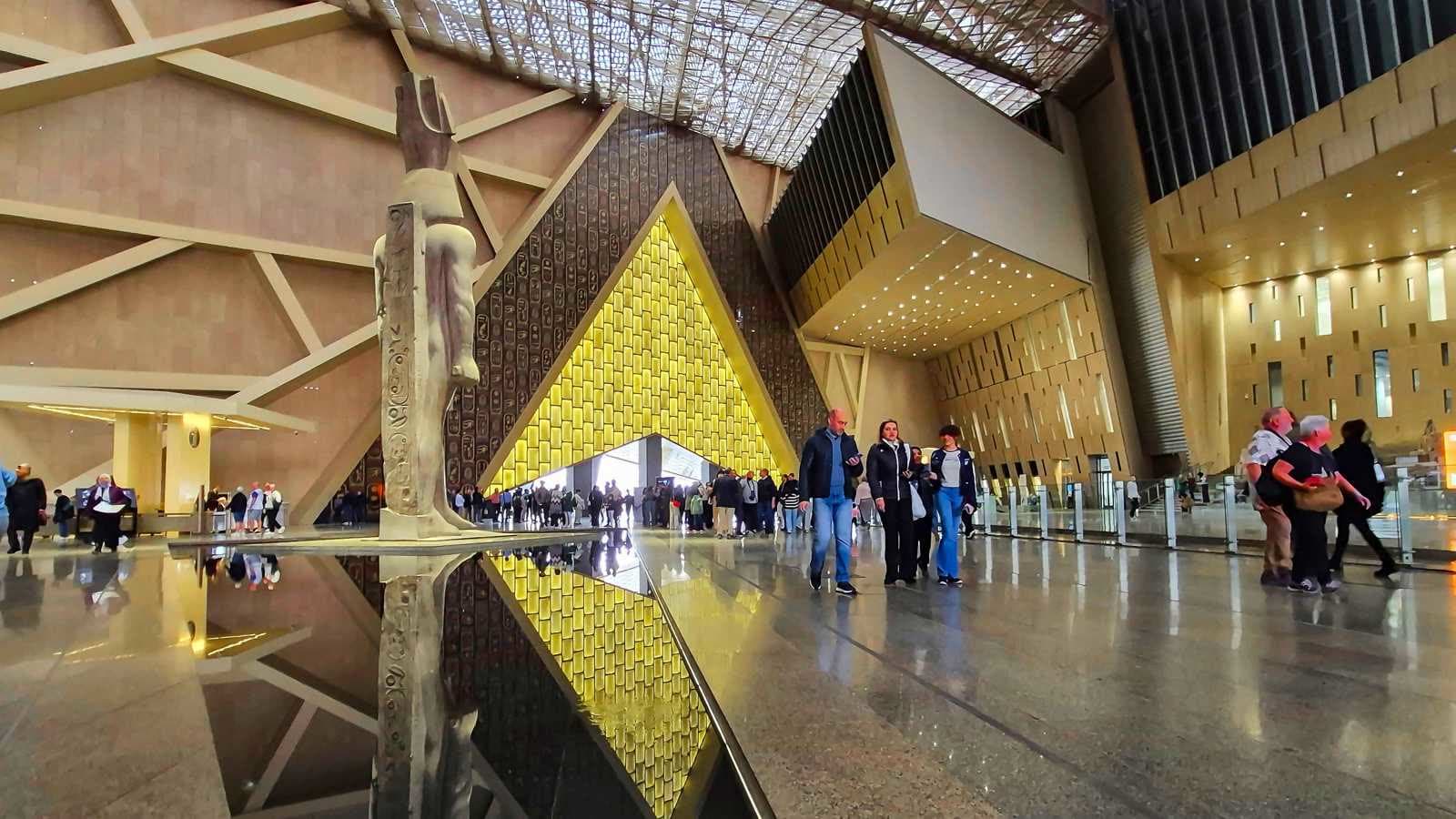

What to see at the Grand Egyptian Museum comes down to order. Start with the colossal Ramesses II in the atrium and climb the Grand Staircase, then go straight to the Tutankhamun galleries while your legs and attention are fresh. After that, see the Khufu solar boat and pick two or three themes from the chronological galleries rather than trying to cover everything. The building is far bigger than most first-timers expect, and the sequence matters more than the number of rooms you tick off.
What to see at the Grand Egyptian Museum: why you need a plan
The museum sits right beside the Giza plateau and has been fully open since November 2025, Tutankhamun galleries included. A year on, the early crowds have settled into a pattern, but the place is still busy for most of the day.
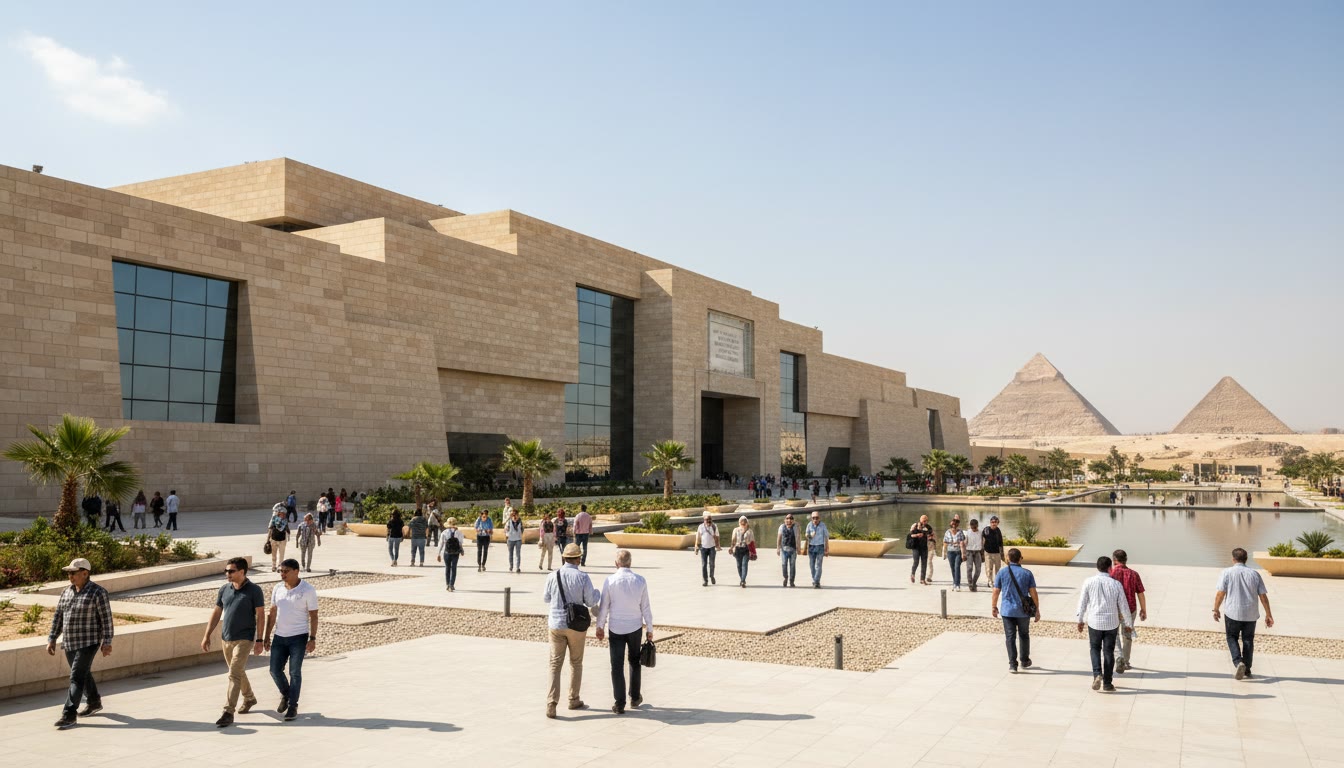
The problem is scale. Long galleries, several levels, and a lot of walking between the things you came for. First-timers tend to spend their energy in the first hour on whatever is nearest the door, then reach the best material footsore and glazed.
So treat this as a route, not a catalogue. Below you'll find what deserves a proper stop, what to skim, and what to save for a second visit. Plenty of people go back.
On a Giza day we pair the museum with the Pyramids of Giza and nothing else. It's a short drive between the two, and both are big enough that a third site turns a good day into a rushed one. Allow 3 to 4 hours inside the museum for the route here, longer if you linger.
The atrium and the Grand Staircase
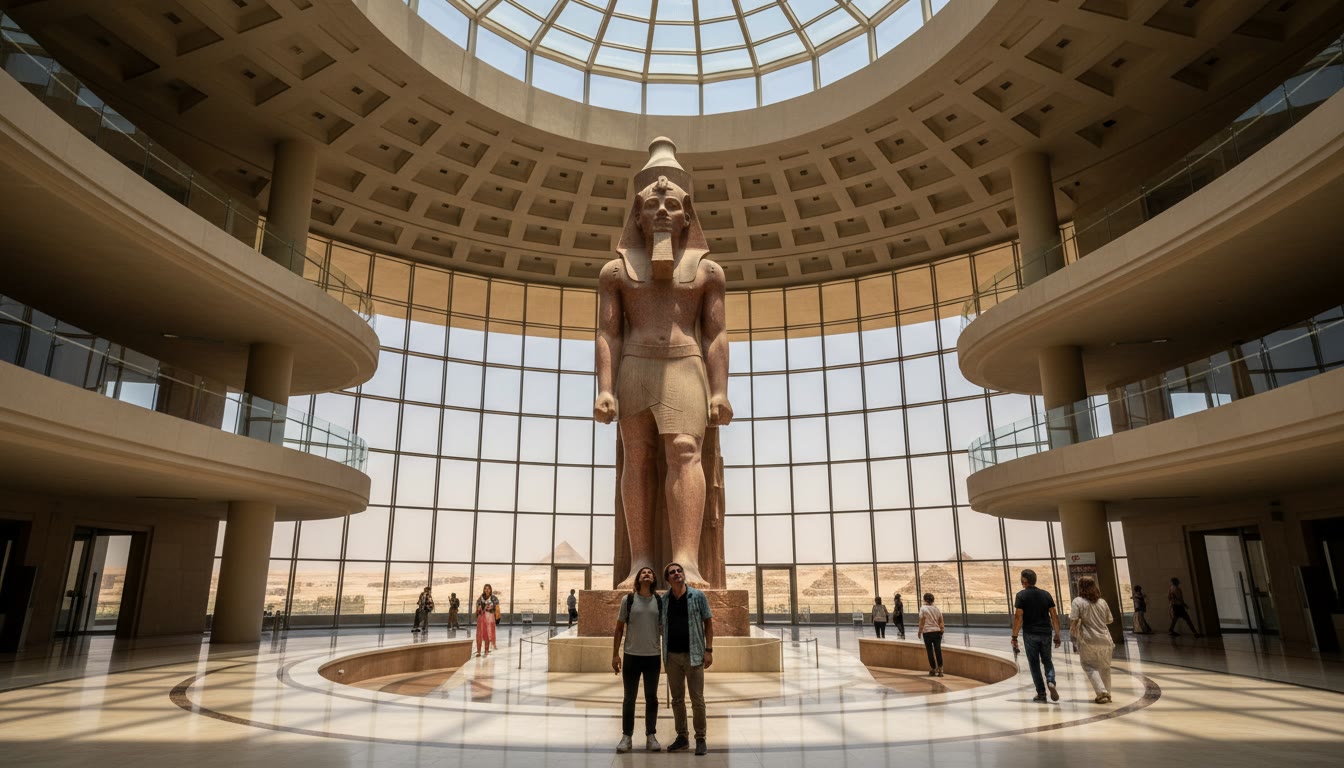
You walk in under the colossal statue of Ramesses II. Give it 5 minutes and take your photograph early, before people gather around the base. It also sets the scale for everything that follows.
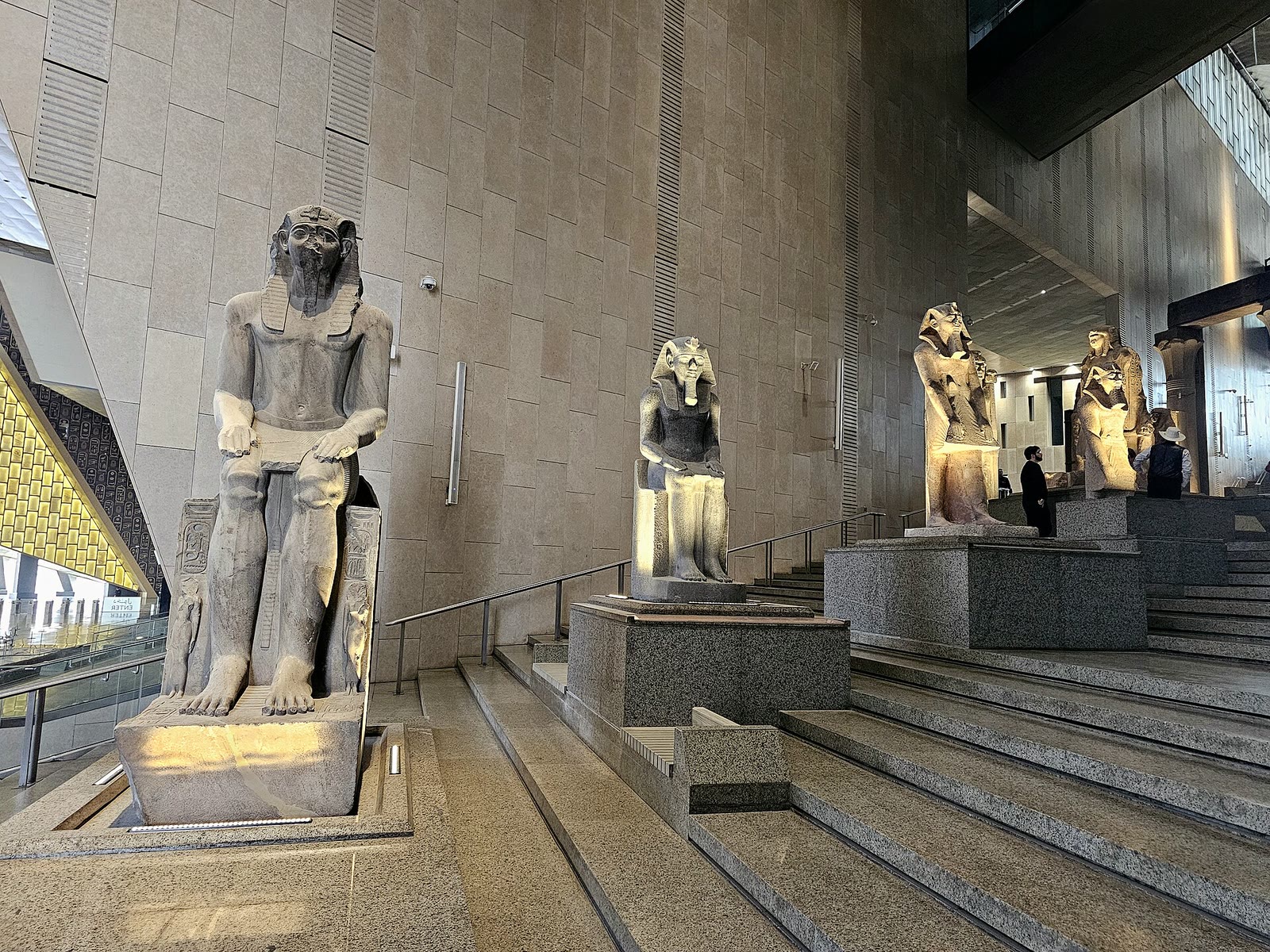
The Grand Staircase is a long, wide ascent lined with royal statues, stelae and architectural pieces, arranged on tier after tier. Walk it slowly the first time, but don't stop at every figure. Pick three or four that your guide can explain properly: a king, a deity, an inscribed block. Reading every label will cost you the energy you need upstairs.
At the top, turn around. The tall glass wall frames the Pyramids, and it's the best spot in the building to get your bearings before the galleries begin.
Wear comfortable shoes. Bring a light layer as well, because the interiors are air-conditioned and the contrast with the heat outside is sharp. Our Grand Egyptian Museum tour page explains how we run the visit.
The Tutankhamun galleries
This is the main draw and deserves the largest share of your time. The galleries bring the contents of the tomb together in one place, which was never possible when the objects were spread across older displays.
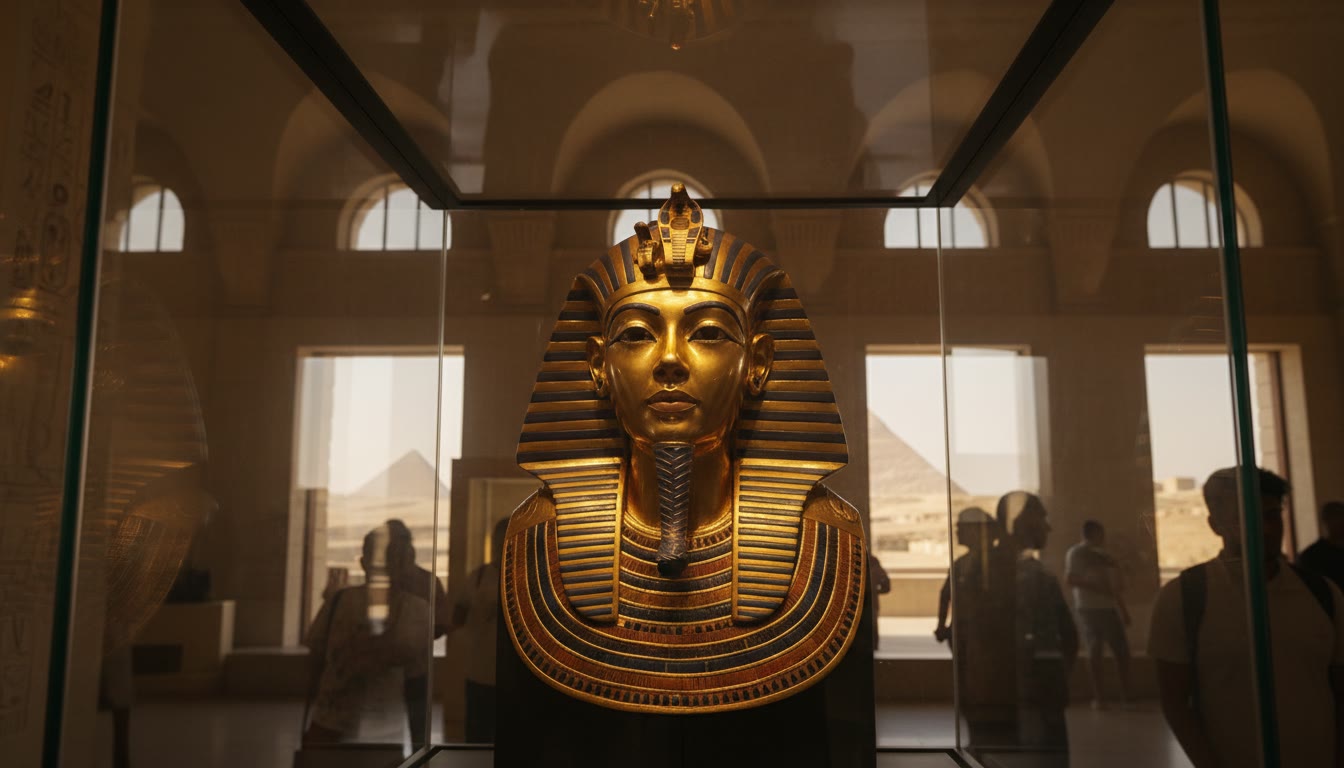
Here's how we'd rank what you'll see. The gold funerary mask comes first, and it's the one object nobody should rush. Then the throne and the gilded shrines, where the craftsmanship is hard to take in at a glance. After those, the chariots and jewellery. Last, and often best, come the small personal items: sandals, fans, boxes. They say more about a teenage king's daily life than any amount of gold.
Skim the repeated rows of similar vessels and models. A good guide will pick the two that matter and move you on.
Do these rooms early in the route, not at the end. Meeting the mask when you're tired and surrounded by a tour group is the worst way to do it. Mid-morning is usually the busiest stretch, so we plan to be in these galleries ahead of the groups.
There's a Luxor link too. The tomb itself is still in the Valley of the Kings, and entry is a separate ticket that stays extra. Seeing the objects first makes the small, bare tomb far easier to appreciate. For background before you go, read the story of King Tutankhamun.
The Khufu solar boat
The boat is built of cedar planks and was buried beside the Great Pyramid of Khufu. It was reassembled from hundreds of pieces, and at around 4,500 years old it ranks among the oldest and best-preserved large wooden vessels from the ancient world. For the discovery and reconstruction, the encyclopaedia entry on the Khufu ship is a reasonable start.
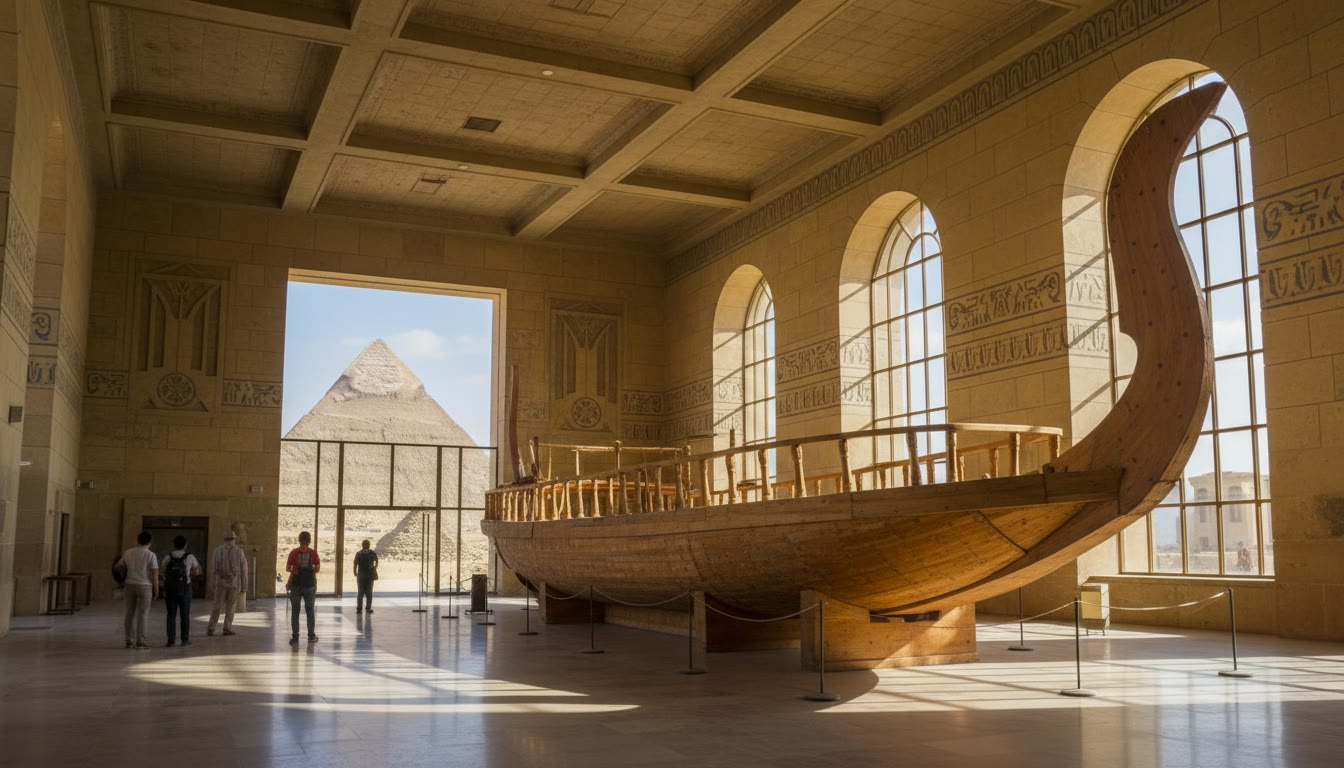
It was long shown in a purpose-built hall at the foot of the Great Pyramid, and older guidebooks still describe it there. Presentation has changed, so confirm with us before your date exactly how and where you'll see it.
Make it a deliberate stop. It's a single object you can walk around and read in minutes, and it makes the Giza story concrete in a way a wall of text can't. We put it straight after the Tutankhamun galleries, as a calmer second highlight.
Look at the rope lashing that holds the planks together, the joinery between them, and the length of the hull. Then ask how anyone planned that without a drawing board.
Sieh es dir selbst an
Reisen, die die Orte in diesem Artikel besuchen.
Möchten Sie eine andere Route oder Länge? Wir gestalten es nach Ihren Wünschen.
Stop, skim or skip: a quick ranking
| Highlight | Where it sits in the route | Verdict |
|---|---|---|
| Ramesses II colossus | Atrium, first | Stop |
| Grand Staircase statues | Climb to the upper levels | Skim, with 3 or 4 stops |
| Tutankhamun mask | Tutankhamun galleries, early | Stop |
| Tutankhamun throne and shrines | Tutankhamun galleries | Stop |
| Tutankhamun small personal items | Tutankhamun galleries | Stop, if time allows |
| Repeated vessels and models | Tutankhamun galleries | Skim |
| Khufu solar boat | After the Tutankhamun galleries | Stop |
| Chronological galleries, Old Kingdom to Greco-Roman | Later in the visit | Skim, pick 2 themes |
| Gift shops and cafés | End of the visit | Skip until the end |
If you'd like a route built around your own interests, such as royal statuary, daily life or religion, our private Egyptologist guides can plan it with you.
Möchten Sie What to See at the Grand Egyptian Museum: Highlights Guide erkunden?
Lassen Sie uns die perfekte private Reiseroute für Sie entwerfen. Von erfahrenen lokalen Guides bis hin zu maßgeschneiderten Plänen zeigen wir Ihnen das echte Ägypten.
A route through the Grand Egyptian Museum, in order
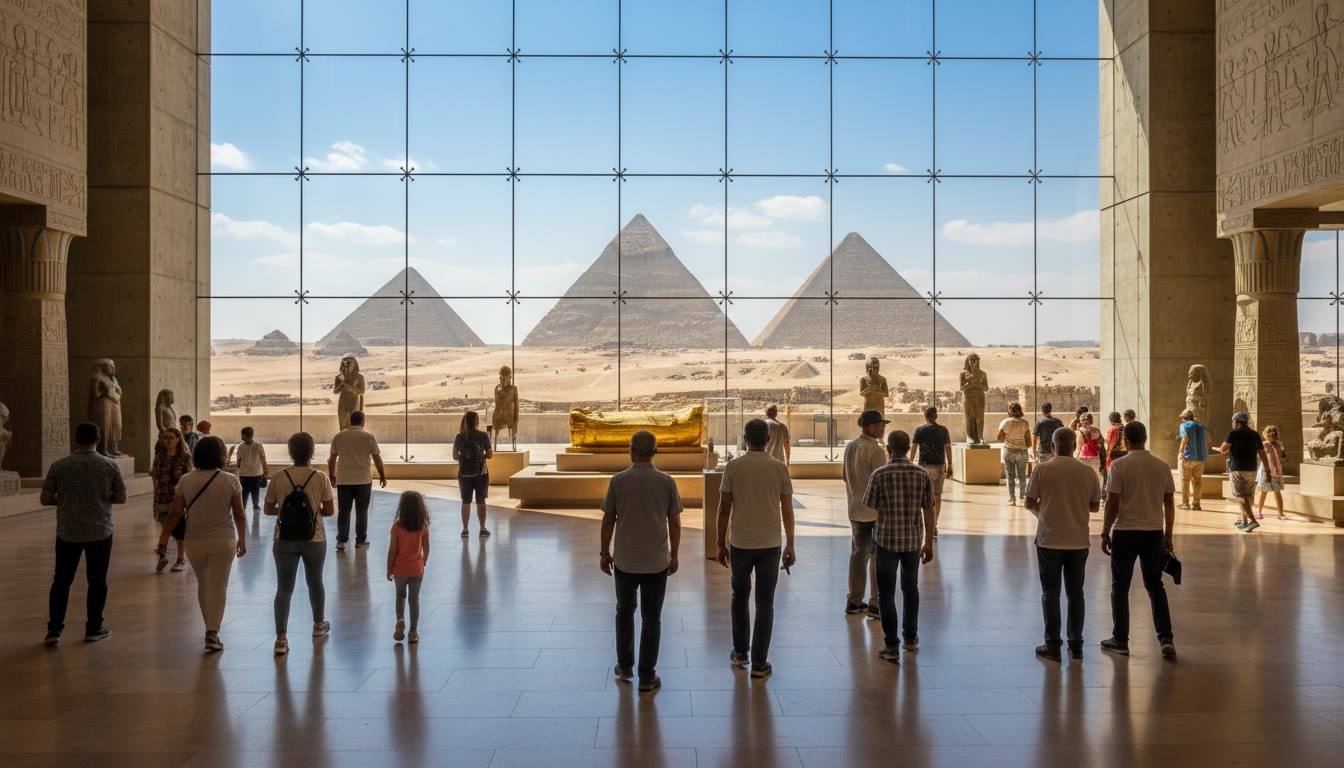
- Atrium and the Ramesses II colossus: about 5 minutes, a photograph, and a feel for the scale.
- Grand Staircase: climb without stopping at every statue, then pause at the top for the view toward the Pyramids.
- Tutankhamun galleries: go here first, and see the mask early before the rooms fill.
- Khufu solar boat: a calmer stop where you can walk around a single object.
- Two chronological galleries: choose them by interest, such as royal statuary or daily life.
- Coffee, then the shops on your way out.
The logic is simple. The heaviest crowds and the heaviest demands on your attention come first, and lighter browsing comes later. Take the chronological galleries as one or two themes, not a march through every dynasty. Nobody retains that.
On a Giza day, pair the museum with the Pyramids and add no Saqqara or other sites. From October to April either order works. Reaching the museum early keeps the Tutankhamun rooms quieter, and the plateau is pleasant in the afternoon. In summer, do the Pyramids first while it's still bearable and spend the midday heat indoors.
Season matters. October to April is the comfortable window for the Pyramids side of the day. June to August is hot, and the museum's air-conditioning will feel like a relief. For wider reading, there's an encyclopaedic overview of the museum covering its location, construction and collections.
How a private Egyptologist guide helps in a building this size
A guide chooses the few staircase statues worth explaining and gets you into the Tutankhamun galleries at the right moment. They also read the inscriptions and iconography you'd otherwise walk straight past.
Pacing matters even more. A guide can cut a gallery short, double back, or slow down for an object you're drawn to. That counts for more here than in a smaller museum, because the building invites aimless wandering and the afternoon disappears.
Private tours are our core format, with Egyptologist guides and tailor-made routes. We can build the museum into a Giza day or into a wider trip, and you can start with our Grand Egyptian Museum tour. If you want to check current gallery arrangements before you book, message us on WhatsApp at +20 106 023 3393.
Frequently asked questions
Are Tutankhamun's treasures at the Grand Egyptian Museum?
Yes. The Tutankhamun galleries have been open since the museum's full opening in November 2025 and show the tomb's contents together, including the gold funerary mask. The tomb itself remains in the Valley of the Kings near Luxor, and entering it needs a separate ticket.
Möchten Sie What to See at the Grand Egyptian Museum: Highlights Guide erkunden?
Lassen Sie uns die perfekte private Reiseroute für Sie entwerfen. Von erfahrenen lokalen Guides bis hin zu maßgeschneiderten Plänen zeigen wir Ihnen das echte Ägypten.
Which objects should I prioritise at the Grand Egyptian Museum?
See the Ramesses II colossus in the atrium, a few Grand Staircase statues rather than all of them, Tutankhamun's mask, throne and shrines, and the Khufu solar boat. Then add two chronological galleries that match your interests, instead of trying to see everything in one visit.
Can I see the Pyramids and the Grand Egyptian Museum on the same day?
Yes, and we recommend it as a full Giza day: the Pyramids plus the museum, with no other sites added. In summer, do the Pyramids early because of the heat, then move indoors, since the museum is air-conditioned and far more comfortable by midday.
Is the Khufu solar boat inside the Grand Egyptian Museum?
The boat is part of the Giza story and a deliberate stop on our route. It was long shown in its own hall beside the Great Pyramid, and presentation details have changed. Ask us before your date for the current arrangement rather than relying on older guidebooks.
Do I need a guide at the Grand Egyptian Museum?
You can go alone, but the building is large and labels only go so far. A private Egyptologist guide picks the objects worth your attention, sets the order and paces the day. See our Grand Egyptian Museum tour page or our private guides page for options.
Planen Sie eine Reise nach Ägypten?
Lassen Sie uns die Details übernehmen. Von privaten Führern bis hin zu luxuriösen Nilkreuzfahrten erstellen wir maßgeschneiderte Reisepläne, die Ihnen das wahre Ägypten zeigen.
Passen Sie über WhatsApp an