

Abu Simbel. The name alone conjures images of immense power and ancient ingenuity, doesn't it? These aren't just any old temples; they're two colossal rock-cut monuments, carved right out of the cliff face by Pharaoh Ramesses II way back in the 13th century BC. You'll find them tucked away in Egypt's deep south, practically hugging the Sudanese border. What makes them so utterly captivating? Their sheer size, for sure, but also the mind-bending engineering, the astronomical precision, and the heroic, almost miraculous, story of their rescue in the 1960s by UNESCO. Today, when you stand before those massive statues, step into those richly decorated interiors, or witness the sun festival's perfect alignment, it's easy to feel the whispers of a truly grand past.
The Story So Far: Ramesses the Great's Southern Statement
Ramesses II: Builder Extraordinaire
Ramesses II wasn't just any pharaoh; he was *the* Ramesses, the one they called 'the Great.' He held the throne for a staggering 66 years, from 1279 to 1213 BC, making him one of the longest-reigning and, frankly, most prolific rulers of Egypt's 19th Dynasty. Imagine living to your early 90s in ancient times – an absolute anomaly! This gave him plenty of time to leave his mark, not just on history, but literally on the landscape of Egypt. He wasn't called 'the Great' for nothing. Beyond his military exploits and that pioneering peace treaty with the Hittites after the Battle of Kadesh, Ramesses was an architectural force. He built, or dramatically upgraded, temples everywhere: Abu Simbel, Luxor, Karnak, Abydos... the list goes on. Each project was a declaration, a way to immortalize his reign and ensure his name echoed through eternity.Nubia: Egypt's Rich Southern Neighbor
Nubia, the land stretching south from Aswan into what's now Sudan, always had a complex dance with Egypt. For millennia, it was a source of immense wealth – gold, exotic woods, ivory, incense – but also a potential flashpoint. During the New Kingdom, Egypt kept a firm grip on Nubia, run by a sort of viceroy. Nubian gold fueled Egypt's grand ambitions, and Nubian soldiers even fought in Egyptian armies. So, when Ramesses chose this remote spot near the old border for Abu Simbel, it was a deliberate, powerful statement. It was a projection of Egyptian might to the Nubians, a divine endorsement of his rule, and a show of piety for his own people.Why Build Here? Construction and Grand Purpose
Ramesses kicked off Abu Simbel's construction early in his reign, around year five, and it took about two decades to complete. Think about it: thousands of workers painstakingly carving 300,000 cubic meters of sandstone directly out of the cliff! These weren't freestanding buildings; they were literally burrowed into the earth. And why all this effort for a place so remote? Well, it was multi-layered. First, it was a deep religious dedication to the gods Re-Horakhty, Ptah, and Amun, plus, rather conveniently, the deified Ramesses II himself. Second, it was pure politics: a massive display of pharaonic power right on the Nubian frontier. Third, a celebration of his 'victories' (some more propaganda than reality, I'd say) and his role as Egypt's divine protector. Fourth, that incredible astronomical precision, aligning the temple with the sun god. And finally, a very personal touch: a temple for his beloved wife, Nefertari. That was a big deal – a pharaoh dedicating an entire temple to his queen. It tells you something about their bond, or maybe her political sway.
The Great Temple of Ramesses II: A Behemoth in Stone
Want to explore Abu Simbel Temples: A Journey to Ramesses' Grand Legacy?
Let us design the perfect private itinerary for you. From expert local guides to seamless luxury cruises, we craft custom trips that show you the real Egypt.
Customize via WhatsAppThe Facade: Ramesses in Grand Scale
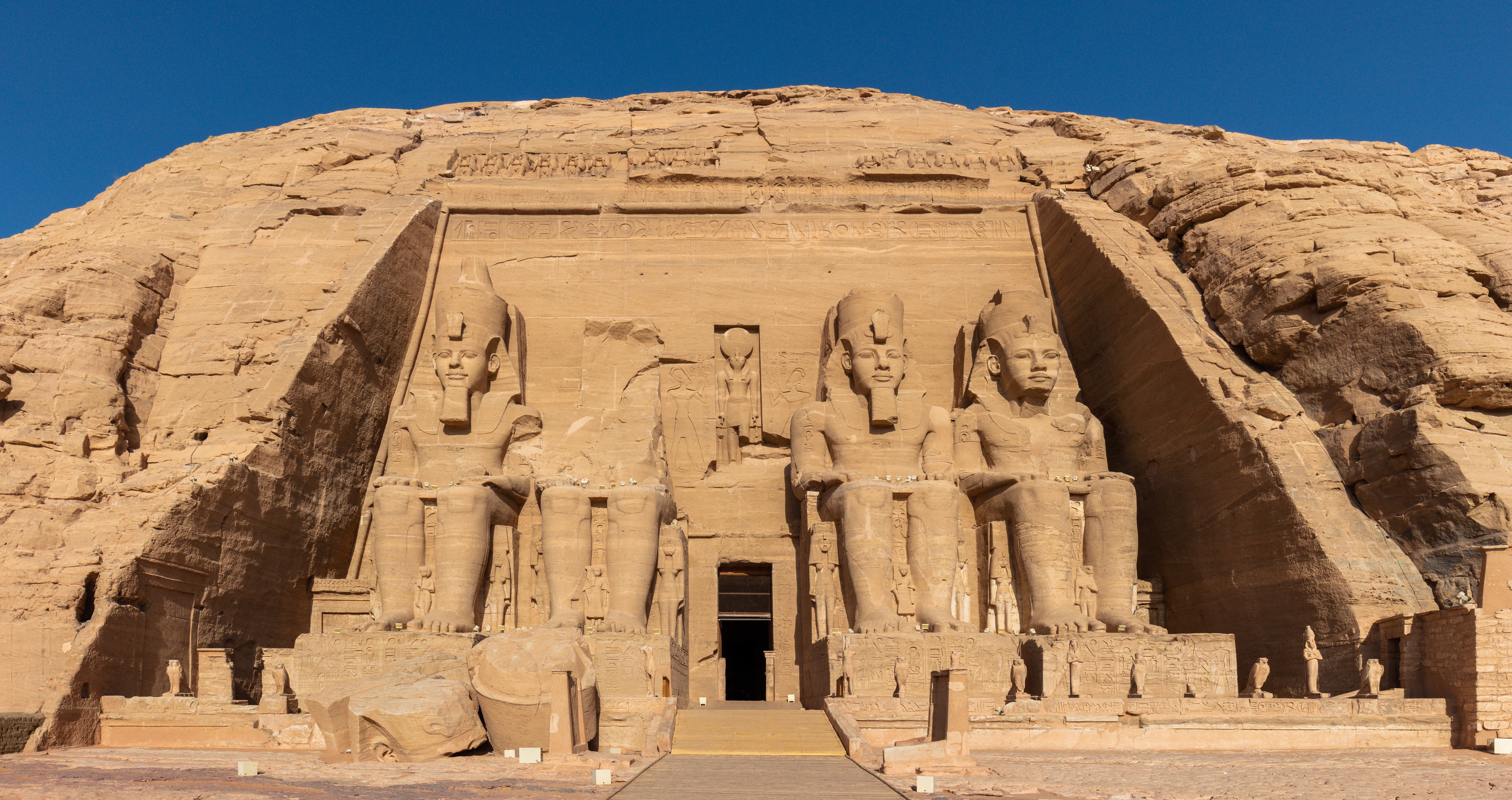
The instant you see the Great Temple, your jaw will drop. Its facade is dominated by four absolutely colossal seated statues of Ramesses II, each towering about 20 meters (66 feet) high, carved straight from the rock. Ramesses sits there, double crown on his head, royal insignia in hand, staring eastward, patiently awaiting the rising sun. You'll feel tiny. I mean, each face is nearly four meters tall! And notice the smaller figures carved at his feet – his mother Queen Tuya, his dear Nefertari, and some of his many children, all looking up at their divine king. That second statue from the left? You'll see it's damaged. An ancient earthquake, likely, cracked it, and the broken pieces still lie where they fell. It's a poignant reminder that even these eternal monuments couldn't escape nature's wrath. Look up above the entrance, and you'll spot Re-Horakhty, the falcon-headed sun god the temple honors most. And capping it all, a row of 22 baboon statues, each two meters tall. Baboons, you see, were linked to Thoth, god of wisdom, and known for greeting the sun. Perfect guardians for a solar temple.Inside the Mountain: A Walk Through Glorious History
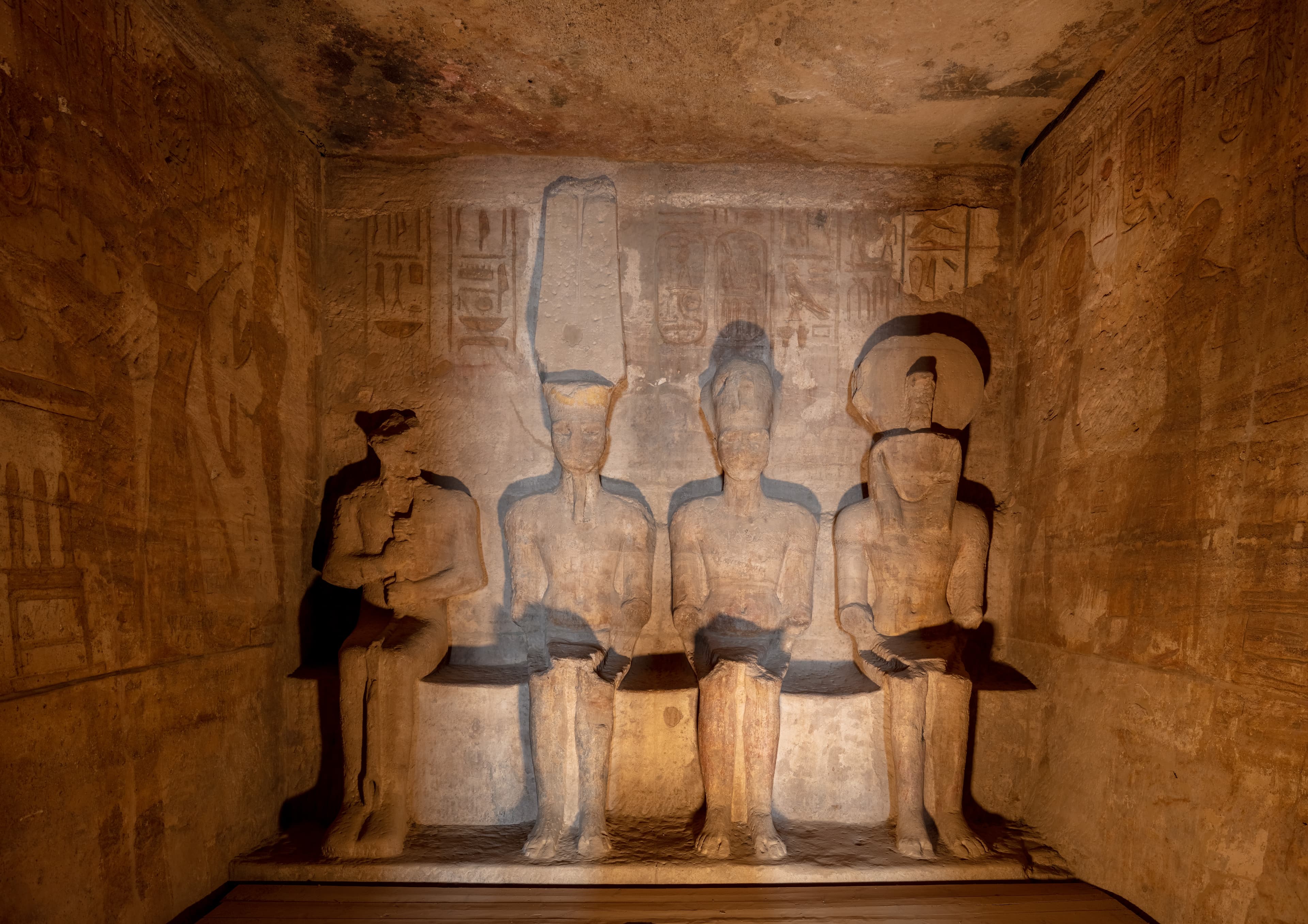
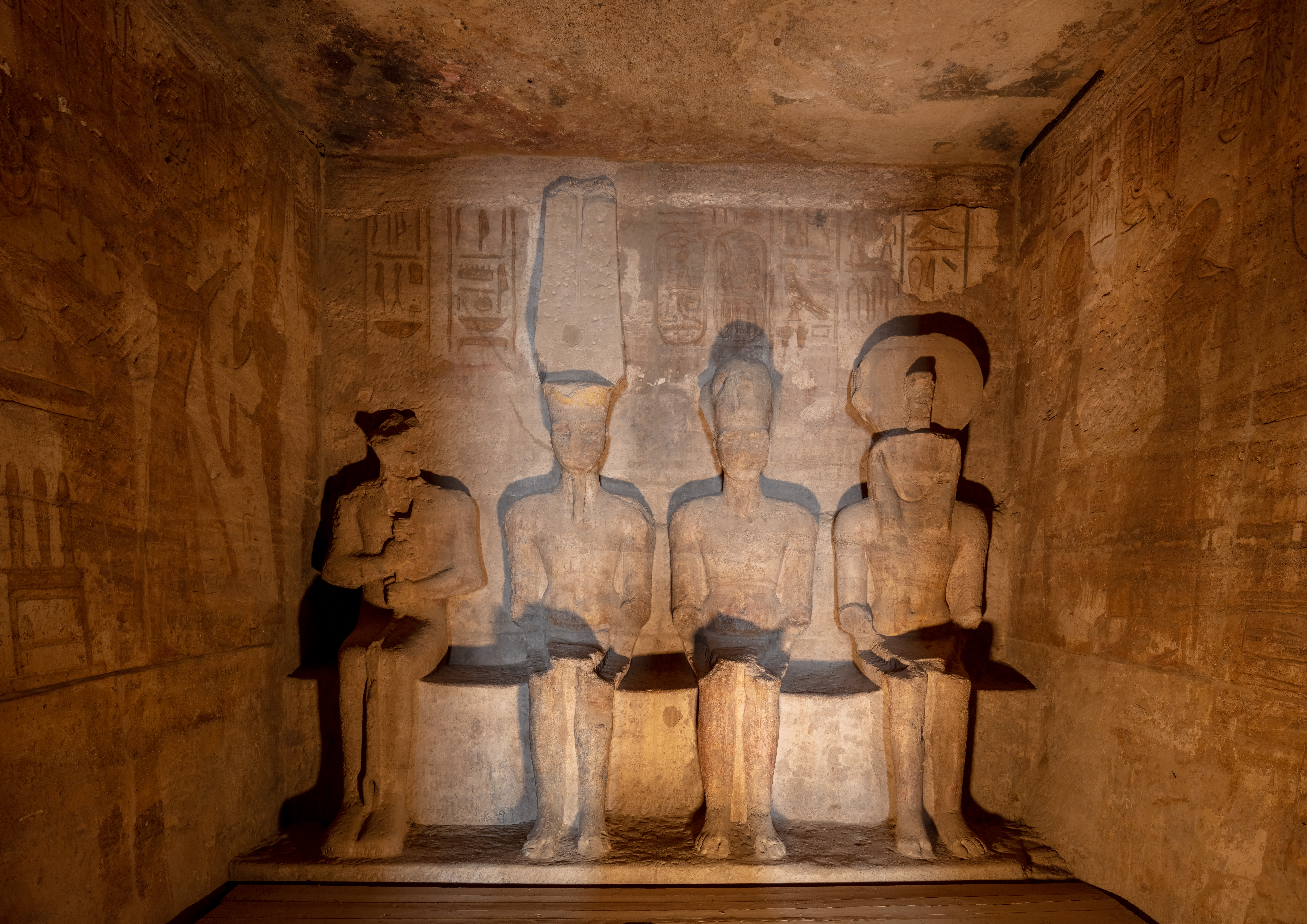
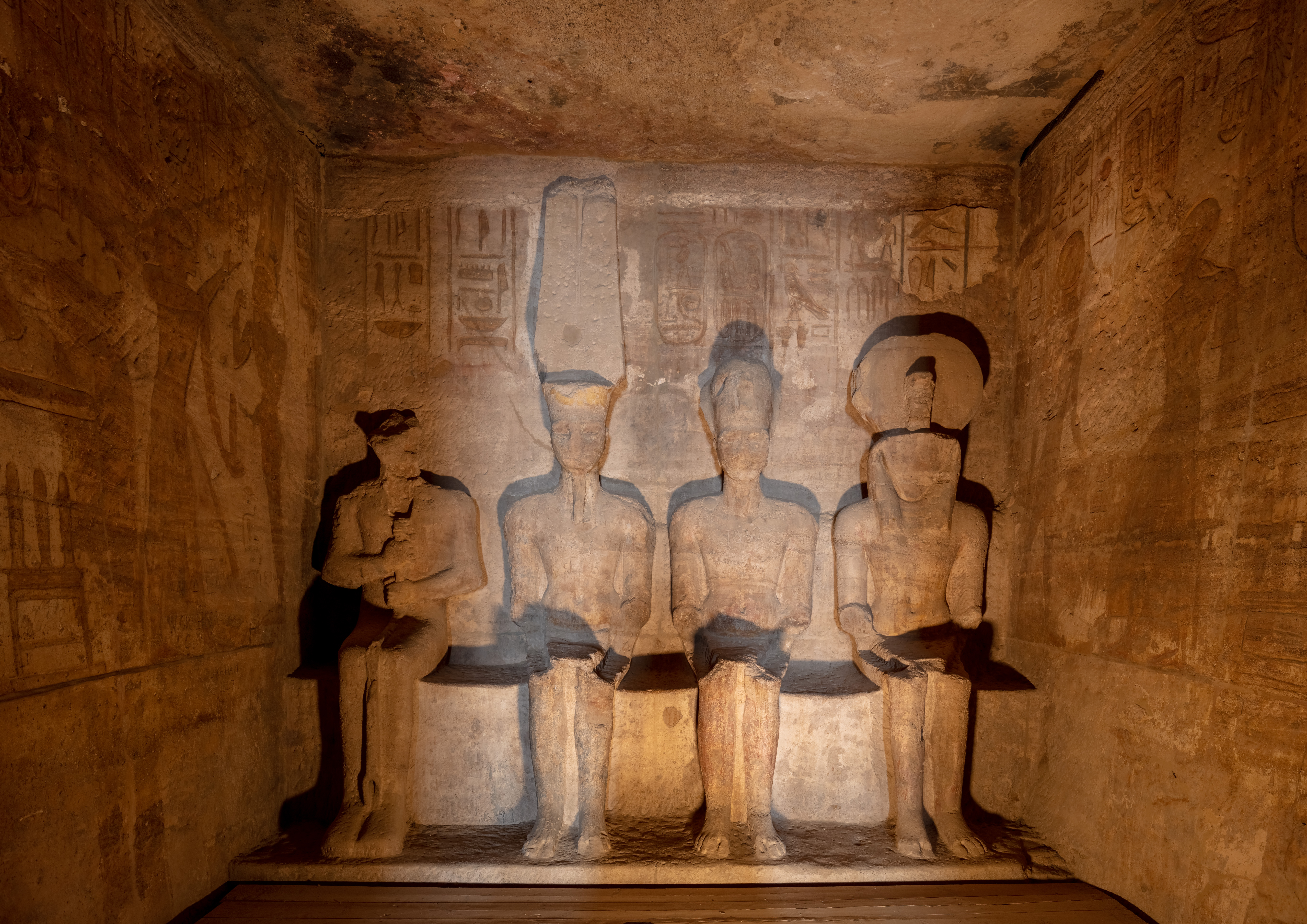
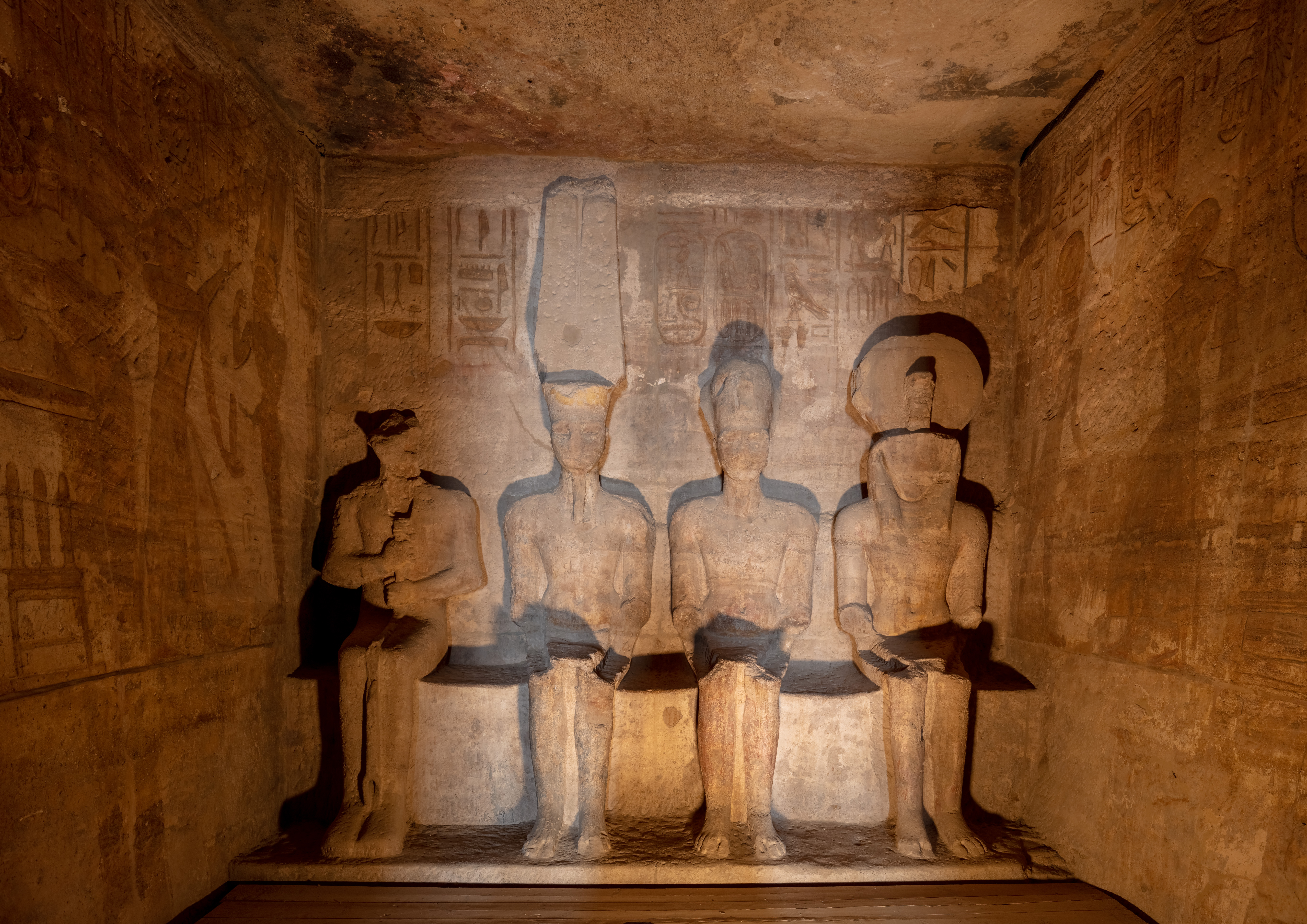
Step inside, and the temple plunges 63 meters into the cliff. The first space, the hypostyle hall, is dramatic: eight ten-meter-tall Osiride pillars, basically statues of Ramesses looking like Osiris. The walls? They're a canvas of vivid relief carvings, detailing Ramesses II's military triumphs, especially his (somewhat glorified) account of the Battle of Kadesh against the Hittites in 1274 BC. These Kadesh scenes are pure ancient propaganda – Ramesses, leading his chariot, enemies falling before him. While history suggests the battle was more of a draw, these reliefs paint him as the ultimate warrior. Beyond Kadesh, you'll see scenes of campaigns against Libyans, Syrians, and Nubians, all reinforcing Egypt's dominance. The artistry here is truly top-notch, full of movement and emotion. Go deeper, past a smaller, four-pillared hall depicting Ramesses and Nefertari making offerings, and you reach the sanctuary. Here, four seated statues carved from the living rock await: Re-Horakhty, Amun-Re, the deified Ramesses II, and Ptah, the god of craftsmen. This is the heart of the temple, and the focus of its most famous phenomenon.The Solar Alignment: An Astronomical Marvel
This temple wasn't just aligned to the East by chance. It was designed with incredible astronomical precision, so that on two specific dates each year, the sun's rays would penetrate all 63 meters of the temple and illuminate the sanctuary statues. Imagine the calculations! Even tiny errors would have thrown it all off. These dates originally marked significant events for Ramesses, likely his birthday and his coronation day. When UNESCO moved the temple, they managed to keep this alignment almost perfectly, shifting the dates by just one day to October 22nd and February 22nd. It's a huge achievement. During this 'Sun Festival,' the sun illuminates Re-Horakhty, then Amun-Re, then Ramesses himself. Ptah, being associated with the underworld, stays in shadow – a nice symbolic touch. The whole spectacle lasts about twenty minutes before the sun moves on.
The Small Temple of Nefertari: A Queen's Lasting Love
Want to explore Abu Simbel Temples: A Journey to Ramesses' Grand Legacy?
Let us design the perfect private itinerary for you. From expert local guides to seamless luxury cruises, we craft custom trips that show you the real Egypt.
Customize via WhatsAppHonoring a Queen
Just about 140 meters north of Ramesses' monument, you'll find the smaller temple, dedicated to his beloved Great Royal Wife, Queen Nefertari, and the goddess Hathor. Now, it might be 'smaller,' but it's still significant. It's truly rare for an Egyptian pharaoh to dedicate an entire temple to his queen. Nefertari, whose name means 'Beautiful Companion,' was clearly special. She features prominently in Ramesses' early reign, and her magnificent tomb (QV66 in the Valley of the Queens) is considered one of Egypt's most beautiful. This temple, along with her tomb, really speaks to Ramesses' devotion.Elegance in Stone: Architecture and Decoration
The Small Temple's facade features six colossal standing statues, each about 10 meters (33 feet) tall. What's striking is that four are of Ramesses II, but *two* are of Nefertari. Her statues are only slightly smaller, reflecting her incredibly high status and his affection. She's depicted wearing Hathor's headdress, identifying her with the goddess. Look closely, and you'll see smaller figures of their royal children between these giants. Inside, though less complex than the Great Temple, it's beautifully done. The hypostyle hall boasts six Hathor-headed columns, and the ceiling is a starry, vulture-decorated masterpiece. Reliefs show Ramesses and Nefertari offering to gods, and even Ramesses in battle. The sanctuary holds a statue of a sacred Hathor cow sheltering a figure of Ramesses, symbolizing divine protection. It's all about celebrating Nefertari's divine connection and her bond with Hathor, the goddess of love and beauty.
The UNESCO Rescue: A Modern Engineering Miracle
The Looming Threat
Fast forward to the 1960s. Egypt was building the Aswan High Dam, a massive project designed to control the Nile and generate electricity. But there was a huge problem: the dam would create Lake Nasser, a colossal artificial lake that would completely submerge Abu Simbel and countless other ancient Nubian monuments hundreds of feet underwater. It was a cultural catastrophe in the making. The global archaeological community was aghast. UNESCO stepped up, launching an unprecedented international campaign to save these treasures. Abu Simbel, with its unique grandeur and the sheer technical challenge, became the icon of this mission.The Impossible Move: How They Did It
Between 1964 and 1968, engineers and archaeologists pulled off what many thought was impossible. The plan? Chop both temples into manageable blocks and reassemble them on artificial hills, 65 meters higher and 200 meters away from their original spot, safely above the future waterline. Think about the precision: workers had to delicately cut the temples into 1,036 blocks, some weighing 30 tons, using hand saws to avoid vibrations. Each block was carefully numbered and documented. Then, massive reinforced concrete domes were built to house the reassembled temples, designed to mimic the original cliff from the outside. Piece by piece, like a giant, ancient puzzle, the temples were put back together. The joins were meticulously filled, and the artificial hills shaped to look as natural as possible. This project cost around $40 million (which sounds like a bargain today, honestly, equivalent to about $300 million in 2024 dollars) and was funded by international donations. Fifty countries contributed, making it a true global effort to save human heritage. The result? A spectacular success. The reassembled temples stand today, looking virtually identical to their original state. It's simply staggering.The Sun Festival: A Witness to Ancient Wonder
So, twice a year, on October 22nd and February 22nd, thousands of people gather at Abu Simbel before dawn. The Egyptian government even throws a party around it, with Nubian music, dancing, and food. The anticipation is palpable. As the sun peeks over the horizon, its first golden rays hit the facade, making those colossal statues glow. Then, gradually, the light pierces the temple, creeping through the halls until it reaches the sanctuary. If you're lucky enough to be inside, you'll see the light illuminate Re-Horakhty, then Amun-Re, and finally Ramesses himself, leaving Ptah in shadow. It's a profound, almost spiritual experience that lasts about twenty minutes before the sun shifts. Then, the celebrations continue, a mix of ancient wonder and modern festivity.
Visiting Abu Simbel: My Insider Tips
Getting There From Aswan: Your Options Are...
Most people visit Abu Simbel as a day trip from Aswan. Your choices: * **Flights:** Quickest and most comfortable. A short 30-40 minute hop from Aswan. If you don't mind the added expense, this is the way to go. * **Bus Tours:** The most common and budget-friendly option. Buses usually leave Aswan around 4:00 AM, traveling in convoys for safety. It's a 3-4 hour desert drive each way, so be prepared for an early start and a good nap on the return. * **Lake Nasser Cruises:** A more leisurely, multi-day experience, stopping at various temples along the way before reaching Abu Simbel. This is for those who aren't rushing and want to soak in the Nubian landscape. * **Private Car/Taxi:** Possible, but you'll still need to adhere to the convoy regulations for security.Timing is Everything: When to Go & How Long to Stay
**Best Time:** October to March offers the most pleasant weather, with temperatures ranging from a comfortable 15-25°C. Avoid April to September if you can, as it gets brutally hot (35-45°C), though you'll find fewer tourists and potentially better prices. The morning light is absolutely magical for photographing the temple facade. **Sun Festival:** If you plan for October 22nd or February 22nd, be aware that it's insanely crowded. Book *everything* way in advance – flights, hotels, tours. It's a unique experience, but not for the faint of heart. **How Long?** I'd say allow 2-3 hours minimum to really explore both temples, get your photos, wander through the interiors, pop into the small museum, and take a stroll along Lake Nasser. Day trips from Aswan usually give you about 1.5-2 hours on site, which feels a bit rushed, to be honest. If your budget and schedule allow, staying overnight in Abu Simbel village is pure magic. You get to see the temples at sunset and sunrise when the light is simply phenomenal, and the crowds are minimal. Plus, there's a Sound and Light Show most evenings.Don't Forget Your Essentials!
Since you'll be out in the desert, even if it's 'winter,' the sun is intense. Here's my checklist: * **Sun Protection:** A wide-brimmed hat, strong sunscreen, and good sunglasses are non-negotiable. * **Water:** At least 1-2 liters. Dehydration is no fun in Egypt. * **Walking Shoes:** Comfortable ones. You'll be doing a fair amount of walking. * **Clothing:** Light, breathable fabrics. Dress respectfully (shoulders and knees covered). * **Camera:** With extra batteries! You'll be snapping a lot of photos. * **Egyptian Pounds:** For any small purchases or tips. * **Warm Layer:** If you're doing an early morning bus or flight, it can be surprisingly chilly before the sun fully rises.Ready to turn this guide into reality?
Our local experts can create a custom itinerary based on these recommendations. Just send us a quick message!
Customize via WhatsApp