
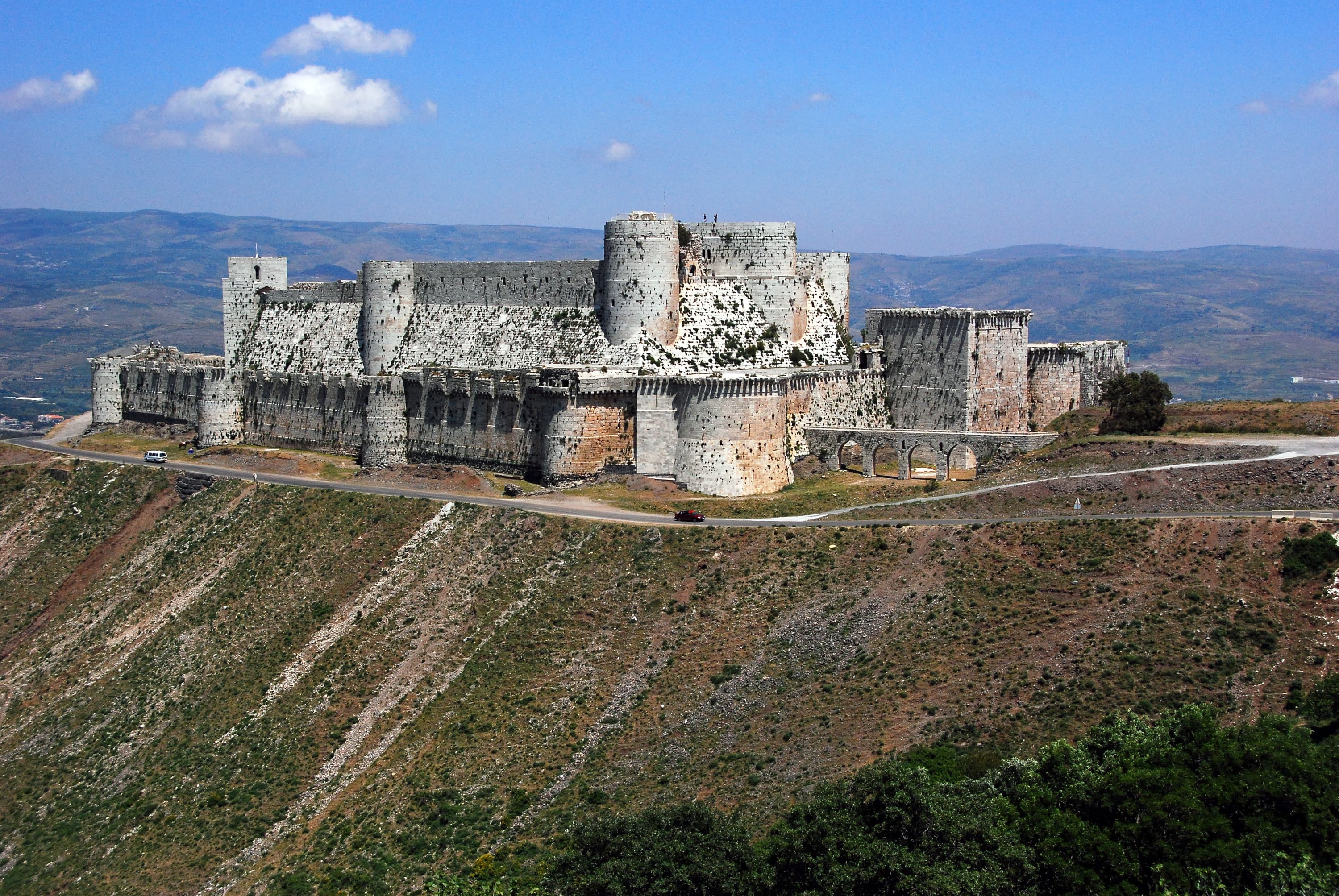

Perched high on the Mokattam Hills, a truly massive medieval fortress crowns Cairo's skyline. Its towering minarets pierce the sky, and its ancient walls have silently witnessed over eight centuries of Egyptian history. Welcome to the Citadel of Salah El-Din—one of Cairo's most impressive, and frankly, essential, stops. It's more than just a fortress; it's a sprawling complex that traces the country's story from Crusader-battling Muslim warriors to Ottoman pashas and into modern Egypt. Within these formidable walls, you'll uncover mosques that rival any in the Islamic world, museums detailing Egypt's military journey, and panoramic views that stretch across the sprawling metropolis below. This place isn't just about stone and mortar; it's where sultans ruled Egypt for 700 years, where Salah El-Din devised the strategies that vanquished Crusader armies, and where Muhammad Ali laid the groundwork for a modern Egyptian state. History doesn't just sit here—it absolutely towers above you, etched in stone, marble, and Ottoman grandeur.
The Legendary Builder: Salah El-Din Al-Ayyubi
Who Was Saladin?
His full name was Al-Nasir Salah al-Din Yusuf ibn Ayyub—a mouthful that translates to 'Righteousness of the Faith, Joseph son of Job.' Born around 1137 or 1138 AD in Tikrit, Iraq, he's most famous for a truly remarkable feat: defeating Crusader armies and recapturing Jerusalem in 1187 AD. The name 'Saladin,' by the way, is just the Latinized version of 'Salah El-Din.' What's fascinating is that even his European Crusader adversaries held him in such high regard that his name made its way into their languages—quite unusual for an enemy commander! Unlike many military leaders, Salah El-Din earned respect from all sides. He managed to unite fractured Muslim territories, famously crushed Crusader forces at the Battle of Hattin, and reclaimed Jerusalem after 88 long years of Crusader rule. His chivalrous conduct—treating defeated enemies with honor, showing mercy, and protecting civilians—even earned praise from medieval European writers. It's truly a testament to his character.Building the Citadel: A Stroke of Strategic Genius
Salah El-Din ordered the construction of Cairo's Citadel in 1176 AD. He'd seen Cairo's vulnerability and wanted a solid defensive position that could control the city, protect it from future Crusader attacks, serve as a royal residence set apart from the urban bustle, and stand as a powerful symbol of Islamic might. The Mokattam Hills offered the perfect spot: it's the highest point in Cairo, giving clear views in every direction, making it incredibly difficult for enemies to assault, and allowing it to command the capital below. Here's the twist though: Salah El-Din never actually lived in his citadel! Construction wasn't completed until 1182, by which time he'd already left Cairo to campaign in Syria. He died in 1193 AD in Damascus, never setting foot in Egypt again. Yet, his Citadel went on to be the seat of Egyptian power for over 700 years—an absolutely incredible legacy.
The Citadel Through History
Seven Centuries of Power
This Citadel served as the epicenter of Egyptian power through multiple dynasties. Salah El-Din's own descendants, the Ayyubids (1171-1250 AD), ruled from here. Then came the Mamluks (former slave soldiers who seized power), making it their headquarters from 1250-1517 AD; they added palaces, mosques (like the Al-Nasir Muhammad Mosque), and beefed up the fortifications. The Ottomans kept it as their seat of government from 1517-1914 AD, even adding the Suleyman Pasha Mosque—which was Egypt's very first Ottoman-style mosque. This place has seen *everything*.Want to explore Salah El Din Citadel in Cairo: A Journey Through Time?
Let us design the perfect private itinerary for you. From expert local guides to seamless luxury cruises, we craft custom trips that show you the real Egypt.
Customize via WhatsAppThe Muhammad Ali Era
Muhammad Ali completely transformed the Citadel between 1805 and 1849 AD. He's responsible for that magnificent Alabaster Mosque, establishing modern military training facilities, and building several palaces. But his reign also saw a truly dark chapter: the infamous Mamluk massacre of 1811. He invited roughly 470 Mamluk leaders to celebrate his son's military departure, then ambushed and slaughtered them in the Citadel's narrow passageways. It was a brutal move, but it eliminated his chief rivals and cemented his absolute control.Modern Transformation
By the 1860s, Khedive Ismail had moved the government seat to Abdeen Palace. From then on, the Citadel transitioned from a busy power center to the historic monument and museum complex we know today.
The Muhammad Ali Mosque: An Architectural Masterpiece
The Alabaster Mosque
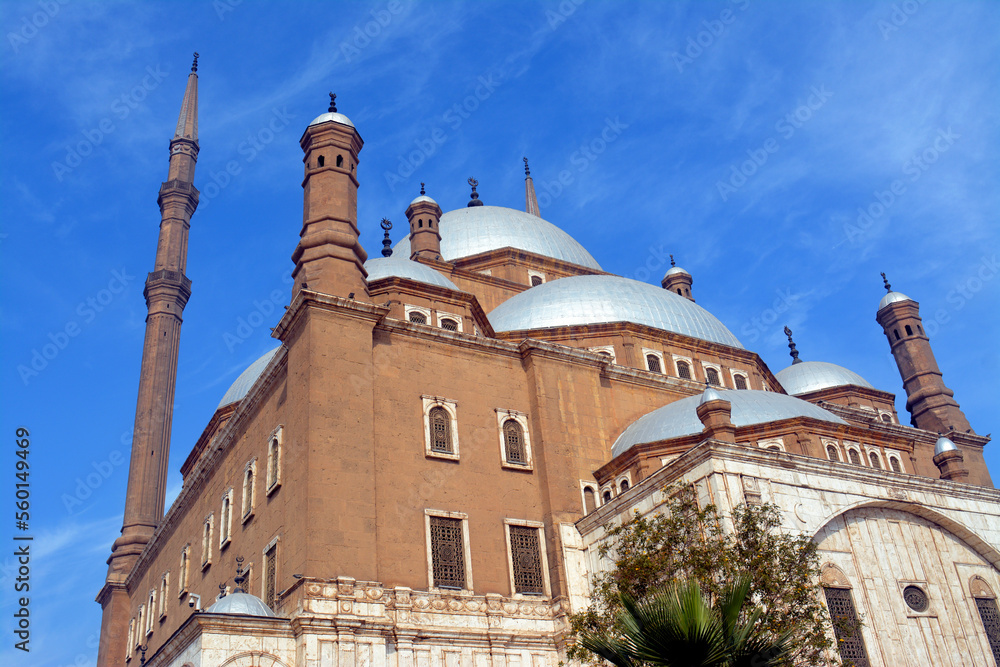
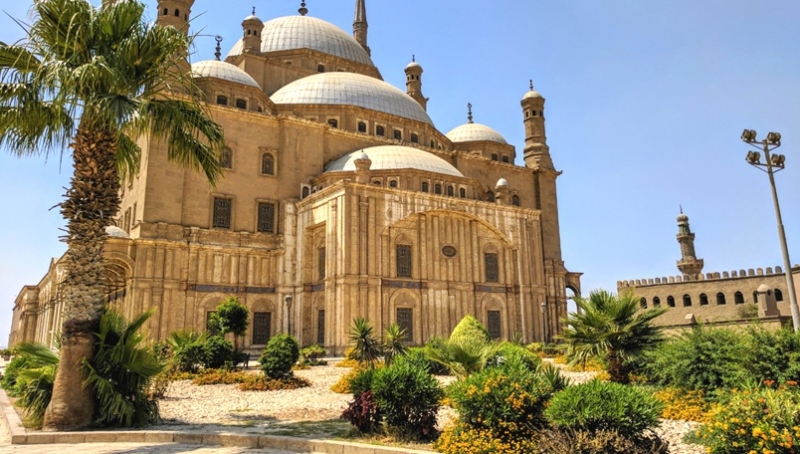
Officially named the Mosque of Muhammad Ali, it's easily the most dominant structure within the Citadel, with its gleaming alabaster marble covering both interior and exterior. Built over 18 years between 1830 and 1848 AD, it was designed by architect Yousif Boushnaq from Istanbul, in a deliberate Ottoman Turkish style—modeled after Istanbul's iconic Blue Mosque. This wasn't just aesthetics; it sent a powerful message: Muhammad Ali saw himself as an equal to the Ottoman sultans, despite technically being their subordinate.Want to explore Salah El Din Citadel in Cairo: A Journey Through Time?
Let us design the perfect private itinerary for you. From expert local guides to seamless luxury cruises, we craft custom trips that show you the real Egypt.
Customize via WhatsAppArchitectural Magnificence
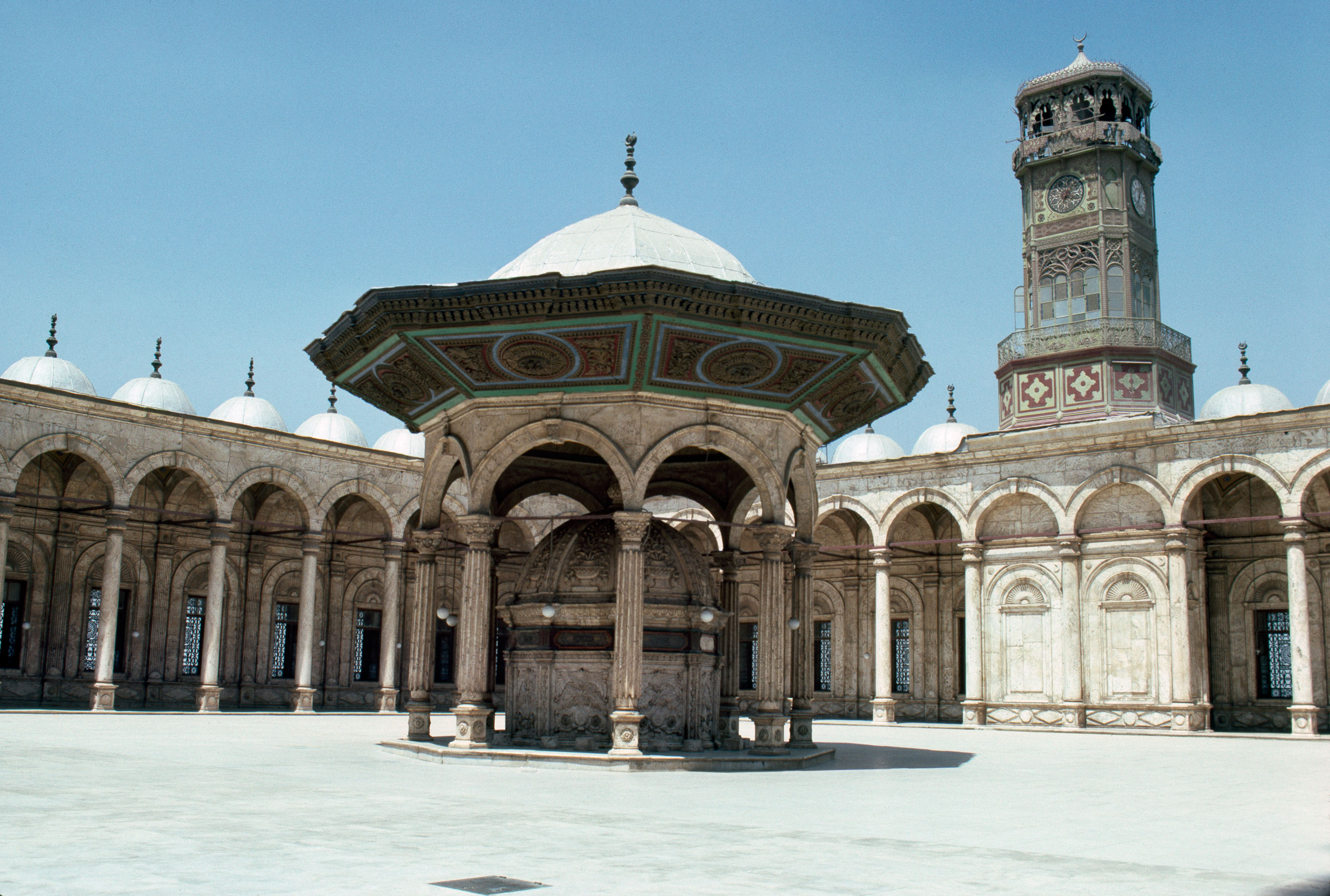
The mosque features a grand central dome, cradled by four semi-domes, with four smaller domes in the corners, creating an absolutely massive interior space. Its twin minarets reach an astounding 84 meters tall—making them the highest in all of Egypt! Their slender, pencil-like Ottoman style stands in stark contrast to the chunkier Mamluk minarets and is visible from across Cairo. The large courtyard, spanning 177 x 173 feet, boasts elegant arched galleries, a central ablution fountain, and an Ottoman clock tower. That clock tower was a gift from France in 1845, reciprocating Muhammad Ali's gift of the Luxor Obelisk. Fun fact: the clock broke immediately and didn't tick for 175 years until it was finally repaired in 2020!Interior Splendor
Stepping inside the prayer hall truly feels like entering a palace. The enormous space with its soaring ceilings showcases alabaster marble everywhere, creating an almost luminous glow. Ornate chandeliers (initially oil lamps, now electric), rich carpets, gilded decorations, Arabic calligraphy, and stained glass windows filtering colored light all combine to create an overwhelming sensory experience. The mihrab—that elaborately decorated prayer niche pointing towards Mecca—is covered in gold and intricate designs. And nestled in the southeast corner, within a brass-railed enclosure, is Muhammad Ali's tomb, an ornate marble tribute to Egypt's great modernizer. The sheer scale of this mosque is breathtaking. The alabaster walls seem to glow, and the domes create remarkable acoustic effects where even whispers carry across the vast space. This isn't just architecture; it's a profound experience.Other Citadel Highlights
Al-Nasir Muhammad Mosque
Built between 1318 and 1335 AD during the Mamluk period, this mosque is about 500 years older than Muhammad Ali's and offers a beautiful glimpse into authentic medieval Islamic architecture. It features a striking dome with green tiles, an ornate minbar (pulpit), and marble columns cleverly recycled from ancient pharaonic temples! Its peaceful courtyard with a central fountain attracts far fewer crowds than the Muhammad Ali Mosque, making it a perfect spot for quiet contemplation. This mosque served as the Citadel's main one for centuries before it was overshadowed.Suleyman Pasha Mosque
Constructed in 1528 AD, this mosque holds the distinction of being Egypt's very first Ottoman-style mosque. It showcases classic Ottoman design, complete with beautiful Iznik tiles, an elegant minaret, and a surprisingly peaceful garden setting. Just a heads up: it's sometimes closed for restoration, so if it's a must-see for you, double-check beforehand.The Museums
Military Museum
The Military Museum is packed with weaponry from various Egyptian periods, uniforms, equipment, historical battle dioramas, and military vehicles—all celebrating Egypt's storied military history. From ancient arms to medieval armor, modern equipment, and even presidential gifts, it offers a comprehensive overview of Egypt's military evolution.Carriage Museum
The Carriage Museum displays incredibly ornate ceremonial carriages from the Muhammad Ali dynasty (19th-20th centuries). It offers a fascinating peek into the royal family's lifestyle and showcases some truly beautiful craftsmanship.Police Museum
The Police Museum chronicles the history of Egyptian law enforcement and holds artifacts related to historical crimes and assassinations in Egyptian history. It's a niche interest, but for some, quite compelling.
The View: Cairo at Your Feet
Why the View Matters
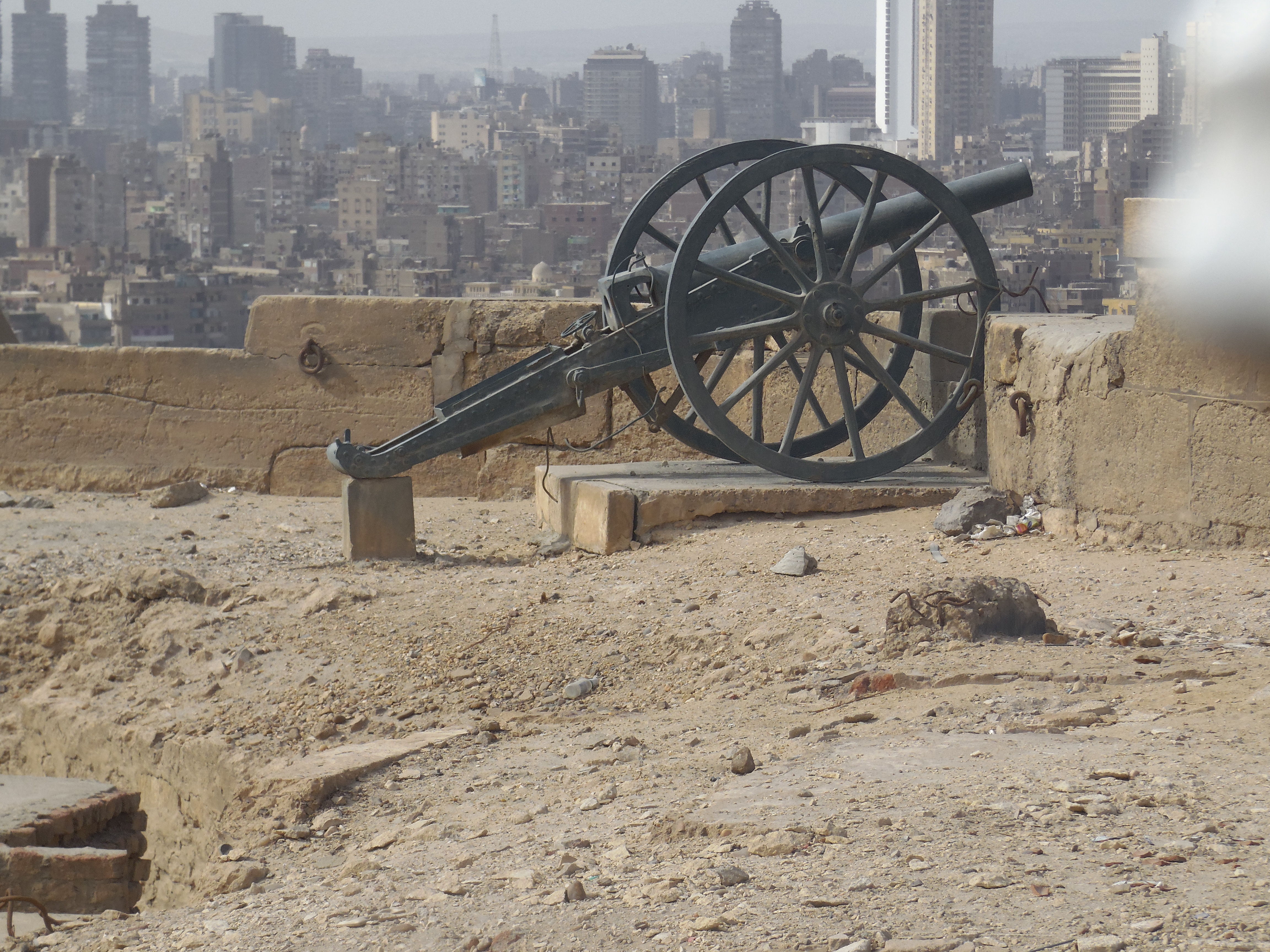
The Citadel's greatest free attraction is undeniably the panoramic view! From its elevated position, Cairo sprawls out below in every direction. To the west, on a clear day, you can actually see the Pyramids of Giza, with modern Cairo stretching towards them and the Nile River snaking its way through the city. To the north, you'll spot the minarets of Islamic Cairo and downtown buildings. Eastward, the Mokattam Hills rise, with eastern Cairo neighborhoods fading into the desert beyond. And to the south, the Old Cairo area offers a striking contrast of old and new.Best Viewing Tips
The absolute best views are typically found from the Muhammad Ali Mosque courtyard. There are also several other viewing platforms around the Citadel that offer different perspectives. Clear days are crucial if you're hoping to spot the Pyramids, and sunset always paints a dramatic scene. Mornings usually offer clearer views before pollution and heat haze build up, while late afternoons provide that beautiful golden light perfect for photography.Visiting the Citadel: A Practical Guide
Getting There
The Citadel is perched on the Mokattam Hills in southeastern Cairo and is easily spotted from across the city. A taxi or Uber is the most convenient way to get there—just tell the driver 'Qala'at Salah El-Din' or simply 'Citadel.' It's about a 15-minute ride from Tahrir Square, 10 minutes from Islamic Cairo, 15 minutes from Old Cairo, and 30-40 minutes from Giza. Many Cairo tours include the Citadel, often combining it with the Egyptian Museum and/or the Giza Pyramids.Entry and Tickets
Entrance fees are currently 220 EGP for foreigners (this often includes the Ar-Rifa'i Mosque if purchased as a combined ticket) and 110 EGP for students with a valid ID. This gets you access to the entire Citadel complex, both major mosques, all the museums, gardens, and fantastic viewing areas. Opening hours are generally daily from 8:00 AM - 5:00 PM in winter or 8:00 AM - 6:00 PM in summer, but always confirm as they can vary. Keep in mind that mosques might close during prayer times, and Friday midday is especially busy with worshippers.How Long to Spend
Most visitors find 2-3 hours sufficient for a really satisfying experience. If you're on a tight schedule, a quick visit (Muhammad Ali Mosque plus the view) takes about 1.5-2 hours. A standard visit, including both mosques and a brief museum stop, usually takes 2.5-3 hours. For a comprehensive exploration, hitting all the mosques, museums, gardens, and taking a leisurely pace, allow 4-5 hours.What to Bring
Definitely bring water (you can buy it inside, but having your own is smart), sunscreen and a hat (you'll be exposed to the sun), comfortable walking shoes, and, of course, your camera for those spectacular views. Dress modestly, covering your shoulders and knees. Women will need a headscarf for the mosques (they're usually provided at the entrance). Remember to remove your shoes before entering mosque prayer areas. Optional items include a guidebook, snacks (food options inside are limited), binoculars for closer views of Cairo's details, and an extra camera battery or memory card.Engaging with the Citadel
Historical Imagination
As you wander, try to ignite your historical imagination. Picture Mamluk soldiers training in the courtyards, sultans receiving ambassadors, and horses clattering on the ancient stones. From the walls, imagine sentries scanning for approaching armies and defenders preparing for a siege. Inside the Muhammad Ali Mosque, envision the aging pasha praying within his magnificent creation, aware that his time was drawing to a close. And on that viewing platform, picture Salah El-Din standing there 850 years ago, surveying a Cairo that was vastly, utterly different.Questions to Ponder
Let a few thought-provoking questions stir your mind: Why did defensive fortresses always favor high ground? How did the Citadel's commanding position shape Cairo's development over centuries? Why did Muhammad Ali choose an Ottoman style instead of local Egyptian architecture, and what message was he sending? How did a single fortress manage to remain the seat of power for 700 years under multiple, differing dynasties? Are there modern-day equivalents to these medieval citadels? What truly makes a place a 'power center' in our world today?Photography Challenges
For my fellow photographers, look to capture the silhouettes of minarets against the sky, the intricate alabaster patterns catching the sunlight, the breathtaking dome interiors looking straight up, and the exquisite calligraphy and decorative elements. Experiment with panoramic views of the Cairo skyline, try to catch the Pyramids in the distance on those clear days, frame the sunset over the city, and if possible, capture the night lights if it's open late. Don't forget to include people for scale—visitors dwarfed by massive columns, lines of shoes outside a mosque, worshippers at prayer, or candid moments in the courtyards. Wide-angle lenses generally work best for interiors and those sweeping panoramas. Morning and late afternoon light are a photographer's dream, enhancing colors and textures. Overcast days, surprisingly, can reduce harsh shadows. Focus on the details, not just the wide shots. Including people adds a vital sense of scale to the monumental architecture, making your photos more dynamic and engaging.Combining the Citadel with Other Sites
Classic Cairo Day Tour
If you're doing the classic Cairo day tour, you'll typically start with the Egyptian Museum in the morning (allow 2-3 hours), enjoy lunch at a downtown restaurant, then head to the Citadel in the afternoon (another 2-3 hours), perhaps adding the nearby Sultan Hassan Mosque, and finishing with an evening of shopping and dinner at Khan el-Khalili. It's a packed, but rewarding, day.Islamic Cairo Focus
For those who want to really dive into Islamic Cairo, consider visiting Al-Azhar Mosque and Al-Muizz Street in the morning, enjoying lunch within Islamic Cairo, then dedicating your afternoon to the Citadel, Sultan Hassan Mosque, and perhaps the Ibn Tulun Mosque. It's a truly immersive experience.The Mosque Trail
For mosque enthusiasts, follow a chronological trail through Cairo's most important mosques: start with Amr ibn al-As (641 AD), Egypt's very first mosque; then Ibn Tulun (872 AD), the oldest surviving in Cairo; move to Al-Azhar (970 AD), the incredibly prestigious university-mosque; then Al-Nasir Muhammad (1335 AD), the Mamluk masterpiece within the Citadel; next, Sultan Hassan (1363 AD), the largest and most impressive Mamluk mosque; and finally, Muhammad Ali (1848 AD), for that grand Ottoman feel within the Citadel.
The Neighborhood: Salah El-Din Square
Sultan Hassan Mosque
Directly across from the Citadel stands the magnificent Sultan Hassan Mosque-Madrasa, showcasing what many consider the finest Mamluk architecture in Cairo. Its sheer scale rivals the Citadel itself. Combined tickets are often available, and it's just a quick five-minute walk from the Citadel entrance.Ar-Rifa'i Mosque
Right next to Sultan Hassan Mosque, this 19th-century Neo-Mamluk mosque is the final resting place for Egyptian royalty, including King Farouk (Egypt's last king) and Mohammad Reza Pahlavi (the last Shah of Iran). Built between 1869 and 1912 to beautifully complement Sultan Hassan's medieval architecture, its entry is often included with your Citadel ticket.The Square
Midan Salah El-Din (formerly Rumayla Square) really comes alive with a medieval atmosphere, especially in the evening. You'll find local restaurants and cafés, street vendors, and endless photo opportunities with both mosques and the Citadel visible all at once.Tips from Experienced Visitors
Do
Do make the Muhammad Ali Mosque your first stop, it truly is the most impressive. Do take your time at the viewing areas to really soak in that incredible Cairo panorama. Do venture into the Al-Nasir Muhammad Mosque—it's often overlooked but beautifully peaceful. Do bring plenty of water; you'll absolutely need it. Do allow extra time for photos, because this place is incredibly photogenic. And do explore the quieter gardens and areas beyond the main attractions; you might find some hidden gems.Don't
Don't just visit the Muhammad Ali Mosque and leave—you'll miss out on so much history and beauty! Don't plan your visit during Friday midday prayers, as it gets incredibly crowded. Don't forget sun protection; you'll be exposed to the elements. Don't wear inappropriate clothing, or you'll be denied entry to the mosques. Don't rush through; this place truly deserves your time. And whatever you do, don't skip the view—it’s absolutely spectacular!Photography Tips
Always use a wide-angle lens for interiors and those expansive panoramas. The golden hours (morning and late afternoon) offer the best light. Overcast days can actually be a blessing, reducing harsh shadows. Look for the fine details, not just wide shots, to tell a richer story. And remember, including people adds a crucial sense of scale to the massive architecture, making your photos far more dynamic and interesting.Ready to turn this guide into reality?
Our local experts can create a custom itinerary based on these recommendations. Just send us a quick message!
Customize via WhatsApp