

So, here's the exciting news: Alexandria's venerable Greco-Roman Museum finally threw open its doors again in October 2023, after a whopping 18-year renovation. Egyptian Prime Minister Mostafa Madbouly even attended the ceremony – it was a big deal! This grand old institution, originally opened way back on October 17, 1892, is now 131 years old and absolutely brimming with over 40,000 artifacts. These treasures span a massive timeline, from 630 BC right up through the 19th-century Ottoman period.
What makes this place special is how beautifully it captures Alexandria's unique blend of Greek, Roman, and Egyptian cultures. You'll find everything from intricate sculptures and stunning mosaics to ancient woodwork and rare coins. Keep an eye out for the alabaster 'Good Shepherd' in Room 1 and the iconic Apis Bull in Room 6 – they're real showstoppers. Just a heads-up for your visit: starting January 2025, they're only accepting credit card payments for tickets.
The Origins of the Greco-Roman Museum
The Greco-Roman Museum isn't just an old building; it's a testament to Alexandria's determination to preserve its incredible heritage. Its story starts small, from a time when preserving ancient artifacts wasn't quite the organized endeavor it is today, and grew into one of Egypt's most cherished archeological collections.From Rosetta Street to Horriya Avenue
Believe it or not, this grand museum began its life in 1892 in a modest five-room apartment on Rosetta Street – which we now know as Horriya Avenue. But hey, a growing collection of ancient treasures needs more than a cozy apartment, right? So, by 1895, it had already moved to a larger, purpose-built structure not far from today's Gamal Abdul Nasser Street. This wasn't just a change of address; it marked a significant moment: this new building was actually Egypt's first structure specifically designed and built to house and protect antiquities.The Vision of Giuseppe Botti
Every great institution has its visionary, and for the Greco-Roman Museum, that was Giuseppe Botti. This Italian scholar, born in Modena in 1853, specialized in ancient Egyptian civilization and taught at various Italian schools before making his way to Alexandria in 1889. His passion for archeology and preservation sparked a brilliant idea. In 1891, Botti championed the creation of a dedicated space for Alexandria's archeological finds. He saw too many invaluable artifacts being shipped off to the Boulaq Museum in Cairo, rather than remaining in the city where they were discovered. His unwavering dedication paid off, and when the museum officially opened in 1892, he was its first director. Talk about seeing a dream come to life!Inauguration by Khedive Abbas II
The museum took yet another monumental step when Nubar Pasha initiated the construction of an impressive neoclassical building. Architects Dietrich and Stenon were behind its design, and it's quite remarkable that the entire project was completed in just one year. Khedive Abbas Helmy II formally opened the Greco-Roman Museum on September 26, 1895. This grand inauguration solidified Botti's dream and showcased Egypt's commitment to protecting its diverse cultural heritage. The museum swiftly became the primary home for artifacts Unearthed across Alexandria, each treasure illuminating the city's fascinating past.
Architectural and Historical Significance
Visiting the Greco-Roman Museum means experiencing both its remarkable collection and its sheer architectural beauty. This isn't just a place to see artifacts; the building itself is a magnificent testament to Alexandria's rich past, its design gracefully blending aesthetic appeal with profound historical significance.Want to explore The Greco-Roman Museum: A Guide to Alexandria's Revived Treasure?
Let us design the perfect private itinerary for you. From expert local guides to seamless luxury cruises, we craft custom trips that show you the real Egypt.
Customize via WhatsAppNeoclassical Design and Symbolism
Just look at that facade! Six stately columns supporting an impressive pediment greet you – it's a classic neoclassical masterpiece from German architect Dietrich and Dutch architect Stenon, completed in 1894. Nubar Pasha really pushed this project, leading to its swift completion in just a year. While it's stood for over a century, the building has seen several updates to preserve its historical value while adapting to modern needs. The biggest renovation kicked off in 2005, paused briefly in 2011 due to funding (as these things sometimes do!), and then happily resumed in 2018. This painstaking restoration didn't just refresh paint; it strengthened ancient walls with iron structures, revived the classic facade, and brought in modern lighting and security to safeguard the precious artifacts and enhance the visitor experience.The Meaning Behind 'MOUSEION'
The ancient Greek inscription 'MOYΣEION' (MOUSEION) proudly carved into the building's facade isn't just a fancy word. It literally means 'place of the Muses,' and it's where our modern word 'museum' comes from. In ancient Hellenistic society, a mouseion was far more than a building; it was a vibrant center for scholarly work and intellectual discussion. The original Mouseion of Alexandria, part of the complex that housed the legendary Library of Alexandria, was a true hub of knowledge and creativity. So, that inscription on the facade? It's a direct, powerful link between this modern institution and Alexandria's incredible legacy as an ancient world center of learning and culture.Expansion to 27 Halls and Garden
From its modest beginnings, the Greco-Roman Museum has grown quite a bit. It started with 11 halls, but through decades of development and especially a major upgrade in 1984, it expanded to its current impressive size of 27 halls, complete with an attractive garden. Today, the ground-floor exhibition spaces are arranged chronologically, showcasing artifacts from the 5th century BC all the way through the Byzantine era (6th century AD). Upstairs on the mezzanine, you'll find four specialized halls dedicated to education, archives, gypsoteca (plaster cast collections), and study. Collectively, the museum's 6,000 artifacts on display tell a powerful story of the intellectual and artistic connections between ancient Egyptian, Greek, Roman, Coptic, and Byzantine civilizations.
Inside the Museum: Room-by-Room Highlights
A wander through the Greco-Roman Museum in Alexandria is like stepping into a living storybook. Each room unfolds to reveal a treasure trove of antiquities, telling Egypt's incredible multicultural narrative and showcasing how these mighty civilizations seamlessly merged.Want to explore The Greco-Roman Museum: A Guide to Alexandria's Revived Treasure?
Let us design the perfect private itinerary for you. From expert local guides to seamless luxury cruises, we craft custom trips that show you the real Egypt.
Customize via WhatsAppRoom 1: The Good Shepherd and Coptic Influences
Your journey begins with a truly stunning alabaster statue: the Good Shepherd. Its large, expressive eyes and the distinctive, flat folds of its robe immediately announce the unique Coptic artistic style. This beautiful piece isn't just art; it's a capture of early Christian symbolism, where the shepherd embodies protection and deliverance, rather than sacrifice. You'll also find some fascinating artifacts from the Monastery of St. Menas, just west of Alexandria, in this hall.Room 3: Jewelry and Silver Torso of Aphrodite
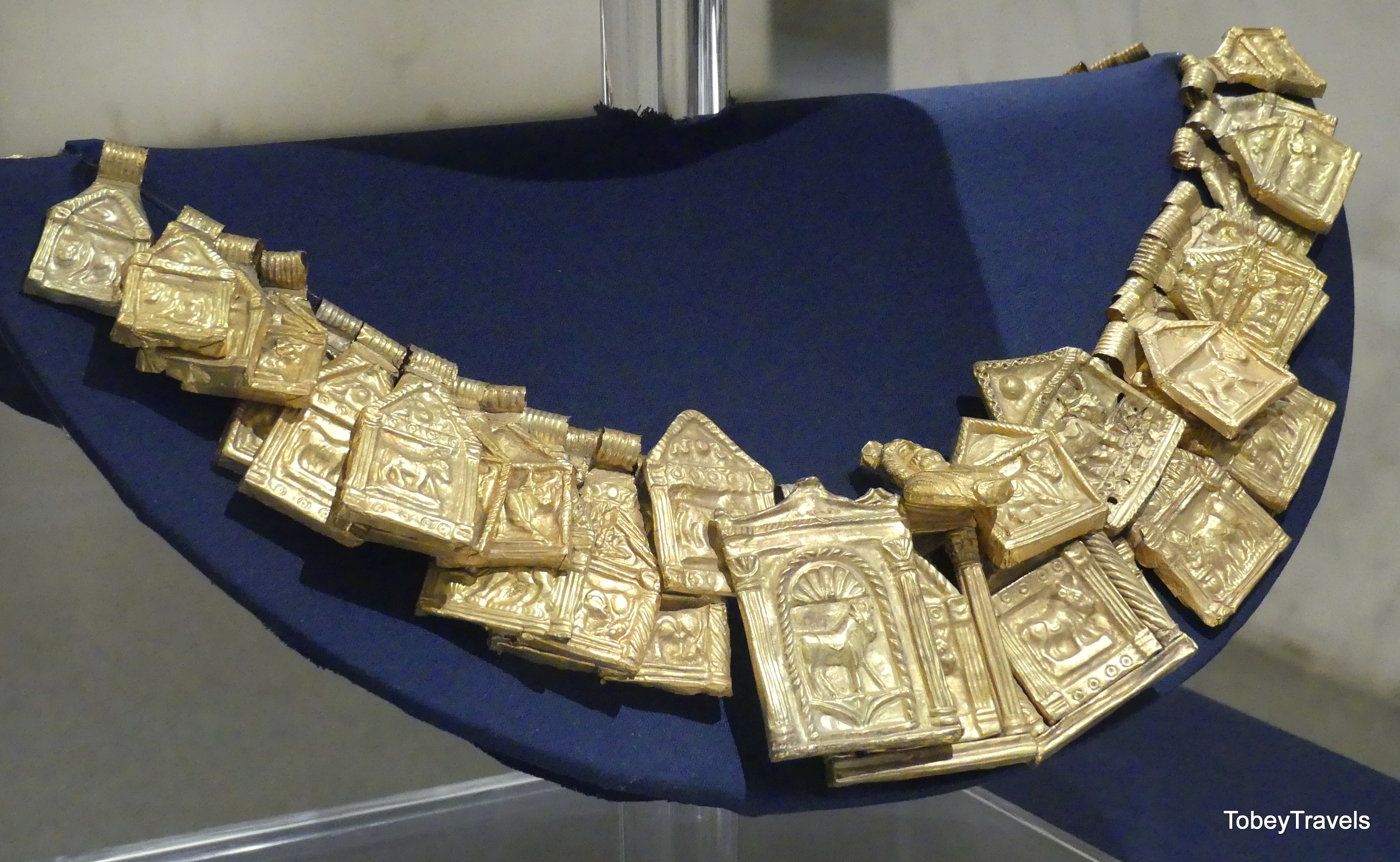
Room 3 glitters with an impressive collection of metal, silver, and gold artifacts. The undisputed star here is a silver torso of Aphrodite from the 2nd century. But don't miss the chance to marvel at the ancient jewelry, dazzling in magnificent colors, which truly shows off the exceptional skill of Greco-Roman craftsmen. They really knew how to make a statement!Room 6: Apis Bull and Serapis Head
Ah, Room 6 and its commanding presence: the mighty Apis Bull. Workers found this impressive statue west of Pompey's Pillar during Emperor Hadrian's reign (117-138 AD). It's a remarkable piece, perfectly blending Greek realism with traditional Egyptian artistry. Nearby, you'll find the Serapis Head, carved from fine white marble and also discovered near Pompey's Pillar. This deity was a fascinating combination of Osiris and Apis, designed to bridge Egyptian and Greek religious traditions. It truly embodies the cultural fusion of the era.Room 8: Mummies and Ptolemaic Sarcophagi
The eighth hall delves into the fascinating world of mummies and sarcophagi. Here, the displays beautifully illustrate the clear differences between the gilded and painted cartonage of pharaonic mummies and the ornate diamond bandaging seen in Ptolemaic examples. These artifacts give us a tangible look at how burial practices evolved and changed through different dynasties, offering a unique window into ancient beliefs.Room 12: Marcus Aurelius and Medusa Mosaic
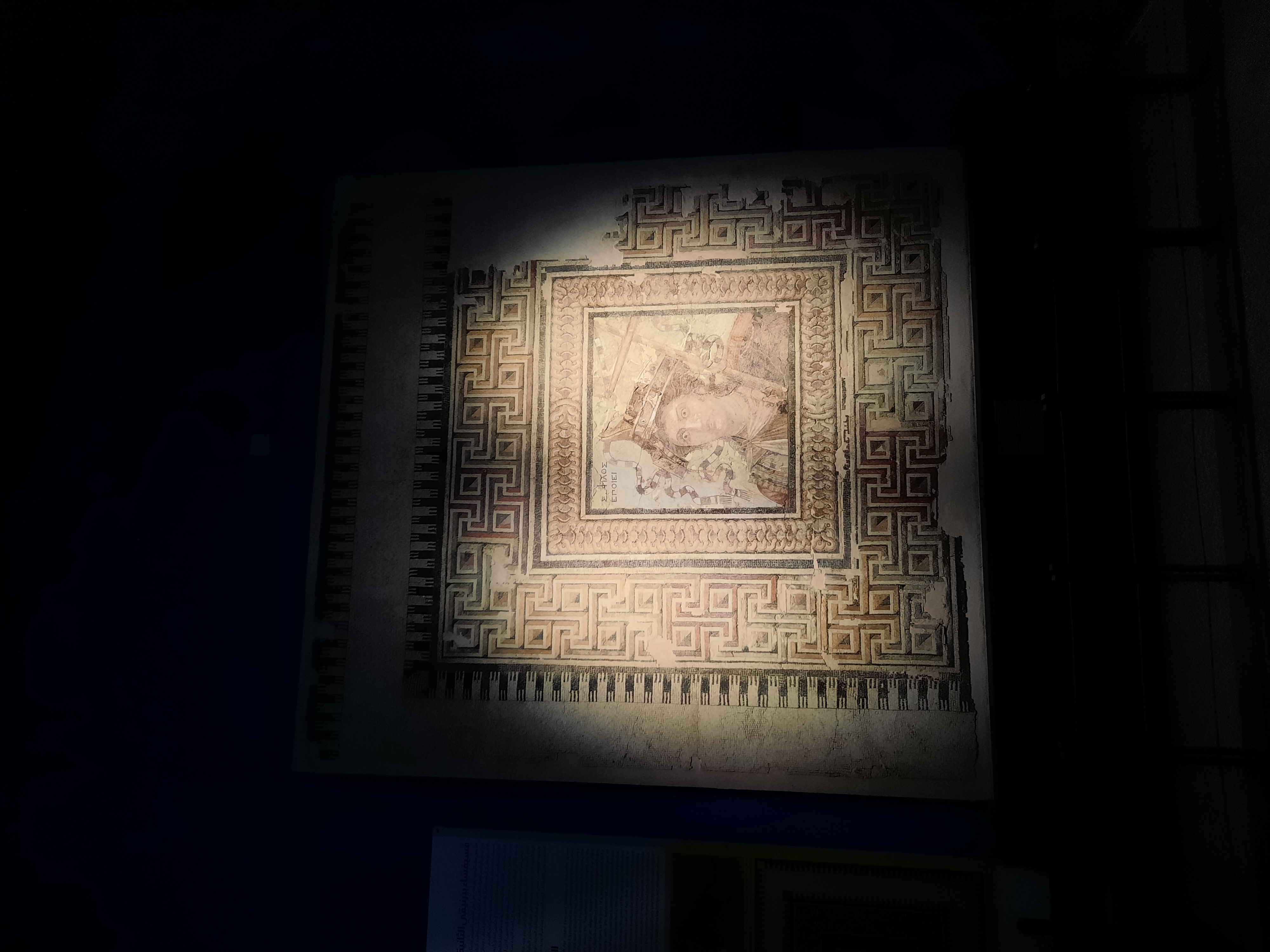
Room 12 is a standout for its Graeco-Roman statuary. You'll encounter Ptolemy IV's colossal red granite head, discovered in Abuqir, proudly wearing Egypt's double crown. But for many, the star attraction is the huge white marble statue of Marcus Aurelius (121-180 AD), unearthed beneath the Sayed Darwish Theater. Another piece that absolutely demands attention is the famous Medusa mosaic – a breathtaking floor piece that once depicted Medusa's full body. Just imagine walking on that!Room 22: Colored Glassware and Bronze Head of Hadrian
As you reach Room 22, you're greeted by truly beautiful colored glassware. These pieces are proof of ancient Egypt's incredible glass-making prowess, achieved through the simple fusion of soda and sand. At the far end of the hall stands a striking bronze head of Emperor Hadrian (76-138 AD). Take a moment to really look at it; its eyes, crafted from ivory and glass, are a testament to the ancient artisans' unbelievable attention to detail.
The Museum's Role in Preserving Cultural Fusion
The Greco-Roman Museum isn't just a collection of old things; it's Alexandria's grand stage for showcasing cultural fusion. This remarkable place holds tangible proof of how different civilizations intertwined, blended, and created entirely new art forms and traditions.Greek Realism Meets Egyptian Symbolism
The museum's rich collection vibrantly demonstrates the artistic conversation that happened between Greek aesthetic principles and traditional Egyptian imagery. Look closely at the sculptures; you'll see Greek anatomical detail flowing into Egyptian symbolic elements, a truly amazing blend. It's fascinating to observe how classic Greek proportions gradually began to embrace Egyptian symbolic motifs. This fusion is perhaps clearest in statues that combine a realistic Greek torso with traditional Egyptian headdresses or poses.Artifacts from Fayoum and Benhasa
Discoveries from places like Fayoum and Benhasa are invaluable for understanding Egypt's multicultural history. These sites have unearthed amazing examples of cultural mixing. Think of the famous Fayoum mummy portraits: they beautifully blend Egyptian mummification practices with the stark, realistic portraiture of the Roman style. Then there are the Benhasa artifacts, showcasing state-of-the-art technical advances that sprang from this cultural exchange, where Egyptian materials and Greek design sensibilities converged beautifully in metalwork and ceramics.The Agathadaimon Stelae and Divine Serpents
The Agathadaimon Stelae are exactly the kind of thing that makes cultural fusion so endlessly fascinating to me. These carvings depict the 'good spirit' serpent deity, traditionally seen as a protector of homes and communities. What's cool is how Greek settlers adopted this Egyptian protective figure and then completely reinterpreted its artistic style, mixing Greek sculpture techniques with unmistakable Egyptian religious symbols. These serpent images are a perfect illustration of how religious ideas weren't confined by borders; they crossed cultural lines and evolved.Hellenistic Statuary and Roman Portraiture
Within the museum, you'll find incredible examples of Hellenistic sculpture and Roman portrait styles. While Hellenistic works often focused on ideal beauty and dramatic movement, Roman portraits were all about capturing individual character and realistic features. In Alexandria's unique, cosmopolitan environment, these styles didn't just coexist; they blended with Egyptian artistic traditions to create absolutely distinctive artworks. These pieces borrowed from all three cultures, yet somehow remained uniquely Alexandrian – a true testament to the city's rich, layered history.Ready to turn this guide into reality?
Our local experts can create a custom itinerary based on these recommendations. Just send us a quick message!
Customize via WhatsApp