


You know, when you visit Aswan, most people flock to Philae Temple or take a felucca ride. But there's this incredible, often overlooked site that, for me, really brings ancient Egypt to life: the Unfinished Obelisk. Tucked away in Aswan's northern granite quarries, it's not a finished masterpiece, but rather a colossal 'what if' – a massive monument abandoned mid-creation. But don't let 'unfinished' fool you; this place reveals more about how ancient Egyptians worked stone and undertook those mind-boggling engineering projects than almost anywhere else.
It's generally believed that Queen Hatshepsut, one of Egypt's most powerful female pharaohs, ordered this behemoth during her 18th Dynasty reign. Had it been completed, it would have been the tallest obelisk ever constructed. But, alas, natural cracks in the rock meant it had to be left, still attached to the bedrock. What's amazing is that this 'failure' actually became a gift to history. It's a perfectly preserved, rare snapshot of their quarrying techniques, tool marks, and extraction methods. Standing there, you'll get a vivid, visceral sense of the sheer skill, unbridled ambition, and immense challenges these ancient craftsmen faced.
Obelisks in Ancient Egypt: More Than Just Tall Stones
Sacred Solar Symbols, Straight from the Sky
Ancient Egyptians weren't just building pretty things; everything had deep meaning. Obelisks, these tall, tapering monuments with their small, pyramid-shaped tops (called 'pyramidion'), were profoundly religious. They symbolized the 'benben stone' from their creation myths – that first mound of earth that rose from the primordial waters of chaos. Imagine that! That little cap, the pyramidion, was often gilded or covered in electrum – a gold-silver alloy – so it would brilliantly reflect the sun. This linked the obelisk directly to Ra, the sun god. The Greeks, bless their straightforward hearts, called them 'obeliskos', meaning 'small skewer' because, well, they looked like skewers! The Egyptians, with a bit more poetry, called them 'tekhenu'. You'd typically find them in pairs, framing the entrance to major temples, especially those dedicated to Ra. They literally reached for the sky, connecting earth to heaven, humans to gods. Pretty powerful stuff.Hatshepsut's Building Spree
Queen Hatshepsut – now there was a pharaoh who knew how to make a statement! She ruled for about 21-22 years during the early 18th Dynasty and, boy, did she build. Temples, restorations, expeditions to the mythical land of Punt (likely modern Somalia or Eritrea) – she did it all. And, of course, obelisks. Lots of obelisks. These weren't just decorative; they were physical manifestations of her piety and, frankly, her right to rule. She actually erected at least four obelisks, with two particularly famous ones still standing proudly at Karnak Temple in Luxor. Those Karnak obelisks are already massive, around 30 meters tall and weighing about 320 tons each. Think about the engineering marvel just to quarry, transport, and erect *those*. But the Unfinished Obelisk in Aswan? At 42 meters and an estimated 1,200 tons, it would have absolutely dwarfed its counterparts. It's likely she wanted something unprecedented, a towering declaration of her royal power and divine favor. Really puts her ambition into perspective.Why Aswan Granite? The Best of the Best
If you wanted to build something big and last forever in ancient Egypt, Aswan was your go-to. It was the main source for red granite (technically granodiorite, but let's not split hairs), a stone so hard, so durable, and so beautiful. Its distinctive pink-red color came from iron-rich minerals, and its crystalline structure made it incredibly tough, resisting whatever the desert environment threw at it. That hardness was exactly why it was perfect for obelisks. These things had to stand tall and narrow without crumbling under their own massive weight. No other place in ancient Egypt offered such a treasure trove of granite. The Aswan quarries were active for over 3,000 years, from the Old Kingdom all the way through the Roman Period. It's a testament to the stone's enduring quality and the continuous demand for it.
Quarrying Techniques: Ancient Engineering Uncovered
Want to explore Unfinished Obelisk in Aswan: A Glimpse into Ancient Egyptian Engineering?
Let us design the perfect private itinerary for you. From expert local guides to seamless luxury cruises, we craft custom trips that show you the real Egypt.
Customize via WhatsAppThe Extraction Process: A Manual Masterpiece
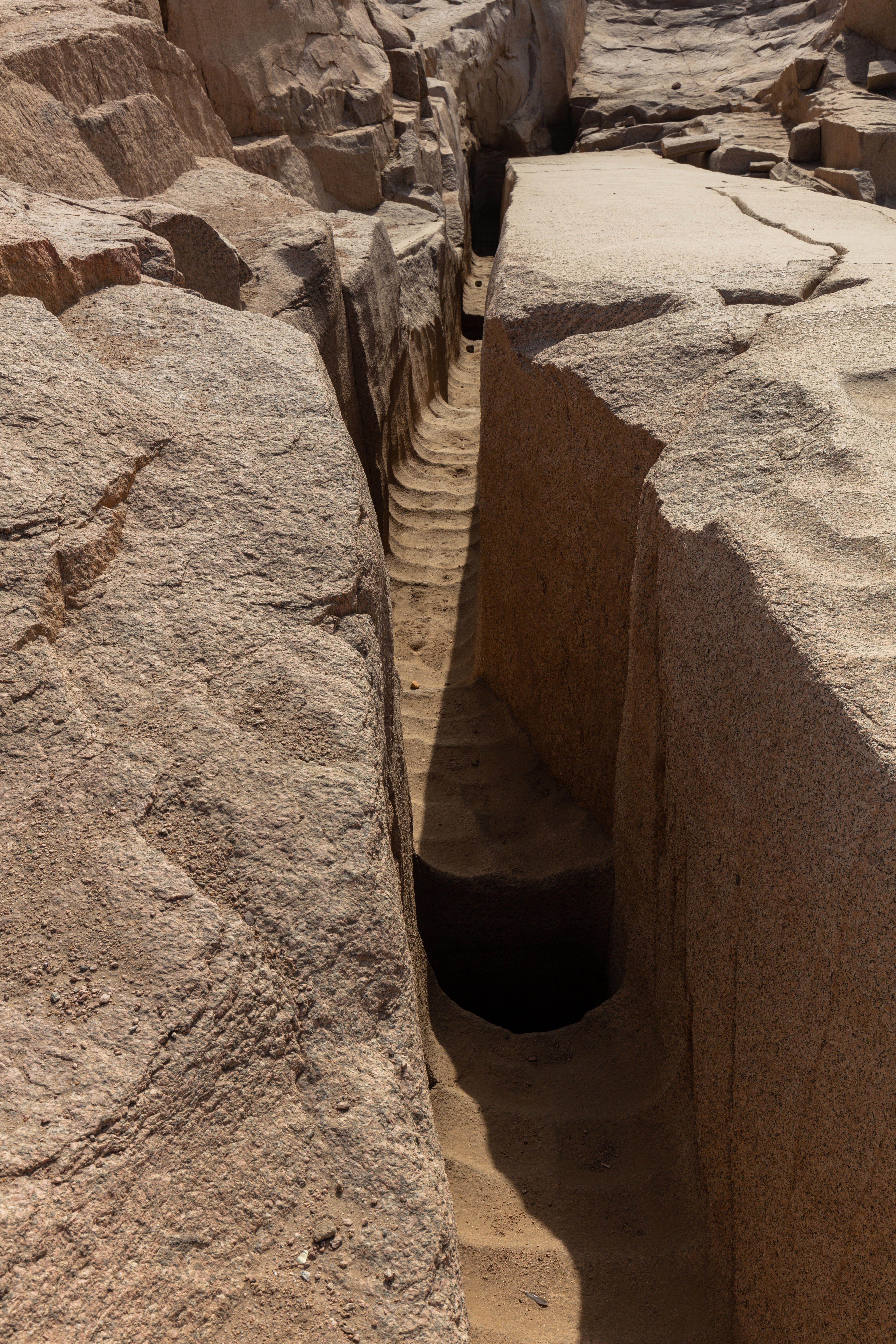
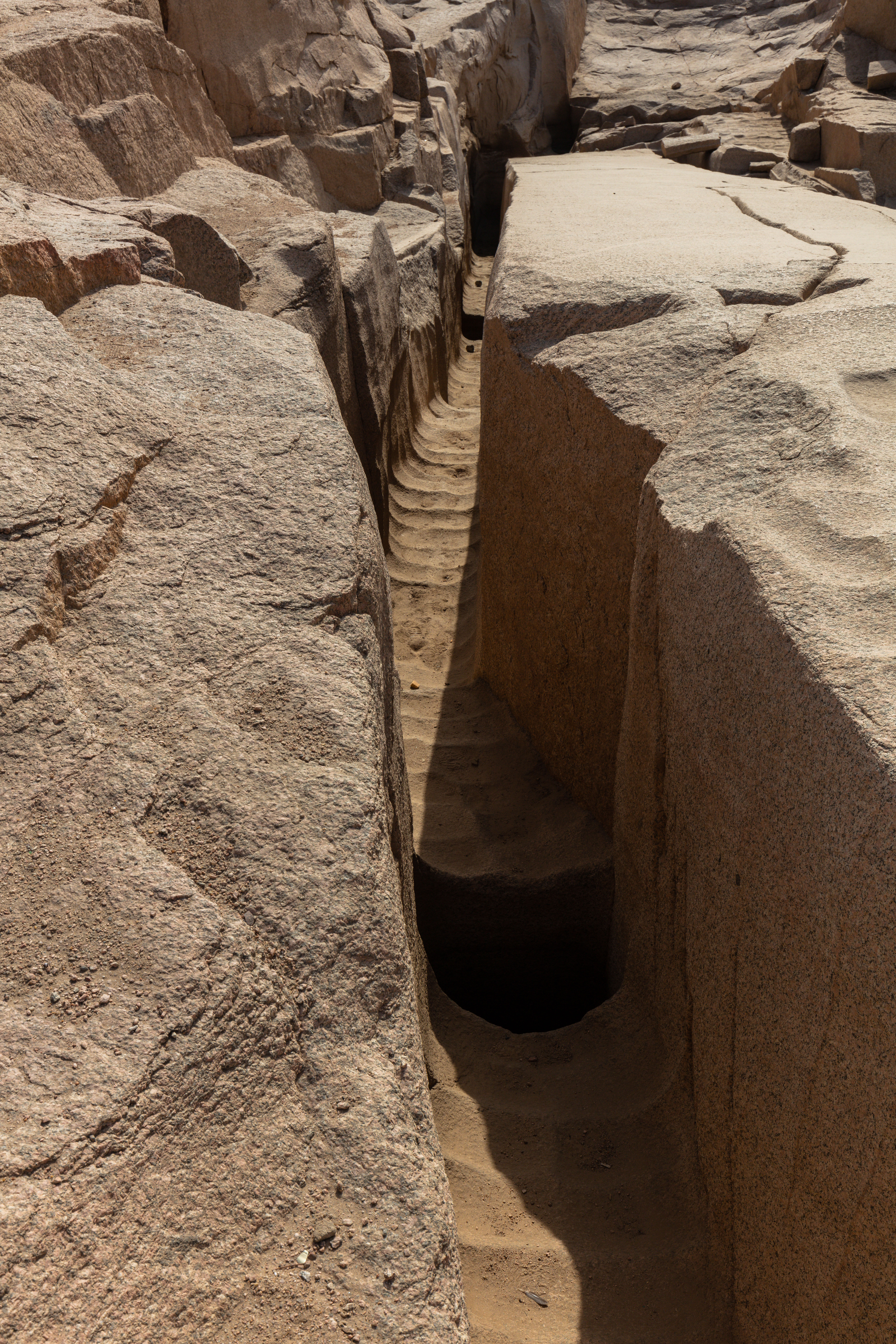
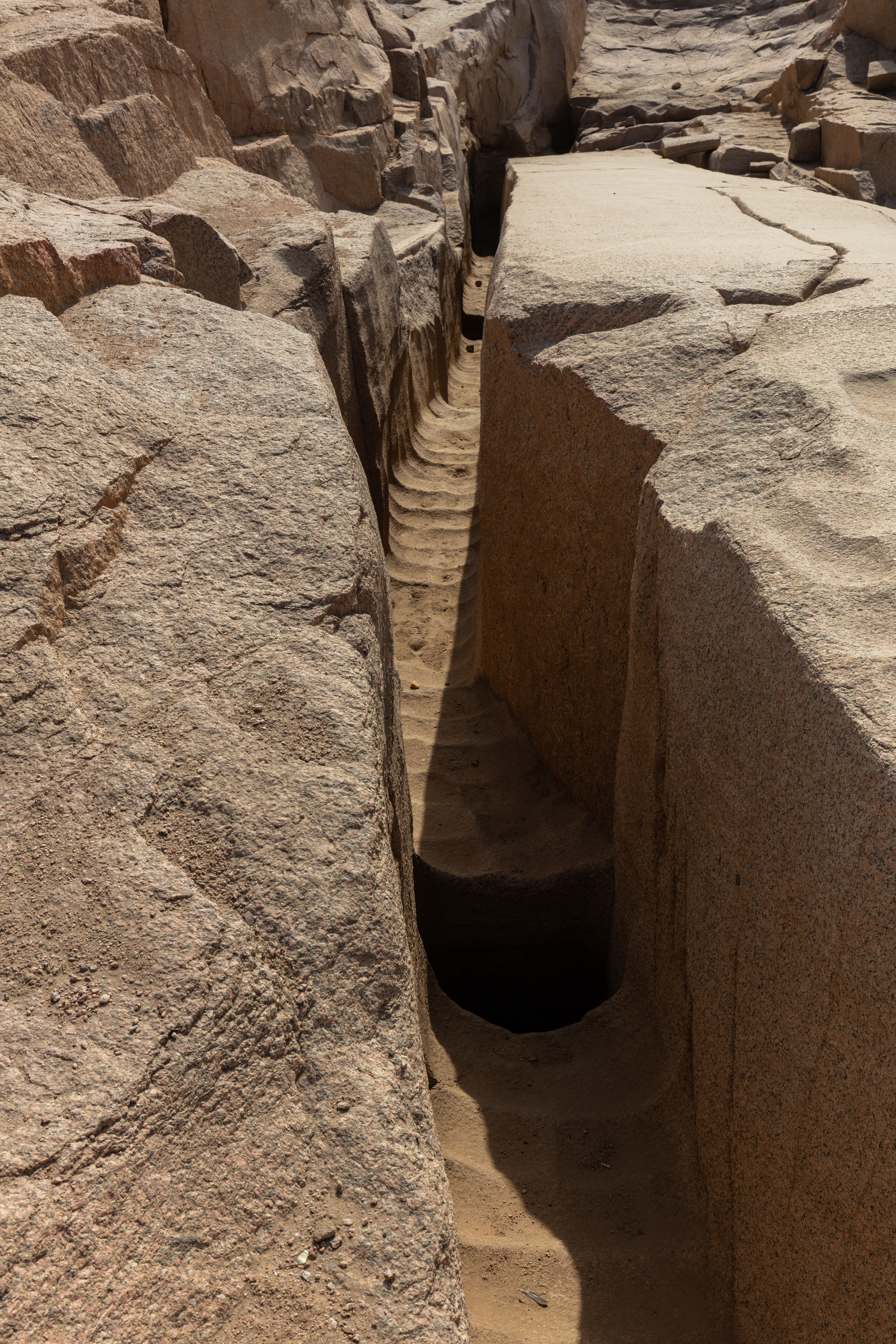
The Unfinished Obelisk isn't just a big rock; it's a textbook demonstration of the systematic, painstaking process ancient Egyptians used to extract these monumental stones. It all started with precision. They'd survey and mark the dimensions of the desired block right there on the quarry floor. Imagine using string lines coated with red ochre to 'snap' perfectly straight lines, defining the obelisk's future boundaries. Ingenious, right? Next came the trenching. They'd dig narrow trenches around and beneath the marked block, effectively isolating it from the surrounding bedrock. For *this* obelisk, those trenches were about 75 centimeters (30 inches) wide – just enough space for a worker to stand and swing their tools. It makes you realize how intimate and labor-intensive the process was. The main event, the core of their excavation method, was 'pounding with dolerite balls'. Dolerite, a volcanic stone even harder than granite, was shaped into spherical pounding stones, weighing a hefty 5-6 kilograms (11-13 pounds) each. Workers would stand in those trenches, rhythmically pounding the granite surface with these stones, gradually pulverizing the rock. If you look closely at the Unfinished Obelisk, you can see the systematic grooves where individual workers stood, creating distinct workstations along the trenches. It's like seeing their ghost footprints. Archaeological experiments have shown just how slow and arduous this was. A single worker could remove only about 5-10 cubic centimeters of granite per hour. To excavate all the necessary trenches for this obelisk? We're talking thousands upon thousands of man-hours of absolutely exhausting labor. Copper tools did play a supporting role. While copper is softer than granite, chisels and saws, used with quartz sand as an abrasive, could cut grooves and help refine the stone, especially for finishing surfaces and delicate details. There's been some debate about the 'fire and water' technique, where granite surfaces would be heated then rapidly cooled to cause fracturing. While potentially effective, the Unfinished Obelisk primarily shows evidence of dolerite pounding, so it might have been less common here. Finally, to free the block entirely, they'd use wooden wedges. Once the trenches were all around and underneath, workers would drive these wedges into slots cut in the stone. Then, they'd soak the wedges with water. The expanding wood would create immense pressure, splitting the granite along predetermined lines and finally liberating the block from its bedrock prison.Why It Was Abandoned: A Fatal Flaw
So, with all that incredible effort, why is it still there? As the workers diligently excavated around the Unfinished Obelisk, they discovered natural cracks within the granite. These fissures, completely invisible from the surface, ran through critical areas that needed structural integrity. Continuing the work would have been pointless; the obelisk would have certainly broken during transport, failed when they tried to erect it, or possibly even crumbled under its own weight after standing. Faced with this fundamental, heartbreaking flaw, the project supervisors made a pragmatic, if costly, decision: abandon it. No point wasting more resources on a monument destined for failure. And so, this massive stone remained exactly where it lay, eventually to be covered by sand and debris until modern archaeology brought it back into the light.
Archaeological Investigation and What We've Learned
Rediscovery and Study: Unearthing the Past
The quarries themselves were never truly 'lost' to local knowledge, but a systematic archaeological investigation really kicked off in the 19th and early 20th centuries. Egyptologists were keen to document ancient quarrying sites across Egypt, and the Unfinished Obelisk immediately stood out. Its sheer size and the incredible preservation of all those quarrying marks made it a star. The real deep dive into clearing and documenting the site happened in the 1920s and 30s. Archaeologists meticulously mapped tool marks, calculated the obelisk's precise dimensions, and painstakingly studied every angle of the quarrying techniques. This research was groundbreaking; it completely transformed our understanding of ancient Egyptian stoneworking, replacing old theories with tangible evidence directly from the archaeological record.Want to explore Unfinished Obelisk in Aswan: A Glimpse into Ancient Egyptian Engineering?
Let us design the perfect private itinerary for you. From expert local guides to seamless luxury cruises, we craft custom trips that show you the real Egypt.
Customize via WhatsAppWhat This Stone Teaches Us
Seriously, the Unfinished Obelisk is an absolute treasure trove of knowledge about ancient Egyptian engineering: * **Workforce Organization:** Those systematic tool marks? They tell a story of highly organized teams, each responsible for excavating specific sections of the trenches. It shows skilled craftsmen working under expert supervision. * **Tool Technology:** The thousands of dolerite pounders found here are proof positive of the primary quarrying method. But you’ll also spot copper tool marks, showing their use for finer finishing work. * **Project Scale:** Just calculating the sheer labor needed for a monument this size helps us grasp the incredible mobilization of workforce, the intricate logistics, and the vast economic resources needed for royal building projects. * **Quality Control:** The decision to abandon something this expensive because of a flaw speaks volumes. It shows ancient Egyptians had incredibly high standards, preferring to scrap a project rather than complete a structurally unsound monument. * **Engineering Knowledge:** The precision in measurements and the systematic approach reveals a sophisticated understanding of geometry, surveying, material properties, and structural mechanics. All this, mind you, without our modern math and instruments.The Quarry Site Today: Your Visit
Site Layout and Features: Where Giants Lie
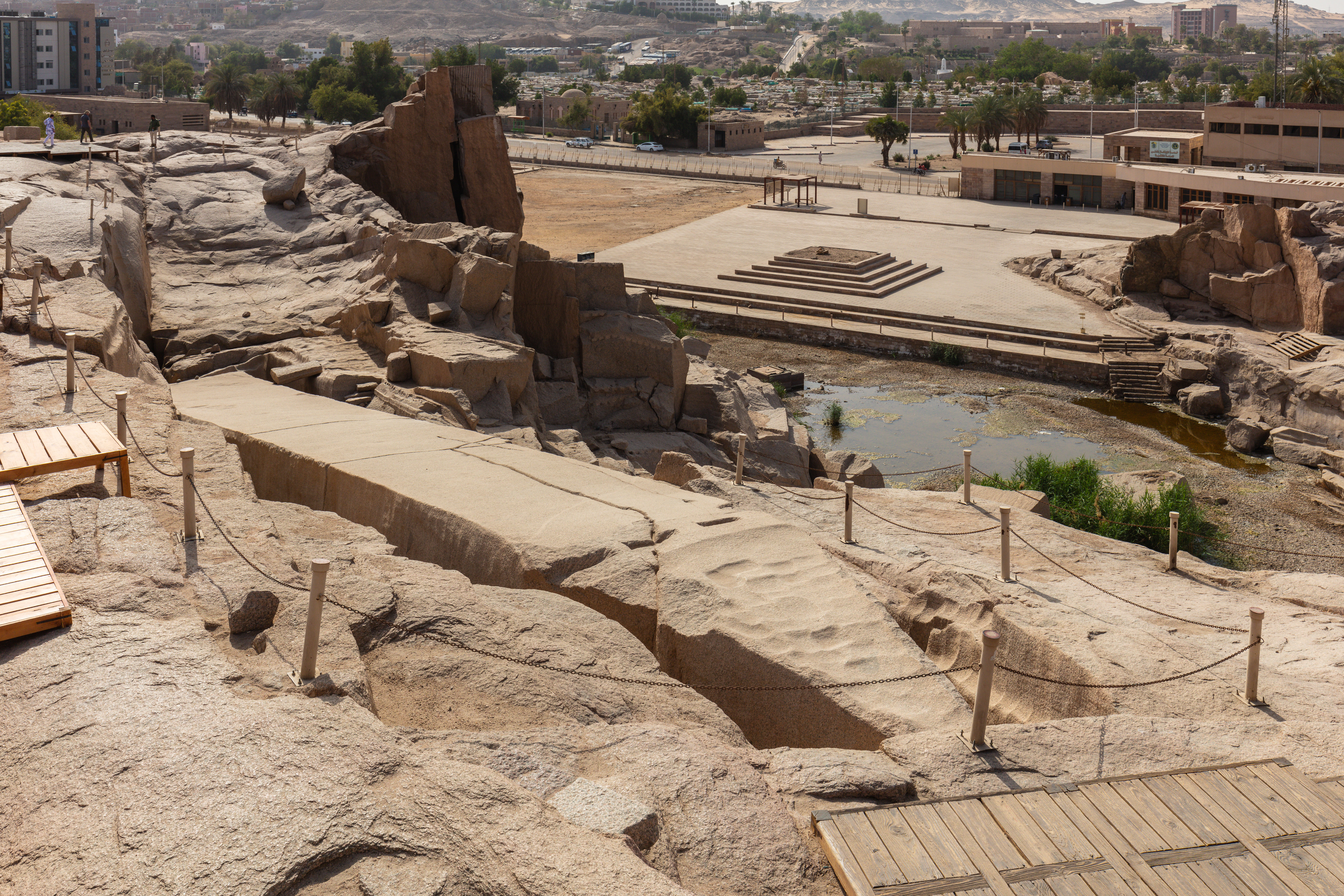
Today, the Unfinished Obelisk lies in this vast open-air quarry, stretching across several acres. The obelisk itself is the star, of course, a massive 42-meter slab. Its 'top' (which would have been its base once erected) is still connected to the bedrock, perfectly showcasing that moment when work stopped. It tapers from about 4.2 meters (14 feet) square at its base down to 2 meters (6.5 feet) at what would have been its spire. You'll see trenches, roughly 75 centimeters wide, surrounding three sides of the obelisk, excavated to depths of 1-2 meters. The underside is still partially connected to the bedrock, a truly frozen moment in time. But it's not just the big obelisk. Throughout the quarry, you'll find evidence of literally centuries of quarrying: * **Extraction Marks:** Thousands of circular depressions from those dolerite pounders, visible on the trench walls and quarry floors. It’s like a gallery of ancient fingerprints. * **Smaller Monuments:** You'll spot partially extracted stones of various sizes, showing different stages of the quarrying process. * **Tool Remnants:** While most have been collected, you might still see scattered dolerite pounders and copper tool fragments. * **Inscriptions:** Keep an eye out for hieroglyphic inscriptions carved into the rock – names of supervisors, dates, even administrative records. * **Worker Pathways:** Worn routes where workers trod between their workstations and tool storage areas. It's almost like you can hear the echoes of their footsteps.
The Visitor Experience: Immersive History
When you visit, you'll find elevated walkways and viewing platforms. This lets you get fantastic views of the obelisk from all angles without actually walking on the ancient stone (which is important for preservation!). Information panels, thoughtfully provided in multiple languages, explain the quarrying techniques, the obelisk's dimensions, and, of course, why it was abandoned. The real magic here is the open-air setting. You're not in a museum; you're standing right where it all happened. Seeing this gargantuan stone lying in its ancient bed makes the sheer scale and ambition of the project incredibly real and immediate. Unlike abstract museum displays, seeing the actual monument in its original context truly hammers home the impressive capabilities – and limitations – of ancient Egyptian engineering.Visiting the Unfinished Obelisk: Tips for Your Trip
Practical Information: The Nitty-Gritty
* **Location:** You'll find it in the northern granite quarries, about 2 kilometers southeast of central Aswan. Super easy to get to from the city center. * **Access:** Most people come on organized tours, private drivers, or a taxi. It's often combined with Philae Temple and the Aswan High Dam in a half-day trip. If you're feeling adventurous, you can even cycle there! * **Opening Hours:** Generally 7:00 AM to 5:00 PM daily in winter, or 7:00 AM to 6:00 PM in summer. Do double-check closer to your trip, as hours can shift for Ramadan or special events. * **Entry Fees:** It's a pretty modest entrance fee for international tourists, usually around 100 EGP (but prices can change). Egyptian citizens and students get reduced rates. * **Duration:** Most people spend a good 45-60 minutes here, exploring, taking photos, and reading the info panels. If you're a real engineering or archaeology buff, you could easily spend 1-2 hours soaking it all in.Best Time to Visit: Beat the Heat and Crowds
* **Early Morning (7:00-9:00 AM):** This is ideal. It's the coolest part of the day, the light is perfect for photography, and you'll find fewer crowds. The morning sun illuminates the obelisk beautifully from the east, creating dramatic shadows that really bring out the tool marks. * **Late Afternoon (4:00-6:00 PM):** Another great option. You'll get that lovely golden hour light, comfortable temperatures, and soft illumination for photos. The shadows stretch out, making those quarrying marks pop. * **Avoid Midday (11:00 AM-3:00 PM):** Seriously, avoid it. Aswan gets incredibly hot, often over 40°C (104°F) in summer. The overhead sun creates harsh, flat lighting, and that's when it's busiest with groups.What to Bring: Essentials for the Quarry
These are non-negotiables: * **Sun Protection:** A wide-brimmed hat, strong sunscreen, and good sunglasses are critical. There's almost no shade in the quarry. * **Water:** Bring at least 1 liter per person. You'll thank me later. * **Comfortable Walking Shoes:** The quarry floor can be uneven in spots. * **Camera:** A wide-angle lens is super helpful for capturing the entire length of the obelisk. * **Light Clothing:** Breathable fabrics are a must. Avoid dark colors that absorb heat.Combining with Other Aswan Attractions: Make a Day of It!
The Unfinished Obelisk fits perfectly into a day of exploring Aswan: * **Philae Temple (20 minutes away):** This stunning island temple, dedicated to the goddess Isis, was moved stone-by-stone to save it from the rising waters of Lake Nasser. A must-see. * **Aswan High Dam (15 minutes away):** A modern engineering marvel that tamed the Nile and created Lake Nasser behind it. * **Nubian Museum (10 minutes away):** An excellent museum charting Nubian culture, history, and the incredible effort to rescue ancient monuments during the dam's construction. * **Elephantine Island (15 minutes away):** Aswan's largest island, home to ancient ruins, charming Nubian villages, and the Aswan Museum. Most organized tours in Aswan will offer a half-day itinerary covering the three main sites (Unfinished Obelisk, Philae Temple, High Dam) or full-day options including even more.
Educational Value and Archaeological Significance
Understanding Ancient Egyptian Engineering: An Outdoor Classroom
If you want to truly grasp ancient Egyptian engineering, the Unfinished Obelisk is your ultimate outdoor classroom. It’s not just theory; it’s direct, physical evidence. Here, you can: * See the actual tool marks made by workers 3,400 years ago. * Finally understand the colossal scale of royal building projects that demanded thousands of laborers. * Appreciate the simple yet effective technology of dolerite pounding as their main quarrying method. * Recognize their commitment to quality control, even if it meant abandoning a massive, expensive project. * Visually trace the entire process of extracting huge monuments right from the bedrock. * Feel a genuine connection to the skilled craftspeople who toiled in this very quarry millennia ago.Comparative Context: Putting Obelisks in Perspective
The Unfinished Obelisk also helps you truly appreciate the completed obelisks you see throughout Egypt and around the world. Seeing the extraction process up close clarifies so much: * How these massive monuments were created without any modern machinery. * Why Aswan granite was so incredibly valuable throughout Egyptian history. * The immense labor, relentless time, and vast resources poured into every single royal building project. * Why so few ancient obelisks remain in Egypt (many were taken to Rome, Paris, London, New York, and beyond). * The incredibly complex engineering challenges involved in transporting and then successfully erecting such monumental stones.Research Continues: Unlocking More Secrets
Even today, archaeological and engineering research is ongoing at the Unfinished Obelisk site. It's a living laboratory! Recent studies include: * **Experimental Archaeology:** Modern researchers are actually recreating ancient quarrying techniques to test out hypotheses about their methods, tools, and just how much labor it all took. * **Tool Mark Analysis:** Detailed documentation of individual tool marks continues to provide even deeper insights into worker techniques, specific tool types, and how projects were organized. * **Geological Studies:** Scientists are investigating granite properties, how cracks form, and what kind of quality assessment methods the ancient Egyptians might have employed. * **Labor Calculations:** They're constantly refining estimates for the workforce size, working conditions, and project timelines, all based on these modern quarrying experiments and the rich ancient evidence right there at the site.Ready to turn this guide into reality?
Our local experts can create a custom itinerary based on these recommendations. Just send us a quick message!
Customize via WhatsApp