

Imagine this: A donkey, just minding its business in Alexandria back in 1900, takes a misstep and falls through the ground. An accident, yes, but one that led to one of the most incredible archaeological discoveries of its time: the Catacombs of Kom El Shoqafa. Tucked away some 35 meters (that's about 115 feet) below the bustling city, this isn't just any old burial site; it's Egypt's largest known Roman necropolis.
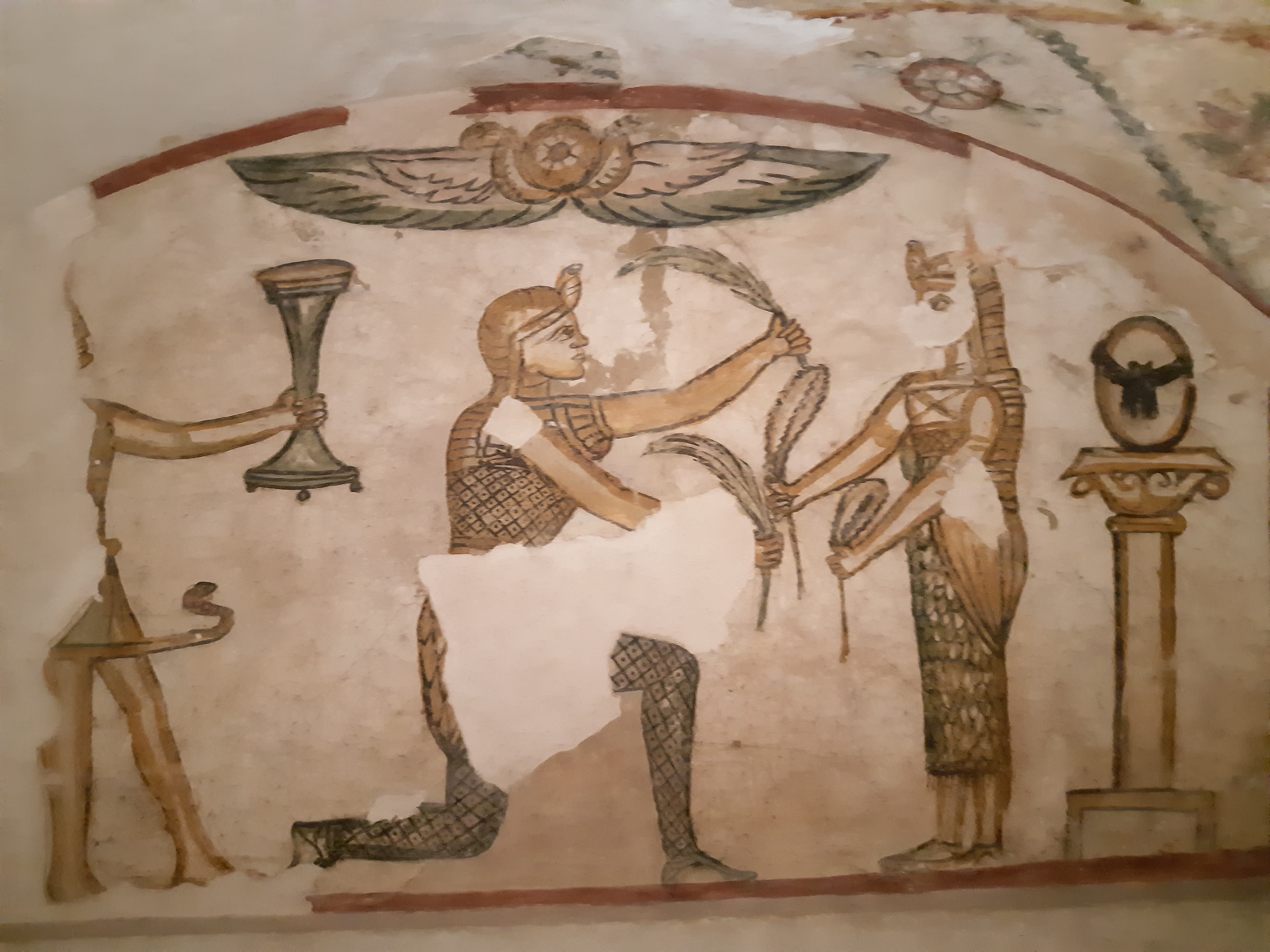
What makes it truly special is the way it effortlessly weaves together Egyptian, Greek, and Roman styles. You'll see it everywhere – in the carvings, the statues, even in the symbolic artwork. Think about it: the Egyptian god Anubis, yet dressed like a Roman soldier. It’s a visual feast of cultural fusion. Used roughly between the 2nd and 4th centuries CE, these catacombs include various tombs, chambers, and even a dining hall where families once gathered to honor their dead. And while some parts are still underwater, keeping their secrets, this place continues to captivate everyone who visits, offering a unique peek into a rich, complex past.
The Unlikely Beginning: Kom El Shoqafa's Discovery and Name
The story of how the Catacombs of Kom El Shoqafa came to light is pure archaeological drama. For centuries, this massive underground world lay hidden right beneath Alexandria’s streets. It really makes you wonder how many other ancient marvels are just waiting to be stumbled upon! If not for that fateful accident at the turn of the 20th century, it might still be waiting.
When a Donkey Led the Way
So, picture it: the year is 1900. A local stoneworker named Said Ali Jibarah is going about his day, when boom – a donkey takes a tumble. That tumble exposed a hidden tomb. Before long, archaeologists were on the scene, uncovering this vast, untouched burial site that had been perfectly preserved since the 4th century CE. It was a treasure trove, complete with its incredible blend of Egyptian, Greek, and Roman artistic styles.
'Mound of Shards': What's in a Name?
The name itself, 'Kom El Shoqafa,' is actually pretty telling. It means 'Mound of Shards' in Arabic, and it comes from the piles of broken pottery scattered around the site. Back in ancient times, people brought food and drink in clay pots for funeral rituals. After the ceremony, they'd intentionally break them before leaving. The belief was that taking them home from a burial site was just bad luck. A fascinating insight into their customs, isn't it?
From Private Tomb to Public Necropolis
Initially, these catacombs weren't meant for everyone. They started out as a private tomb for one very wealthy family in Alexandria. But as time went on, roughly between the 2nd and 4th centuries CE, they expanded quite a bit to accommodate around 300 burials. It eventually became a public cemetery, a clear reflection of the incredibly diverse population that called Alexandria home during that era.
Stepping Inside: Architecture and Design That Tells a Story
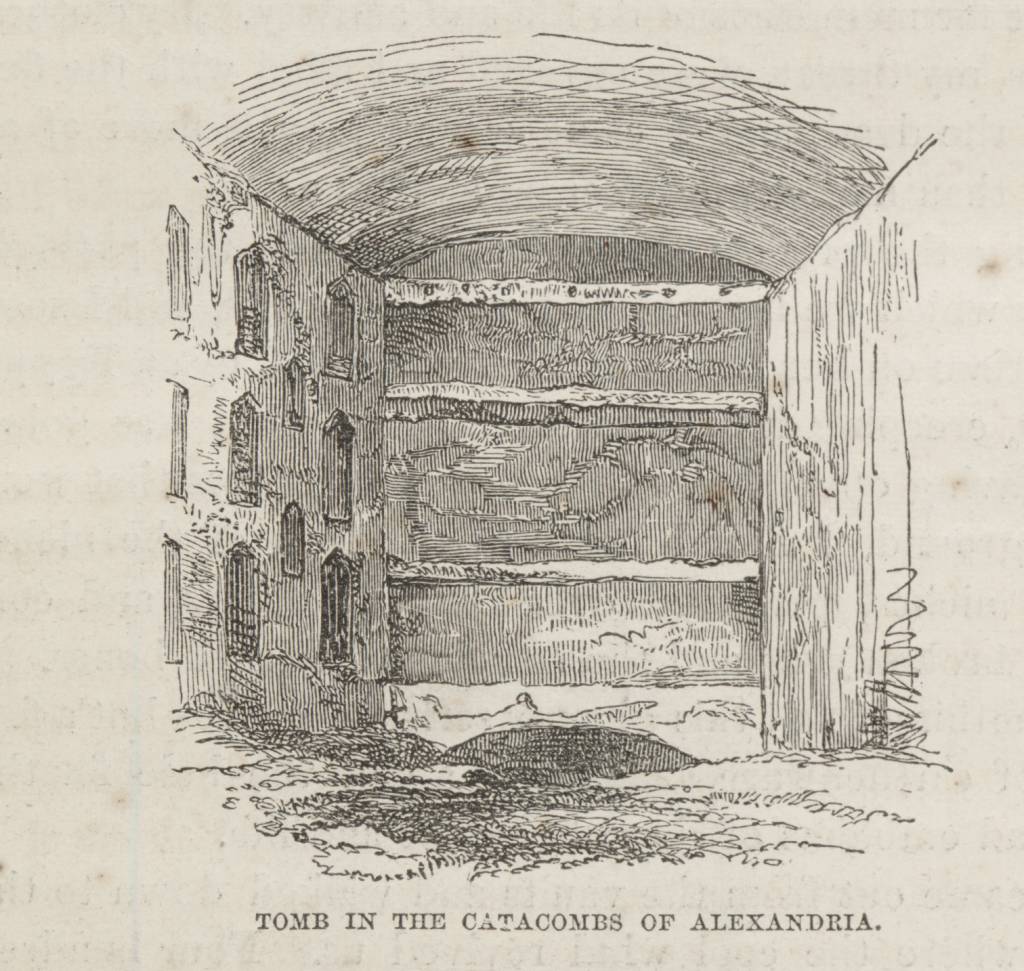
When you journey down into the Catacombs of Kom El Shoqafa, you're not just entering a tomb; you're stepping into an architectural masterpiece carved right out of Alexandria's bedrock. It’s a truly humbling experience to see how beautifully this underground necropolis blends Egyptian, Greek, and Roman influences into every chamber and passageway.
Want to explore Unearthing the Secrets of Kom El Shoqafa Catacombs: Alexandria's Hidden Gem?
Let us design the perfect private itinerary for you. From expert local guides to seamless luxury cruises, we craft custom trips that show you the real Egypt.
Customize via WhatsAppThe Grand Entrance: Spiral Staircase and Rotunda
Your descent begins on a wide, spiral staircase, a testament to Roman design, carved deep into the earth. It feels like you're being gently guided into another world. At the very heart of the catacombs lies the rotunda – a stunning circular chamber with a domed ceiling, six elegant columns, and vibrant red geometric patterns. This central space is the hub, the place that leads you further into the hidden tombs and chambers beyond.
Three Levels, Countless Stories
These catacombs plunge an impressive 35 meters underground, meticulously carved across three distinct levels. While the very lowest level remains submerged (still holding its secrets!), the upper levels are accessible and reveal so much. You'll find a grand funeral hall, intricate tomb chambers, and rock-cut niches designed to hold mummies. Each level offers a tangible connection to ancient burial traditions.
Feasting with the Dead: The Triclinium
Adjacent to the rotunda, you'll discover the triclinium – a Roman-style banquet hall. Measuring 9 meters wide and 8.5 meters long, its stone couches are arranged in a U-shape. This was where families would gather for ancient funeral feasts, a very Roman custom. The triclinium really stands out as one of the most decorated areas of the catacombs. Imagine mourners bringing food and wine for commemorative visits, then deliberately breaking their pottery before leaving, believing that carrying it out from a place of death would bring bad luck.
The Hall of Caracalla: A Somber Chapter
A break in the outer rotunda wall leads you to the Hall of Caracalla. This chamber carries a darker history, serving as a mass grave for those killed under Emperor Caracalla's orders in 215 AD. Archaeologists found not only many human remains here but also animal bones – specifically, horses used in Roman gladiatorial games. It's a stark, compelling reminder of ancient entertainment and its unexpected links to burial practices.
Want to explore Unearthing the Secrets of Kom El Shoqafa Catacombs: Alexandria's Hidden Gem?
Let us design the perfect private itinerary for you. From expert local guides to seamless luxury cruises, we craft custom trips that show you the real Egypt.
Customize via WhatsAppA Tapestry of Beliefs: Symbolism and Cultural Fusion
The Catacombs of Kom El Shoqafa truly shine because of their unparalleled cultural fusion. This underground necropolis isn't just a burial site; it's practically a visual textbook demonstrating how three major ancient civilizations came together. It's a living, breathing testament to Alexandria's incredibly multicultural society during the Ptolemaic and early Roman periods.
Egyptian, Greek, and Roman Art in Harmony
Everywhere you look in these catacombs, you'll see a remarkable blend of Egyptian, Greek, and Roman art and architecture. It speaks volumes about the cosmopolitan nature of ancient Alexandria. This fusion isn't just in the big picture; it's in the fine details, too. Take the tomb entrance, for instance: it has a temple-like facade with columns crowned by a mix of Egyptian papyrus, lotus, and Greek acanthus leaves, all topped with an Egyptian winged sun-disk featuring Horus falcons. The artisans here, they really knew how to combine these diverse traditions to create something truly unique, something that still captivates anyone exploring Alexandria’s ancient wonders today.
Anubis in Armor: Hybrid Deities and Cultural Blending
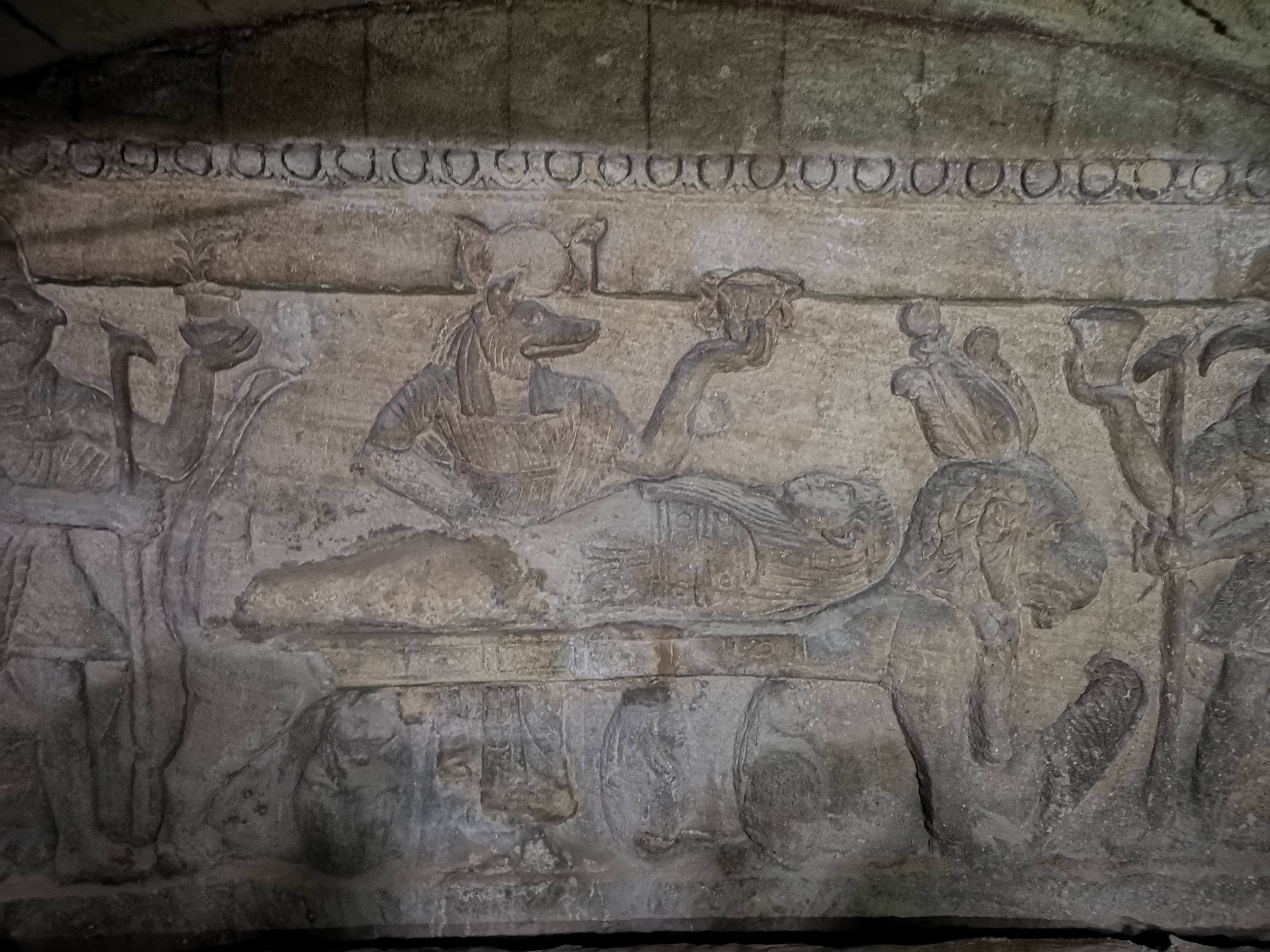
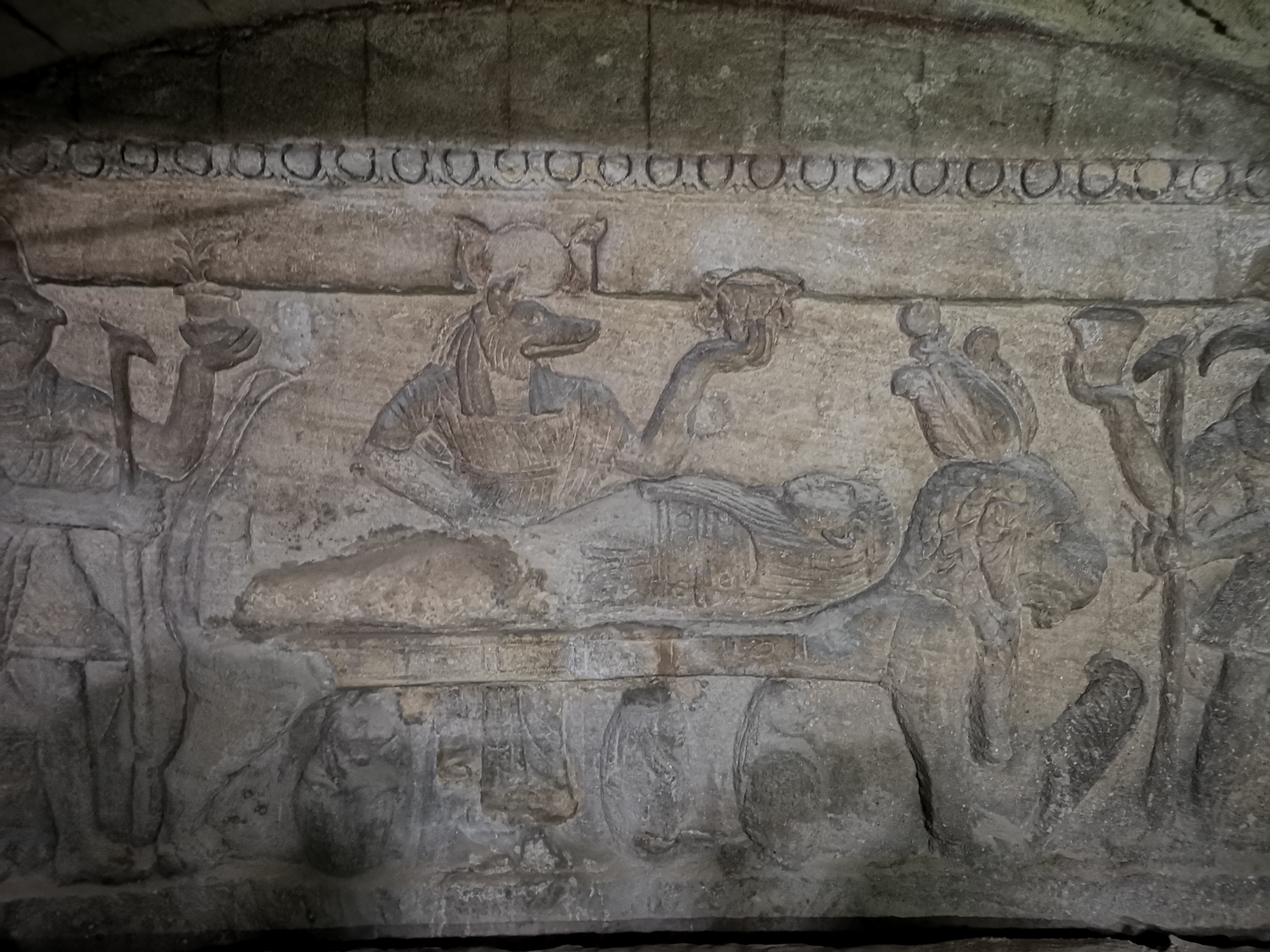
The hybrid deity representations are, for me, some of the most compelling aspects of this cultural fusion. You'll see Greek good spirits, called Agathodaemons, depicted as snakes on both sides of the inner tomb entrance. These serpents are wearing the Roman Caduceus and Greek Thyrsus, *and* Egypt's double crown (Pschent). It’s a perfect visual summary of Alexandria's multicultural identity. But it gets even better: the central panel features something truly striking. Anubis, the jackal-headed Egyptian god of mummification, portrayed as a Roman legionary, complete with armor, spear, and shield. This image perfectly encapsulates the rich cultural mixing that defined Alexandria in the 2nd century AD.
Sarcophagi and Loculi: Where Traditions Meet
The main burial chamber houses three large stone sarcophagi. They're decorated in a Roman style, with elements like garlands and gorgon heads, but they beautifully blend Roman and Egyptian burial traditions. Each sarcophagus has lids that can't be removed, and carvings of both Greek and Egyptian gods. The walls are lined with loculi – rectangular niches designed to hold mummies. It all goes to show how Alexandrians honored their dead, combining profound respect with an incredible mix of cultural burial practices.
Mythological Narratives: Osiris and Persephone
The Persephone Tombs offer another powerful example of cultural fusion through mythological scenes. The upper register portrays the Egyptian myth of Osiris's mummification, while the lower depicts the Greek myth of Persephone's abduction. Both stories share the deeply human theme of death and resurrection, but they're presented with a blend of formal Egyptian style and Hellenistic Greek naturalism. It’s a profound reflection of Alexandria's blended religious traditions.
The Enduring Mysteries of Kom El Shoqafa
Even with all we've learned, the Catacombs of Kom El Shoqafa remain a fascinating puzzle for archaeologists and historians. Many aspects of this ancient burial site still defy easy explanation, making it truly unique among Egypt's vast archaeological treasures. It's a place that keeps you thinking, keeps you wondering.
The Unexplained Expansion
One of the biggest questions centers on how these catacombs grew so much. They started as a private tomb for a single wealthy family. Yet, somehow, they expanded to accommodate around 300 more burials. This significant growth between the 2nd and 4th centuries CE raises crucial questions about Alexandria's changing burial customs and who exactly controlled this elaborate necropolis. It’s a mystery that still hasn't been fully unraveled.
Beyond a Family Tomb: Whispers of Other Uses
It's clear the catacombs evolved from just a family tomb to a burial site for a diverse range of people within Alexandria’s Greco-Roman society. The triclinium banquet hall hints at grand funeral ceremonies, and the animal remains found in the Hall of Caracalla suggest tantalizing connections to gladiatorial games or even sacrifices. What other roles did this complex serve? We're still piecing it together.
The Secrets Below: Flooded Levels
Perhaps the most tantalizing physical mystery lies in the catacomb's lowest level: it's entirely underwater and completely inaccessible. Groundwater from nearby farmland and a canal, combined with sewage seepage, has made archaeological work there virtually impossible. Water marks on the walls clearly show past flooding, suggesting parts of the site have been submerged many times throughout history. Who knows what treasures, or what crucial information, might be hidden forever in these unexplored chambers?
A Silent History: The Lack of Inscriptions
What makes these catacombs truly stand out is their near-total absence of inscriptions or identifying marks. Most ancient Egyptian tombs are bursting with hieroglyphics and cartouches that tell stories and name individuals. Kom El Shoqafa, however, offers almost no written clues about who was buried there or its ultimate purpose. Archaeologists are forced to rely solely on the architecture and artwork to try and piece together the site's story. Even more intriguing, ancient texts never once mention these catacombs, leaving their original name and true significance open to endless speculation.
Ready to turn this guide into reality?
Our local experts can create a custom itinerary based on these recommendations. Just send us a quick message!
Customize via WhatsApp