
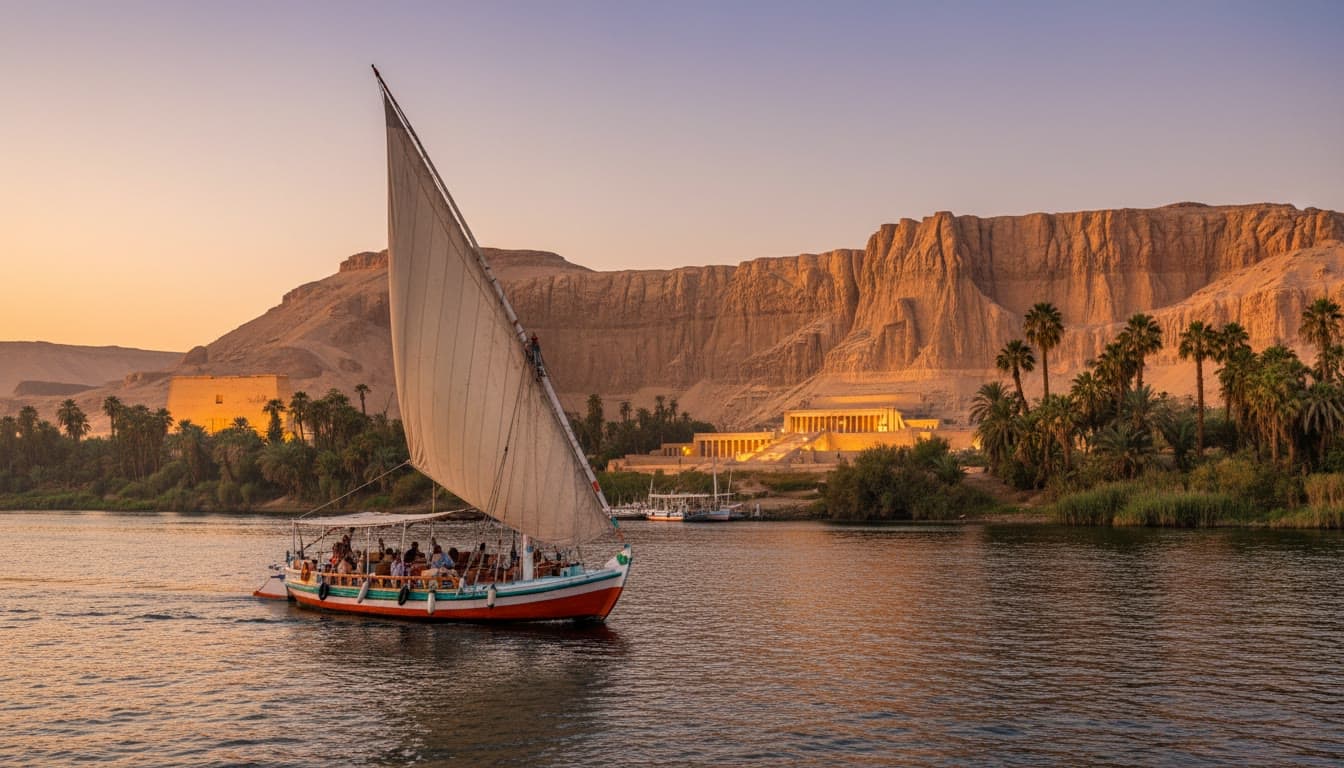

En la cuestión de dahabiya vs barco de crucero, el velero gana en tranquilidad y en número: compartes el río con quizás una docena de otros huéspedes. El barco gana en espacio, una piscina y un horario alrededor del cual puedes reservar vuelos. Una dahabiya navega cuando el viento lo permite y es remolcada cuando no, así que renuncias a cierto control. La mayoría de los principiantes con un horario ajustado se desenvuelven mejor en un barco.
Las parejas y los aficionados a los viajes lentos suelen preferir la dahabiya.
Qué es una dahabiya y cómo se diferencia de un barco de crucero
Una dahabiya es un barco de vela tradicional de dos mástiles con velas latinas. Comenzó como una casa flotante privada para viajeros adinerados en el Nilo, y el nombre es simplemente la palabra árabe para ello. Las versiones de hoy están reconstruidas como pequeños barcos de huéspedes con un puñado de cabinas. Para la historia, la entrada de Wikipedia sobre la dahabiya es un buen comienzo.
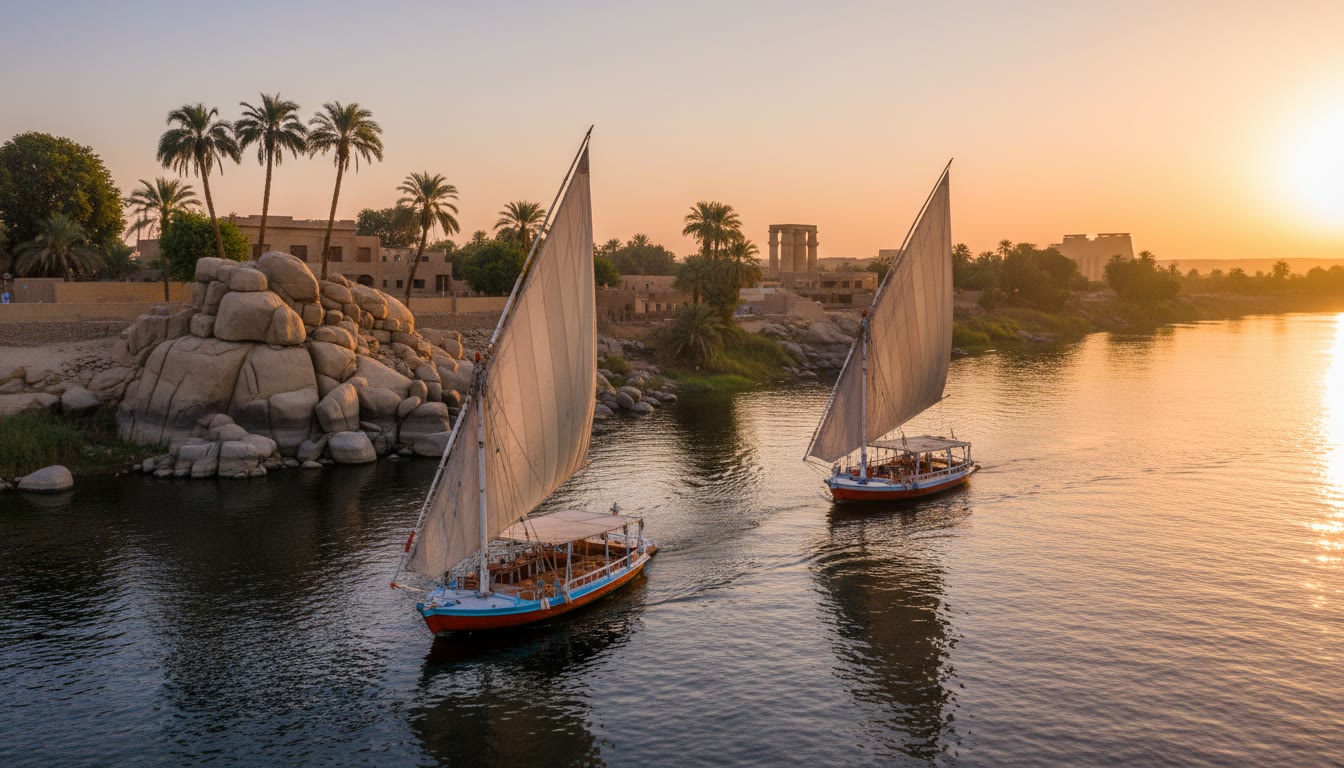
La escala es la verdadera división. Una dahabiya lleva alrededor de una docena a dieciséis huéspedes, con una tripulación casi tan grande como la lista de pasajeros. Un barco convencional del Nilo lleva bien más de cien.
Los barcos más nuevos de las grandes marcas europeas han elevado el nivel de comodidad en el lado del barco, pero no han cambiado lo básico en cuanto a tamaño, atraque y ritmo. Ambos tipos cubren el mismo tramo de río y ven los mismos templos. Lo que cambia es cómo llegas a ellos y con quién los compartes.
Si los barcos de vela te atraen, comienza con nuestros cruceros en dahabiya. Los barcos en la misma ruta están agrupados bajo cruceros de Luxor a Asuán.
Dahabiya vs barco de crucero: comparación lado a lado
Este es el patrón habitual en un viaje de Luxor a Asuán. Los barcos individuales varían, así que trata cada celda como una regla general.
| Característica | Dahabiya | Gran barco de crucero |
|---|---|---|
| Invitados a bordo | Alrededor de 16 como máximo | Bien más de 100 |
| Cabañas | Unas pocas, decoradas individualmente, baño privado; generalmente más pequeñas y pueden carecer de balcón | Cabañas estándar más grandes, a menudo con ventanas panorámicas o balcones |
| Propulsión | Navega cuando el viento lo permite; remolque o motor pequeño de lo contrario | Impulsado por motor, horario fijo |
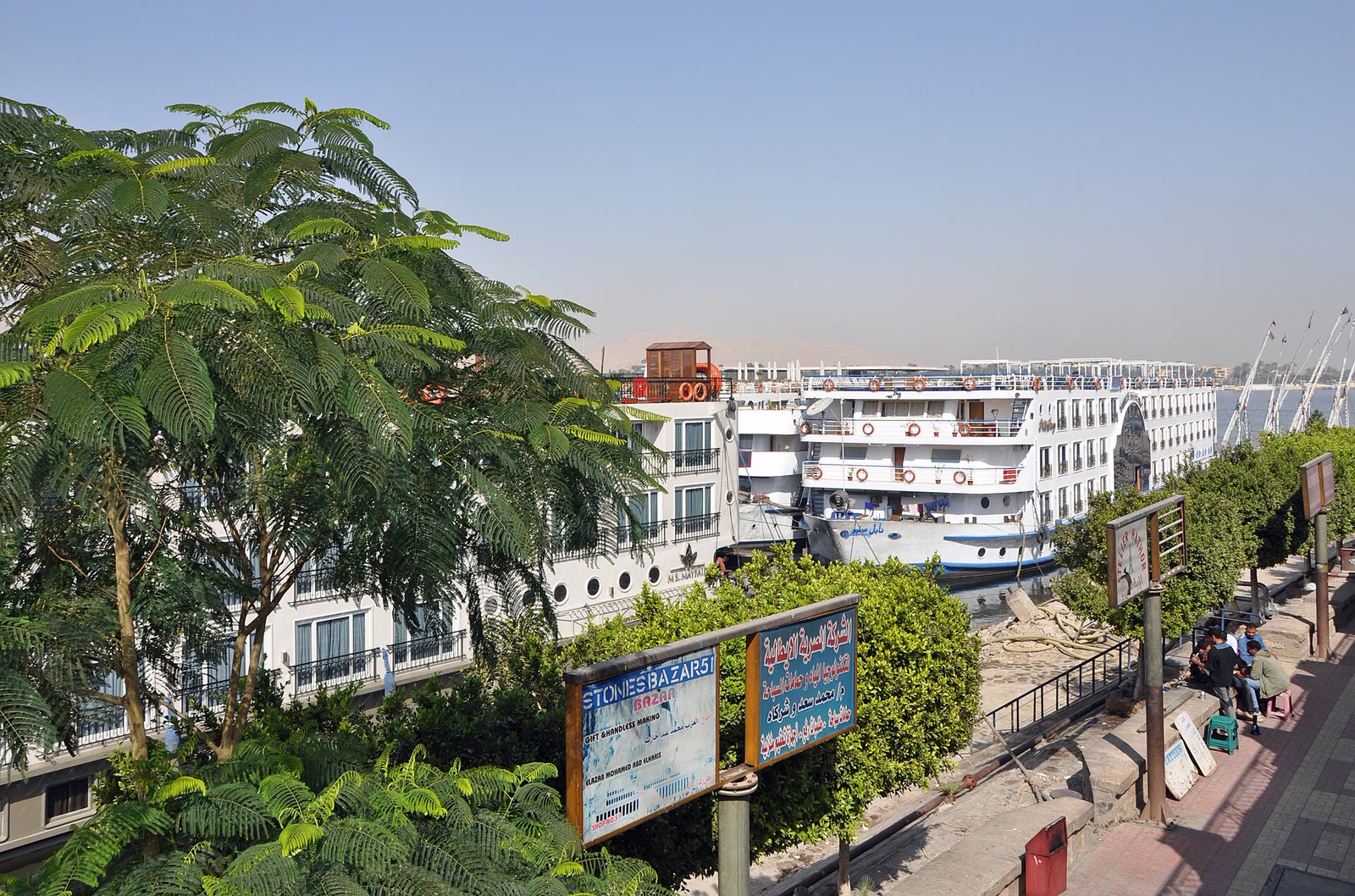
| Amarre | Puede amarrar en bancos tranquilos y bancos de arena | Se atraca en puntos de desembarque establecidos, a menudo en filas con otros barcos |
| Ritmo | Flexible, moldeado por el viento y el calor | Salidas fijas y horarios de excursiones |
| Duración típica de Luxor a Asuán | A partir de alrededor de 4 noches, a menudo más | Alrededor de 3–4 noches |
| Comidas | Menú fijo o pequeña elección, cocinado para pocos invitados | Buffet con horarios de comida establecidos |
| Instalaciones | Deck y salón con sombra; una pequeña piscina de inmersión en el mejor de los casos | Piscina y solárium, además de un bar; algunos tienen gimnasio o spa |
| Precio por noche (relativo) | Generalmente más alto, más cerca de barcos premium | Amplia gama; el extremo económico es más barato |
| Mejor temporada | De octubre a abril; el calor del verano por encima de 40°C hace que el tiempo en cubierta sea desagradable | De octubre a abril; el mismo calor del verano, aunque una piscina ayuda |
Una advertencia sobre el precio. Un barco convencional superará casi cualquier dahabiya, pero un barco de cinco estrellas puede costar aproximadamente lo mismo por noche que un velero. Compara dentro de tu propio estándar.
Viento, motores y el horario que realmente obtendrás
Una dahabiya navega solo cuando el viento coopera. El viento predominante en Egipto sopla desde el norte, por lo que dirigirse hacia el sur desde Luxor hacia Asuán es la dirección más fácil bajo vela. Al ir hacia el norte, la corriente hace parte del trabajo. En días tranquilos, un remolcador tira del barco, o un motor pequeño funciona.
Un viaje sin uso de motor es raro. Si un operador promete navegación pura todo el camino, pregunta cuántas horas estuvieron realmente bajo vela en salidas recientes.
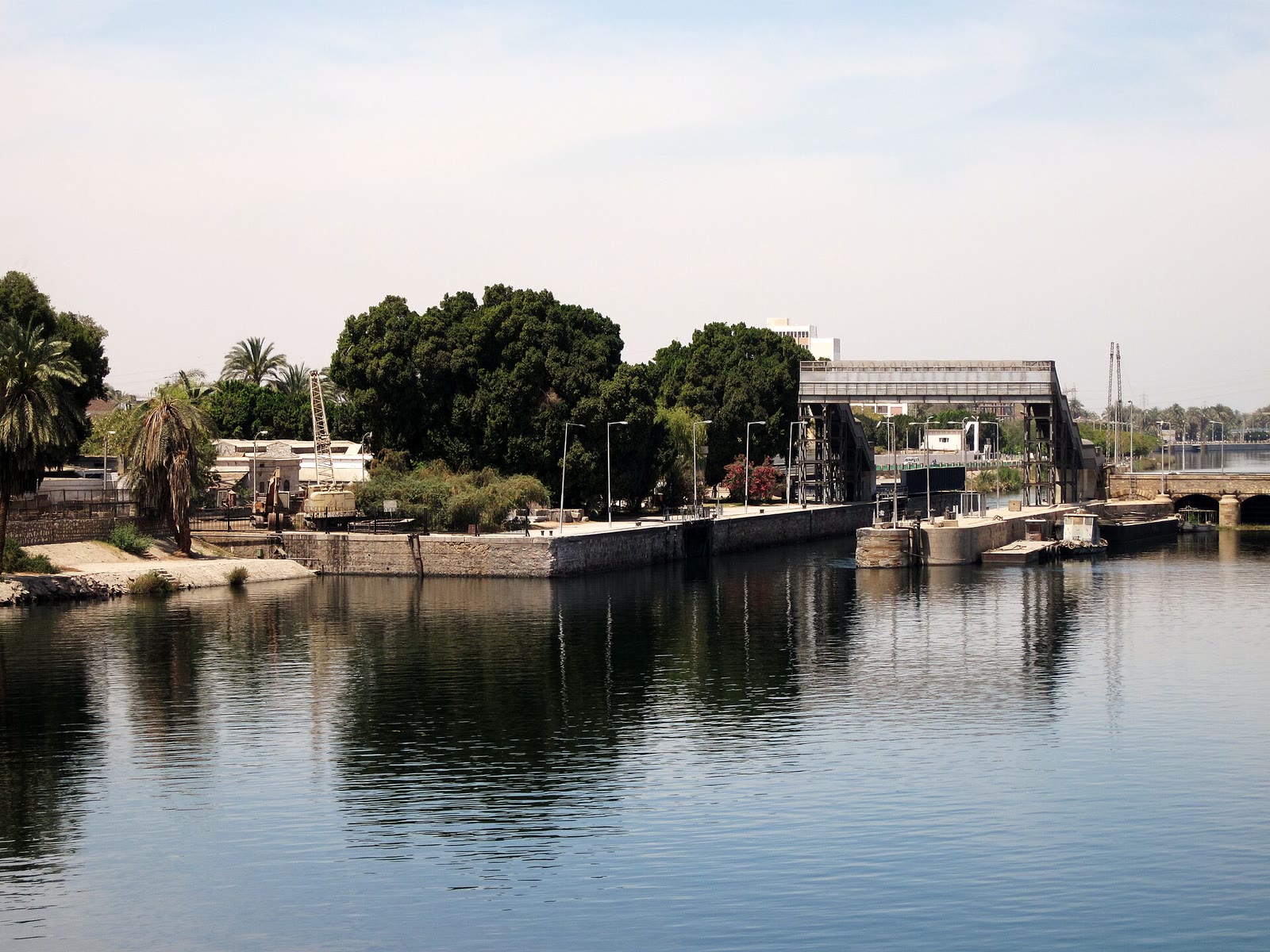
La esclusa de Esna retrasa ambos tipos de embarcaciones. Los barcos pueden hacer cola allí durante un buen rato, por lo que cualquier cronograma de itinerario es aproximado.
En un barco obtienes salidas fijas, horarios de excursiones establecidos y generalmente un inicio temprano en los principales sitios. Una dahabiya es más flexible. El guía ajusta las visitas según el calor y las multitudes, y el día sigue al viento tanto como al reloj.
Si debes estar en Asuán a una hora determinada para un vuelo a Abu Simbel o un tren, elige un barco. Nuestro artículo sobre Asuán a Abu Simbel por carretera o vuelo explica por qué esa conexión es importante. El trayecto dura de 3.5 a 4 horas y el vuelo aproximadamente 45 minutos, por lo que una llegada tardía puede costarte el plan.
Paradas y lugares de interés entre Luxor y Asuán
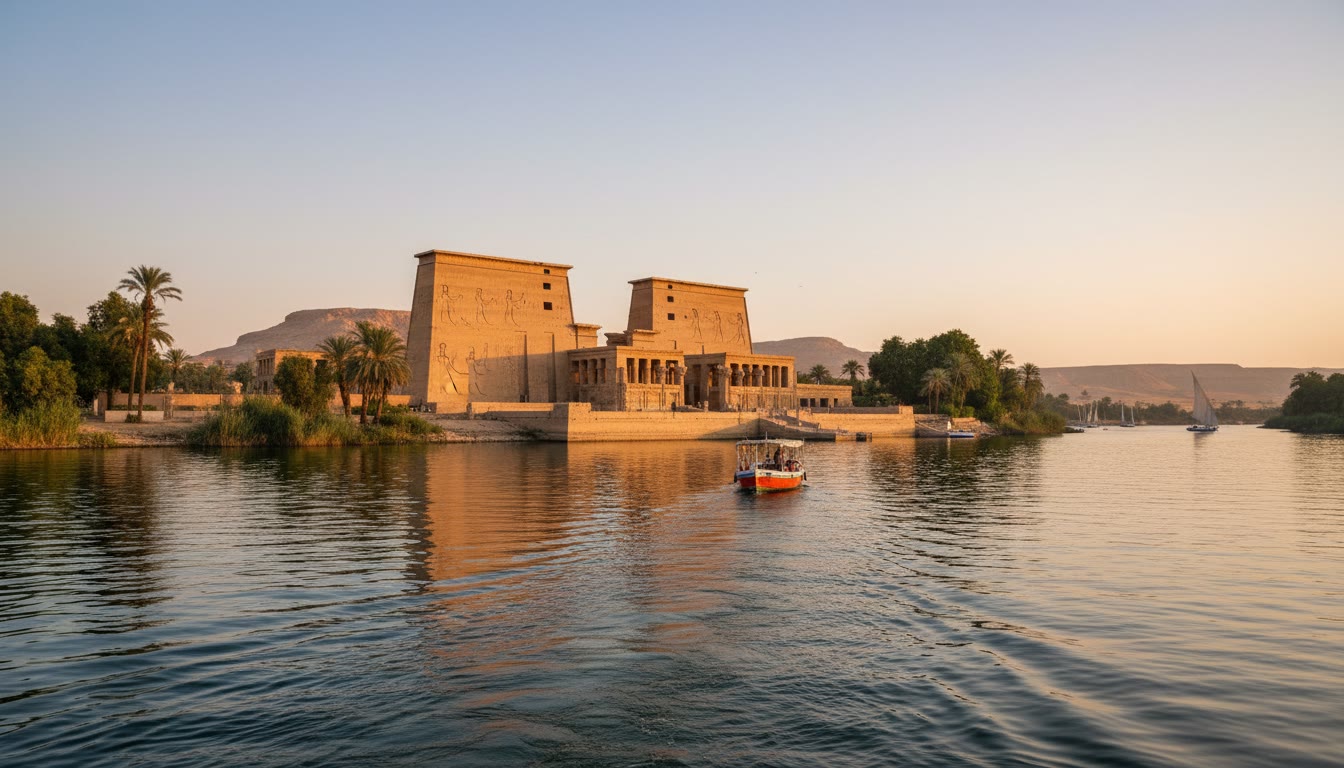
La ruta sigue el mismo orden en ambos. Luxor es primero, con Karnak y los sitios de la Ribera Occidental. Luego Esna, Edfu y Kom Ombo, terminando en Asuán con Filae y la Alta Presa. Los monumentos tebanos están cubiertos por la lista de la UNESCO para Tebas Antigua, y los templos principales son idénticos, elijas el barco que elijas.
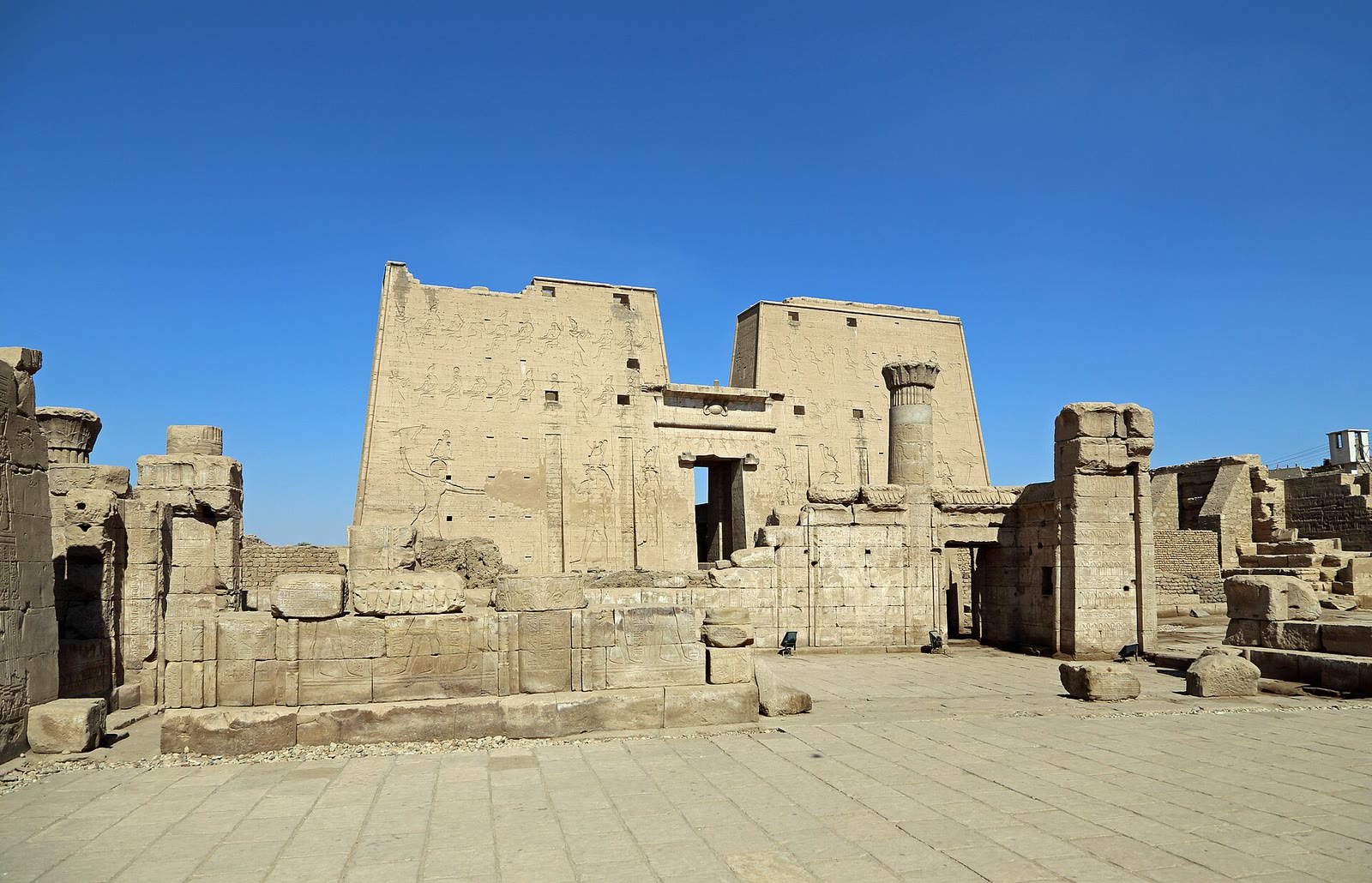
La diferencia práctica es la gestión de multitudes. Los barcos atracan en el embarcadero del pueblo para cada templo, y los grupos de turistas llegan juntos. Edfu y Kom Ombo pueden estar ocupados en horas pico. Un grupo de dahabiya es lo suficientemente pequeño como para ir temprano o tarde, lejos de los grupos de autobuses.
Algunas dahabiyas atracan en lugares más tranquilos a la orilla del río y llegan a lugares menos visitados como Gebel el-Silsila o El Kab. Eso depende del operador y los permisos, así que pregunta qué extras están incluidos en lugar de asumirlos.
Ambos tipos suelen incluir un paseo en faluca en Asuán. Algunos viajes en dahabiya añaden caminatas por el pueblo o tiempo en un banco de arena, lo que un barco rara vez tiene tiempo de hacer.
Edfu y Kom Ombo son paradas cortas en la mayoría de los barcos, a menudo una o dos horas en el templo. Si los templos son tu prioridad, un guía egiptólogo privado importa más que el barco. Nuestra guía de viaje de Luxor a Asuán cubre la ruta y la alternativa por carretera con más detalle.
Velo por ti mismo
Viajes que visitan los lugares en este artículo.


¿Quieres una ruta o longitud diferente? La construiremos a tu alrededor.
Comparación de cabinas, comida y precio
Los barcos te ofrecen más espacio en el suelo, un baño más grande y a menudo un balcón. Las cabinas de dahabiya son más pequeñas pero tienen más carácter, y los barcos modernos tienen buen aire acondicionado. Pregunta sobre el ruido del generador y los pasos de la tripulación arriba. El sonido se propaga en un barco de madera.
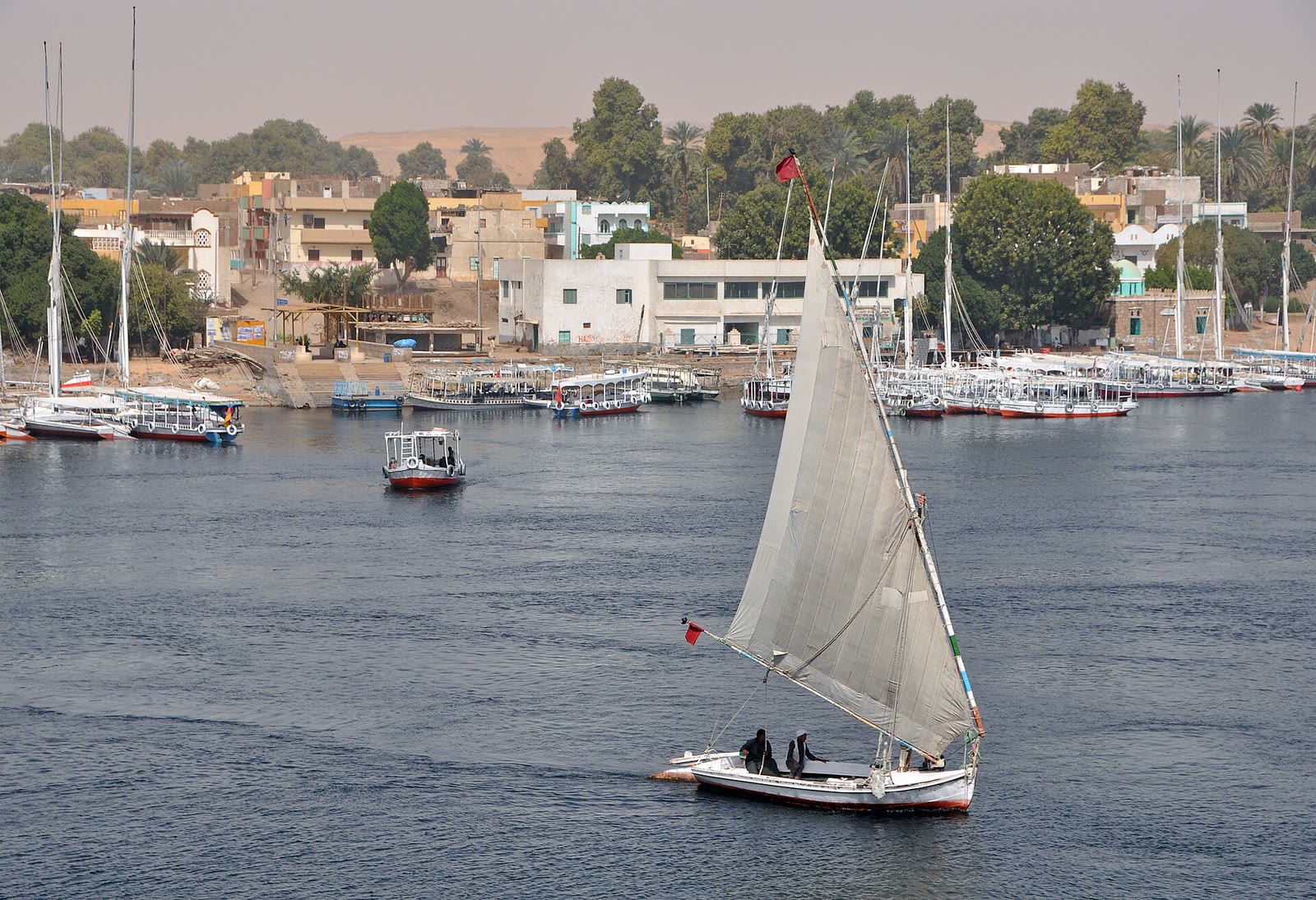
Las instalaciones favorecen al barco: una piscina, una terraza al sol, un bar, a veces un gimnasio. Una dahabiya tiene una cubierta sombreada y un salón. La piscina y el entretenimiento nocturno atraen a algunas personas e irritan a otras, así que decide en qué grupo estás antes de reservar.
La comida también difiere. Un barco sirve un buffet en horarios de comida establecidos con una amplia elección. Una dahabiya cocina un menú fijo para unos pocos huéspedes, a menudo con más platos locales y mejor manejo de necesidades dietéticas. Informa al operador sobre alergias antes de pagar un depósito.
Una tarifa normalmente cubre pensión completa, excursiones, un guía y tarifas de entrada. Las bebidas y las propinas suelen ser adicionales, al igual que Abu Simbel y las tumbas de entrada adicional en el Valle de los Reyes. Las dahabiyas cuestan más por noche, y dado que el viaje suele ser más largo, el total aumenta rápidamente.
Compara igual por igual antes de juzgar el valor: mismas inclusiones, mismo número de noches. Cuando leas reseñas de cruceros en dahabiya, verifica que describan el barco actual y no uno más antiguo.
¿Quieres explorar Dahabiya vs Crucero en el Nilo: ¿Cuál te conviene??
Permítenos diseñar el itinerario privado perfecto para ti. Desde expertos guías locales hasta cruceros de lujo, creamos viajes a medida que te muestran el Egipto real.
Cruceros por el NiloTours en Dahab y SinaíPaquetes de Viaje a EgiptoPaquetes de Lujo
A quién le conviene cada opción
Parejas y recién casados. Una dahabiya ofrece privacidad y tranquilidad. Un barco ofrece comodidad y un poco de vida a bordo. Es posible un chárter privado de dahabiya si deseas tener todo el barco para ustedes.
Familias con niños. Un barco suele ser la mejor opción. Tiene piscina, más espacio y comedor flexible. Una dahabiya tiene cubiertas abiertas y pasarelas y no hay salvavidas, lo cual es importante con niños pequeños. Los adolescentes y niños mayores pueden disfrutar de una si toda la familia está relajada con los horarios.
Primerizos con días limitados. Un crucero en barco de 4 noches se ajusta a un viaje de 7 o 10 días con un horario predecible. La etapa del Nilo normalmente se sitúa después de El Cairo y antes de un complemento a Abu Simbel.
Fans del viaje lento y fotógrafos. Una dahabiya te conviene. Los días sin viento pueden hacerse largos, y el viaje puede parecer extenso si deseas un turismo constante.
Viajeros con movilidad limitada. Muchos barcos tienen ascensores y pasillos más anchos. Las dahabiyas tienen escaleras estrechas y pasarelas, así que pregunta al operador exactamente cómo funciona el embarque.
Podemos organizar cualquiera de las dos como parte de un viaje a Egipto a medida, y las fechas de dahabiya en los meses más frescos se llenan. Para verificar la disponibilidad de fechas particulares, envíanos un WhatsApp al +20 106 023 3393.
Lista de verificación de decisiones: dahabiya o barco de crucero
- Tamaño del grupo. Si te molesta cenar con más de cien extraños, elige una dahabiya. Si te gusta un poco de compañía, un barco está bien.
- Espacio en la cabina. ¿Necesitas espacio para extenderte o quieres un balcón? Un barco gana.
- Piscina y bar. Si son importantes, reserva un barco. Si prefieres ver la orilla pasar, una dahabiya.
- Fechas fijas. ¿Vuelos, trenes o una conexión a Abu Simbel? Toma un barco.
- Horarios dependientes del viento. Si puedes vivir con remolques y un horario flexible, una dahabiya está bien.
- Noches disponibles. Con 3–4 noches, un barco. Con una semana o más, una dahabiya se vuelve realista.
- Movilidad. ¿Escaleras y pasarelas son un problema? Un barco.
- Niños pequeños. Un barco, por las razones de seguridad en la cubierta mencionadas anteriormente.
- Precio por noche. La tarifa más baja pertenece a un barco convencional. Paga más solo si un grupo pequeño vale la pena para ti.
- Temporada. Ambos funcionan de octubre a abril. En verano, con temperaturas a menudo superiores a 40°C, un barco con piscina y aire acondicionado fuerte es más fácil de soportar.
- Amarras tranquilas. Si elegirías un banco de arena sobre un muelle regular, eso es una dahabiya.
Si la mayoría de tus respuestas apuntan a espacio, instalaciones y horarios fijos, elige un barco. Si apuntan a un grupo pequeño y un ritmo flexible, elige una dahabiya.
Antes de reservar cualquiera, pregunta por la edad del barco y la última renovación, quién es el guía a bordo, las horas de motor en viajes recientes y los términos de cancelación.
Preguntas frecuentes
¿Qué es una dahabiya?
Una dahabiya es un barco de vela tradicional del Nilo con dos velas latinas, originalmente una casa flotante privada. Las versiones modernas llevan aproximadamente de una docena a dieciséis huéspedes en algunas cabinas privadas. Navegan cuando el viento lo permite y son remolcadas o utilizan un pequeño motor cuando no lo es.
¿Quieres explorar Dahabiya vs Crucero en el Nilo: ¿Cuál te conviene??
Permítenos diseñar el itinerario privado perfecto para ti. Desde expertos guías locales hasta cruceros de lujo, creamos viajes a medida que te muestran el Egipto real.
Cruceros por el NiloTours en Dahab y SinaíPaquetes de Viaje a EgiptoPaquetes de Lujo
¿Es mejor una dahabiya que un barco de crucero por el Nilo?
Ninguna gana de manera absoluta. Una dahabiya te ofrece un grupo pequeño, amarras tranquilas y un ritmo más lento. Un barco te ofrece cabinas más grandes, más instalaciones y un horario más firme, generalmente a un precio más bajo por noche. Si los vuelos fijan tus fechas o viajas con niños pequeños, un barco suele ser la opción más segura.
¿Cuánto dura un crucero en dahabiya de Luxor a Asuán?
Los itinerarios de dahabiya generalmente comienzan en alrededor de cuatro noches y a menudo duran más, porque el barco depende del viento. Un barco convencional cubre el mismo tramo en aproximadamente 3–4 noches. Por carretera, son solo unas 3–3.5 horas, así que eliges un crucero por el río, no por la velocidad.
¿Las dahabiyas navegan realmente, o utilizan motores?
Ambas. El viento del norte predominante ayuda cuando te diriges hacia el sur desde Luxor, pero en días tranquilos el barco es remolcado por un remolcador o funciona con un pequeño motor. Muy pocos viajes se navegan todo el camino. Pregunta al operador cuántas horas estuvieron bajo vela en las salidas recientes, y sé escéptico ante una promesa de navegación pura.
¿Cómo leo las reseñas de cruceros en dahabiya?
Prefiere las reseñas recientes que mencionen el uso del viento y del motor, el aire acondicionado, el ruido del generador, la condición de la cabina y el guía. Ten cuidado con los elogios vagos. Verifica que la reseña describa el barco actual y una temporada similar a la tuya, luego compara lo que dicen los reseñadores con las inclusiones declaradas por el operador.
¿Planeando un viaje a Egipto?
Deje que nos encarguemos de los detalles. Desde guías privadas hasta cruceros de lujo por el Nilo, creamos itinerarios personalizados que le muestran el verdadero Egipto.
Personaliza a través de WhatsApp