
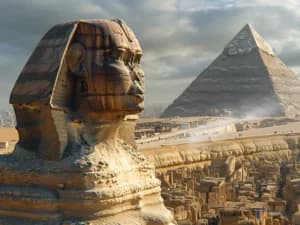

Ever stood before a modern skyscraper, all glass and steel, and felt a whisper of something ancient, something profound? Maybe not consciously, but trust me, it's there. The echoes of Egypt, this land I'm so passionate about, ripple through far more than just museum exhibits and history books. They're etched into the very foundations of our built world, informing designs from monumental to mundane. It's a fascinating journey, tracing those lines from the desert sands to urban jungles, and one I can't wait to share with you.
More Than Just Pyramids: Unpacking Egypt's Architectural Legacy
When most people think of ancient Egyptian architecture, their minds immediately jump to the Pyramids of Giza. And rightly so – they are, without a doubt, one of humanity's most staggering achievements. But Egypt offered so much more than just these iconic triangular forms. Think about the colossal temples of Karnak and Luxor, stretching for what feels like miles, their hypostyle halls a forest of intricately carved columns. Consider the obelisks, piercing the sky with their elegant simplicity, or the massive pylon gateways that announced sacred spaces. These weren't just buildings; they were statements. Statements of power, divinity, eternity, and a deep understanding of engineering and aesthetics that frankly, still blow my mind.
What strikes me most, when I wander through these ancient sites, is the sheer scale and permanence. The Egyptians built for eternity, and that unwavering vision has resonated through millennia. Their mastery of stone, their innovative use of post-and-lintel construction, the symbolic language embedded in every line and relief – it all formed a design vocabulary that proved incredibly influential.
From the Nile to the Neoclassical: Early Adopters of Egyptian Style
The first obvious ripples of Egyptian influence hit during the Neoclassical period, particularly after Napoleon's campaigns in the late 18th century ignited a fervor for all things Egyptian. Suddenly, sphinxes were guarding doorways in Parisian mansions, obelisks were popping up in European squares, and Egyptian motifs found their way into everything from furniture to funerary architecture. It was a stylistic craze, a romantic fascination with the 'exotic' and the 'timeless,' and it left its mark.
- Obelisks: Take the Washington Monument, for example. It's not a pyramid, but its towering, tapering form is a direct homage to ancient Egyptian obelisks, symbolizing strength and aspiration.
- Pylon Gateways: While not as common in their pure form, the idea of a grand, symmetrical entrance designed to impress and delineate space, often flanked by monumental elements, clearly has roots in Egyptian temple architecture. Think of some of the grander entrances to museums or public buildings.
- Columns and Capitals: The lotus, papyrus, and palm capitals found in Egyptian temples were adapted and reinterpreted by later cultures, eventually influencing classical orders and beyond.
Art Deco and Beyond: A Resurgence of Egyptian Glamour
Fast forward to the early 20th century, specifically the 1920s and 30s. The discovery of Tutankhamun's tomb in 1922 unleashed another wave of Egyptomania. This time, it fed directly into the sleek, geometric aesthetic of Art Deco. Think of the Chrysler Building in New York, with its tiered crown and sunburst motifs. While not overtly Egyptian, the verticality, the sense of upward thrust, the decorative panels, and the bold, often symmetrical forms all echo the grandiosity and symbolic language of ancient Egyptian design. Movie palaces of the era, too, often incorporated Egyptianizing elements, from stylized hieroglyphs to grand, pharaonic-inspired foyers.
It wasn't about direct copying anymore; it was about capturing a mood. That sense of eternal grandeur, of disciplined form married with rich symbolism, found a new expression in the modern age. It’s funny how something so ancient can feel so utterly modern when reinterpreted with a fresh eye.
Want to explore The Impact of Ancient Egypt on Modern Architecture?
Let us design the perfect private itinerary for you. From expert local guides to seamless luxury cruises, we craft custom trips that show you the real Egypt.
Customize via WhatsAppThe Enduring Principles: Scale, Mass, and Symbolism
Beyond specific stylistic elements, the true, deeper impact of ancient Egypt on modern architecture lies in its core principles. Architects today, whether they realize it or not, are often grappling with the same fundamental questions the ancient Egyptians brilliantly answered:
- Monumentality and Scale: The Egyptians understood the psychological power of massive structures. That sense of awe, of human insignificance against divine or civic might, is something modern architects still strive for in public buildings, corporate headquarters, and even residential towers.
- Permanence and Durability: Building to last, a hallmark of Egyptian construction, continues to be a goal. Modern materials might be different, but the desire for structures that defy time remains.
- Symbolism and Narrative: Egyptian architecture was deeply resonant with meaning. Every element told a story. While modern architecture might be less literal, the idea that a building can communicate values, aspirations, or a brand identity is a direct descendant of this ancient practice. Think of corporate logos embedded in building facades, or the symbolic forms of museums.
- The Relationship with Light: The way Egyptians manipulated light within their temples, creating dramatic contrasts and sacred glows, is echoed in contemporary designs that play with natural light, shadow, and artificial illumination to evoke mood and emphasize form.
Looking Forward, Looking Back
So, the next time you marvel at a towering edifice, or appreciate the solid, imposing presence of a government building, take a moment. Look closely. You might just catch a glimpse of the desert sun reflected in a modern facade, a subtle nod to the masters who built for eternity along the Nile. It’s a testament to the enduring genius of ancient Egypt that its architectural DNA continues to inform, inspire, and shape the world we build around us. And honestly, for me, that makes this ancient land even more incredible to explore. It's not just history; it's a living legacy, constantly evolving, constantly inspiring.
Come experience it for yourself. Feel the weight of those ancient stones, and then imagine how their spirit reshaped the world. It’s a powerful experience, I promise.
Planning a trip to Egypt?
Let us handle the details. From private guides to luxury Nile cruises, we create custom itineraries that show you the real Egypt.
Customize via WhatsApp