
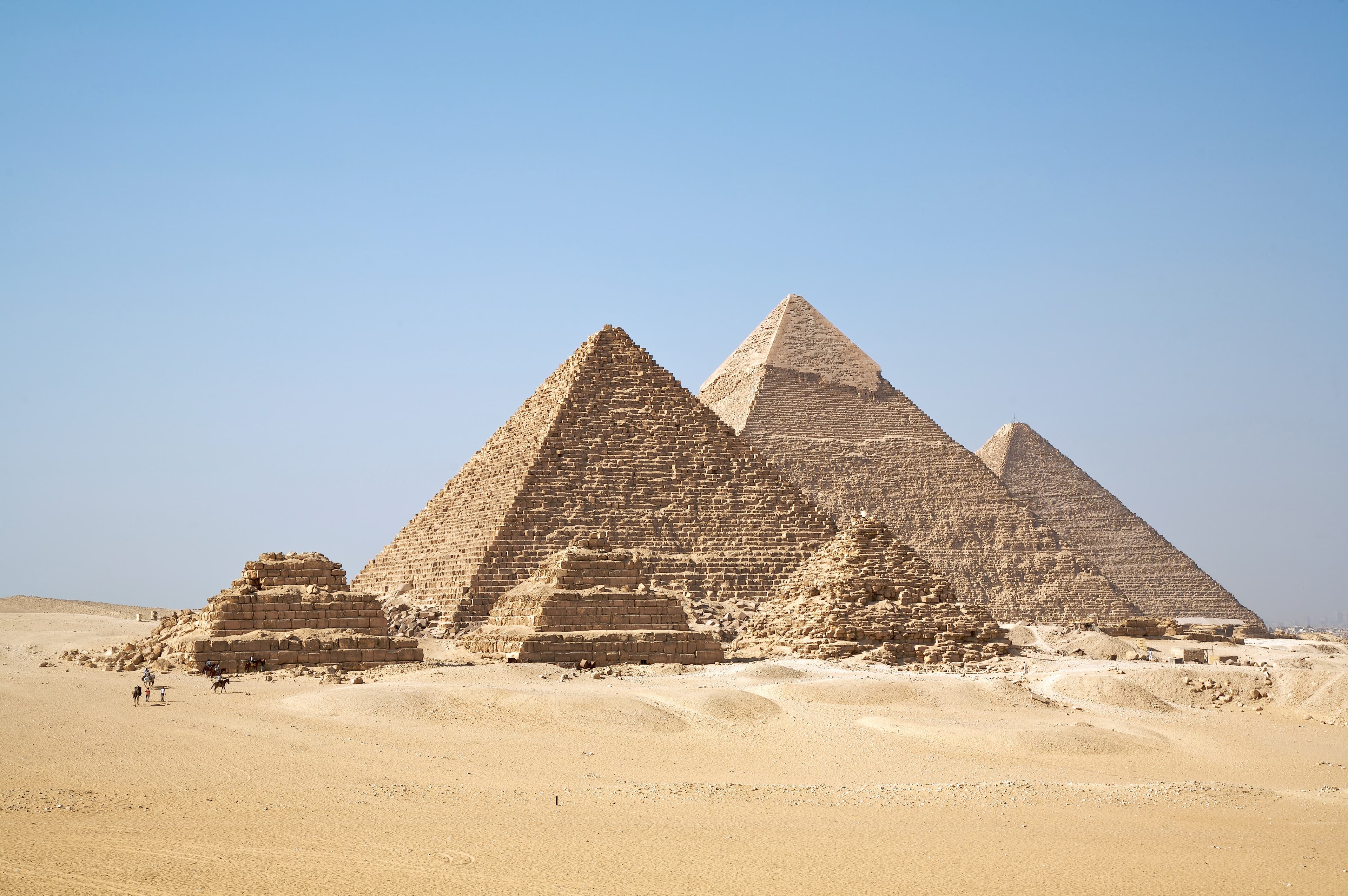

You see them in pictures, hear about them in legends – the Egyptian pyramids. They're not just piles of old stones; they're monumental echoes of a civilization that pushed the boundaries of what was possible, all while holding onto deep spiritual beliefs. Mostly popping up during Egypt's Old and Middle Kingdoms, these structures were pharaohs' eternal homes, showcasing unbelievable engineering smarts.
From the immense Giza pyramids to countless smaller, time-worn ruins, about 138 of them dot the desert landscape along the Nile's western bank. Their sheer size, meticulous precision, and incredible endurance make them enduring symbols of ancient Egypt, giving us a precious glimpse into their world, their faith, and how ingeniously they solved problems.
The Journey to the Pyramid Shape
From Humble Beginnings: The Mastaba Tombs
Before we hit those iconic pyramids, ancient Egyptian nobles and even earlier pharaohs found their final resting places in 'mastabas.' Think of them as rectangular, mud-brick benches, which is what the Arabic word literally means. These weren't grand, but they were pretty clever: flat roofs, underground burial chambers, and little chapels on top for offerings and rituals. They were the standard, even continuing alongside the first pyramids, and you can still see vast mastaba fields at places like Saqqara and Giza.The Game Changer: The Step Pyramid (around 2650 BC)
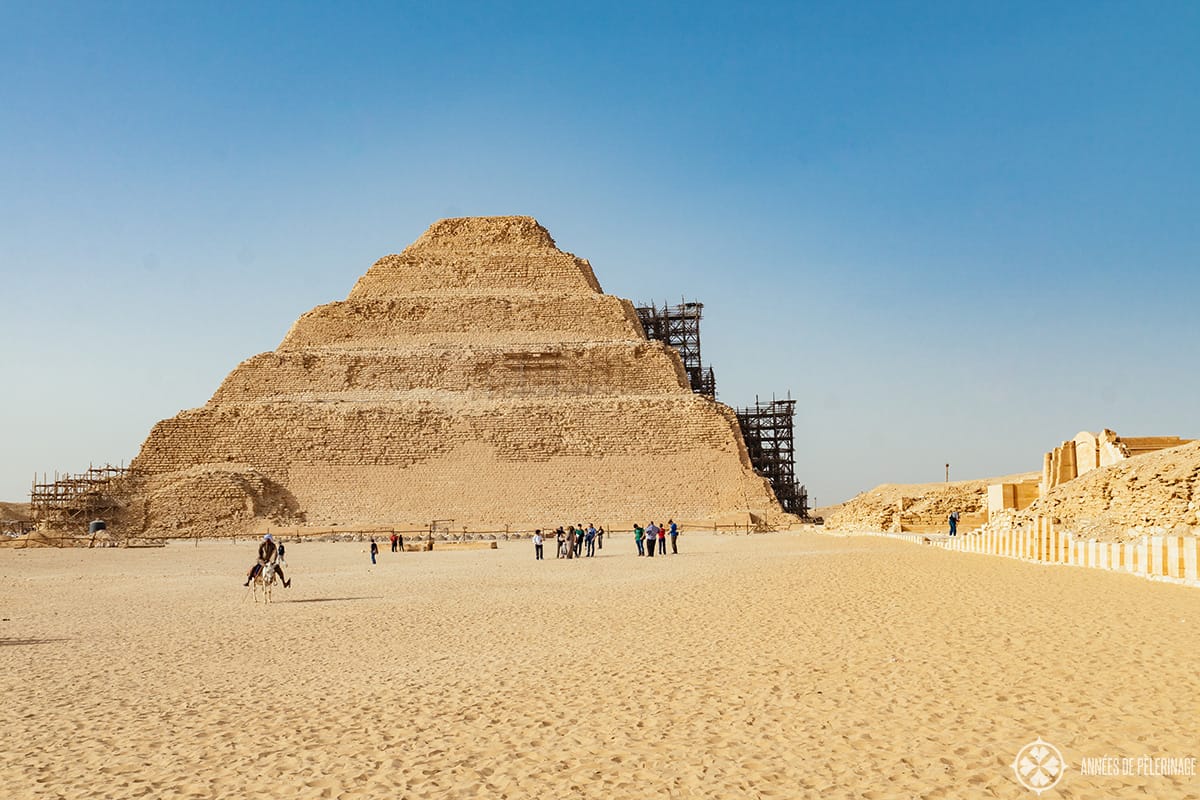
The real revolution began with Djoser's Step Pyramid at Saqqara. This wasn't just another mastaba; it was a defiant leap into monumental stone architecture. Imagine a brilliant mind named Imhotep, acting as architect, stacking six progressively smaller mastabas on top of each other. The result? A 62-meter-tall, stepped colossus – Egypt's very first major stone building. This wasn't just a tomb; it was a statement, setting the stage for every pyramid that followed.Learning Curve: The Bent Pyramid (around 2600 BC)
Pharaoh Sneferu, Djoser's successor, was clearly an ambitious guy, but even he had a few architectural hiccups. His Bent Pyramid at Dahshur is fascinating because it's a visible record of trial and error. It starts steep, then shifts to a shallower angle midway up (from 54° to 43°). Historians suspect structural issues during construction forced the change, giving it that distinct, well, 'bent' look. It shows they were figuring things out as they went, trying to achieve that perfect smooth-sided pyramid.The Breakthrough: The Red Pyramid (around 2590 BC)
Sneferu eventually got it right. Also at Dahshur, his Red Pyramid is celebrated as Egypt's first truly successful smooth-sided pyramid, maintaining a consistent 43° angle from base to peak. It gets its name from the reddish limestone that's now exposed since most of its polished white casing stones are gone. This one was the true prototype, showing the way for what would come next at Giza.¿Quieres explorar Unraveling the Mystery: How Egypt's Pyramids Were Built?
Permítenos diseñar el itinerario privado perfecto para ti. Desde expertos guías locales hasta cruceros de lujo, creamos viajes a medida que te muestran el Egipto real.
Personalizar por WhatsAppTours a las Pirámides de GizaPaquetes de Viaje a EgiptoCruceros por el Nilo
The Apex: The Great Pyramids of Giza (around 2580-2510 BC)
And then, we arrive at Giza. The pyramids of Khufu, Khafre, and Menkaure aren't just big; they're the embodiment of peak ancient Egyptian building prowess. They combine immense scale with engineering precision you can barely wrap your head around, sophisticated internal chambers, and sprawling temple complexes. Khufu's Great Pyramid, originally towering at 146.5 meters, held the record as the world's tallest structure for over 3,800 years. It's the only one of the original Seven Wonders of the Ancient World still standing, a marvel of human achievement.The Evolution Continues: Later Pyramids
After the dazzling 4th Dynasty pyramids at Giza, subsequent pharaohs still built pyramids, though they tended to be a bit smaller and less grand. But even these had their own innovations: * **5th Dynasty (around 2500-2350 BC):** Pyramids like that of Unas at Saqqara introduced the first 'Pyramid Texts' – hieroglyphic spells carved into the burial chamber walls, guiding the pharaoh into the afterlife. * **6th Dynasty (around 2350-2181 BC):** The tradition continued, still incorporating those important Pyramid Texts. * **Middle Kingdom (around 1991-1650 BC):** These often featured mud-brick cores, then covered with limestone casings. Sadly, many of these haven't stood the test of time as well as their Old Kingdom predecessors.
How Did They Actually Build Them? The Great Unsolved Mystery (Mostly)
The Human Engine: Labor Organization
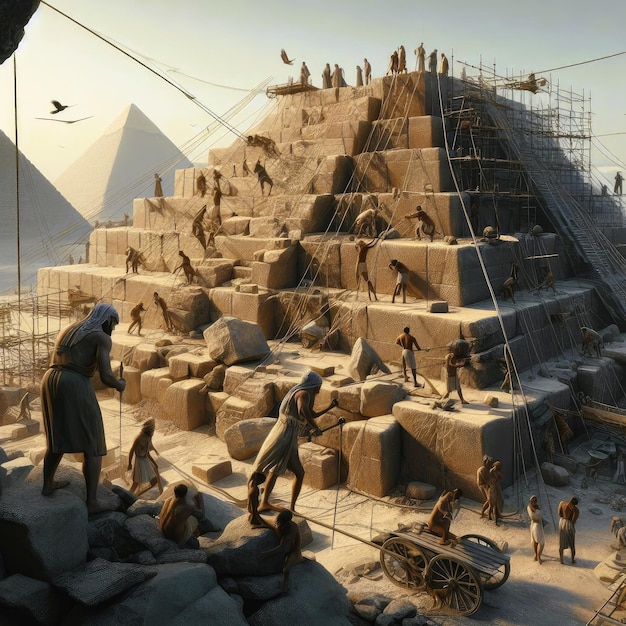
Let's get one thing straight: the pyramids were **not** built by slaves. This is a persistent myth! Instead, think of a massive, highly organized workforce of paid laborers, skilled craftsmen, and even farmers who, during the annual Nile flood season when their fields were underwater, were conscripted to work on these grand projects. Numbers? For the Great Pyramid, estimates suggest anywhere from 20,000 to 30,000 workers, including quarrymen, haulers, masons, engineers, and all the support staff needed to feed and house them. We've found archaeological evidence of dedicated worker villages at Giza, complete with bakeries, breweries, and even medical facilities. These weren't suffering slaves; they were a well-managed, respected workforce, essential to the pharaoh's eternal journey.¿Quieres explorar Unraveling the Mystery: How Egypt's Pyramids Were Built?
Permítenos diseñar el itinerario privado perfecto para ti. Desde expertos guías locales hasta cruceros de lujo, creamos viajes a medida que te muestran el Egipto real.
Personalizar por WhatsAppTours a las Pirámides de GizaPaquetes de Viaje a EgiptoCruceros por el Nilo
Getting the Stone: Quarrying Techniques
Imagine cutting millions of tons of stone with ancient tools. Most of the pyramids were built with local limestone, quarried relatively close to the sites. They'd use copper tools to cut into natural cracks, then wooden wedges. These wedges, when soaked with water, would expand and split the rock. For the harder stones, like the granite used in burial chambers (often from Aswan, over 800 km south!), they'd use stone pounding tools and sand abrasives. And for that brilliant, blinding white outer casing? That came from the fine Tura limestone quarries across the Nile.Moving the Mountains: Transport Methods
This is where it gets really fascinating, and honestly, we're still piecing together the full picture. The exact method for moving those colossal blocks remains one of the pyramid's enduring enigmas. Here are the leading theories: * **Straight Ramps:** Picture one long, straight ramp, made of mud-brick and rubble, extending from the quarries to the pyramid. As the pyramid grew, so did the ramp. The downside? This would have required an enormous amount of material, almost as much as the pyramid itself! * **Spiral Ramps:** Maybe the ramps spiraled around the pyramid as it rose. This would be more material-efficient, but how would they finish the pyramid's very top with a ramp encircling it? * **Internal Ramps:** Some theories suggest ramps might have been built *inside* the pyramid's structure. This could explain certain internal features but lacks definitive archaeological proof. * **Combined Methods:** The most plausible scenario is probably a mix of everything. Different ramp types for different stages of construction, adapting as needed. Regardless of the ramp design, the land transport involved wooden sledges, pulled by teams of workers over tracks that were likely lubricated to reduce friction. Stones from distant quarries, like Aswan granite, were floated on barges during the Nile's annual flood, a natural highway.The Finishing Touches: Placement and Precision
Once on site, laying those blocks was another marvel. The pyramids are astonishingly precise. They're aligned to the cardinal directions (north, south, east, west) with incredible accuracy, sometimes within just 0.05 degrees, achieved through sophisticated astronomical observations. The foundations? Leveled to within mere centimeters using water-filled channels. How they lifted and positioned multi-ton blocks at height is still debated. Levers, counterweights, and even simple but ingenious use of manpower and ramps are all proposed. Finally, after the core was complete, the fine limestone casing stones were meticulously applied from top to bottom, then polished to a dazzling, reflective sheen. Imagine seeing the Great Pyramid gleam like a giant diamond in the desert sun!
More Than Just Tombs: Purpose and Belief
Eternal Royal Tombs
At their core, the pyramids were grand, elaborate tombs. A pharaoh's body, along with everything they might need for the afterlife – from furniture to food – was carefully interred within. The goal was to preserve the mummy for eternity, ensuring the pharaoh's journey to the next world. Burial chambers, sometimes deep underground, sometimes ingeniously placed within the pyramid itself, housed the sarcophagus. Of course, tomb robbers were always a problem, even in ancient times. To deter them, the pyramids featured complex internal passages, false chambers, and elaborate blocking systems. Sadly, most pyramids were plundered within antiquity, but the intention was clear: to protect the royal remains forever.Machines for Resurrection
Beyond just a tomb, the pyramid was a powerful religious symbol. It represented the 'primordial mound,' the first piece of land that emerged from the chaotic waters of creation in Egyptian mythology. This directly linked the pyramid to themes of resurrection and rebirth, central to their beliefs. The pyramid's shape itself was thought to symbolize the sun's rays, petrified in stone, acting as a direct pathway for the pharaoh's spirit to ascend to the sky and join the sun god Ra. Even the pyramidion, the capstone at the very top, was a sacred 'benben stone,' a symbol of the sun and creation.A Display of Power
Building a pyramid was an undeniable statement of a pharaoh's immense power. It showcased their ability to command vast resources, organize tens of thousands of people, and literally change the landscape. It wasn't just about the afterlife; it was about demonstrating divine right and authority in the here and now. These massive projects stimulated the economy, unified the nation through shared purpose, and served as powerful propaganda, visible for miles, declaring the pharaoh's divine status to all.
Which Pyramids Should You Visit? My Top Picks
Giza
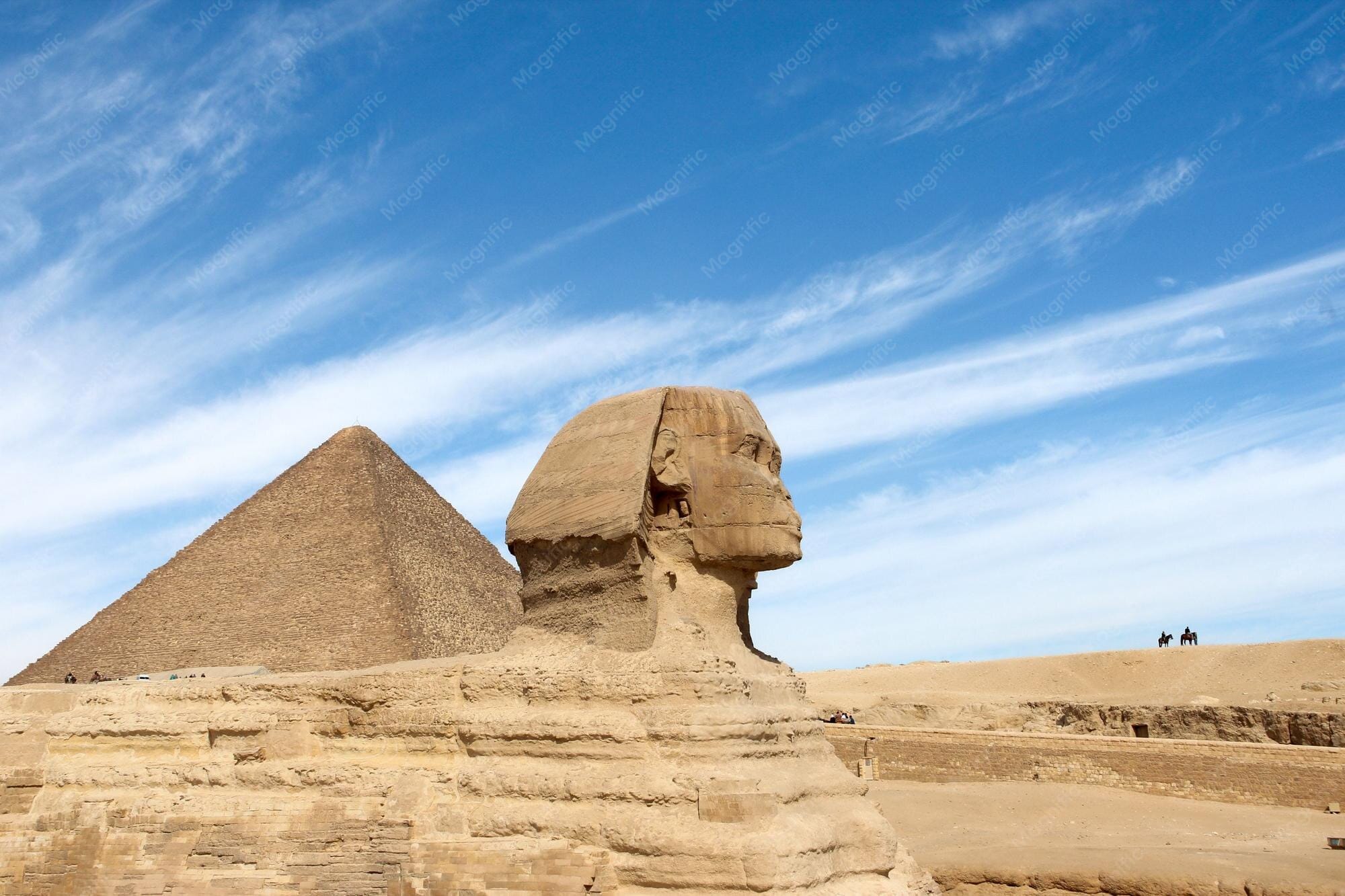
* **Location:** Just 13 km southwest of bustling Cairo. * **Stars of the Show:** The trio of Khufu (the Great Pyramid), Khafre, and Menkaure, along with their smaller queens' pyramids and, of course, the enigmatic Great Sphinx. * **When:** Built during the 4th Dynasty, around 2580-2510 BC. * **Why You Can't Miss It:** This is the iconic image of Egypt. They are the most famous, incredibly well-preserved, and the entire complex is breathtaking.Saqqara
* **Location:** A manageable 30 km south of Cairo. * **Stars of the Show:** The groundbreaking Step Pyramid of Djoser, plus pyramids like Unas and Teti, and many others. * **When:** Spanning the 3rd to 6th Dynasties, roughly 2650-2150 BC. * **Why It's Special:** You're looking at Egypt's oldest pyramid here. The site is also home to incredible mastaba tombs with vivid reliefs and, crucially, the first examples of 'Pyramid Texts' – ancient spells carved into tomb walls.Dahshur
* **Location:** About 40 km south of Cairo, south of Saqqara. * **Stars of the Show:** Sneferu's unique Bent Pyramid and his perfect Red Pyramid. * **When:** 4th Dynasty, around 2600-2590 BC. * **Why It's Worth the Trip:** Fewer crowds mean a more intimate experience. You can often go inside both the Bent and Red Pyramids, offering a rare look at pyramid evolution firsthand.Abu Sir
* **Location:** Nestled between Giza and Saqqara. * **Stars of the Show:** Pyramids of Sahure, Neferirkare, and Niuserre from the 5th Dynasty. * **When:** 5th Dynasty, around 2500-2350 BC. * **Why Consider It:** Another less crowded site, offering a peaceful glimpse into later Old Kingdom pyramid building, often with interesting bits of sun temples.Meidum
* **Location:** About 100 km south of Cairo. * **Star of the Show:** Sneferu's 'collapsed' pyramid. * **When:** 4th Dynasty, around 2600 BC. * **Why It's Intriguing:** This one is a fascinating example of a failed attempt at a smooth-sided pyramid, offering a unique collapsed appearance that tells its own story of ancient engineering challenges.Lahun and Hawara
* **Location:** In the Fayoum region. * **Stars of the Show:** The pyramid of Senusret II at Lahun and the pyramid of Amenemhat III at Hawara. * **When:** Middle Kingdom, around 1850 BC. * **Why They're Different:** These are significant for their mud-brick cores, rather than solid stone, and Hawara was once home to the legendary 'Labyrinth,' a massive mortuary temple described by ancient writers.
Dispelling Pyramid Myths: The Truth Behind the Legends
Myth 1: Built by Slaves
**Reality:** Nope, not slaves. As we discussed, they were built by a well-organized, paid workforce of Egyptian citizens – skilled craftspeople and even farmers working during the annual Nile flood when their fields were submerged. Archaeological findings show worker settlements with good food, medical care, and even respectful burials. This wasn't forced labor; it was a societal effort.Myth 2: Built by Aliens
**Reality:** As cool as the sci-fi idea is, there's absolutely zero evidence for extraterrestrial involvement. The pyramids are a testament to human ingenuity, meticulous planning, the available ancient technology, and literally decades of immense human effort. It's an incredible human story.Myth 3: Full of Mystical Powers
**Reality:** While the pyramids show incredibly sophisticated understanding of mathematics and astronomy, claims about 'pyramid power,' hidden prophecies, or supernatural energy fields really don't hold up to scientific scrutiny. Their 'power' was in their symbolic, religious, and political significance.Myth 4: Impossible to Build Today
**Reality:** We absolutely *could* build pyramids today, and probably faster and cheaper with modern machinery. The true marvel isn't that they're 'impossible' to build, but that a civilization with Bronze Age technology accomplished such monumental feats. It's a tribute to their raw capabilities and determination.Myth 5: Contained Advanced Secret Technology
**Reality:** Again, no 'lost technology' here. The pyramids were built with tools we understand: copper chisels, wooden sledges, stone hammers, ropes, levers, and an astonishing amount of human labor. Their 'advanced technology' was their intelligent application of basic principles and immense organizational skill.Ready to See Them? Visiting Egypt's Pyramids
Planning Your Trip
* **Must-See Sites:** If you're short on time, prioritize **Giza** (obviously!), **Saqqara** (for the oldest pyramid and incredible tombs), and **Dahshur** (fewer crowds, and you can usually go inside). * **Time It Right:** You'll want at least half a day for Giza, another half-day for Saqqara. Dahshur needs about 2-3 hours. Many tour operators combine Giza, Saqqara, and Memphis into a full-day trip, which is a great way to maximize your time. * **Best Time to Visit:** October to April offers the most comfortable temperatures. Summers can be brutal, with intense heat.Practical Tips for a Smooth Visit
* **Sun Protection is Key:** There is very little shade at the pyramid sites. Bring a wide-brimmed hat, sunglasses, and generous sunscreen. You'll thank me later. * **Hydrate, Hydrate, Hydrate:** Seriously, carry at least 2 liters of water per person, especially if you're exploring on foot. * **Comfy Shoes are a Must:** You'll be walking on uneven terrain, sand, and possibly climbing, so sturdy, closed-toe walking shoes are essential. * **Tickets:** You can usually buy tickets at the site, and sometimes online. Check ahead, as policies can change. * **Hire a Licensed Guide:** While you can explore independently, a good, licensed guide can truly bring these sites to life, providing historical context and answering those burning questions. It's worth the investment. * **Beat the Crowds:** Arrive right when the sites open! You'll often get an hour or two of relatively peaceful exploration before the tour buses roll in.¿Listo para convertir esta guía en realidad?
Nuestros expertos locales pueden crear un itinerario personalizado basado en estas recomendaciones. ¡Solo envíanos un mensaje rápido!
Personaliza a través de WhatsApp