
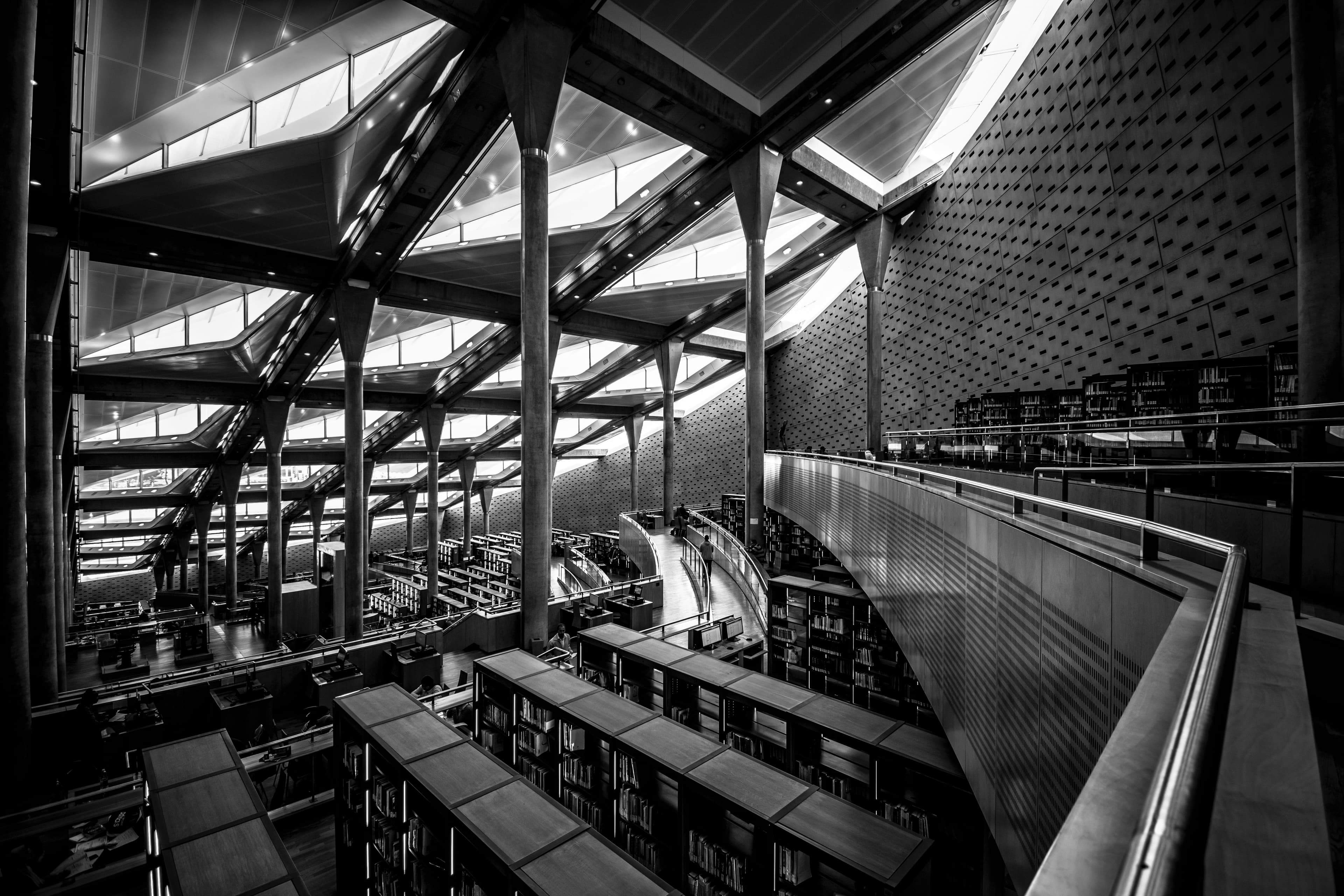

A Beacon of Knowledge, Yesterday and Today
For centuries, the Library of Alexandria has captured imaginations. Picture it: the ultimate intellectual superpower of the ancient world, drawing the sharpest minds from across the Mediterranean. This wasn't just a building; it was an audacious mission, launched in the 3rd century BCE under the Ptolemies, to collect, preserve, and expand all human knowledge. Talk about ambition!
In its heyday, some whispers say it held up to 700,000 scrolls (crazy, right?). Within those walls, breakthroughs in science, philosophy, literature, and medicine simply changed everything. Scholars like Euclid, Eratosthenes, and Aristarchus weren't just storing books; they were making history. Aristarchus, for example, figured out our heliocentric universe way before Copernicus, and Eratosthenes measured Earth's circumference with mind-boggling accuracy.
This wasn't just a dusty archive; it was a living, breathing research hub, part of the larger 'Mouseion' – essentially, the world's first research university.
Sure, the ancient library eventually faded into history, a victim of decline and shifting tides, but that core vision? It never truly died. Fast forward to 2002, and voilà: the Bibliotheca Alexandrina, a stunning modern marvel, rises from the ashes. This new library, with space for eight million books, vast digital archives, and vibrant cultural centers, proudly carries Alexandria's legacy forward.
The story of the Library of Alexandria is pure drama—ambition, brilliance, tragedy, and then, this incredible revival. It's a tale that continues to spark curiosity in scholars and travelers alike, often taking center stage on many unforgettable Egypt tours.
The First Spark: Origins of the Library of Alexandria
A Bold Vision: Every Book Ever Written
The whole thing started with an incredibly radical idea: why not collect every single book known to man? Demetrius of Phalerum, a student of the legendary Aristotle, often gets credit for kickstarting this grand project. Imagine ships arriving in Alexandria's harbor, compelled to hand over their manuscripts so they could be copied and added to the collection. Ptolemaic agents were literally scouring the Mediterranean, hunting down rare and precious works.
This wasn't passive collecting; it was an aggressive, relentless pursuit that made the Library the biggest, most ambitious collection of texts the ancient world had ever seen.
Royal Support, Scholarly Freedom
The library's astronomical success was largely thanks to the Ptolemaic dynasty's deep pockets and even deeper intellectual curiosity. Ptolemy I Soter and his successors, Ptolemy II Philadelphus and Ptolemy III Euergetes, didn't just build a library; they nurtured an intellectual ecosystem. Scholars weren't just employed; they were royally pampered with generous stipends, free housing, and even tax exemptions.
This meant they could dedicate themselves entirely to research, teaching, and writing, completely free from everyday worries. What a life, right?
The Mouseion: An Ancient Research Powerhouse
The library wasn't a standalone structure; it was the heart of the Mouseion (think 'Temple of the Muses'). This institution functioned much like a top-tier modern university, complete with lecture halls, extensive reading rooms, botanical gardens, astronomical observatories, and yes, even laboratories. This dynamic, interdisciplinary environment made Alexandria the undeniable intellectual capital of the ancient Mediterranean. It truly was the Silicon Valley of its time.
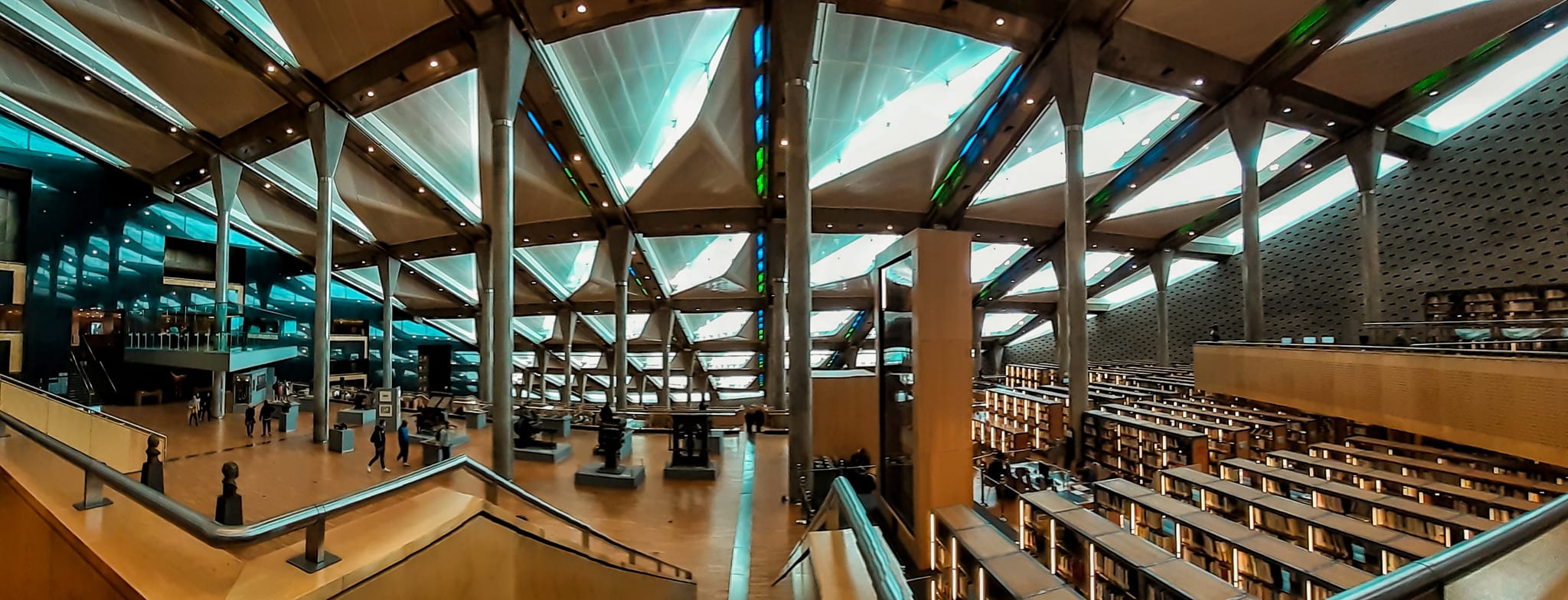
Want to explore Alexandria Library Egypt | Bibliotheca Alexandrina?
Let us design the perfect private itinerary for you. From expert local guides to seamless luxury cruises, we craft custom trips that show you the real Egypt.
Customize via WhatsAppWhy The Library of Alexandria Was So Unique
Global Ambition and Aggressive Acquisition
Most ancient libraries were content to keep local traditions alive, but Alexandria? It had global aspirations. They weren't just preserving; they were expanding. They'd collect multiple versions of Homer's epics from different regions, and then, get this, translate texts from Egyptian, Mesopotamian, Indian, and Persian traditions into Greek.
By the 3rd century BCE, some believed the collection topped 200,000 works, eventually swelling to as many as 500,000 scrolls covering everything from history and science to philosophy, medicine, and literature. It was an information treasure trove!
Pioneers of Organization and Scholarly Critique
The brilliance wasn't just in the collecting; it was in the organizing. Zenodotus of Ephesus, the library's first head librarian, introduced alphabetical order – a system we take for granted today! Callimachus then created the 'Pinakes,' a 120-volume catalog that's often called the world's very first comprehensive library catalog. And Aristarchus of Samothrace, another eminent head librarian, produced definitive editions of Homer, complete with detailed commentary.
These innovations weren't just ahead of their time; they laid the bedrock for modern librarianship.
The Minds Behind the Magic: Scholars of Alexandria
Want to explore Alexandria Library Egypt | Bibliotheca Alexandrina?
Let us design the perfect private itinerary for you. From expert local guides to seamless luxury cruises, we craft custom trips that show you the real Egypt.
Customize via WhatsAppEarth-Shattering Scientific & Mathematical Discoveries
- Euclid penned 'Elements,' a book still considered the absolute cornerstone of geometry.
- Eratosthenes didn't just calculate Earth's circumference (astounding!), but also mapped out the first system of latitude and longitude.
- Aristarchus of Samos dared to suggest a heliocentric solar system – almost 2,000 years before it was widely accepted.
- Herophilus and Erasistratus pushed medicine forward with anatomical dissections, achieving insights unmatched until the Renaissance.
Literary Contributions That Shaped the World
- Zenodotus took Homer's sprawling works and standardized them.
- Callimachus wasn't just a librarian; he systematically organized Greek literature.
- Aristophanes of Byzantium compiled the very first Greek dictionary.
- Dionysus Thrax basically wrote the book on grammar, creating a rulebook used in schools for centuries.
This vibrant intellectual melting pot transformed Alexandria into the undisputed academic hub of the ancient world. It truly was where minds met and ideas exploded.

The Slow Fade: The Fall of the Library of Alexandria
No Single Fire, Just a Gradual Decline
Forget the dramatic movie scene of a single, raging inferno taking down the whole library. That's mostly myth. The reality is far more somber: the Library of Alexandria experienced a slow, agonizing decline over centuries, a death by a thousand cuts rather than one fatal blow.
Incidents of Damage Over Time
- 48 BCE: Julius Caesar's siege of Alexandria brought fires that certainly damaged scrolls stored near the docks.
- 3rd century CE: Emperor Aurelian's campaigns ravaged parts of the city, and the palace quarter, where much of the library may have been, took a hit.
- 4th century CE: Under Theophilus, religious upheaval led to the destruction of pagan temples, and whatever remained of the library could have easily been caught in the crossfire.
- 297 CE: Diocletian's siege further inflicted destruction upon the city.
Loss of Critical Patronage
The decline actually started even earlier, around 145 BCE, when Ptolemy VIII exiled many scholars, including the brilliant Aristarchus of Samothrace. Without consistent royal patronage, resources dried up. Imagine trying to maintain fragile papyrus scrolls for centuries without proper funding – it was an impossible task.
Dispelling the Myths of Total Destruction
You might have heard the tale of Caliph Omar burning the library in 642 CE, claiming if the books agreed with the Quran, they were redundant, and if they disagreed, they were heresy. It's a compelling story, but modern historians largely debunk it as a later fabrication, a legend that only surfaced centuries after the alleged event. It's a powerful narrative, but not historically accurate.
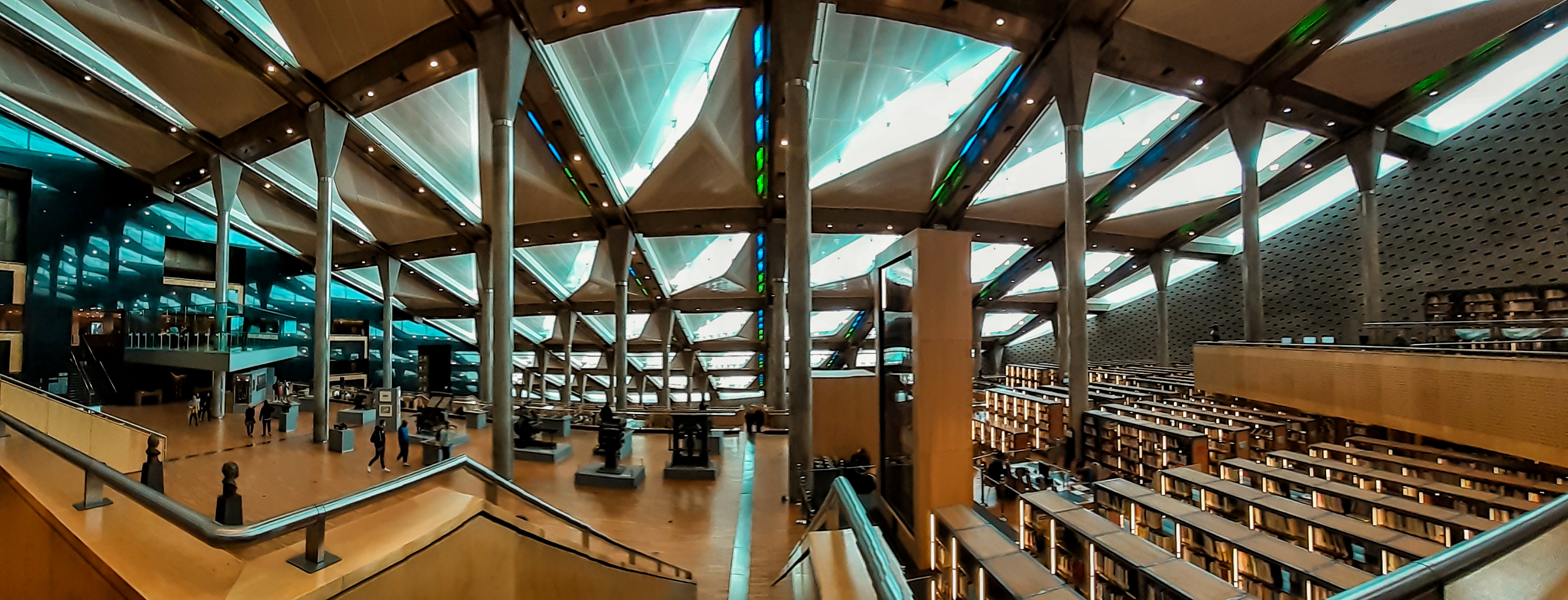
From Ancient Ashes to Modern Marvel: The Bibliotheca Alexandrina
A New Dawn for Ancient Wisdom
In 2002, the spirit of that ancient library beautifully re-emerged as the Bibliotheca Alexandrina. This wasn't just a building project; it was a global collaboration between the Egyptian government, UNESCO, and international partners, costing a staggering $220 million. It's a testament to humanity's enduring love for knowledge.
An Architectural Masterpiece and Cultural Hub
Designed by the brilliant Norwegian firm Snøhetta, the building itself is a sight to behold. It's a striking circular form, with a gleaming glass-paneled roof that tilts majestically towards the Mediterranean – almost like a giant sundial dedicated to knowledge. This marvel can house up to eight million books across its seven stunning, cascading levels.
State-of-the-Art Facilities & Digital Innovation
- It boasts an invaluable rare books collection and specialized libraries, including one thoughtfully designed for the visually impaired.
- Beyond books, you'll find vibrant museums, impressive art galleries, and even a planetarium, seamlessly blending culture with cutting-edge science.
- The Digital Assets Repository (DAR) is a game-changer, storing vast archives in collaboration with the Internet Archive, preserving over 1.5 petabytes of data for future generations.
A Global Impact Reborn
Today, the modern library is bustling! It hosts over 1,500 cultural and academic events every year and pretty much welcomes a million visitors annually. With specialized centers for manuscripts, Mediterranean studies, and Coptic heritage, the Bibliotheca Alexandrina isn't just a library; it's a bold declaration, reclaiming Alexandria's rightful place as a beacon of global learning and culture.
Conclusion: A Legacy That Still Whispers
The Library of Alexandria was so much more than stone and scrolls; it was a daring vision to gather, safeguard, and enrich the world's collective wisdom. Fueled by the Ptolemaic rulers' unwavering support and the sheer genius of scholars like Euclid, Eratosthenes, and Callimachus, it became the ancient world's unparalleled intellectual heart.
Although centuries of shifting politics, fires, and plain old neglect eventually led to its decline, its spirit, its legacy, absolutely lives on through the Bibliotheca Alexandrina. Here, ancient ambition shakes hands with modern innovation.
So, whether you're a history buff or just someone who loves a good story, the Library of Alexandria continues to spark curiosity, beautifully bridging the gap between past and future.
It's a magnificent, enduring testament to humanity's unstoppable drive to discover. Why not experience the wonder yourself on an unforgettable Egypt tour? Come learn, explore, and immerse yourself in these breathtaking ancient wonders today!
Ready to turn this guide into reality?
Our local experts can create a custom itinerary based on these recommendations. Just send us a quick message!
Customize via WhatsApp