
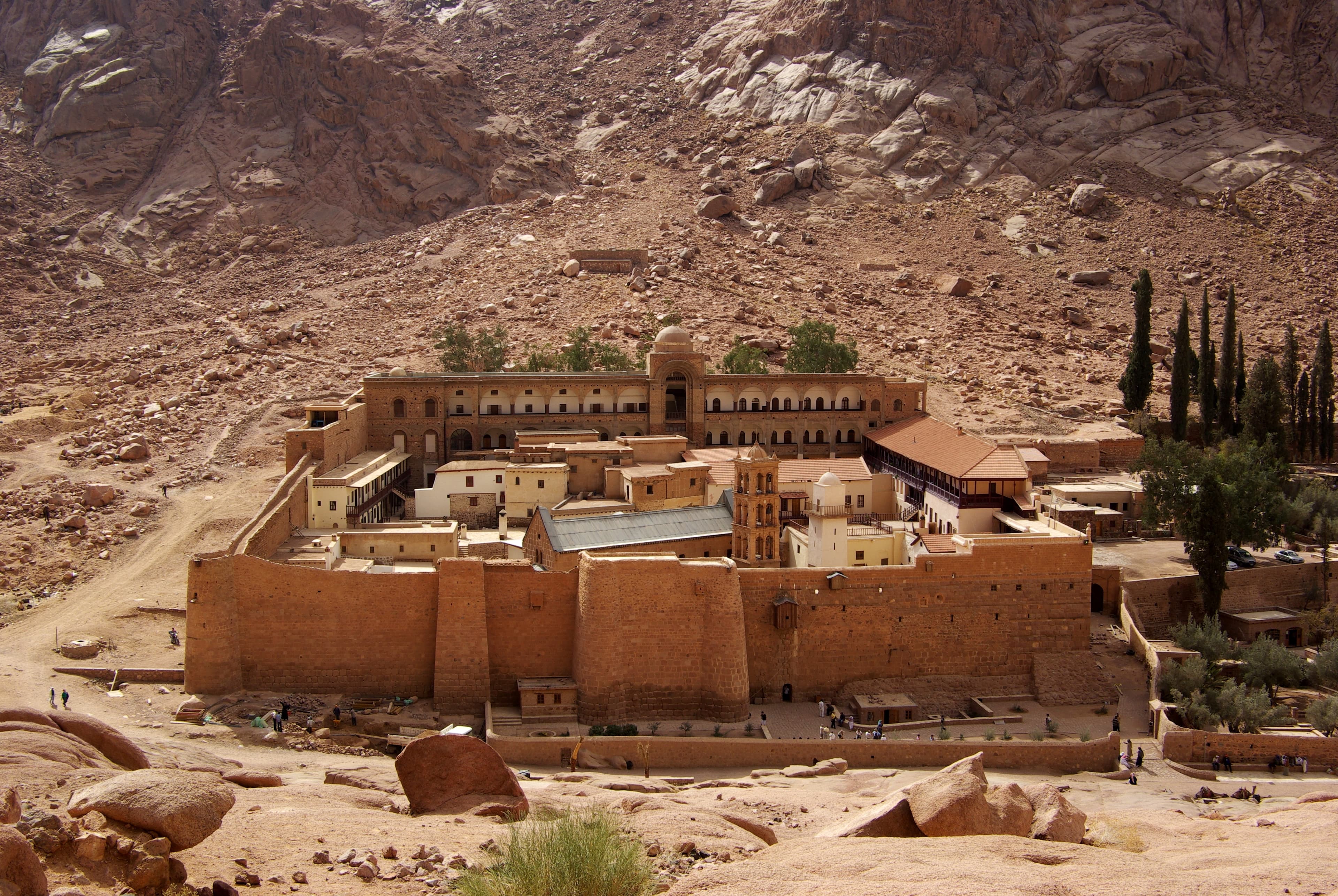

St. Catherine, Egypt, isn't just another historical site; it's one of history's most extraordinary treasures, a place that truly feels out of time. High up in the mountains, 1,586 meters (5,203 ft) above sea level and only 120 kilometers from Nuweiba, you'll find a remarkable monastery where monks have lived without interruption for 1,500 years.
This isn't just any old building, either. Byzantine Emperor Justinian the Great established St. Catherine's monastery back in the 6th century, making it the area's spiritual heart. It's a fortress and a shrine all rolled into one, built on the very spot where Moses is said to have encountered the Burning Bush – which, by the way, is still considered the monastery's most sacred possession. What's incredible is that the church itself has remained pretty much as it was when it was built, even as centuries of history unfolded around it.
It's no wonder UNESCO recognized St. Catherine's immense historical and spiritual value, declaring it a World Heritage Site in 2002. Even though it's a small place – the area's population was around 4,792 in 2021 – it draws people from all corners of the globe, all eager to experience its 17 centuries of living heritage.


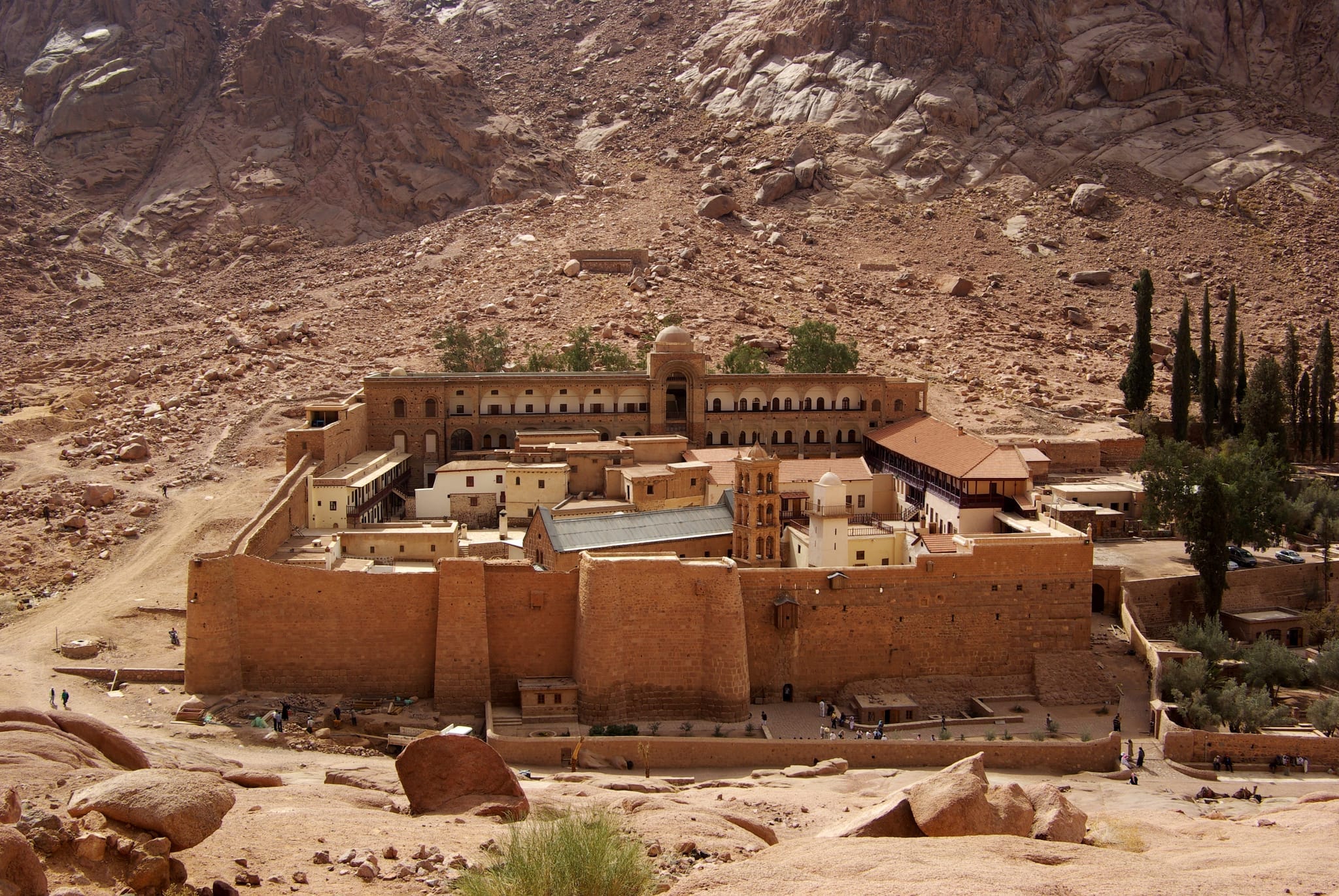 St. Catherine, Egypt, is a powerful testament to human faith, resilience, and coexistence with nature. This ancient site masterfully weaves together countless threads of history, spirituality, and natural beauty into something truly unparalleled on Earth. The monastery itself has remarkably maintained its original form since its 6th-century construction, allowing visitors to literally step back in time as they explore its sacred spaces.
Its significance reaches far beyond its ancient walls. St. Catherine stands as a rare beacon where Christianity, Islam, and Judaism find common ground. It beautifully showcases the extraordinary bond between the Jebeliya Bedouins and the Christian monks, a partnership stretching back over 14 centuries. Between the world's oldest continuously operating library and the natural wonders of Egypt's highest peak, there's an overwhelming sense of profound depth here.
Time seems to flow differently in this mountain sanctuary. Empires have risen and fallen, wars have raged, and civilizations have transformed, yet St. Catherine has quietly preserved its traditions. Its UNESCO World Heritage status is crucial for protecting this living museum for future generations. For me, what's truly captivating about St. Catherine is how it bridges heaven and earth, with its towering mountains and deeply embedded spiritual roots.
Modern visitors walk the very same paths as ancient pilgrims, breathing the same desert air and gazing upon the sacred bush where Moses is said to have encountered God. This unbroken link across 17 centuries makes St. Catherine, Egypt, far more than just a destination; it's a journey through time itself. Honestly, few places on Earth offer such a potent blend of historical significance, spiritual depth, cultural legacy, and natural splendor, all preserved in one extraordinary location. It's an experience that truly stays with you.
St. Catherine, Egypt, is a powerful testament to human faith, resilience, and coexistence with nature. This ancient site masterfully weaves together countless threads of history, spirituality, and natural beauty into something truly unparalleled on Earth. The monastery itself has remarkably maintained its original form since its 6th-century construction, allowing visitors to literally step back in time as they explore its sacred spaces.
Its significance reaches far beyond its ancient walls. St. Catherine stands as a rare beacon where Christianity, Islam, and Judaism find common ground. It beautifully showcases the extraordinary bond between the Jebeliya Bedouins and the Christian monks, a partnership stretching back over 14 centuries. Between the world's oldest continuously operating library and the natural wonders of Egypt's highest peak, there's an overwhelming sense of profound depth here.
Time seems to flow differently in this mountain sanctuary. Empires have risen and fallen, wars have raged, and civilizations have transformed, yet St. Catherine has quietly preserved its traditions. Its UNESCO World Heritage status is crucial for protecting this living museum for future generations. For me, what's truly captivating about St. Catherine is how it bridges heaven and earth, with its towering mountains and deeply embedded spiritual roots.
Modern visitors walk the very same paths as ancient pilgrims, breathing the same desert air and gazing upon the sacred bush where Moses is said to have encountered God. This unbroken link across 17 centuries makes St. Catherine, Egypt, far more than just a destination; it's a journey through time itself. Honestly, few places on Earth offer such a potent blend of historical significance, spiritual depth, cultural legacy, and natural splendor, all preserved in one extraordinary location. It's an experience that truly stays with you.
Walking Through Time: The Layers of History
St. Catherine’s history goes way, way beyond the monastery walls. Long before monks arrived, during the Pharaonic Era (3200-323 BCE), this region was part of Egypt's 'Deshret Reithu' province. Ancient Egyptian rulers weren't just passing through; they established the way of Shur across Sinai to Jerusalem in the 16th century BCE and actively mined the region for valuable turquoise, gold, and copper. If you venture nearby, you can still find the well-preserved ruins of Serabit el-Khadim, complete with temples from the 12th Dynasty dedicated to the goddess Hathor. Then came the Christians in the 3rd century CE, drawn to these biblical sites and seeking refuge from Roman persecution. Around 330 CE, Emperor Constantine's mother, Saint Helena, even commissioned a small church and tower right near where the Burning Bush supposedly stood. But it was Emperor Justinian I's grand building projects between 548-565 CE that truly gave the monastery its iconic form. He wasn't messing around either; impressive fortifications were built, and 200 soldiers were stationed there to protect the community. These defensive walls have done their job remarkably well, safeguarding both the monks and the church's original structures. That's why it holds the title of the oldest continuously functioning Orthodox Christian monastery in the world. For 17 centuries, this monastery has thrived in remarkable isolation. Its internal layout remains surprisingly close to its original design, with local materials used in various restorations helping to preserve its authentic feel. It’s like stepping into a living museum.
Want to explore St. Catherine, Egypt: A Journey Through Time and Spirituality?
Let us design the perfect private itinerary for you. From expert local guides to seamless luxury cruises, we craft custom trips that show you the real Egypt.
Customize via WhatsAppSacred Spaces and Spiritual Stories
Right at the monastery's heart, you'll find the Chapel of the Holy Bush, its oldest shrine. This is where early Sinai anchorites once gathered, and more importantly, it commemorates the spot where God spoke to Moses from the burning bush – a moment first noted by the pilgrim Egeria back in 383-384 CE. When you step into this incredibly sacred space, you must remove your shoes, a tradition that humbly honors the biblical account. What's unique about this chapel is its design; it lacks a traditional iconostasis, allowing pilgrims to kneel and pray directly at the holy table resting on four columns. A silver star beneath the altar marks the *exact* location of that miraculous bush. And yes, the bush itself is still growing nearby, looking strong today. Just north of the catholicon is the Well of Moses, marking the spot where, according to Exodus, Moses first met Jethro's seven daughters. This ancient well still provides for the monastery community, now fitted with a modern pump, ensuring its continued use. Beyond these sites, the monastery is a treasure trove of spiritual wealth. It houses one of the world's oldest working libraries, boasting a collection of over 3,000 manuscripts. Among them is the renowned Codex Sinaiticus from the 4th century, which holds the oldest complete New Testament known to exist. This sacred complex holds deep significance, not just for one, but for three monotheistic faiths: Christianity, Islam, and Judaism. A testament to this rare harmony is the mosque built by the monastery's monks in the 11th century. It served to protect the site during times when other Christian places of worship were destroyed, a fascinating example of interfaith resilience.
People, Nature, and the Spirit of the Place
For over 1,400 years, the Jebeliya Bedouin tribe has been the guardian of St. Catherine, Egypt. Their story is remarkable: Emperor Justinian originally brought them in as Roman soldiers to protect his newly built monastery. Over time, they intermarried with local tribespeople, forming the distinct and peaceful Jebeliya tribe we know today. Even after converting to Islam, they maintained a truly unique bond with the Christian monastery, a partnership that continues to this day. These resilient people have faced countless challenges over the centuries—wars, forced relocations, drought, and pandemics. Their strength was particularly evident during the Israeli occupation (1967-1982), when, despite being labeled 'traitors,' they secretly aided Egyptian Army forces navigating the treacherous mountain terrain. Beyond human history, the Saint Katherine Protectorate, now 34 years old, is a haven for nature. It's home to a remarkable ecosystem, including the world's tiniest butterfly (the Sinai baton blue), the Nubian ibex, and more than 1,262 plant species. Egypt’s tallest peak, Mount Catherine, dominates this high-altitude landscape, surrounded by many other peaks rising above 2,000 meters. The climate here is unique for Egypt; it sees some of the country's coldest nights, and snow often falls between December and February. This snow isn't just for show; it's a vital water source, slowly melting to fill the region's underground catchments, sustaining life in this arid land. St. Catherine city truly stands out as one of Egypt's most spiritual places. The ancient mountains, combined with timeless traditions, create a sanctuary where three major religions find common ground. It's a place where you can genuinely feel an extraordinary connection between people, nature, and the spiritual.
St. Catherine, Egypt, is a powerful testament to human faith, resilience, and coexistence with nature. This ancient site masterfully weaves together countless threads of history, spirituality, and natural beauty into something truly unparalleled on Earth. The monastery itself has remarkably maintained its original form since its 6th-century construction, allowing visitors to literally step back in time as they explore its sacred spaces.
Its significance reaches far beyond its ancient walls. St. Catherine stands as a rare beacon where Christianity, Islam, and Judaism find common ground. It beautifully showcases the extraordinary bond between the Jebeliya Bedouins and the Christian monks, a partnership stretching back over 14 centuries. Between the world's oldest continuously operating library and the natural wonders of Egypt's highest peak, there's an overwhelming sense of profound depth here.
Time seems to flow differently in this mountain sanctuary. Empires have risen and fallen, wars have raged, and civilizations have transformed, yet St. Catherine has quietly preserved its traditions. Its UNESCO World Heritage status is crucial for protecting this living museum for future generations. For me, what's truly captivating about St. Catherine is how it bridges heaven and earth, with its towering mountains and deeply embedded spiritual roots.
Modern visitors walk the very same paths as ancient pilgrims, breathing the same desert air and gazing upon the sacred bush where Moses is said to have encountered God. This unbroken link across 17 centuries makes St. Catherine, Egypt, far more than just a destination; it's a journey through time itself. Honestly, few places on Earth offer such a potent blend of historical significance, spiritual depth, cultural legacy, and natural splendor, all preserved in one extraordinary location. It's an experience that truly stays with you.Ready to turn this guide into reality?
Our local experts can create a custom itinerary based on these recommendations. Just send us a quick message!
Customize via WhatsApp