

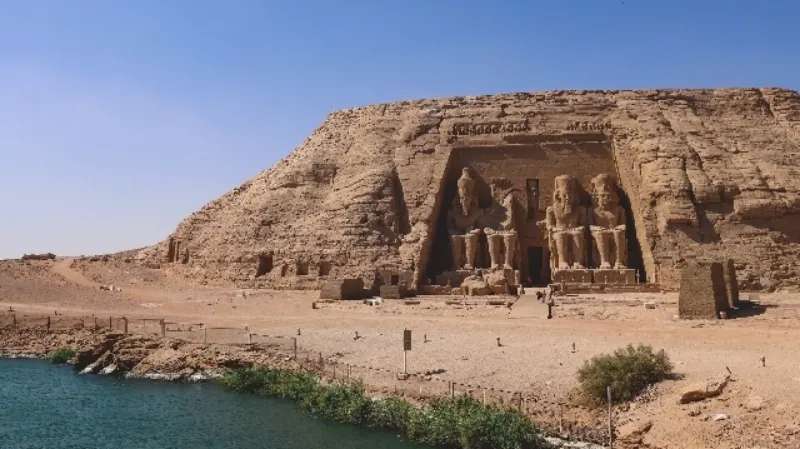
When you talk about iconic Egyptian sites, the Abu Simbel Temples are always right up there. Pharaoh Ramses II, being the self-aggrandizing ruler he was, built these colossal temples in the 13th century BC right on the southern edge of his kingdom. They weren't just impressive; they were a statement, a 'don't mess with Egypt' sign for anyone approaching from the south.
Today, everyone knows them not just for those massive statues, which are breathtaking, but for something truly out of this world: the Abu Simbel sun phenomenon. It happens twice a year, and honestly, if you're planning any Egypt tours, this should be on your radar. It's an absolute must-see.
The Story Behind Abu Simbel
You'd think these temples are all about Ramses II and his beloved wife Nefertari, and to a degree, they are. But fundamentally, they're dedicated to the gods. The larger temple is a massive dedication to Amun, Ptah, and Re-Harakhty, featuring those four colossal seated statues of Ramses II at its entrance. The smaller, more elegant temple? That's for Queen Nefertari, celebrating the goddess Hathor and clearly showing how highly Ramses regarded his queen.
She wasn't just *a* queen; she was *the* queen, getting her own divine recognition.
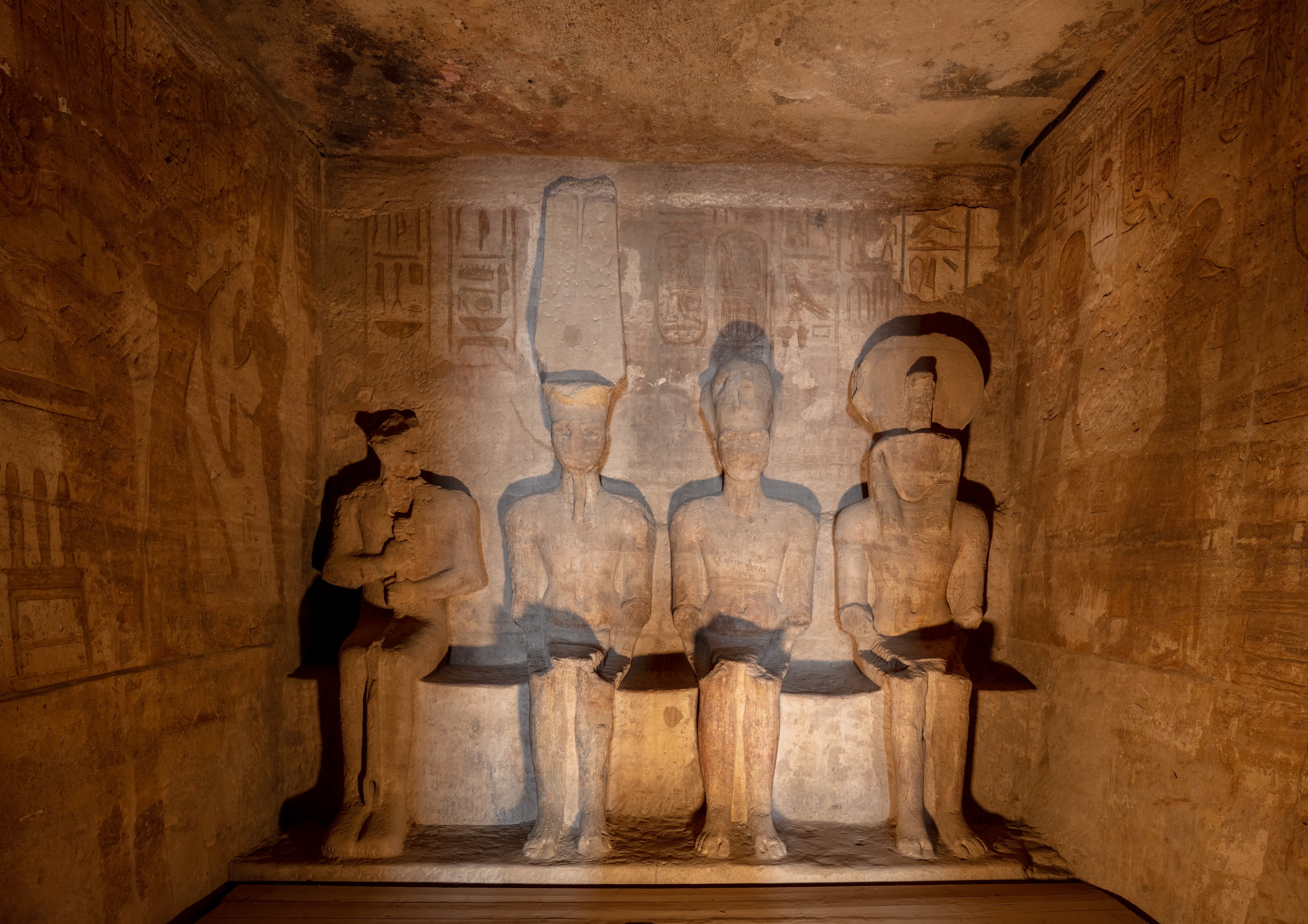
These temples aren't built; they're *carved* right into a sandstone hillside. Every inch is covered in hieroglyphs, etching Ramses II's military wins, especially his famous Battle of Kadesh, into stone for eternity. The main temple is just grand; one seated statue at the entrance is a whopping 65 feet tall, and inside, another stands 108 feet, watching over the inner chambers. Now, here's the kicker: its deepest sanctuary stays completely dark almost all year, except for two specific days.
This isn't random; it's a jaw-dropping display of ancient Egyptian brilliance in astronomy, math, and architecture.
The Abu Simbel Light Phenomenon: A True Spectacle
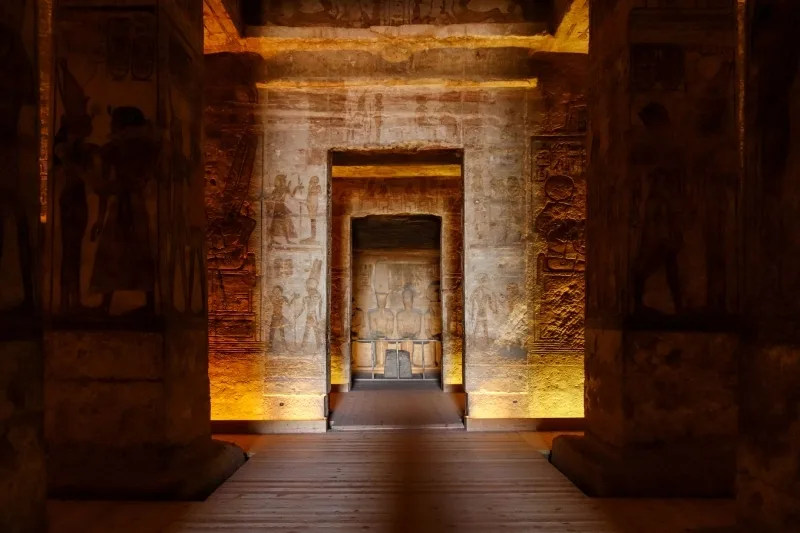
The ancients weren't just building pretty temples; they were engineering wonders. They angled the temples so precisely that on two days a year, the rising sun would pierce through the darkness and illuminate the innermost room. Those days? February 22nd, marking Ramses II's ascension to the throne, and October 22nd, his birthday. We call it the Abu Simbel Sun Festival today.
On these magical mornings, sunlight travels over 200 feet, reaching and lighting up three of the four statues in that inner sanctum: Ramses II himself, Ra (the sun god), and Amun (the king of the gods). The fourth statue, Ptah, remains shrouded in darkness, perfectly symbolizing his role as the god of darkness. This incredible, precise alignment is just mind-blowing, a testament to how smart and imaginative those ancient Egyptians were.
Over 3,200 years later, the Abu Simbel Sun Festival still drops jaws and fills hearts with wonder.
When to Catch This Solar Spectacle
If you want to witness this truly unique event, you've got two chances each year:
- February 22nd – This day marks Ramses II's coronation.
- October 22nd – This is Ramses II's birthday celebration.
These are definitely the prime dates to experience the Abu Simbel light phenomenon and feel that incredible moment as the sun fills the temple's sanctuary.
An Engineering Marvel: The Relocation of Abu Simbel
Fast forward to the 1960s, and these incredible temples faced an existential threat. The building of the Aswan High Dam meant they'd be completely submerged under the new Lake Nasser. It was a massive global crisis, and UNESCO stepped in, orchestrating one of the most ambitious archaeological rescue missions ever.
They literally cut the temples into thousands of massive blocks, disassembled them, and then painstakingly reconstructed them 65 meters higher on a new site, carefully maintaining their original orientation. The amazing part? The Abu Simbel light phenomenon still happens with the exact same precision it did thousands of years ago. It's a modern-day testament to how much effort and care went into preserving such a vital piece of human history.
Planning Your Visit to Abu Simbel
If you want an experience that you'll genuinely never forget, aim for the Sun Festival on February 22nd or October 22nd. Going early in the morning is key for a few reasons:
- It's cooler, which is a major plus in Egypt.
- You'll get the best spot to watch the sunrise.
- You'll witness that incredible solar alignment firsthand.
If you can't make it for the festival, I'd suggest visiting during Egypt's cooler winter months, roughly November through March. You really want to avoid that intense summer heat.
Want to explore Abu Simbel Sun Festival: Egypt's Incredible Solar Phenomenon?
Let us design the perfect private itinerary for you. From expert local guides to seamless luxury cruises, we craft custom trips that show you the real Egypt.
Customize via WhatsAppExperiencing the Abu Simbel Sun Festival: More Than Just Light
The Abu Simbel Sun Festival isn't just about the sun hitting stone; it's a full-blown cultural celebration. Thousands of people gather, all waiting to see that sunrise illuminate the statues. And once it happens, the entire day is filled with traditional music, lively dance, artisan markets displaying incredible craftsmanship, and delicious local Egyptian food. It's a chance to connect with both ancient history and vibrant contemporary culture all at once.
The Magic of Sunrise
When you're there before dawn, you'll see early risers either meditating quietly or just soaking in the peaceful anticipation, waiting for that first ray of sun to hit the sanctum. As the statues are bathed in light, the atmosphere turns absolutely magical. Then, as the sun climbs higher, the real party starts with traditional singing, dancing, and showcases of Nubian artistry. It's just incredible.
Cultural Immersion
This festival is a rare opportunity to really immerse yourself in modern Egyptian culture. You can chat with local artisans, learn about ancient crafts that are still alive today, and taste some truly authentic Egyptian cuisine. It's one of those experiences that perfectly blends history, science, and a rich cultural tapestry into something truly unforgettable.
Ready to turn this guide into reality?
Our local experts can create a custom itinerary based on these recommendations. Just send us a quick message!
Customize via WhatsApp