
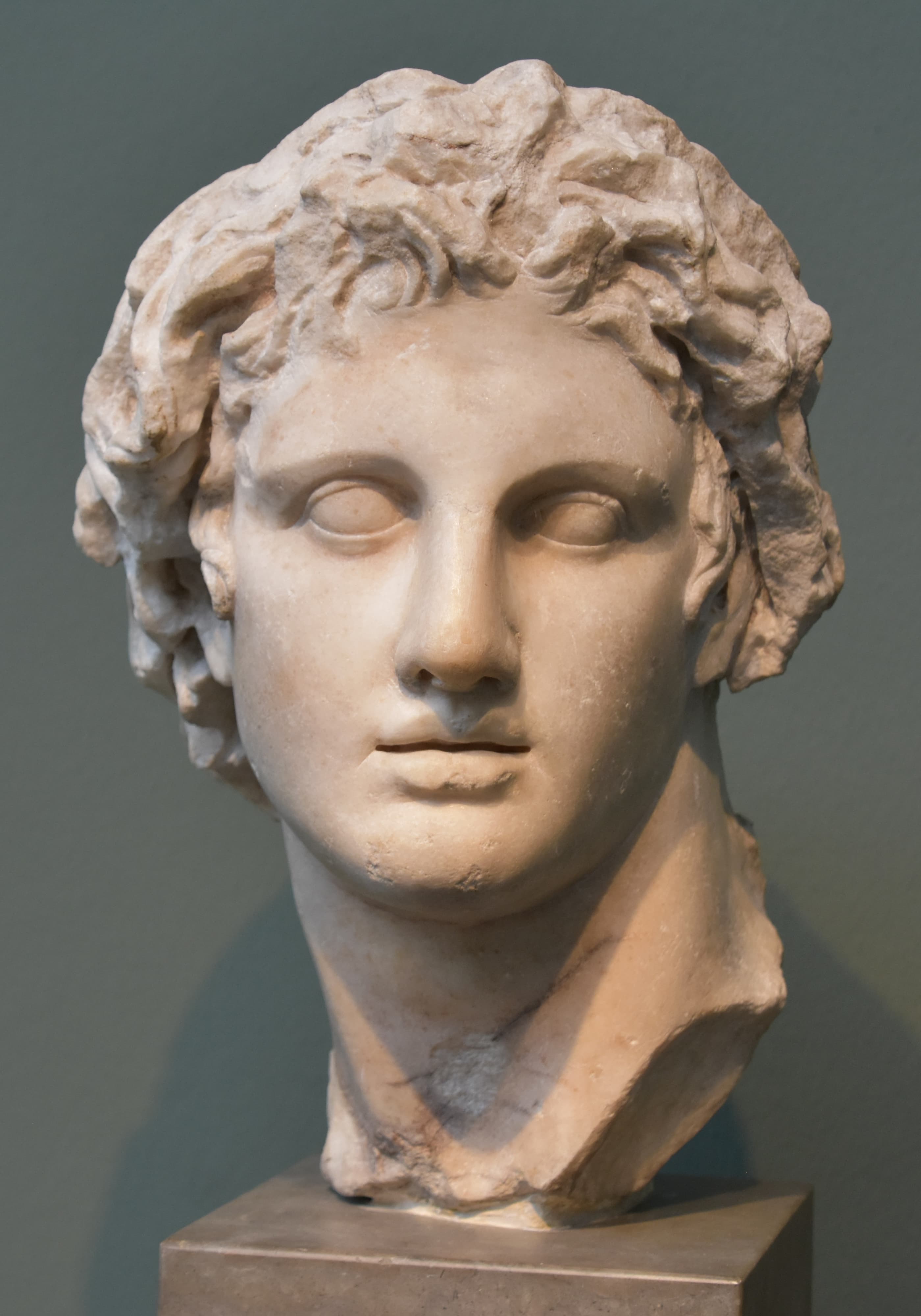

When we talk about ancient Egypt, a few names spring to mind immediately, and Alexander the Great might not be the very first one for everyone. But trust me, his short stint here, starting in 332 BCE, wasn't just a footnote; it was a total game-changer. He basically swept away Persian rule and threw open the doors to over three centuries of Greek and Roman influence. It's wild to think how one person's actions could pivot a whole civilization's trajectory.
Today, when you travel through Egypt, his presence is still felt, particularly in places like vibrant Alexandria or the serene Siwa Oasis. You’re not just seeing ruins; you're walking through the living history of his transformative era.
Who was this Alexander, anyway?
Alright, so Alexander III of Macedon – yeah, 'Alexander the Great' rolls off the tongue a bit better, doesn't it? This guy was born in Pella, way back in 356 BCE. Most of his life was one relentless military campaign after another, carving out one of the biggest empires the ancient world had ever seen by the time he was just thirty. Imagine that… from Greece all the way to northwest India. He's often counted as one of history's most brilliant military minds.
And no, he wasn't a pharaoh in the traditional sense; he was Macedonian. But his connection to Egypt is pretty unique, and frankly, super important.
His legacy? It's huge, especially in terms of cultural exchange. He stamped his name on about twenty cities, with Alexandria, Egypt, being the most famous. He's this legendary figure, often compared to Achilles, and his military strategies are still studied today. He truly stands among history's most influential people.
Alexander and Egypt: A Deep Dive
Alexander's Arrival: A Welcome Change
When Alexander marched into Egypt during his push against the Persian Empire, something remarkable happened: no resistance. None. The Egyptians were utterly fed up with Persian occupation, and seriously, they welcomed him like a liberator. It was a stark contrast to the bloody battles he was fighting elsewhere. It's humbling to think about how much a people can suffer before they embrace an outsider as their savior.
Why were they so happy to see him?
- He pretty much ended the harsh Persian rule.
- He actually respected their traditions and religion. Big deal.
- He presented himself as a legitimate, benevolent ruler, not just a conqueror.
This approach was genius. It earned him widespread admiration and made his rule here surprisingly smooth and totally accepted.
A Brand New Political Landscape
Under Alexander, Egypt suddenly found itself part of a massive empire stretching across continents. Even though he didn't stay long, he laid down foundations that shaped Egypt for centuries. Think about that impact!
Key political shifts he kicked off:
- He replaced Persian bigwigs with Greek officials he could trust. Smart move.
- He established a shiny new capital, Alexandria, explicitly designed to connect Egypt with the broader Mediterranean world.
- He made sure to respect local temples and the priesthood, which was a huge win for maintaining peace.
- He cleverly wove Egyptian customs into his rule to legitimize his power.
Honestly, his political framework was the blueprint for the later, long-reigning Ptolemaic Dynasty. He set the stage.
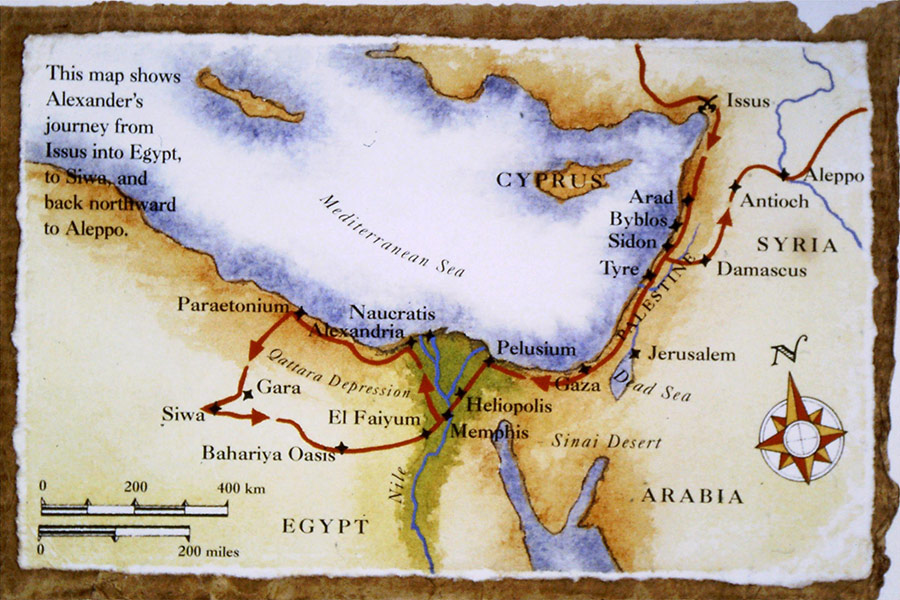
Founding the Legendary City of Alexandria
If there's one thing Alexander is most remembered for in Egypt, it has to be the founding of Alexandria in 331 BCE. He picked this spot between the Mediterranean and Lake Mariout with an eagle eye for strategy. Easy access to the Nile, an open coastline for ships, and incredible potential for trade – the man knew what he was doing.
Why was Alexandria such a big deal?
- It became Egypt's capital for almost a thousand years. Think about that staying power!
- It grew into a massive hub for commerce and culture, a true melting pot.
- It housed the world-famous Library of Alexandria – a powerhouse of ancient knowledge.
- And let's not forget the Pharos Lighthouse, one of the Seven Wonders of the Ancient World.
The city blossomed into this cosmopolitan marvel, drawing scholars, merchants, and travelers from every corner of the ancient world. It truly was a beacon.
The Mystical Journey to Siwa Oasis
One of the coolest stories from Alexander’s time in Egypt is his pilgrimage to the Oracle of Amun in the Siwa Oasis. Imagine trekking across the vast Western Desert for this! It wasn't just a trip; it was deeply symbolic.
Why would he bother with such a challenging journey?
- He wanted divine confirmation of his rule. A huge power move.
- He aimed to link himself to the Egyptian god Amun, cementing his legitimacy in the eyes of not just Egyptians, but Greeks too.
At the oasis, the priests apparently declared him the 'son of Amun,' elevating his status to near-divine. This moment was pivotal, solidifying his authority and shaping the perception of him across his entire empire.
Alexander's Unexpected Respect for Egyptian Culture
It’s fascinating how, despite spending only a few months here, Alexander made such a concerted effort to honor local traditions. He wasn't just a conqueror; he was a smart leader who played the long game.
What did he do?
- He made offerings to Egyptian gods, showing religious respect.
- He actively supported the renovation of temples.
- He consulted with Egyptian priests – tapping into local wisdom.
- He even managed to blend Greek and Egyptian religious practices.
By respecting the culture instead of crushing it, he truly secured the loyalty of the Egyptian people. It was a masterclass in diplomacy.
After He Left: A Continuing Link
Alexander eventually moved on from Egypt to continue his campaigns further east. He never returned, but the country clearly left an impression on him – right up to his final days.
And what happened after he died in 323 BCE?
- His general, Ptolemy I Soter, wasted no time claiming Egypt as his own.
- Ptolemy controversially had Alexander's body brought to Egypt.
- Alexander was laid to rest in Alexandria, making the city a pilgrimage site for centuries.
His tomb, sadly lost to history now, became one of the most visited locations in the ancient Mediterranean. People traveled far and wide to pay their respects.
The Ptolemaic Dynasty and His Enduring Legacy
Alexander's influence was the bedrock of the Ptolemaic Dynasty (323–30 BCE), a period where Greek culture met Egyptian traditions head-on and actually fused. This blending created something unique and powerful.
Key elements of this incredible legacy:
- Greek became the official administrative language.
- Hellenistic art and architecture flourished everywhere.
- They kept building temples in classic Egyptian style, a nod to the past.
- Alexandria expanded further as an intellectual powerhouse, drawing the brightest minds.
Cleopatra VII, the very last ruler of this dynasty, pretty much closed the chapter on this amazing Greco-Macedonian legacy in Egypt.
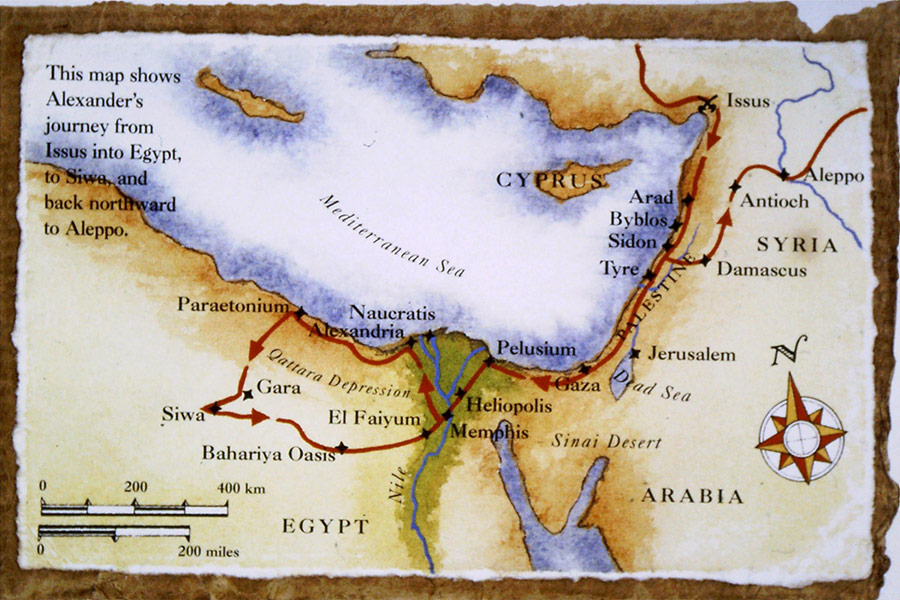
Alexander's Lasting Imprint on Egyptian History
Whether political, cultural, or architectural, Alexander's time in Egypt left an indelible mark. It really shaped the country's identity for millennia.
His enduring legacy includes:
- Introducing Hellenistic culture, which blended seamlessly (mostly) with Egyptian traditions.
- Establishing Alexandria as a global capital, a true wonder of the ancient world.
- Inspiring future rulers to combine Greek and Egyptian ideals into their governance.
- Sparking an incredible cultural exchange that rippled across the entire Mediterranean.
Without Alexander, Egypt's Greco-Roman period simply wouldn't have unfolded the way it did. He was the catalyst.
Want to explore Alexander the Great: Reshaping Ancient Egypt's Destiny?
Let us design the perfect private itinerary for you. From expert local guides to seamless luxury cruises, we craft custom trips that show you the real Egypt.
Customize via WhatsAppSites in Egypt Connected to Alexander the Great (For You, the Traveler!)
Good news! You can actually trace Alexander's footsteps today. Several destinations proudly carry the echoes of his era.
Alexandria Today
Even though the ancient city lies tucked beneath its modern counterpart, the Greco-Roman vibe is still very much alive. It’s part of the city's DNA.
Here’s what you should absolutely see:
- Bibliotheca Alexandrina: A stunning modern library, a fantastic tribute to its ancient predecessor.
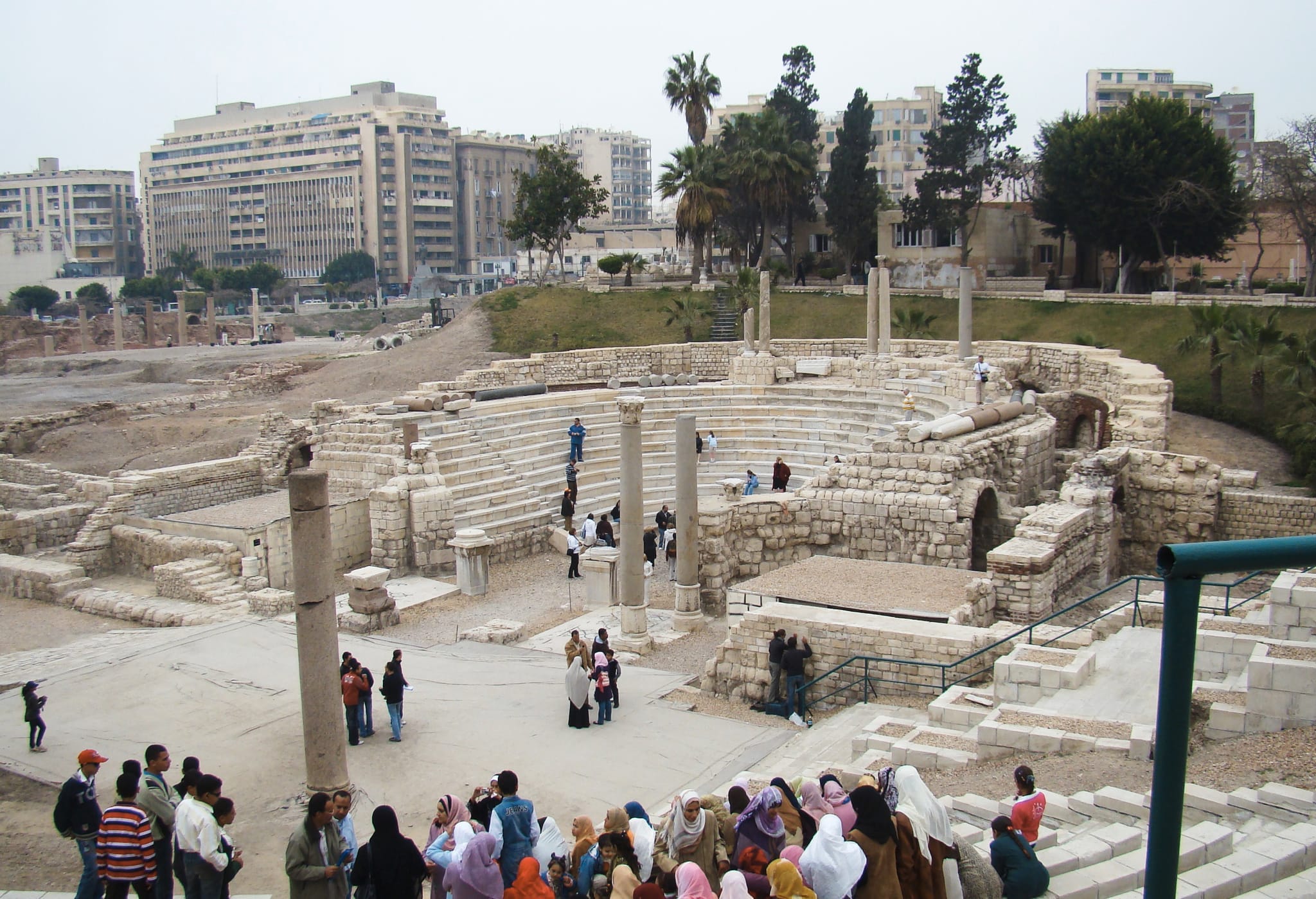
- Kom El-Dikka: Wander through its Roman theater and gaze at the ancient houses. Gives you a real sense of scale.
- Alexandria National Museum: Packed with artifacts from Alexander's time and beyond. Essential viewing.
The Magical Siwa Oasis
This is where Alexander's Egyptian story gets truly mystical. The Siwa Oasis is an experience unto itself.
When you go, make sure to explore:
- The Temple of the Oracle (or Temple of Amun) – stand where Alexander himself stood.
- Aghurmi Village, with its ancient mud-brick ruins.
- Cleopatra’s Spring, a natural spring perfect for a refreshing dip.
- The epic desert landscapes and the surreal salt lakes.
Honestly, Siwa is one of Egypt’s most peaceful and spiritually rich destinations. It’s a world apart.
Why Alexander’s Egypt Still Captivates Travelers
People are just drawn to this particular slice of Egyptian history, and for good reason:
- It's where Greek, Egyptian, and Mediterranean civilizations beautifully intertwined.
- It lets you delve into the captivating legend of the Oracle of Siwa.
- It explains how Alexandria, one of Egypt's most dynamic cities, came to be.
- It offers a unique lens to understand how cultures merge and evolve over time.
Exploring Alexander’s Egypt isn't just about ancient history; it's a vibrant blend of archaeology, epic storytelling, and incredible places to explore.
And for those wondering how he died: most likely from malaria or typhoid fever, both tragically common in ancient Babylon. Alexander the Great's time in Egypt might have been short, but believe me, it completely redefined the country’s trajectory. From the magnificent founding of Alexandria to that sacred desert journey to the Siwa Oasis, his actions completely reshaped Egypt’s political map and linked it irrevocably to the Hellenistic world.
Today, you can still experience that profound legacy—through ancient ruins, serene desert oases, and captivating museums that keep his extraordinary story alive.
Ready to turn this guide into reality?
Our local experts can create a custom itinerary based on these recommendations. Just send us a quick message!
Customize via WhatsApp