

A Monument That Redefined Egypt's Spiritual Landscape
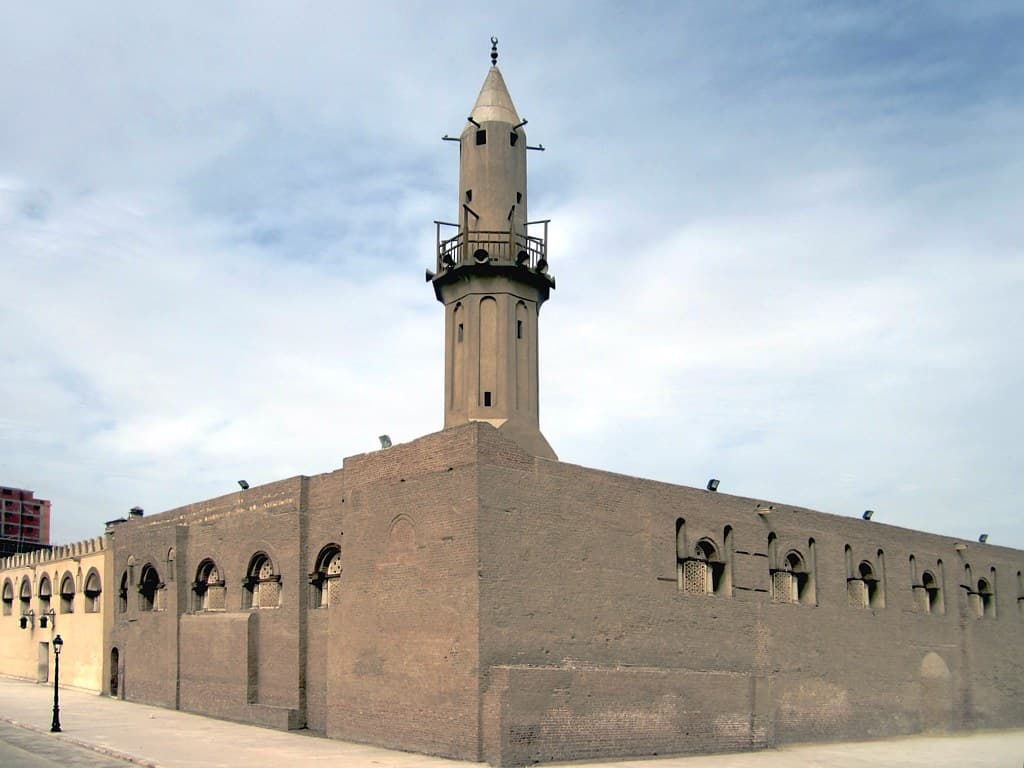
Right in the bustling heart of Old Cairo, you'll find a monument that truly reshaped Egypt's spiritual and cultural soul. We're talking about the Mosque of Amr ibn al-As, founded way back in 641 CE. It isn't just known as the first mosque ever built in Egypt, but across the entire African continent. Its story goes so much deeper than just religious devotion; it's practically a live-action textbook on the spread of Islam, the birth of Egyptian Islamic architecture, and even the formation of Fustat – Cairo's original Islamic capital.
What really makes this mosque special isn't just its age, though that's impressive enough. It's its sheer resilience. Over fourteen centuries, this place has been built, burned, expanded, and painstakingly restored by every major dynasty that came through. The Umayyads, Abbasids, Fatimids, Ayyubids, Mamluks, and Ottomans – each left their unique architectural fingerprint. What you see today is a layered masterpiece, still serving as a vibrant center for prayer and community. From what was once a simple mud-brick and palm-frond shelter, it's transformed into today's sprawling complex with gleaming marble pillars, reflecting Egypt's every evolving history. Honestly, walking through those arcades feels like tracing centuries of learning, deep faith, and cultural conversation. For anyone truly wanting to dig into Egypt's Islamic heritage, the Mosque of Amr ibn al-As offers an experience where spirituality and history just beautifully merge.
The First Mosque in Egypt: Its Humble Origins
Origins in Fustat
This iconic mosque was founded by Amr ibn al-As, the general who, you guessed it, led the Arab conquest of Egypt. He built it under direct instructions from Caliph Umar ibn al-Khattab, meant to be both a place of worship and a community gathering spot. The original structure, honestly, was pretty modest: palm trunks holding up a roof made of reeds and mud, with a simple gravel floor. No minarets, no domes – the qibla (the direction for prayer) was just marked by some basic posts. But don't let its humble beginnings fool you; this mosque symbolized a brand-new era for Egypt. It was far more than just a place to pray; it was a central hub for governance and social life, truly embodying what a mosque meant to early Islamic society.
Architectural Evolution Through the Ages
Umayyad Contributions
As Egypt's Muslim population swelled, the Umayyads were the first to enlarge the mosque. They introduced the first minarets, placing them strategically at its corners. This wasn't just a structural change; it literally changed the city's skyline, making the call to prayer a visually prominent landmark. This expansion genuinely cemented the mosque's role as the beating heart of Fustat.
Want to explore Mosque of Amr ibn al-As: Egypt's Oldest Mosque and a Living Chronicle of Faith?
Let us design the perfect private itinerary for you. From expert local guides to seamless luxury cruises, we craft custom trips that show you the real Egypt.
Customize via WhatsAppAbbasid Enhancements
Fast forward to 827 CE, and under Abbasid rule, the mosque actually almost doubled in size. They added more aisles and arcades, and you can see subtle decorative details that truly reflect the refined style of the Abbasid period. These weren't just functional expansions; they hinted at a growing desire for architectural grandeur.
Fatimid Embellishments
The Fatimids came next, adding their own artistic flourishes. They rebuilt certain parts of the mosque and adorned the mihrab with silver and intricate decorations. Their enhancements brought a new level of beauty without ever compromising the mosque's spiritual essence, elevating it to a symbol of both deep devotion and significant prestige.
Ayyubid and Mamluk Restorations
During the Ayyubid era, Saladin himself stepped in to restore the mosque after much of Fustat was tragically destroyed in fires – a defensive tactic to stop Crusader occupation. Later, during the Mamluk period, Mourad Bey undertook extensive restructuring of large sections of the mosque, including the minarets and arcades. This is largely where the monument started to take on the form we recognize today.
Modern Preservation
By the 19th and 20th centuries, thankfully, Egypt's rulers began to fully appreciate the mosque's immense cultural and historic value, kickstarting vital preservation projects. While almost none of the original 7th-century structure stands, the accumulated restorations over time tell an incredible story of continuity and adaptation across centuries.
Want to explore Mosque of Amr ibn al-As: Egypt's Oldest Mosque and a Living Chronicle of Faith?
Let us design the perfect private itinerary for you. From expert local guides to seamless luxury cruises, we craft custom trips that show you the real Egypt.
Customize via WhatsAppLayout and Key Architectural Features
Courtyard and Prayer Hall
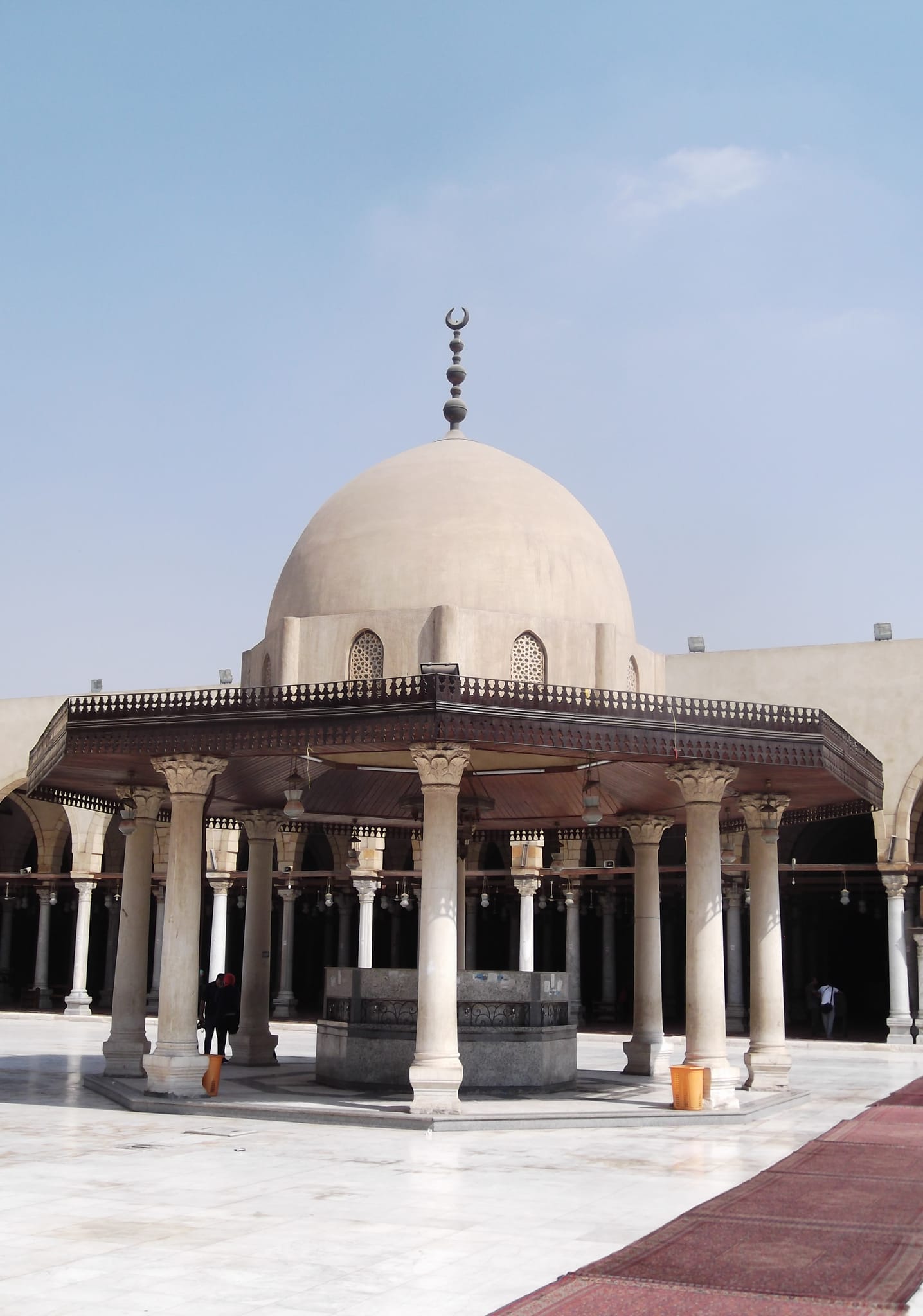
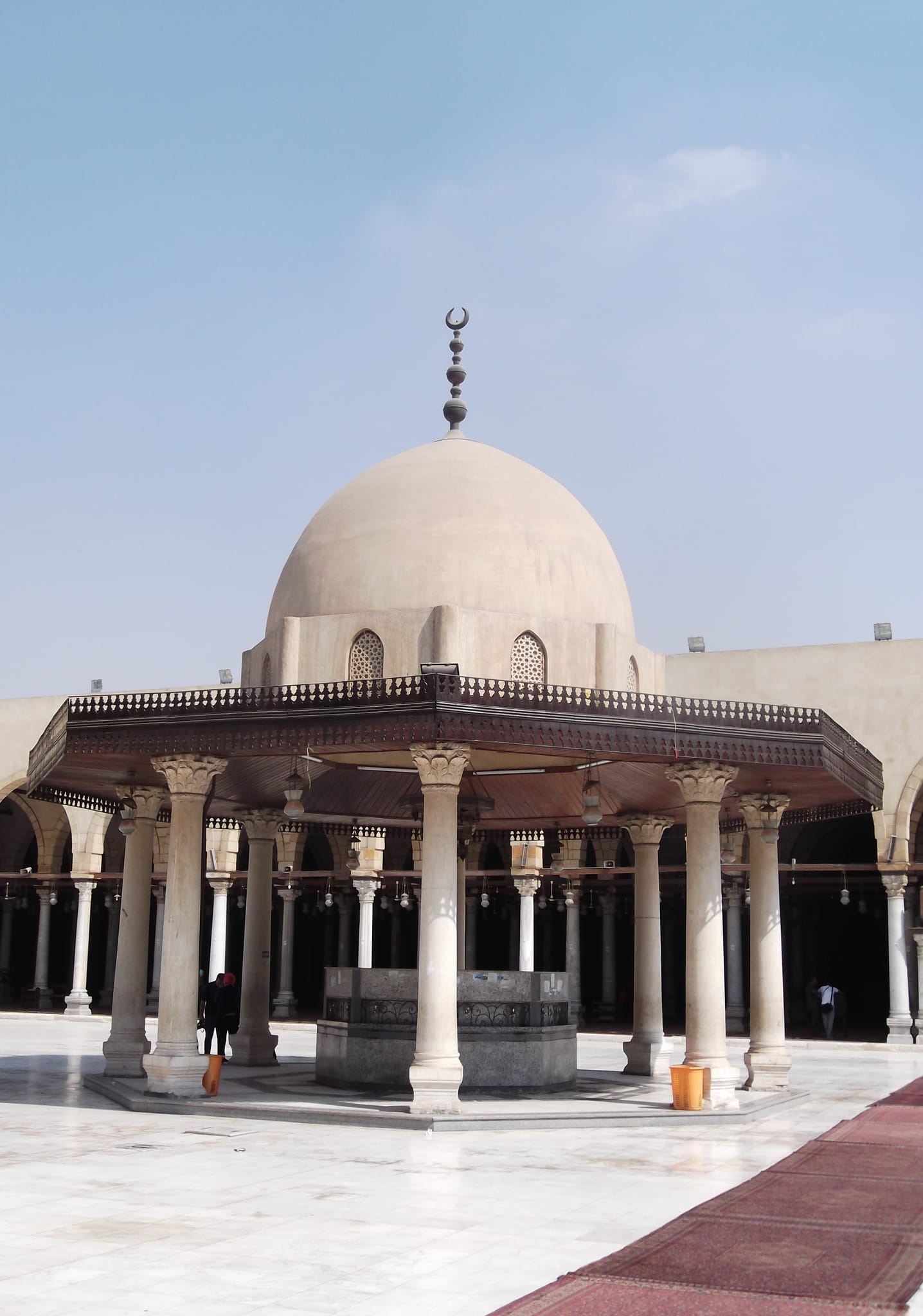
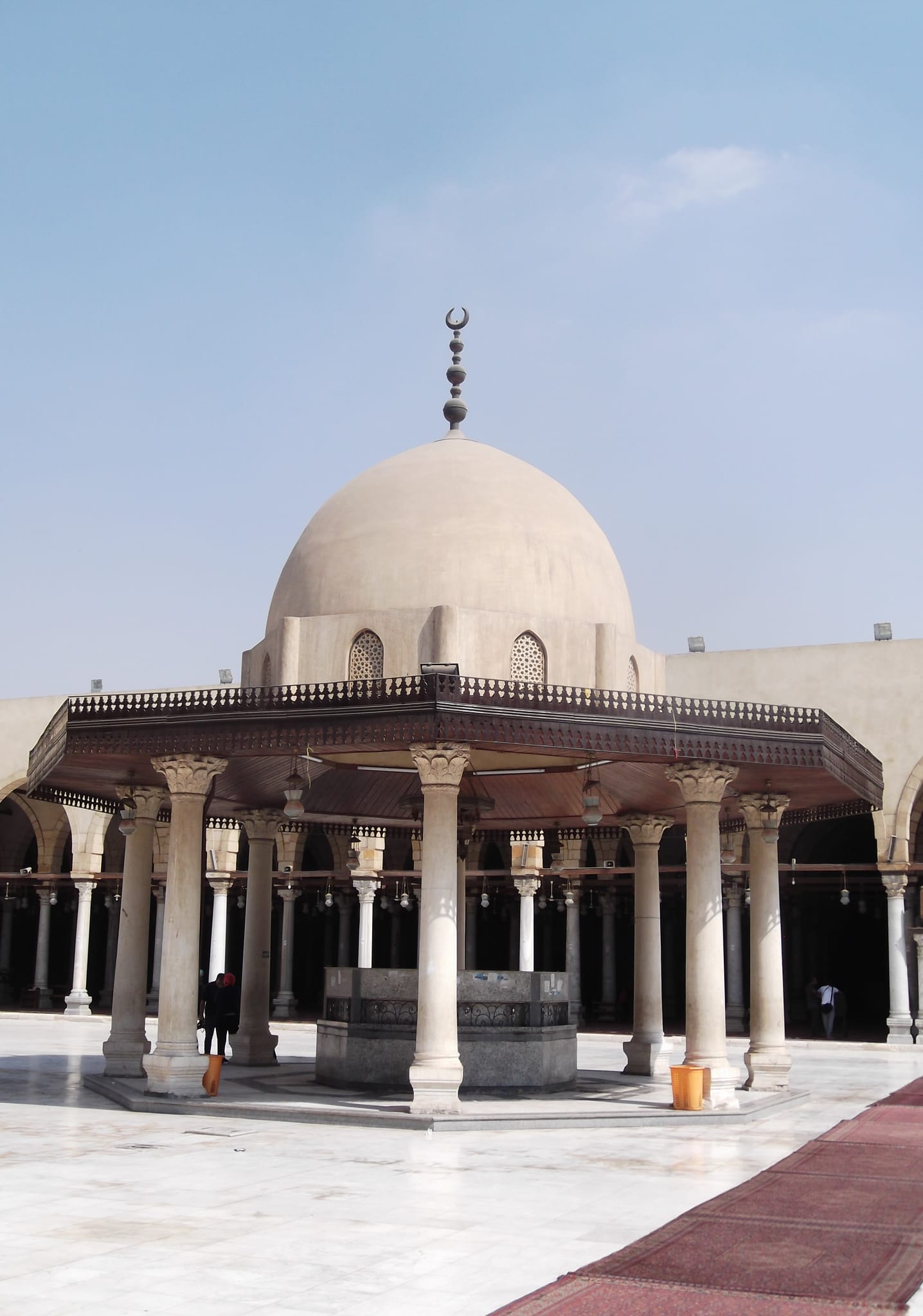
Today, the mosque sprawls impressively, covering about 120 by 112 meters. Its central courtyard, wide open to the sky, is beautifully framed by arcades with rows upon rows of columns. Many of these columns, mind you, were actually reused from older Roman and Byzantine buildings – a cool bit of history in itself! Along the qibla wall, you'll find the main hypostyle prayer hall, which houses the mihrab and a wooden minbar, still used for Friday sermons.
Minarets and Domes
The graceful minarets you see today actually date from the 18th century. Their elegant design reflects later Ottoman influences and really helps shape the mosque's distinctive silhouette. Although domes weren't part of its very earliest form, later additions introduced them, neatly blending function with a subtle aesthetic appeal.
Subtle Decorative Elements
While perhaps more modest than some of Cairo's later, grander Islamic monuments, this mosque holds its own understated beauty. You'll find lovely wooden ceilings, intricate geometric carvings, and historical stone inscriptions enriching its strong, simple structure. And that use of spolia – those columns taken from earlier Christian buildings – is a fascinating visual link between Egypt's pre-Islamic and Islamic past. It tells its own story.
Cultural and Religious Significance
A Center of Scholarship
For centuries, long before Al-Azhar even existed, the Mosque of Amr ibn al-As served as Egypt's primary hub for Islamic scholarship. Renowned scholars lectured here, drawing students who eagerly gathered to study the Qur'an, Hadith, and Islamic law. Its reputation as a seat of learning was instrumental in establishing Cairo as an intellectual and spiritual beacon in the wider Muslim world. It truly is a symbol of enduring faith, despite fire, war, and countless reconstructions, the mosque has never stopped functioning as a place of prayer. This resilience makes it a living monument, embodying Islam's enduring role in Egypt's cultural fabric. Those five daily prayers still echo through its halls, beautifully connecting modern worshippers with their 7th-century predecessors.
A Crossroads of Heritage
Sitting right near Coptic Cairo and the ancient Babylon Fortress, this mosque truly represents a cultural crossroads. Its close proximity to historic churches and the famed Coptic Museum really highlights Cairo's complex, multi-layered identity, where Islamic and Christian traditions Stand side by side, sharing histories.
The Mosque Today: Visiting Old Cairo's Historic Gem
When you visit the mosque today, you'll find it incredibly accessible, deeply serene, and just dripping with atmosphere. Its arcaded courtyards and expansive prayer halls naturally invite reflection, while every architectural detail reveals another layer of Egypt's incredible history. I'd recommend visiting in the early mornings or late afternoons; you'll get the best light and usually a quieter, more peaceful experience. Remember, respectful dress is absolutely essential, as this mosque is still a very active house of worship. Guides often emphasize its critical role as Egypt's oldest mosque and its importance as a center of both community and profound scholarship. Exploring its features, especially alongside nearby sites in Old Cairo, really offers a comprehensive look at the city's enduring religious and cultural significance.
Why the Mosque of Amr ibn al-As Still Matters
The Mosque of Amr ibn al-As isn't just some dusty old monument; it's a living, breathing space that effortlessly connects the past and present. As the oldest mosque in Africa, it laid the very foundation for Cairo's Islamic architecture. As a thriving center of learning, it nurtured countless scholars and traditions that shaped Egypt's pivotal role in the larger Muslim world. And as a remarkably resilient structure, it embodies the incredible strength of faith that has persevered through turbulent centuries.
For anyone serious about tracing the roots of Islamic Egypt, walking through its ancient halls offers a sense of continuity that few other sites can match. Its significance isn't just in the bricks and columns, but in the enduring spirit of devotion and community it continues to inspire. And for modern travelers, including those on our carefully curated Egypt tours, it remains an absolute highlight – a place where faith, history, and heritage truly come alive under the warm Cairo sun.
Ready to turn this guide into reality?
Our local experts can create a custom itinerary based on these recommendations. Just send us a quick message!
Customize via WhatsApp