
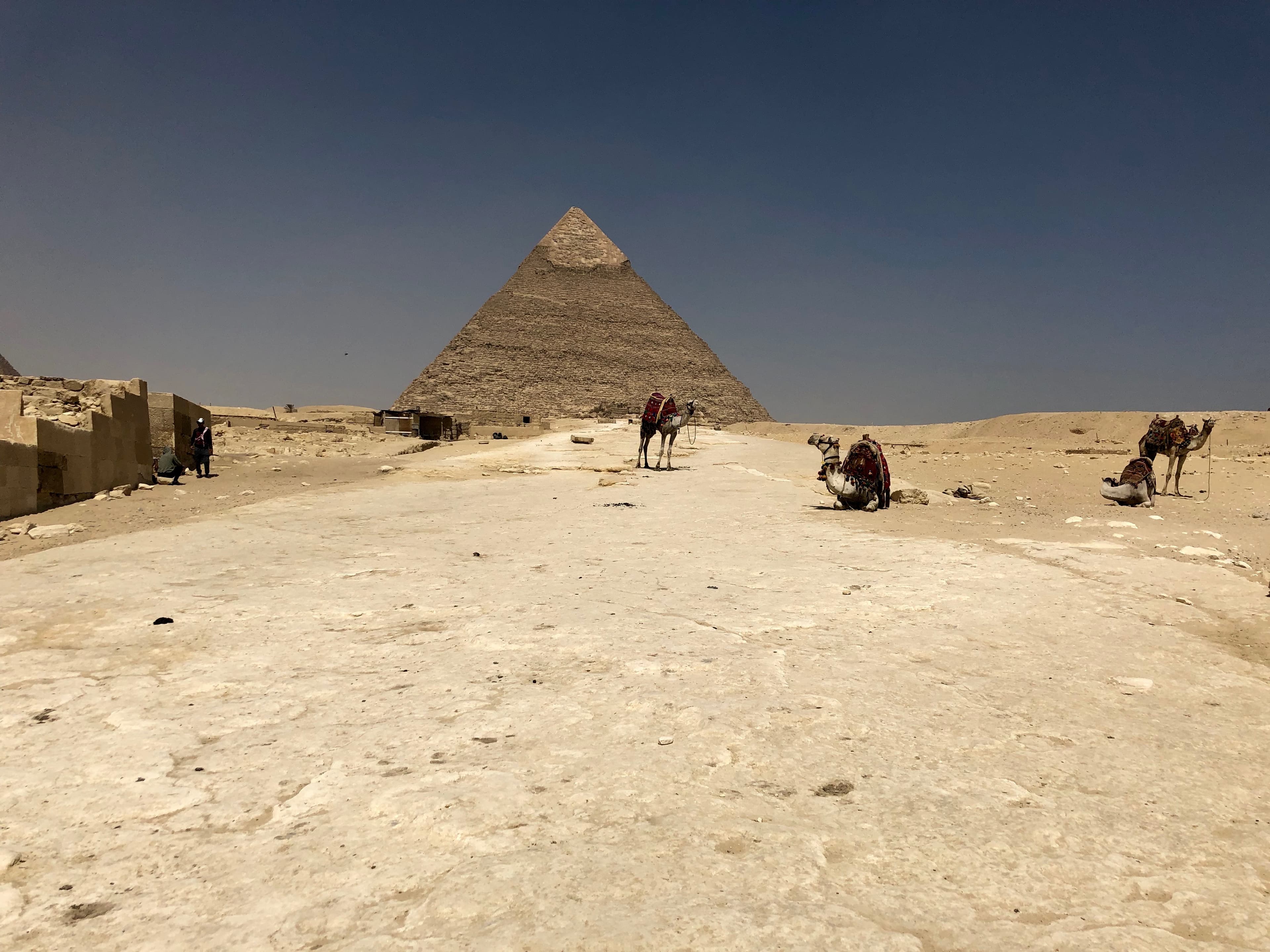

Alright, let's talk about the Giza Necropolis. For me, it's not just a collection of old rocks near Cairo; it's the very soul of ancient Egypt, standing defiantly against time. This isn't just a site; it's a feeling, a massive monument to human ambition, engineering, and belief. When you're standing there, looking up at the Great Pyramid of Khufu, the last remaining Wonder of the Ancient World, you can't help but feel a shiver.
Built during Egypt's 4th Dynasty, this whole complex – the pyramids of Khufu, Khafre, and Menkaure, the stoic Great Sphinx, and all those accompanying temples and tombs – is a masterclass. It's an extraordinary display of what ancient minds achieved, a testament to religious conviction, and it's been captivating people for over 4,500 years. Trust me, it's an encounter with history that you won't soon forget.
The Big Three: Giza's Iconic Pyramids
The Great Pyramid of Khufu (Cheops)
So, the Great Pyramid. This behemoth was built for Pharaoh Khufu (who ruled from roughly 2580-2560 BC; you might also hear him called Cheops, his Greek name). It's the biggest of the Giza pyramids, and get this: it originally stood at 146.5 meters (481 feet) tall. That made it the tallest man-made structure on Earth for over 3,800 years! Today, it's a bit shorter at 138.8 meters (455 feet), thanks to losing its smooth limestone casing and capstone over the millennia.
Just to give you a sense of scale:
- Original Height: 146.5 meters (481 feet)
- Current Height: 138.8 meters (455 feet)
- Base Length: 230.4 meters (756 feet) per side
- Volume: Roughly 2.6 million cubic meters, if you can even picture that
- Blocks: An estimated 2.3 million limestone and granite blocks
- Weight: A staggering 6 million tons, approximately
What's Inside?
The original entrance is on the north face, about 17 meters up. From there, you can trace passages that lead to an unfinished underground chamber, or head skyward through what's known as the Ascending Passage. My favorite part has to be the Grand Gallery – it's a spectacular corbelled passage, 8.6 meters high and 47 meters long. Pretty impressive, even today.
Then you've got the King's Chamber, made of magnificent red granite, where Khufu's empty sarcophagus still rests. There's also the so-called Queen's Chamber (a bit of a misnomer, as no queens were actually buried there) and those mysterious narrow 'air shafts' that point towards specific stars.
Going Inside the Great Pyramid?
Yes, you absolutely can! But it comes with an extra ticket on top of your general admission (currently 400 EGP). And a heads-up: they only allow 300 visitors a day – 150 in the morning, 150 in the afternoon. So if you're set on it, get there early or book through a reliable tour operator.
The experience is… unique. Expect narrow passages and low ceilings. If you're not a fan of confined spaces, this might be a challenge. It usually takes about 15-20 minutes to explore the interior. Is it worth it? Absolutely, for the sheer experience, even if the interior itself is relatively unadorned.
The Pyramid of Khafre
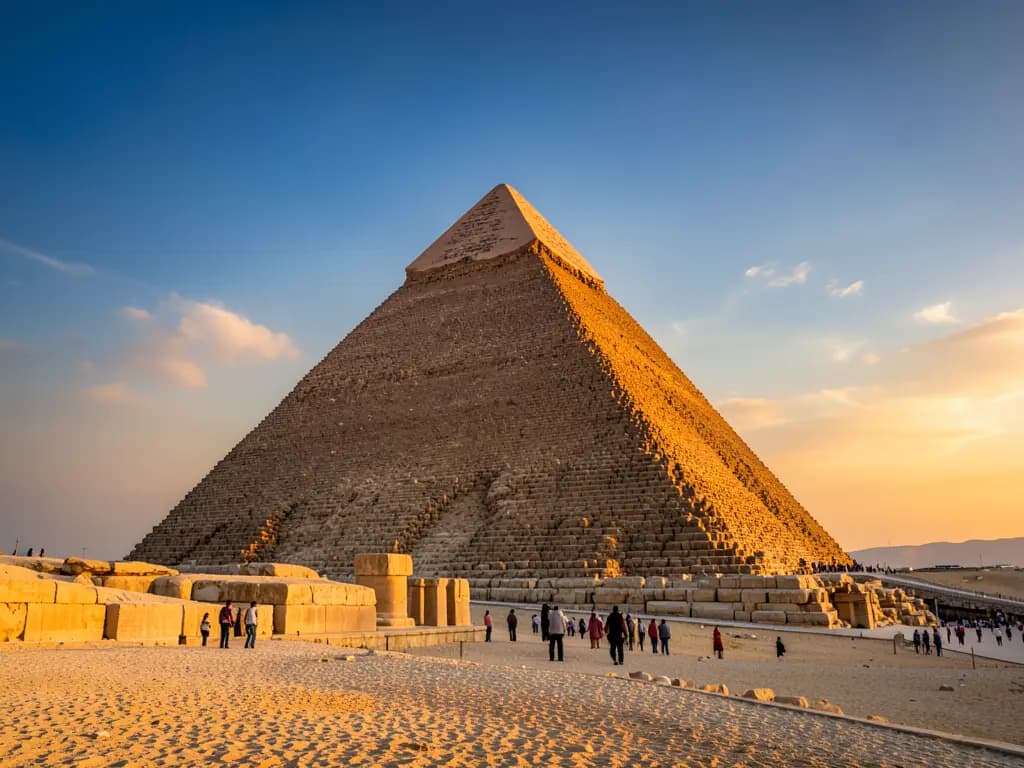
Next up is the Pyramid of Khafre, built for Khufu's son (ruled around 2558-2532 BC). This one often fools people into thinking it's taller than the Great Pyramid because it sits on higher ground and has a steeper angle. In reality, it's slightly smaller. What's cool about Khafre's pyramid is that it still has some of its original limestone casing stones at the very top.
It's a fantastic little glimpse into how all three pyramids once appeared – smooth, dazzling white, gleaming under the Egyptian sun.
Dimensions for Khafre's:
- Original Height: 143.5 meters (471 feet)
- Current Height: 136.4 meters (448 feet)
- Base Length: 215.5 meters (706 feet) per side
- Angle: 53°10', noticeably steeper than Khufu's 51°50'
Key Features:
- That stunning retained casing at the apex.
- Its Valley Temple is considered the best-preserved Old Kingdom temple.
- Of course, the Sphinx guards this complex.
- The interior is simpler than the Great Pyramid's, with two entrances and a burial chamber carved directly from the bedrock.
The Pyramid of Menkaure
Finally, we have the Pyramid of Menkaure, built for Khafre's successor (ruled around 2532-2503 BC). This one is significantly smaller than its colossal neighbors, but it makes up for it with an elaborate complex and a distinct feature: its lower courses are made of beautiful red granite, contrasting strikingly with the limestone.
Menkaure's numbers:
- Original Height: 65.5 meters (215 feet)
- Base Length: 108.5 meters (356 feet) per side
- Volume: About one-tenth the size of the Great Pyramid – quite a difference!
What makes it stand out:
- Those gorgeous red granite lower courses.
- It's accompanied by three smaller Queens' Pyramids.
- The temple complex around it is particularly elaborate.
- Inside, it's actually more complex than the bigger pyramids, with decorative panels and multiple chambers.
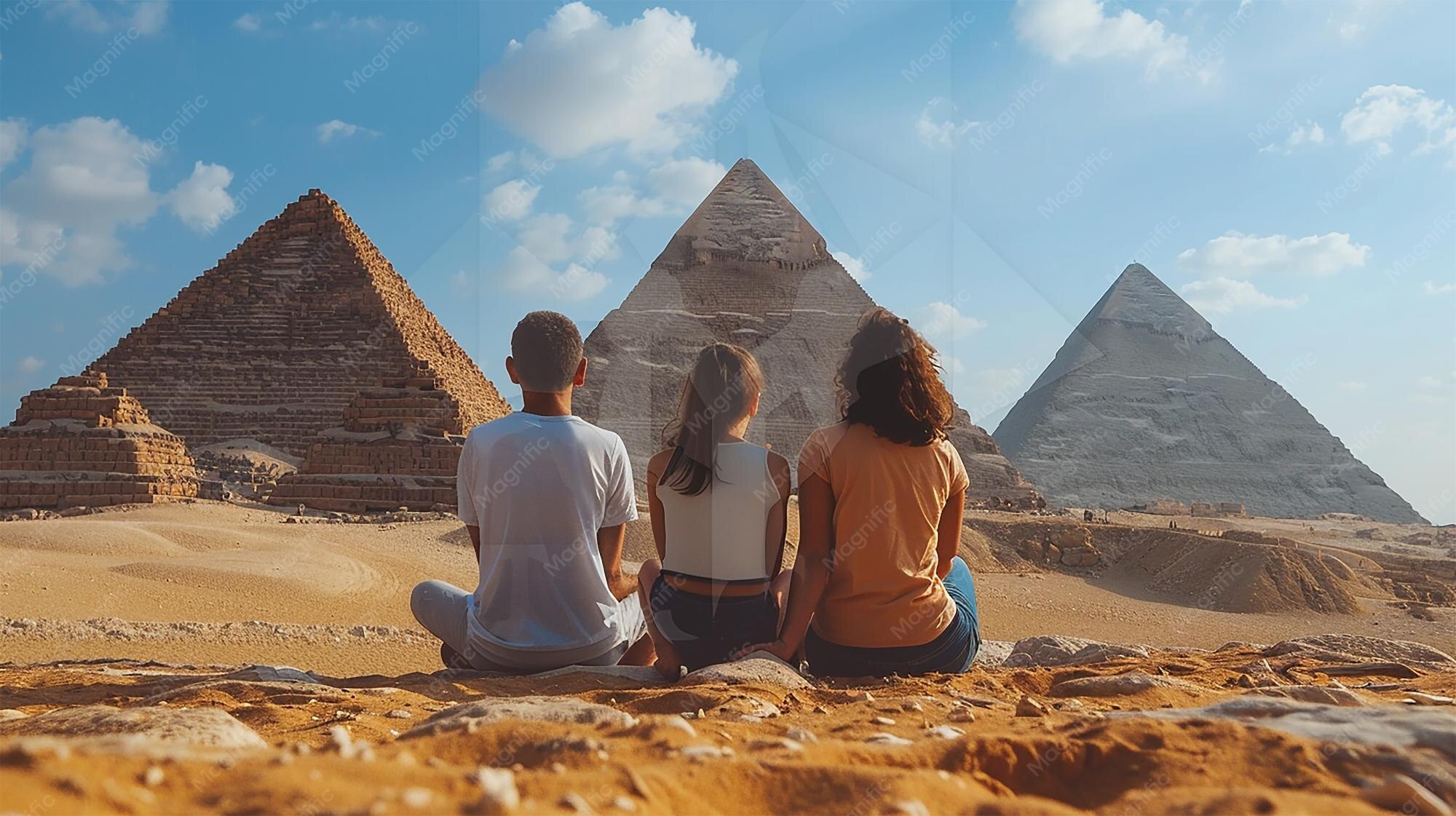
The Great Sphinx: Giza's Enduring Guardian
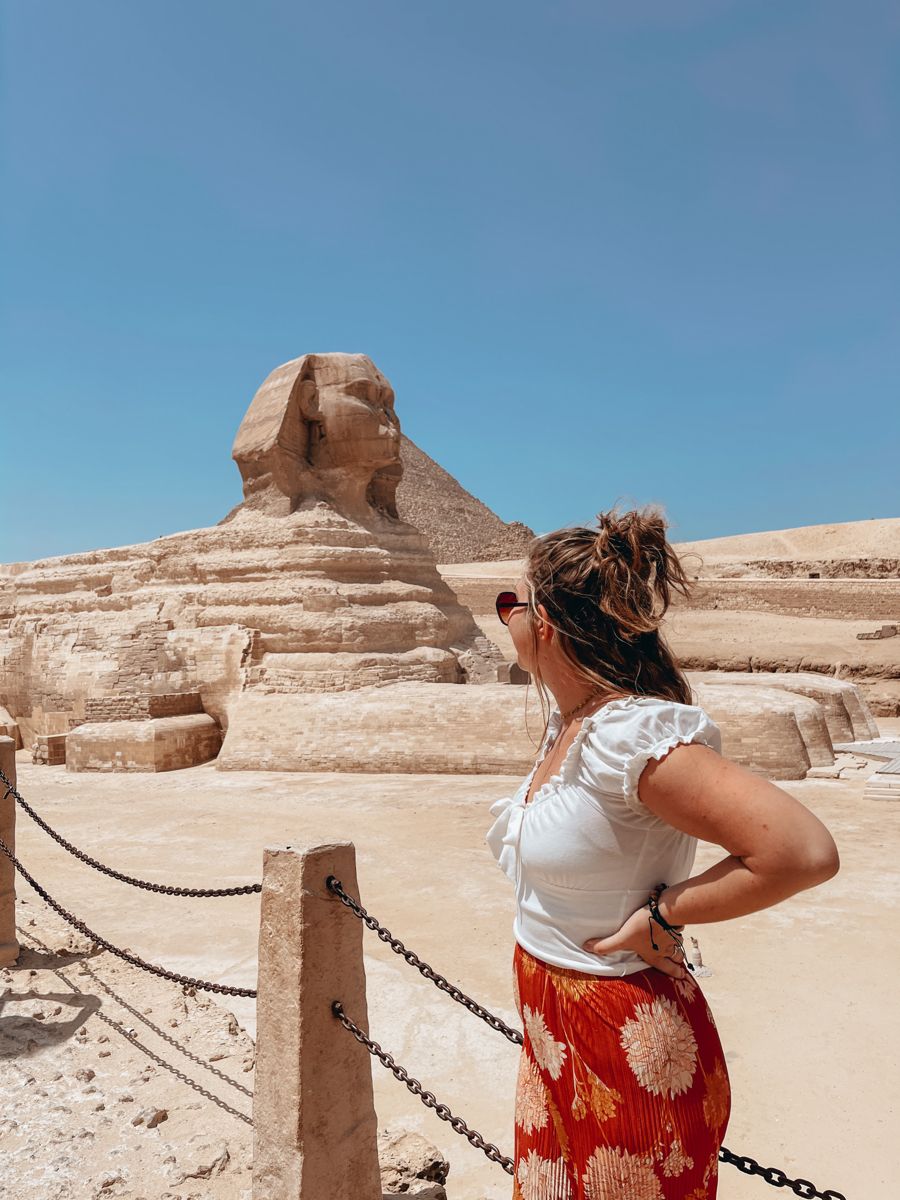
You can't talk about Giza without talking about the Great Sphinx. This absolute marvel was carved straight out of the limestone bedrock during Khafre's reign (around 2558-2532 BC). It's one of those sculptures that just *sticks* with you. This colossal statue is 73 meters (240 feet) long, 20 meters (66 feet) tall, and 19 meters (62 feet) wide. It depicts a mythical creature with the body of a lion and the head of a human, widely believed to be Pharaoh Khafre himself.
Its whole purpose? It's a guardian figure, protecting the Giza Necropolis, a powerful symbol of royal authority and divine safeguarding.
A Closer Look at the Sphinx:
- The Lion Body: Represents raw royal strength.
- The Human Head: Symbolizes intelligence and a divine connection.
- The Royal Headdress: Complete with the 'nemes' headcloth and the 'uraeus' (the royal cobra).
- The Missing Nose: A long-standing mystery, damaged sometime in the medieval period. There are various theories, but no definitive answer.
- The Beard: Bits and pieces can be found in the British Museum and the Cairo Museum.
When you're visiting, the best views are from the northeastern platform or the Desert Plateau viewpoint. Your general admission ticket covers this. No, you can't go inside – the Sphinx is solid. For the best photos, aim for early morning or late afternoon when the light is just golden.
Want to explore The Giza Necropolis: Your Ultimate Guide to Egypt's Ancient Wonders?
Let us design the perfect private itinerary for you. From expert local guides to seamless luxury cruises, we craft custom trips that show you the real Egypt.
See it for yourself
Trips that visit the places in this article.
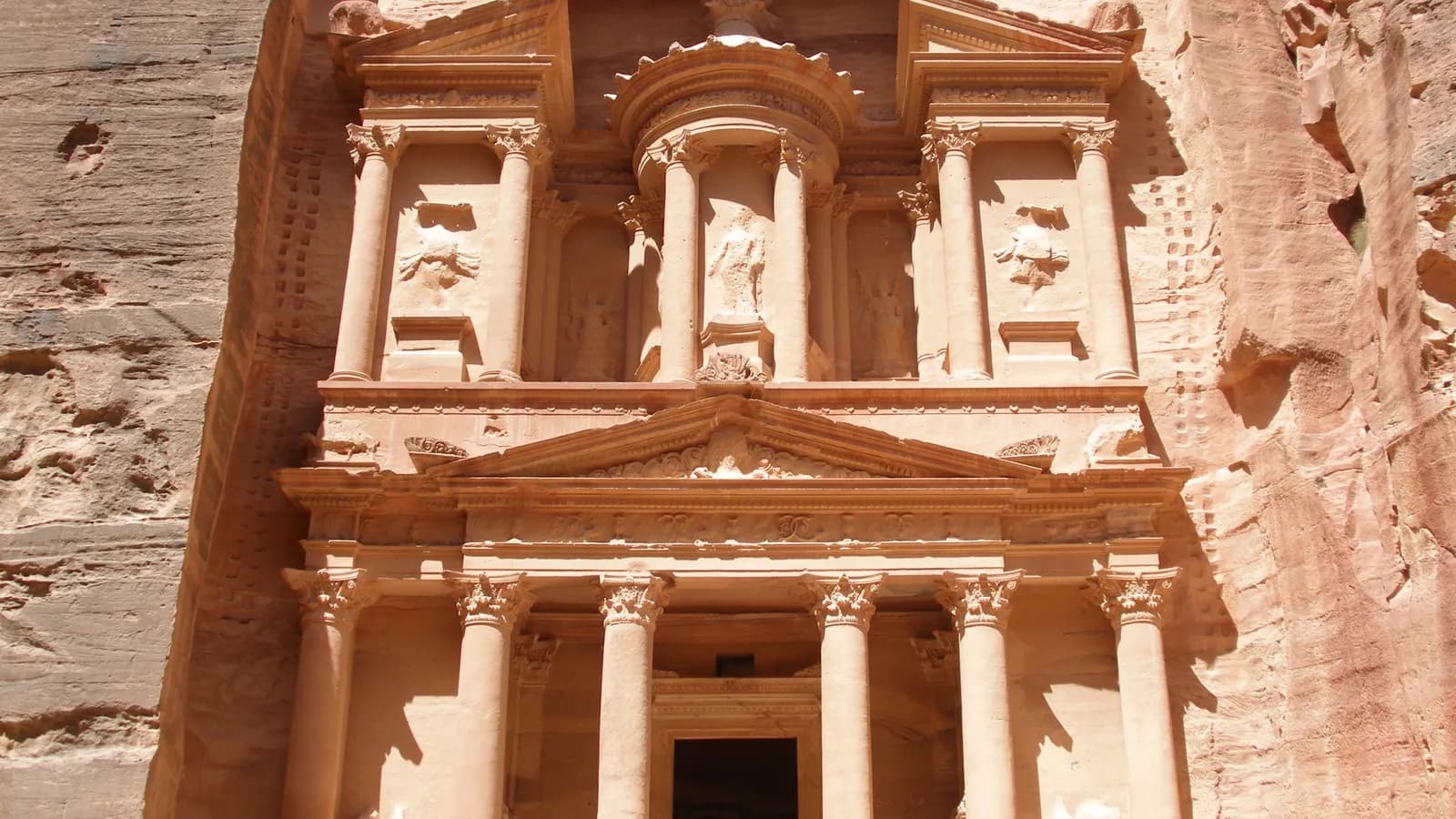
This 12-day tour spans Morocco, Egypt and Jordan, opening in Casablanca and closing at Petra and the Dead Sea after stops at the Giza Pyramids and Alexandria.…
This 5-day tour bases travelers in Cairo for four nights while alternating between the pyramids of Giza and Saqqara and the natural landscapes of the El Fayoum…
Want a different route or length? We'll build it around you.
Beyond the Big Icons: Supporting Structures at Giza
Queens' Pyramids
It's not just about the pharaohs! East of each main pyramid, you'll find three smaller pyramids. These were burial places for queens and other royal family members. For example, Khufu had three dedicated to his queens (likely Hetepheres I, Meritites I, and Henutsen), Khafre had one subsidiary pyramid, and Menkaure actually has three prominent ones, most notably for Queen Khamerernebty II.
Mastaba Tombs
As you wander around, you'll see hundreds of 'mastaba' tombs – these are rectangular, flat-roofed structures, all neatly arranged in rows to the east and west of the pyramids. These were for nobles, officials, priests, and other members of the royal family. What's really cool is that many of these tombs feature incredible reliefs depicting daily life, offering scenes, and chronicling the tomb owner's titles and achievements.
Keep an eye out for the Tomb of Seshemnefer IV, the Tomb of Qar, and the Tomb of Idu if you have time.
Boat Pits
Around the Great Pyramid, you'll spot several boat-shaped pits. These contained dismantled ceremonial boats. The most famous is the Khufu Ship, discovered intact in 1954. It's a cedar boat, 43 meters long, and it's thought to have been used to transport the pharaoh's spirit in the afterlife, or perhaps in his funeral procession. The reconstructed ship used to be displayed in its own Solar Boat Museum, but it's currently closed as it's being relocated to the new Grand Egyptian Museum (GEM).
Want to explore The Giza Necropolis: Your Ultimate Guide to Egypt's Ancient Wonders?
Let us design the perfect private itinerary for you. From expert local guides to seamless luxury cruises, we craft custom trips that show you the real Egypt.
Valley and Mortuary Temples
Each pyramid originally had two temples linked by a causeway. The Valley Temple was the lower one, usually closer to the Nile, and was used for purification rituals before burial. The Mortuary Temple was right up against the pyramid's east face, where offerings were made to the deceased pharaoh. Khafre's Valley Temple is remarkably well-preserved, featuring massive granite pillars and alabaster floors – definitely worth seeing.
Planning Your Visit to the Giza Necropolis
Practicalities for Your Trip
The Giza Necropolis is located on the Giza Plateau, about 13 km southwest of downtown Cairo, right next to the modern Giza city.
How to Get There:
- Taxi/Uber: Pretty straightforward, about 30-45 minutes from downtown Cairo. You'll want to negotiate a price of roughly 150-250 EGP with a taxi driver, or just use the app for transparency.
- Metro + Taxi: You can take the Metro to Giza Station, then grab a short taxi to the pyramids.
- Organized Tours: Honestly, for ease and insight, an organized tour is often the best. They typically include transportation, a guide, and entrance fees, often with hotel pickup.
Opening Hours:
- Winter (October-March): 8:00 AM - 4:00 PM
- Summer (April-September): 7:00 AM - 7:00 PM
- Just a note: during Ramadan, hours might change a bit.
Entry Fees (always subject to change, so double-check!):
- General Admission: 540 EGP (gets you onto the grounds, exterior pyramid views, and the Sphinx).
- Inside Great Pyramid: An additional +400 EGP (remember, only 300 tickets daily).
- Inside Khafre or Menkaure: +100 EGP each.
- Student Discounts: If you have a valid international student ID, you're in luck – 50% off!
How long do you need? I'd say minimum 2-3 hours if you're just viewing the exterior, 3-4 hours if you're venturing inside a pyramid, or a solid half-day if you want to explore thoroughly.
The Best Time to Visit
Optimal Times:
- Early Morning (8:00-10:00 AM): This is prime time. Cooler temperatures, beautiful light for photos, fewer crowds, and just a fresh energy about the place.
- Late Afternoon (4:00-6:00 PM in summer): You get that gorgeous golden hour light, it's usually a bit cooler, and if you time it right, you can watch the sunset over the desert. Magical.
Avoid:
- Midday (11:00 AM-3:00 PM): Seriously, try to avoid this window, especially in summer. The heat can be brutal, the sun is harsh overhead (not great for photos), and it's when the crowds are thickest. You'll thank me.
Seasons:
- Best: October-April. The temperatures are just perfect, usually between 20-28°C.
- Acceptable: May, September. It's warm, but usually manageable.
- Challenging: June-August. We're talking extreme heat, often 35-40°C+, and even higher. Plan accordingly if this is when you're visiting.
What to Pack (Don't Forget These!)
The Giza Plateau is exposed, so preparation is key:
- Sun Protection: A wide-brimmed hat, sunglasses, and plenty of sunscreen are non-negotiable. There's almost no shade out there.
- Water: Bring at least 2 liters per person. Yes, there are vendors, but prices are inflated.
- Comfortable Walking Shoes: You'll be walking on uneven terrain, sandy patches, and potentially climbing steps. Leave the fancy sandals at home.
- Camera: And extra batteries or memory cards! You'll be snapping a lot.
- Cash: Egyptian pounds are essential for additional tickets, tips, and any souvenir vendors you might choose to engage with.
- Modest Clothing: It's always a good idea to cover your shoulders and knees. This is a respectful gesture, and if you plan to visit any mosques nearby, it's required.
- Optional: Binoculars for spotting details, a portable fan, and some energy snacks. You'll be doing a lot of exploring!
The Mortuary Temple of Khufu and the Pyramid Complex
Most people photograph the Great Pyramid and walk away. They miss the part that actually explains it. On the east face of Khufu's pyramid, where the morning sun hits first, lie the foundations of his mortuary temple — the place where priests kept the king's cult alive long after he was sealed inside.
There isn't much left to look at, and it's worth knowing that before you go so you're not disappointed. What survives is the basalt pavement, a few granite column bases, and the outline of a courtyard. The walls were stripped for stone centuries ago. But stand on that black floor and you're standing where daily offerings were made to a god-king for generations.
Run a line east from the temple and you reach the causeway — a covered, sloping corridor that once linked the mortuary temple to the valley temple down near the old waterline. Khufu's valley temple is buried under the modern village beside the plateau, so you can't visit it, but the causeway's path is still readable on the ground. The takeaway: a pyramid was never a standalone tomb.
It was the centrepiece of a working ritual machine — valley temple, causeway, mortuary temple, pyramid. Khafre's complex next door survives far better, so walk over to his valley temple to see what the whole thing originally looked like.
The Giza Pyramids Sound and Light Show: Is It Worth It?
After dark the plateau empties of tour buses and the show takes over. Floodlights wash the three pyramids and the Sphinx in shifting colour while a narrated story walks you through thousands of years of history. It's gloriously old-fashioned. Some travellers find it cheesy; plenty leave moved.
Here's my honest read. The narration leans theatrical and the script hasn't changed much in decades. But seeing the Sphinx lit against a black desert sky, with the pyramids glowing behind it, is something daylight can't give you. If you've already spent a hot morning on the plateau, coming back at night is a completely different Giza.
Practical notes: there are several showings a night, each in a different language, so check which slot runs in your language before you commit. Seating is open-air and the desert gets cold after sunset, so bring a layer even in summer. Tickets are sold separately from daytime entry, and prices and showtimes change, so confirm the current details when you book. If you'd rather not arrange the evening yourself, several of our Giza tours bundle the show with dinner and transfers.
Things to Do in Giza Beyond the Pyramids
Giza is more than the plateau, and an afternoon here goes further than most people expect. A short drive away, the Grand Egyptian Museum holds the complete Tutankhamun collection under one roof for the first time — pair it with the pyramids and you've covered the headline acts in a single day.
On the plateau itself, don't skip the boat museum: a 4,500-year-old cedar vessel, dismantled and buried beside Khufu's pyramid, reassembled plank by plank. A camel or horse ride out to the desert panorama point gives you the postcard shot with all three pyramids in a row — agree the price first and keep it firm. Come evening, the streets of Giza town serve some of the best koshary and grilled food in greater Cairo.
For the slower version of all this, an organised Egypt day tour stitches the museum, the plateau and the panorama into one stress-free loop.
Ready to turn this guide into reality?
Our local experts can create a custom itinerary based on these recommendations. Just send us a quick message!
Customize via WhatsApp