
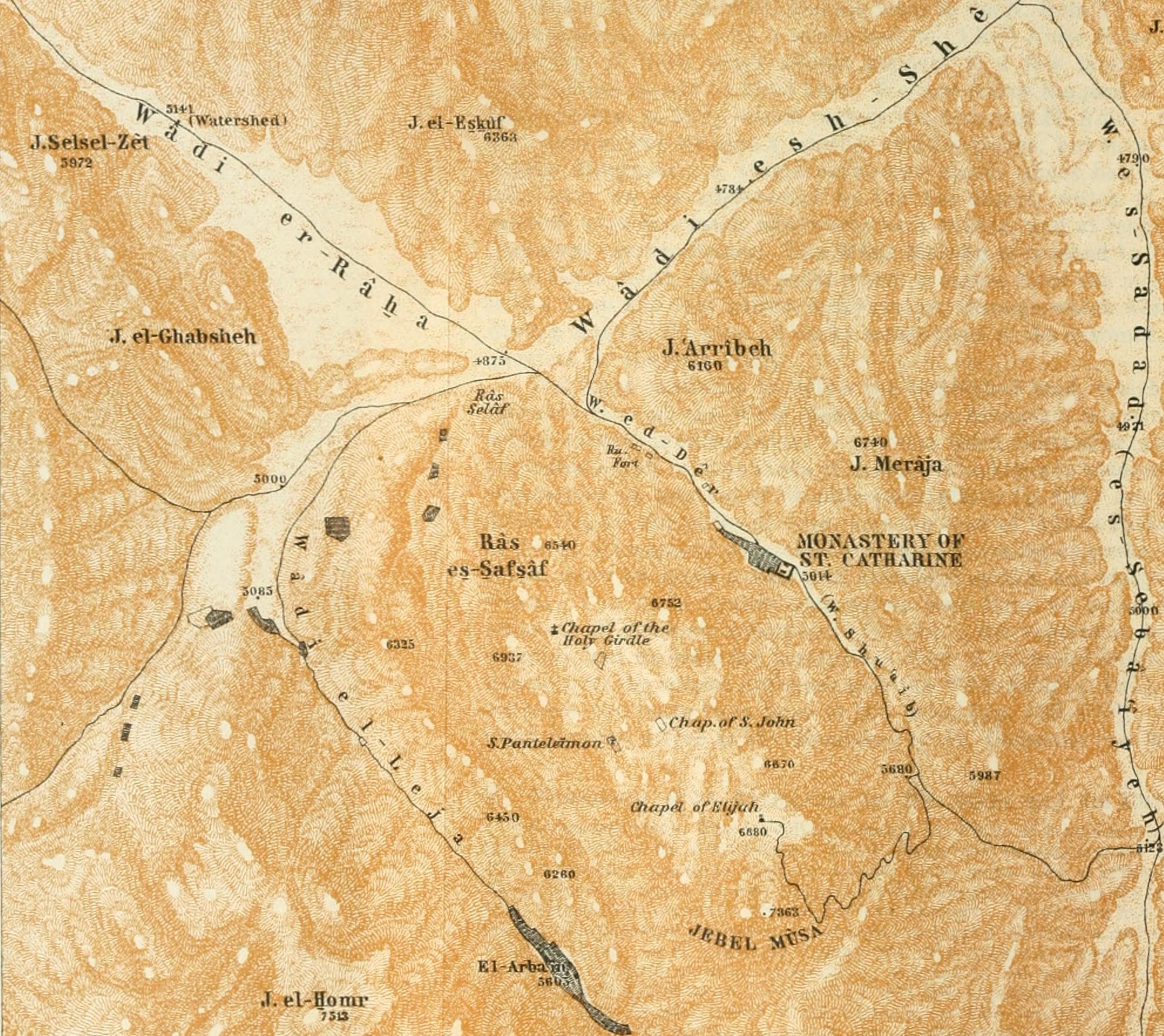

Imagine a place where time seems to slow down, where religious tradition has thrived for over 1,500 years without interruption. That's Saint Catherine's Monastery for you. Nestled at the foot of Mount Horeb in Egypt's Sinai Peninsula, this isn't just an old building; it's a living, breathing testament to faith, history, and resilience. Built between 548 and 565 CE, it's rooted in the very spot where, according to the Old Testament, Moses received the Tablets of the Law.
This monastery's importance stretches far beyond its impressive age. UNESCO recognized it as a World Heritage Site in 2002, highlighting its profound significance to Judaism, Christianity, and Islam – a rare convergence of Abrahamic faiths. While its future ownership has seen some debate, its day-to-day spiritual life and historical role remain steadfast.
Inside, you'll find real treasures. Its library rivals the Vatican's, housing rare works like the Codex Sinaiticus and the Syriac Sinaiticus. Plus, there's an extraordinary collection of early Christian icons, including the oldest known image of Christ Pantocrator. For over fifteen centuries, this remarkable institution has been a constant beacon of worship, refuge, and scholarship, inviting us to look back at an unbroken chain of human endeavor and devotion.
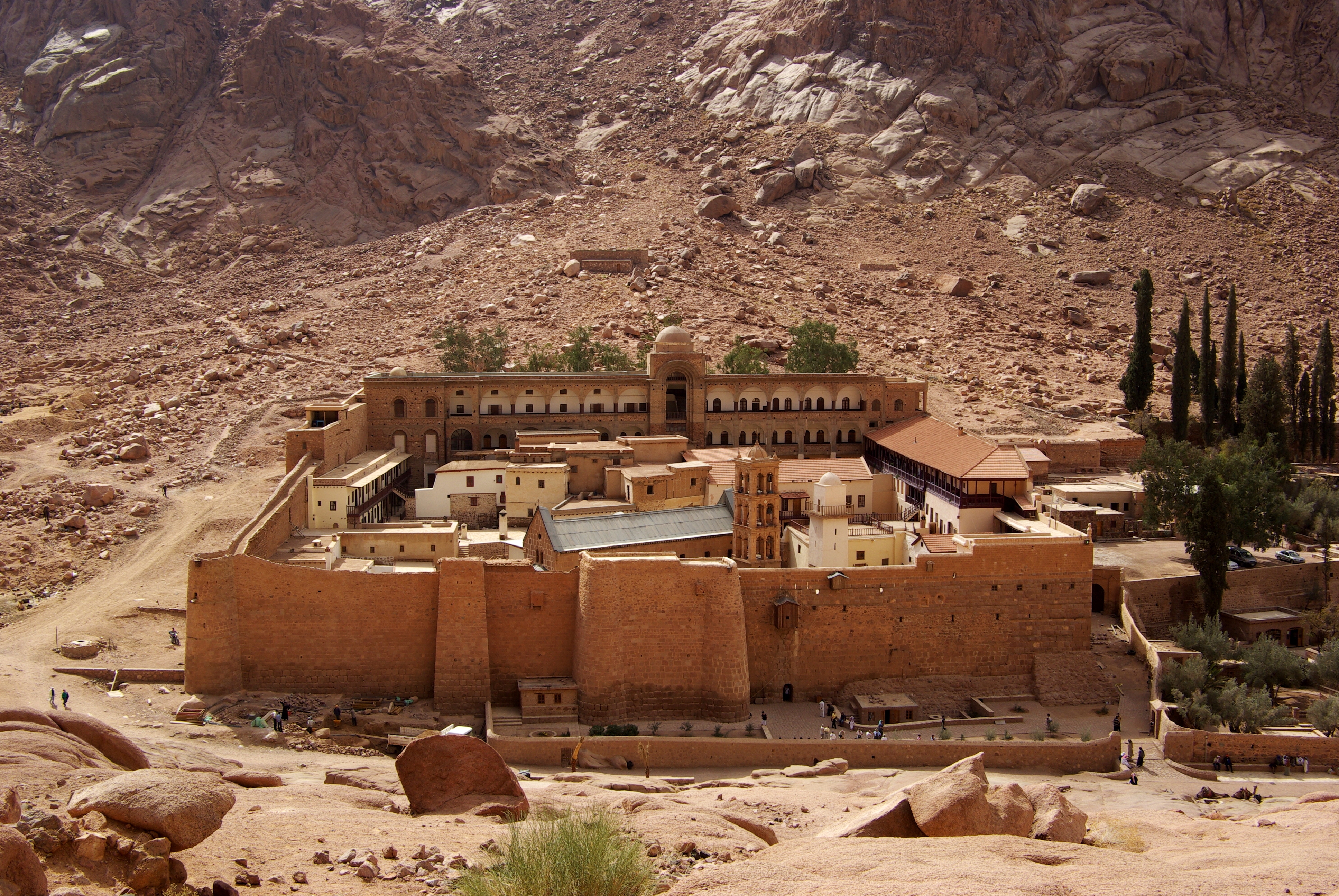 Standing at the base of Mount Sinai, a site held sacred by three major world religions, Saint Catherine's Monastery wasn't just built anywhere. Byzantine Emperor Justinian I ordered its construction with purpose between 548 and 565 CE.
Its location carries immense biblical weight. This is the precise spot where Moses reportedly encountered the miraculous Burning Bush. And yes, that bush still grows within the monastery's walls today. Scientists have identified it as _Rubus sanctus_, a rather unassuming bramble from the rose family that curiously produces no flowers or fruit. The monks here treat it with deep reverence, and they've even built a protective wall around it – a necessary step after enthusiastic visitors started collecting blessed leaves and branches.
Nearby, you'll find the historic Well of Moses. This is where Moses first met Zipporah, Jethro's daughter, who would later become his wife. Amazingly, this ancient well continues to serve as a primary water source for the monastery to this day.
The monastery's name has a story of its own. Originally, it was known as the 'Monastery of the Holy Virgin.' The change came after monks discovered the body of Saint Catherine of Alexandria in a nearby cave. Despite the popular new name, its official title remains quite grand: 'The Sacred Autonomous Royal Monastery of Saint Catherine of the Holy and God-Trodden Mount Sinai.'
This continuity of faith has ensured its status as a vital pilgrimage destination, drawing Christians, Muslims, and Jews alike through the centuries.
Standing at the base of Mount Sinai, a site held sacred by three major world religions, Saint Catherine's Monastery wasn't just built anywhere. Byzantine Emperor Justinian I ordered its construction with purpose between 548 and 565 CE.
Its location carries immense biblical weight. This is the precise spot where Moses reportedly encountered the miraculous Burning Bush. And yes, that bush still grows within the monastery's walls today. Scientists have identified it as _Rubus sanctus_, a rather unassuming bramble from the rose family that curiously produces no flowers or fruit. The monks here treat it with deep reverence, and they've even built a protective wall around it – a necessary step after enthusiastic visitors started collecting blessed leaves and branches.
Nearby, you'll find the historic Well of Moses. This is where Moses first met Zipporah, Jethro's daughter, who would later become his wife. Amazingly, this ancient well continues to serve as a primary water source for the monastery to this day.
The monastery's name has a story of its own. Originally, it was known as the 'Monastery of the Holy Virgin.' The change came after monks discovered the body of Saint Catherine of Alexandria in a nearby cave. Despite the popular new name, its official title remains quite grand: 'The Sacred Autonomous Royal Monastery of Saint Catherine of the Holy and God-Trodden Mount Sinai.'
This continuity of faith has ensured its status as a vital pilgrimage destination, drawing Christians, Muslims, and Jews alike through the centuries.
The Origins and Sacred Setting of Saint Catherine's Monastery
Standing at the base of Mount Sinai, a site held sacred by three major world religions, Saint Catherine's Monastery wasn't just built anywhere. Byzantine Emperor Justinian I ordered its construction with purpose between 548 and 565 CE.
Its location carries immense biblical weight. This is the precise spot where Moses reportedly encountered the miraculous Burning Bush. And yes, that bush still grows within the monastery's walls today. Scientists have identified it as _Rubus sanctus_, a rather unassuming bramble from the rose family that curiously produces no flowers or fruit. The monks here treat it with deep reverence, and they've even built a protective wall around it – a necessary step after enthusiastic visitors started collecting blessed leaves and branches.
Nearby, you'll find the historic Well of Moses. This is where Moses first met Zipporah, Jethro's daughter, who would later become his wife. Amazingly, this ancient well continues to serve as a primary water source for the monastery to this day.
The monastery's name has a story of its own. Originally, it was known as the 'Monastery of the Holy Virgin.' The change came after monks discovered the body of Saint Catherine of Alexandria in a nearby cave. Despite the popular new name, its official title remains quite grand: 'The Sacred Autonomous Royal Monastery of Saint Catherine of the Holy and God-Trodden Mount Sinai.'
This continuity of faith has ensured its status as a vital pilgrimage destination, drawing Christians, Muslims, and Jews alike through the centuries.
Want to explore Saint Catherine's Monastery: A Journey Through Time and Faith?
Let us design the perfect private itinerary for you. From expert local guides to seamless luxury cruises, we craft custom trips that show you the real Egypt.
See it for yourself
Trips that visit the places in this article.

1 Day
This two-day trip from Cairo is built around a pre-dawn ascent of Mount Sinai and a visit to St. Catherine's Monastery, a UNESCO World Heritage site at the…
From$205
Explore
17 Days / 16 Nights
This extensive seventeen-day adventure is ideal for the traveler who truly wants to immerse themselves in Egypt's layers of history and natural beauty, without…
From$2505
ExploreWant a different route or length? We'll build it around you.
A Historical Journey Through the Centuries
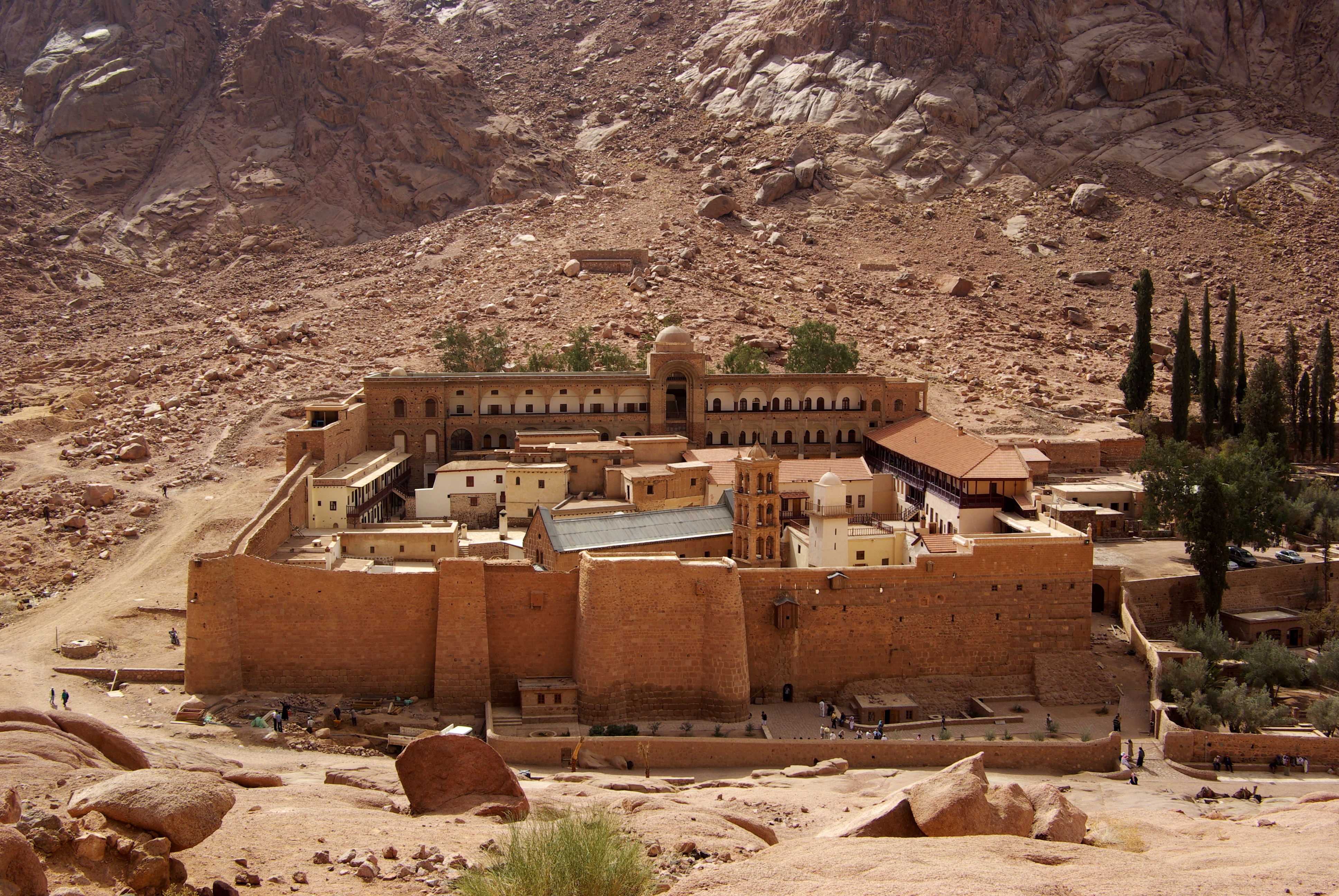 Monastic life took root at this sacred site long before Justinian's grand vision, with monks arriving as early as the late 3rd century. A Christian pilgrim named Egeria first chronicled this early monastic community in her travel journal from 381-386 CE.
Since Emperor Justinian I completed it, the monastery has stood defiantly through seventeen turbulent centuries, facing countless historical challenges. Its impressive fortification walls, towering 10-20 meters high and a robust 2-3 meters thick, proved crucial, acting as a formidable defense against invaders and uncertainty.
Perhaps one of the most intriguing aspects of its survival is the special charter it received after the Arab conquests brought the region under Islamic rule in the 7th century. Legend has it that Prophet Muhammad himself visited the site and granted the monastery a letter of protection in 623 CE. This document, known as the Ahdname, famously exempted the monks from taxes and military service, a groundbreaking gesture of religious tolerance.
During the Fatimid Caliphate (909-1171), a small chapel was even converted into a mosque, which still hosts special occasions – a powerful symbol of interfaith respect. European interest in the monastery surged during the First Crusade, bringing a new wave of pilgrims between 1096 and 1270.
The monastery successfully maintained its privileged status under Ottoman rulers like Selim I and Suleiman the Magnificent (1517-1917). While recent legal challenges in 2025 saw an Egyptian court rule that the surrounding lands belong to the state, the monastery's enduring history of self-preservation and adaptation remains a marvel.
Monastic life took root at this sacred site long before Justinian's grand vision, with monks arriving as early as the late 3rd century. A Christian pilgrim named Egeria first chronicled this early monastic community in her travel journal from 381-386 CE.
Since Emperor Justinian I completed it, the monastery has stood defiantly through seventeen turbulent centuries, facing countless historical challenges. Its impressive fortification walls, towering 10-20 meters high and a robust 2-3 meters thick, proved crucial, acting as a formidable defense against invaders and uncertainty.
Perhaps one of the most intriguing aspects of its survival is the special charter it received after the Arab conquests brought the region under Islamic rule in the 7th century. Legend has it that Prophet Muhammad himself visited the site and granted the monastery a letter of protection in 623 CE. This document, known as the Ahdname, famously exempted the monks from taxes and military service, a groundbreaking gesture of religious tolerance.
During the Fatimid Caliphate (909-1171), a small chapel was even converted into a mosque, which still hosts special occasions – a powerful symbol of interfaith respect. European interest in the monastery surged during the First Crusade, bringing a new wave of pilgrims between 1096 and 1270.
The monastery successfully maintained its privileged status under Ottoman rulers like Selim I and Suleiman the Magnificent (1517-1917). While recent legal challenges in 2025 saw an Egyptian court rule that the surrounding lands belong to the state, the monastery's enduring history of self-preservation and adaptation remains a marvel.
Hidden Treasures Inside the Monastery
 Beyond its ancient, formidable walls, Saint Catherine's Monastery guards an extraordinary collection of treasures that have miraculously survived centuries. Its library, for instance, holds the distinction of being the world's oldest continuously operating library, clocking in at 1,500 years old. Guinness World Records places this remarkable collection second only to the Vatican in terms of its size and the sheer importance of its rare manuscripts.
Imagine shelves filled with rare manuscripts in ten different languages, including Greek, Christian Palestinian Aramaic, Syriac, Georgian, and Hebrew texts. It's truly a linguistic and historical goldmine. One of its most famous finds, the Codex Sinaiticus, a 4th-century biblical manuscript considered one of the oldest nearly complete texts, was discovered here by Constantin von Tischendorf in 1844 and 1859, bringing global recognition to the monastery's scholarly riches.
Adding another layer of intrigue, the Sinai Palimpsests Project, active since 2011, employs advanced imaging technology to reveal hidden texts beneath newer writings. Researchers have already uncovered over 160 palimpsests, yielding 6,800 pages of recovered texts. These incredible finds include previously unknown Greek poems and even the oldest known recipe attributed to Hippocrates!
To safeguard these irreplaceable artifacts, the Saint Catherine Foundation joined forces with London's University of the Arts. Their collaboration led to the creation of special stainless steel boxes for 2,187 parchment manuscripts. These boxes use oxygen starvation systems, ingeniously protecting the documents from the dual threats of fire and the harsh desert climate, ensuring they endure for generations to come.
Beyond its ancient, formidable walls, Saint Catherine's Monastery guards an extraordinary collection of treasures that have miraculously survived centuries. Its library, for instance, holds the distinction of being the world's oldest continuously operating library, clocking in at 1,500 years old. Guinness World Records places this remarkable collection second only to the Vatican in terms of its size and the sheer importance of its rare manuscripts.
Imagine shelves filled with rare manuscripts in ten different languages, including Greek, Christian Palestinian Aramaic, Syriac, Georgian, and Hebrew texts. It's truly a linguistic and historical goldmine. One of its most famous finds, the Codex Sinaiticus, a 4th-century biblical manuscript considered one of the oldest nearly complete texts, was discovered here by Constantin von Tischendorf in 1844 and 1859, bringing global recognition to the monastery's scholarly riches.
Adding another layer of intrigue, the Sinai Palimpsests Project, active since 2011, employs advanced imaging technology to reveal hidden texts beneath newer writings. Researchers have already uncovered over 160 palimpsests, yielding 6,800 pages of recovered texts. These incredible finds include previously unknown Greek poems and even the oldest known recipe attributed to Hippocrates!
To safeguard these irreplaceable artifacts, the Saint Catherine Foundation joined forces with London's University of the Arts. Their collaboration led to the creation of special stainless steel boxes for 2,187 parchment manuscripts. These boxes use oxygen starvation systems, ingeniously protecting the documents from the dual threats of fire and the harsh desert climate, ensuring they endure for generations to come.
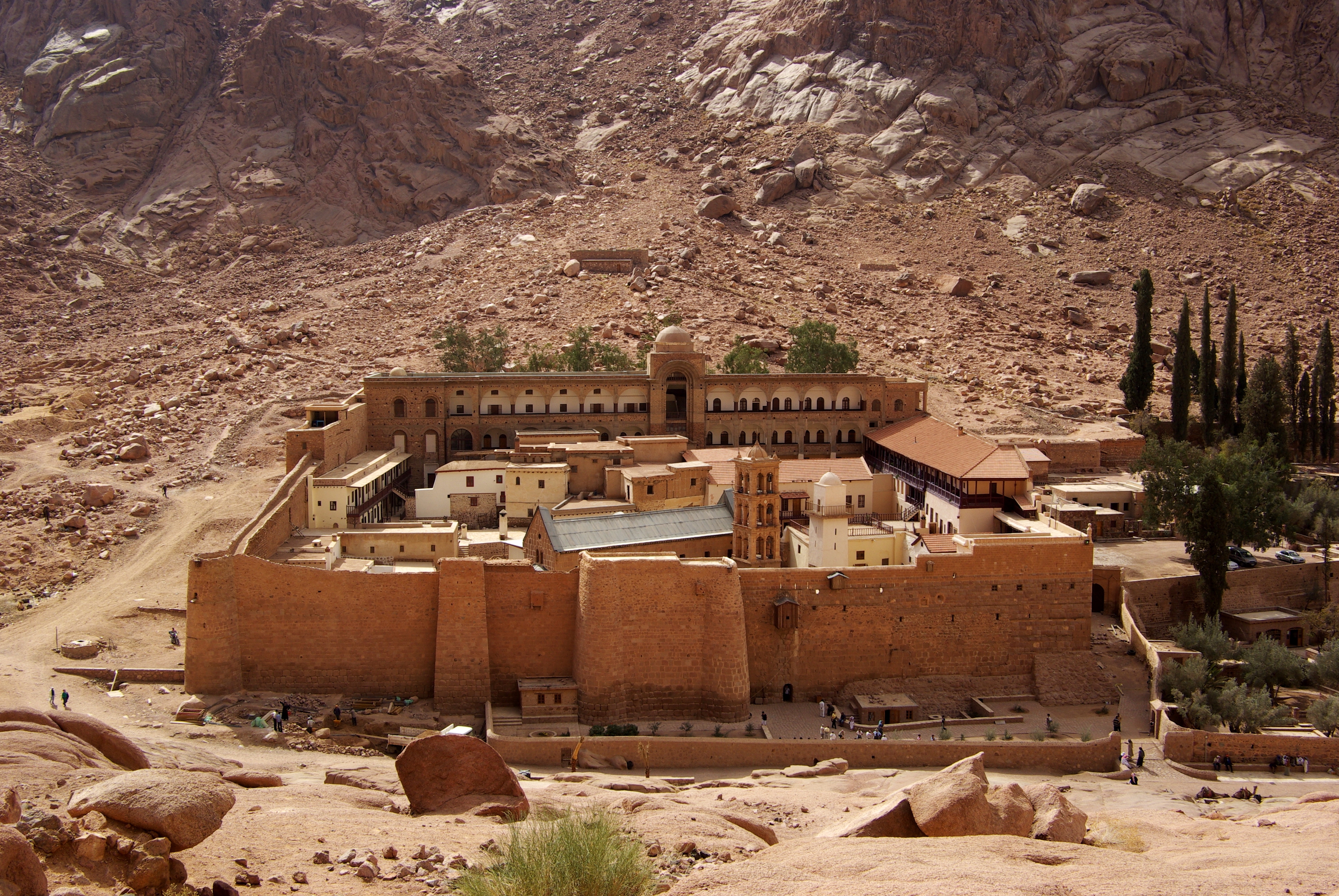 Saint Catherine's Monastery is, without a doubt, a profound testament to human faith and preservation across fifteen centuries. This ancient sanctuary, nestled at the foot of Mount Sinai, isn't just an active place of worship; it's a vigilant guardian of priceless historical treasures. Truly, it stands as a unique spiritual crossroads, where Judaism, Christianity, and Islam intersect in a deeply meaningful way.
The monastery's robust walls protect an extraordinary array of artifacts that scholars rightly call irreplaceable. Its library rivals the Vatican's in historical significance, boasting gems like the Codex Sinaiticus and numerous palimpsests that continously unveil hidden ancient texts. Modern technology, thankfully, is now stepping in to help, with specialized storage systems shielding these delicate documents from fire and the desert's extreme conditions.
Through its long history, Saint Catherine's has witnessed empires rise and fall, yet it has endured. Its survival speaks volumes about its remarkable diplomatic prowess, forging positive relationships with rulers of all backgrounds. The famed protection charter, believed to be from Prophet Muhammad himself, eloquently demonstrates how this Christian sanctuary earned profound respect beyond merely religious boundaries.
While recent legal debates over land ownership hint at future challenges, Saint Catherine's Monastery continues to offer visitors a rare glimpse into an unbroken religious tradition – one that predates most existing institutions. This sacred place bridges our contemporary world with a distant past, inviting connection through its ancient stones, the venerable Burning Bush, and its unparalleled scholarly collections. It's a place that stays with you, long after you've left its quiet, hallowed grounds.
Saint Catherine's Monastery is, without a doubt, a profound testament to human faith and preservation across fifteen centuries. This ancient sanctuary, nestled at the foot of Mount Sinai, isn't just an active place of worship; it's a vigilant guardian of priceless historical treasures. Truly, it stands as a unique spiritual crossroads, where Judaism, Christianity, and Islam intersect in a deeply meaningful way.
The monastery's robust walls protect an extraordinary array of artifacts that scholars rightly call irreplaceable. Its library rivals the Vatican's in historical significance, boasting gems like the Codex Sinaiticus and numerous palimpsests that continously unveil hidden ancient texts. Modern technology, thankfully, is now stepping in to help, with specialized storage systems shielding these delicate documents from fire and the desert's extreme conditions.
Through its long history, Saint Catherine's has witnessed empires rise and fall, yet it has endured. Its survival speaks volumes about its remarkable diplomatic prowess, forging positive relationships with rulers of all backgrounds. The famed protection charter, believed to be from Prophet Muhammad himself, eloquently demonstrates how this Christian sanctuary earned profound respect beyond merely religious boundaries.
While recent legal debates over land ownership hint at future challenges, Saint Catherine's Monastery continues to offer visitors a rare glimpse into an unbroken religious tradition – one that predates most existing institutions. This sacred place bridges our contemporary world with a distant past, inviting connection through its ancient stones, the venerable Burning Bush, and its unparalleled scholarly collections. It's a place that stays with you, long after you've left its quiet, hallowed grounds.Ready to turn this guide into reality?
Our local experts can create a custom itinerary based on these recommendations. Just send us a quick message!
Customize via WhatsApp