

Ever wonder about the heart of the Egyptian Delta? Let me tell you a bit about El Sharkia Governorate. This isn't just another region on the map; it's a place steeped in history, from its days as the twelfth province of Lower Egypt to its crucial role today. Its ancient capital, Bubastis, even held the title of Egypt's capital at one point. The Fatimids are credited with officially establishing the governorate, though before that, it was a collection of smaller villages that eventually merged to form the 'Eastern Region' – or El Sharkia, as we know it.
When the formidable Mohamed Ali took the reins of Egypt in 1805, the country was structured into 13 states – seven in Upper Egypt and six in Lower Egypt. El Sharkia was not only one of these Lower Egypt states but also the oldest. Its administration was overseen by someone we called 'El Kashef', a supervisor of sorts. A few years later, in 1813, Mohamed Ali ordered a comprehensive survey of Egypt's agricultural lands. To streamline things, he decreed that states be further divided into smaller parts, each led by an employee, known as the 'Monarch' of that section. Their job was to organize village affairs and make supervision more manageable. These parts were then broken down even further, with a 'Mayor' at the helm of each.
By 1829, El Sharkia was formally integrated under the directorate of the Lower Egypt territories. This was part of a larger national partitioning that segmented Egypt into three main regions: Lower Egypt, Upper Egypt, and the central territories.
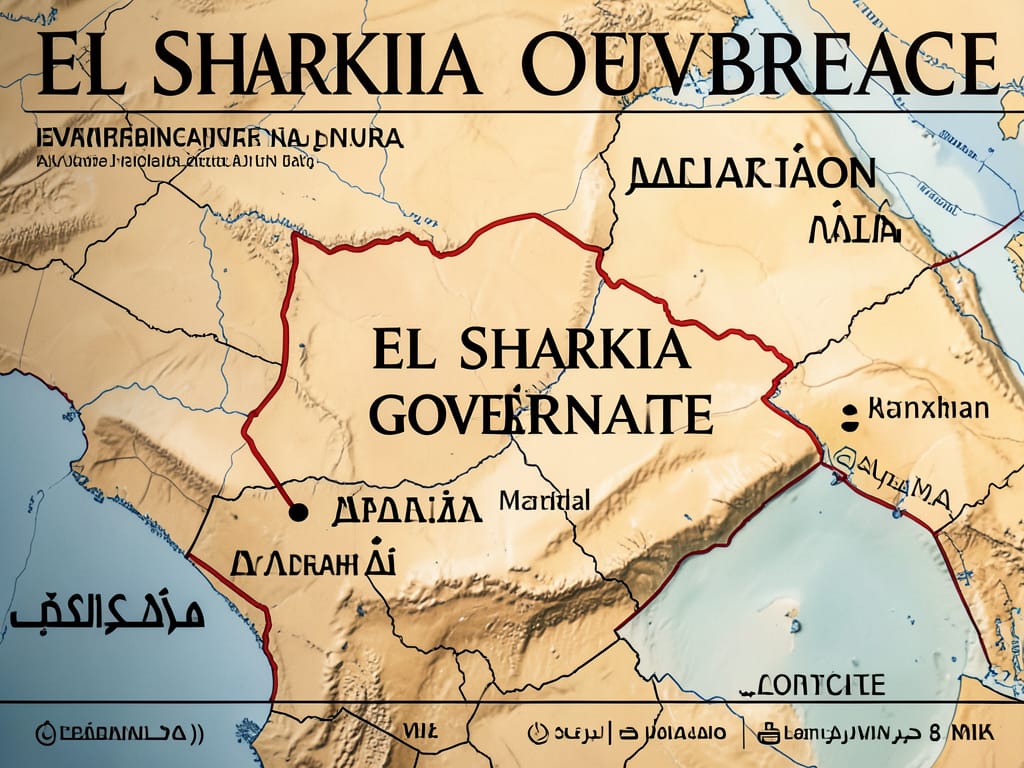 El Sharkia Governorate enjoys a truly unique position. It's nestled right in the middle of the Delta, acting as a bridge between the eastern Delta governorates. Its capital, El Zaqaziq, became a pivotal crossroads for major routes leading to places like El Esmailia, Port Said, Cairo, El Dakahlia, and El Kaliobia. This natural, strategic placement wasn't just convenient; it made El Sharkia a formidable eastern guardian, a fort ready to defend the Republic against any external invasion from the east.
Its official slogan features a very special image: a conservative white horse against a vibrant green background. The horse isn't just for show; it proudly celebrates El Sharkia's renowned excellence in breeding Arabian horses. And that beautiful green? That represents the vast, fertile agricultural lands that define so much of the governorate.
El Sharkia Governorate enjoys a truly unique position. It's nestled right in the middle of the Delta, acting as a bridge between the eastern Delta governorates. Its capital, El Zaqaziq, became a pivotal crossroads for major routes leading to places like El Esmailia, Port Said, Cairo, El Dakahlia, and El Kaliobia. This natural, strategic placement wasn't just convenient; it made El Sharkia a formidable eastern guardian, a fort ready to defend the Republic against any external invasion from the east.
Its official slogan features a very special image: a conservative white horse against a vibrant green background. The horse isn't just for show; it proudly celebrates El Sharkia's renowned excellence in breeding Arabian horses. And that beautiful green? That represents the vast, fertile agricultural lands that define so much of the governorate.
Strategic Location and Symbolic Pride
El Sharkia Governorate enjoys a truly unique position. It's nestled right in the middle of the Delta, acting as a bridge between the eastern Delta governorates. Its capital, El Zaqaziq, became a pivotal crossroads for major routes leading to places like El Esmailia, Port Said, Cairo, El Dakahlia, and El Kaliobia. This natural, strategic placement wasn't just convenient; it made El Sharkia a formidable eastern guardian, a fort ready to defend the Republic against any external invasion from the east.
Its official slogan features a very special image: a conservative white horse against a vibrant green background. The horse isn't just for show; it proudly celebrates El Sharkia's renowned excellence in breeding Arabian horses. And that beautiful green? That represents the vast, fertile agricultural lands that define so much of the governorate.
National Spirit and Vibrant Demographics
Every year, on September 9th, El Sharkia comes alive to celebrate its national day. This date commemorates the brave Egyptian leader Ahmed Orabi, who famously stood before Khedive Tawfeek in Abdeen Square, Cairo, in 1881, presenting the army's demands. It's a powerful reminder of resilience and national pride. In terms of population, El Sharkia is no small player. It ranks as the second-most populated governorate in Egypt, right after Cairo, with roughly 13.6 million people calling it home. About 38% of residents live in urban areas, while a larger 62% embrace the countryside life. And sprawling across 4911 square kilometers, or about 1,169,285 acres, there's a lot of ground to cover!Agriculture, Industry, and Economic Power
When you think of El Sharkia, think fertile lands. It's famous for cultivating a variety of vital crops – cotton, wheat, rice, corn, beans, and beet sugar are just a few. Beyond essentials, you'll find orchards bursting with fruits like luscious mangoes, citrus, grapes, and dates. They even contribute to the cultivation of important medicinal plants. Industry is also a cornerstone here. The Tenth of Ramadan City, a modern industrial hub, is packed with factories. Then there's Obkber, a city that's really made a name for itself in the garment industry, boasting numerous clothing and embroidery factories. It's truly a powerhouse, combining significant commercial and agricultural ventures, with companies like Mary Land for Agricultural Development thriving.See it for yourself
Trips that visit the places in this article.
7 Days / 6 Nights
This 7-day tour covers Cairo, Luxor, and Aswan, including the temples of Edfu and Kom Ombo, opening with the Giza Pyramids and Sphinx, the Valley Temple, and…
From$1,245
Explore
6 Days / 5 Nights
This 6-day tour combines two nights in Cairo with a three-night Nile cruise from Aswan to Luxor, connected by domestic flights, so the Nile Valley's temples…
From$1,085
ExploreWant a different route or length? We'll build it around you.
Touristic Treasures: From Ancient Sites to Sporting Prowess
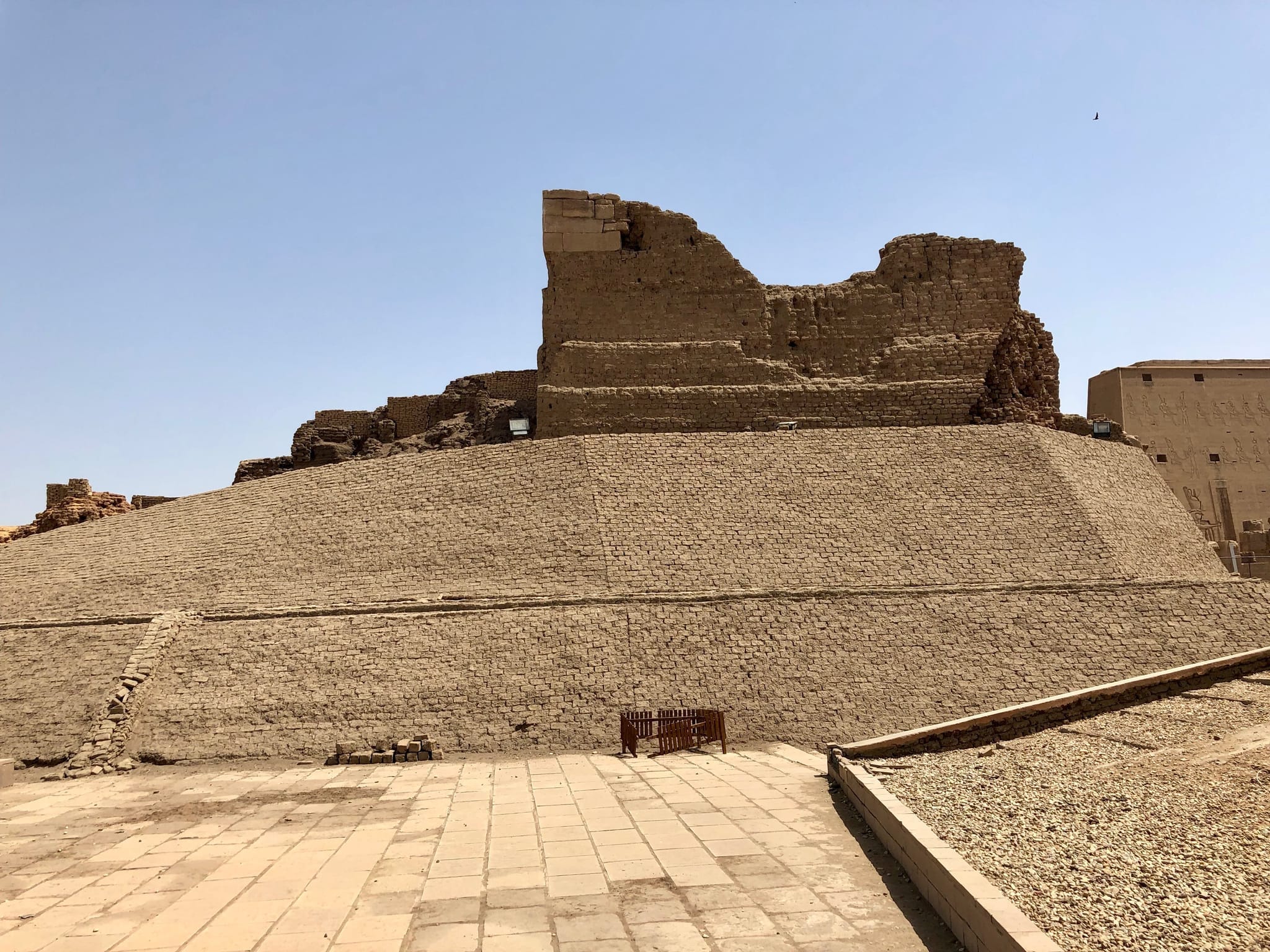 El Sharkia is a goldmine for visitors, offering a rich tapestry of cultural, religious, and even sports tourism.
Cultural Tourism
With about a hundred archaeological sites dotting its landscape, El Sharkia is a history buff's dream. Let's delve into some of the most famous:Zaqaziq: Tell Basta (Bubastis)
This is truly special – the 'city of the cats', home to Bastet, the cat goddess. Tell Basta, once the capital of the 18th nome of Lower Egypt, spans a vast area. While the granite Temple of Bastet, excavated back in the late 1800s, is largely in ruins, its main feature, the Festival Hall of Osorkon II, is still impressive. It seems the temple itself sat on an island within a sacred lake. You'll find foundations dating back to the 6th Dynasty, Ka temples of Pepy I and Teti from the same era, and 12th Dynasty chapels belonging to Amenemhat III, plus an 18th Dynasty chapel of Amenhotep III. What's truly fascinating are the extensive animal burial grounds, especially for cats, all tied to the cult of Bastet. There's even a small temple thought to be dedicated to Mihos, Bastet's son. More recently, tombs of two Viceroys of Kush and the vizier Ituti from the 19th-20th Dynasties were unearthed. Osorkon III is believed to have constructed a temple for Atum here, and a 12th Dynasty palace of a local prince was also discovered, featuring beautiful column bases and statues. The site had an interesting timeline – occupied during the Second Intermediate Period, then abandoned in the early New Kingdom, only to be reoccupied by Nectanebo II to service a canal connecting the Red Sea and Mediterranean. Archeological efforts in the late 1970s by the University of Toronto and the American School of Oriental Research revealed a 2nd-century cemetery with brick chambers containing burials, some with children in amphorae. Despite looting, much was salvaged. The central tell also yielded 5th-century BC Persian levels, including a fine limestone building, beneath which lay tantalizing Hyksos layers with Syro-Palestinian Middle Bronze II artifacts.Kafr Nigm: Pharbaethos
Here, you'll find artifacts from Ramesses II and later periods, many of which are now housed in various museums globally, including Hildesheim.Faqus: Ancient Phakusa
Just north of Faqus lies ancient Phakusa, and the surrounding area holds several sites of incredible historical importance. At al-Khata'nah, just 6km away, is Tell al-Qlrqatah, with 12th Dynasty remains and a granite gate from a chapel of Amenemhat I and Senusert III. East of that is Tell al-Daba'a, currently being excavated by an Austrian mission. This extensive site was crucial during the Second Intermediate Period and is believed to be the location of Avaris, the Hyksos capital. It was abandoned during the 18th Dynasty but reoccupied in the 19th Dynasty, when a large temple, likely dedicated to the god Seth, was built. The NE part of the tell hosted late Hyksos inhabitants, while earlier settlements from the 12th-13th Dynasties were in the central areas. What's intriguing are the burial finds; evidence suggests men were of foreign origin while women were local Egyptians. No signs of Avaris being burned were found. Nearby, at 'Azbat Rushdi al-Saghirah, are remains of a Middle Kingdom town and a temple possibly built by Amenemhat I. At Qantir, 9km away, excavators in the 1920s unearthed quantities of 19th-20th Dynasty glazed tiles depicting floral designs, animals, and fish, now displayed in the Egyptian Museum. This site is one of the contenders for the vast Pi-Ramesses, Ramesses II's Delta capital. North of that is Tell Abu 'l-Shafi'a, featuring the remains of a probable 19th Dynasty temple and the base of a colossal statue of Ramesses II. Beyond Qantir, 18km further, is al-Husayniyyah, near which lies Tell Fara'un (Mound of the Pharaoh), ancient Egyptian Imet, and later Nabasha. This was the capital of the 19th nome of Lower Egypt. Petrie partly cleared the debris mounds here in 1886, discovering the remains of a Temple of Wadjet, the goddess of Lower Egypt. Continuing from al-Husayniyyah, about 88km will bring you to the expansive site of San al-Hagar, ancient Djane, later Tanis. Though the Hyksos once lived here, it's still debated if this was their capital, Avaris. This significant town mound has seen years of investigation. Pieces were removed by Drovetti in 1825, Mariette worked here from 1860-80, and Petrie later for the EEF. French excavations under Montet took place from 1927-55, and it remains a French concession. Its history stretches back to the Old Kingdom, with remains from the 4th-6th Dynasties unearthed. It was a vital Middle Kingdom town, with royal statues from the 12th-13th Dynasties found, some of which were usurped by the Hyksos ruler Apopi. You can still see parts of a large Ramesside Temple of Amun, accessed through a monumental gateway. To the south are the remains of the 21st-22nd Dynasty Royal Necropolis (closed to the public), discovered by Montet in 1939-40, with artifacts now in the EM. Excavations on the south side of the mound cleared the first pylon of an Amun Temple, and a foundation deposit there revealed bronze, silver, and lapis lazuli plaques bearing the name of Osorkon II (874-850 BC). The town's perimeter wall to the south was buttressed at regular intervals. Beyond Faqus, you'll find al-Salihiyyah, founded in the 13th century by Sultan al-Salih Ayyub to support pilgrims on their journey to Mecca. Past Sinbillawayn, 15km further, is al-Baqliyyah. To its south are three low mounds marking ancient Bah, or Hermopolis Parva in Greek, once the capital of the 15th nome of Lower Egypt. The northernmost, Tell al-Naqus (Mound of the Bell), likely marks the town and temple dedicated to the god Thoth. An inverted capital among the ruins gives the mound its name. A 26th Dynasty naos dedicated by Apries to Thoth was found here (now in the EM). Another mound, Tell al-Zereiki, probably holds the ibis cemetery.Want to explore El Sharkia Governorate: History, Heritage, and Hidden Gems?
Let us design the perfect private itinerary for you. From expert local guides to seamless luxury cruises, we craft custom trips that show you the real Egypt.
Religious Tourism
El Sharkia holds deep religious significance. It's believed to have been a host to prophets, with Prophet Yusuf living here. Legend also has it that Moses, the 'prophet of God', was born in Sharkia. His mother is said to have cast him into the Btaputh Altanisy section of the Nile, where he was picked up by 'Pharaoh' at Tanis and raised in Egypt. Incredible stories woven into the land.Sports Tourism
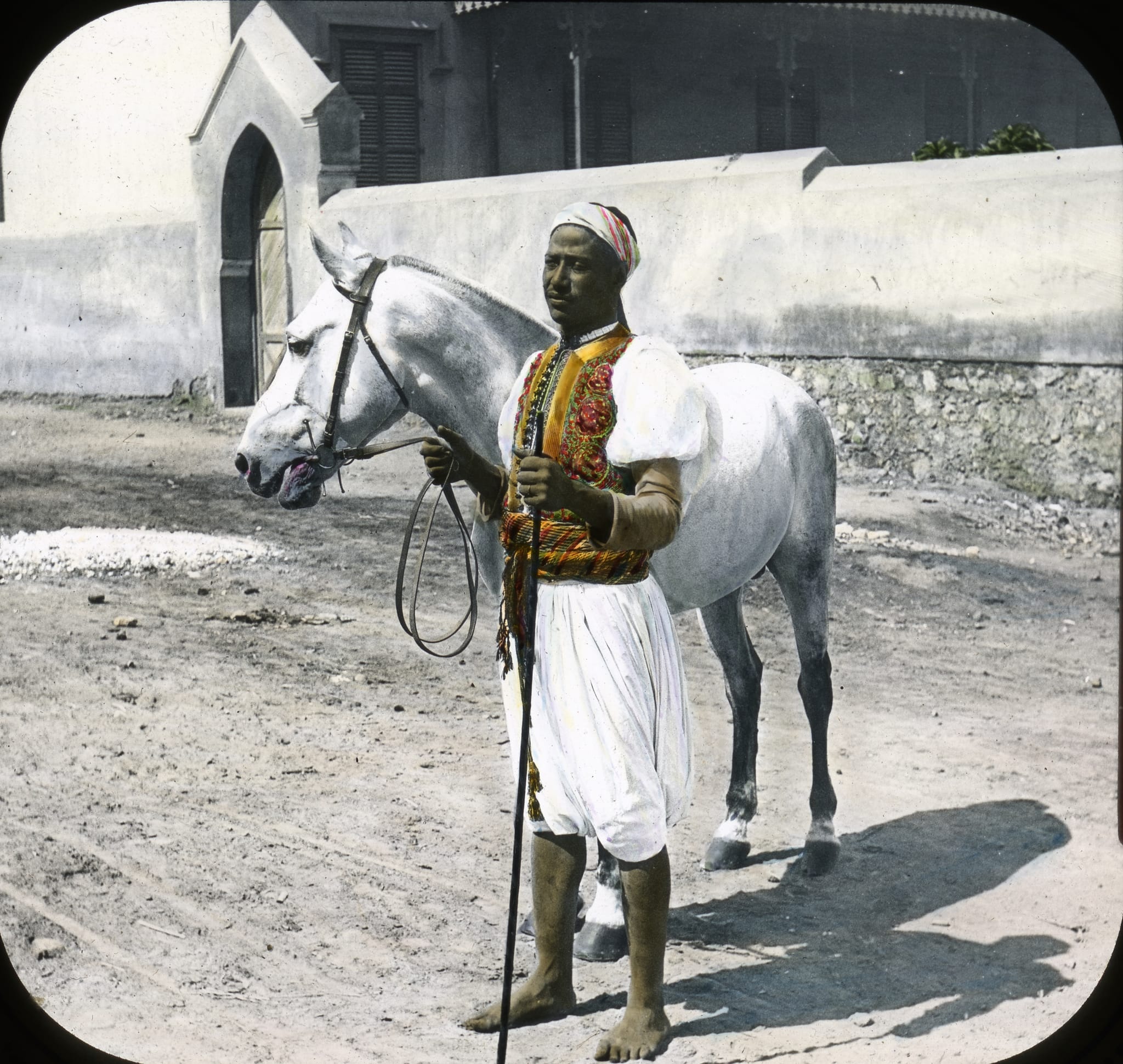 For sports enthusiasts, El Sharkia shines. It's renowned as a breeding ground for eastern Arabian horses, which, as I mentioned, are even part of the governorate's emblem. And if you're into hockey, you'll be impressed: El Sharkia's hockey team has clinched twelve African championships, a record-breaking athletic achievement that has earned its place in international sports encyclopedias. This governorate truly has it all!
Ready to turn this guide into reality?
Our local experts can create a custom itinerary based on these recommendations. Just send us a quick message!
Customize via WhatsApp