
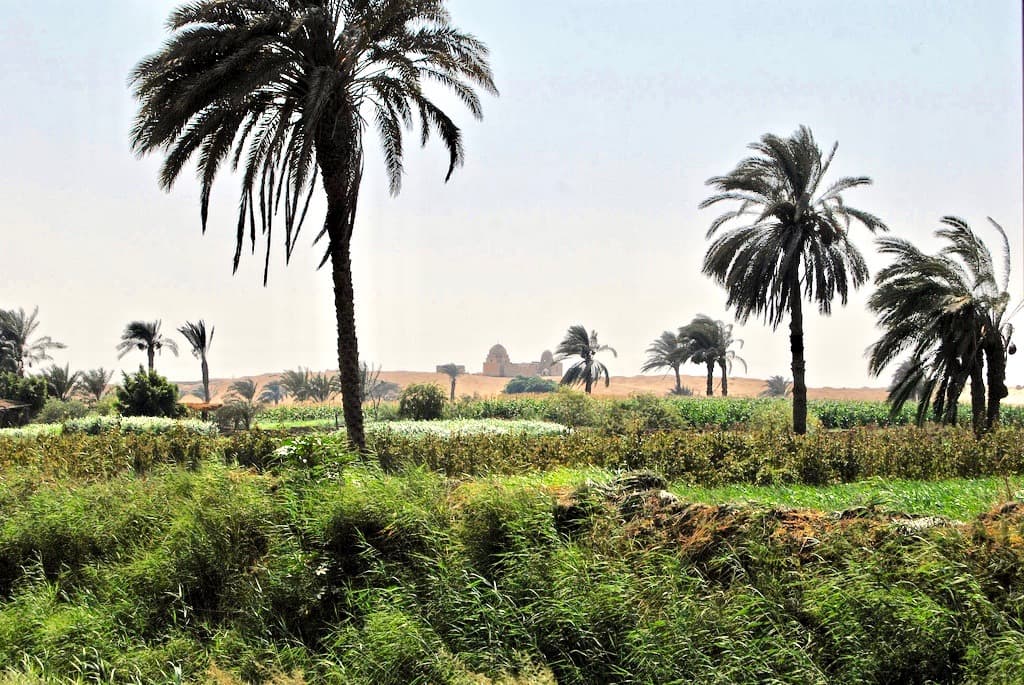

Fayoum Oasis, a real treasure just a stone's throw from Cairo, is Egypt's largest oasis. It's truly a place that combines breathtaking natural beauty with deep history and a vibrant, authentic culture. From the dramatic waterfalls of Wadi El Rayan to the ancient shores of Lake Qarun, and from forgotten pyramids to the artistic buzz of Tunis Village, Fayoum offers a peaceful, unique escape – honestly, it's one of Egypt's most underrated spots.


Where Exactly *Is* This Place?
The Fayoum Depression: A Natural Wonder
Fayoum doesn't just sit in the desert; it _is_ a natural depression. Imagine a huge basin, sculpted by millions of years of geological shifts, dipping down to about 45 meters below sea level at Lake Qarun. This whole area once held a prehistoric lake far grander than what we see today. It's located roughly 100 kilometers southwest of Cairo, and about 80 kilometers west of the Nile Valley, covering around 1,800 square kilometers. The main hub here is Fayoum City, sometimes called Medinet Fayoum, and the whole governorate is home to over 3 million people.Water, Water Everywhere (Thanks to the Nile)
What makes Fayoum so special, unlike many other Egyptian oases that rely on underground springs, is its direct connection to the Nile. The Bahr Youssef canal, an ancient waterway that branches off the Nile near Asyut, has been feeding this oasis for over 4,000 years. This constant flow keeps the land fertile, supports agriculture, and maintains Lake Qarun's water levels, even though the lake itself has no natural outlet.Fayoum's Climate: What to Expect When You Visit
* **Summer (May-September):** Can get brutally hot, often hitting 35-40°C (95-104°F) during the day. Locals often retreat indoors during peak hours. * **Winter (November-February):** Much milder, with pleasant days around 15-20°C (59-68°F) and cooler nights that might require a light jacket. * **Spring/Fall:** These are the sweet spots, with comfortable temperatures hovering around 20-30°C (68-86°F). * **Rainfall:** Don't count on much rain; it's typically just 5-10mm annually. * **My Recommendation:** Plan your visit between October and April for the most enjoyable weather.
The Must-See Spots in Fayoum
Want to explore Fayoum Oasis: Your Guide to Egypt's Hidden Gem?
Let us design the perfect private itinerary for you. From expert local guides to seamless luxury cruises, we craft custom trips that show you the real Egypt.
Customize via WhatsAppWadi El Rayan: Desert Waterfalls? Yes, Really!
About 40 kilometers southwest of Fayoum City, you'll find Wadi El Rayan, arguably the most spectacular natural attraction here. It's a protected area, famous for Egypt's *only* waterfalls. These aren't exactly Niagara, but they're incredibly unique for a desert landscape, formed back in 1973 when agricultural drainage was channeled into a natural depression, creating two lakes connected by cascading water. There's an Upper Lake, which is larger and wonderful for swimming and boating, and a smaller Lower Lake, linked by these distinct waterfalls. You'll even find 'Magic Lake' nearby, a smaller, separate lake known for its seemingly changing colors depending on the light. The massive sand dunes here are perfect for sandboarding – a real thrill! You can also swim in designated areas, snap some amazing waterfall photos, try some serious bird watching, or even go camping (with the right permits). It's easily worth a half-day to a full-day trip, and trust me, you'll want to visit early morning or late afternoon for the best light.Lake Qarun: An Ancient Ecosystem
Lake Qarun is truly a survivor. Stretching 50 kilometers long and 12 kilometers wide, it's one of Egypt's biggest natural lakes, and a direct remnant of the ancient Lake Moeris, which once covered this entire depression. This is a saltwater lake, so no swimming here, but it supports a unique ecosystem and is a crucial stopover for migrating birds. Over 100 bird species, including flamingos, pelicans, herons, and ducks, flock here during migration seasons (spring and fall). It's a birder's paradise! Beyond the birds, you can go fishing (primarily for tilapia and mullet), enjoy delicious lakeside dining at one of the many fish restaurants, or simply take in the incredible sunset views. Boat rides are an option too, offering a different perspective of this ancient body of water.Tunis Village: The Artistic Heartbeat of Fayoum
Perched on hills overlooking Lake Qarun, Tunis Village has transformed into Fayoum's creative hub. It all started with a Swiss woman, Evelyne Porret, who set up a pottery school here in the 1990s. Now, it's a magnet for artists, craftspeople, and travelers looking for a genuine cultural experience. Stroll through, and you'll find charming pottery workshops where you can watch artisans at work – or even try your hand at a pot-making class! There are art galleries showcasing local talent, traditional architecture, and some lovely eco-lodges and guesthouses. The panoramic lake views, especially at sunset, are absolutely mesmerizing. Don't miss the chance to enjoy some fantastic farm-to-table dining here.Wadi El Hitan (Whale Valley): A UNESCO World Heritage Site
Now, this is something truly extraordinary. About 150 kilometers from Fayoum City, deeper in the Western Desert, you'll find Wadi El Hitan – a UNESCO World Heritage Site. This place holds invaluable fossils of ancient whales, telling the incredible story of their evolution from land animals back into sea mammals, some 40 million years ago. Here, you can see hundreds of whale fossils, including complete skeletons, showing clear transitional features. There's even a small museum that makes the evolution story come alive. Just imagine, walking through a desert littered with ancient whales! To get here, you'll definitely need a 4x4 vehicle and it's best to go with an organized tour. It's a full-day excursion from Fayoum, but absolutely worth it for its immense paleontological significance. Just remember to stick to the marked paths; it's a protected area.
Want to explore Fayoum Oasis: Your Guide to Egypt's Hidden Gem?
Let us design the perfect private itinerary for you. From expert local guides to seamless luxury cruises, we craft custom trips that show you the real Egypt.
Customize via WhatsAppStep Back in Time: Ancient Sites in Fayoum
Karanis (Kom Aushim): A Glimpse into Greco-Roman Life
Karanis was a thriving Greco-Roman town, occupied from the 3rd century BC all the way to the 5th century AD. It offers a remarkably preserved snapshot of daily life during that period. You can explore residential areas, temple ruins, ancient baths, and administrative buildings. There's also an on-site museum that displays incredible artifacts like mummy portraits, pottery, and everyday tools found right here.The Pyramids of Hawara and Lahun
Fayoum is home to two significant Middle Kingdom pyramids, dating back around 1850 BC, built by pharaohs of the 12th Dynasty. * **Hawara Pyramid:** Erected by Amenemhat III, this mud-brick pyramid is largely collapsed, but its site includes the remains of the legendary 'Labyrinth,' a massive mortuary temple that ancient historians marveled at. * **Lahun Pyramid:** Built for Senusret II, this pyramid is unique because its entrance is on the south side, unlike most pyramids that face north. While heavily ruined, these sites are historically crucial. You can visit both in about 1-2 hours, though access to certain areas might require special permissions.Qasr Qarun Temple: The Crocodile God's Domain
On the western shore of Lake Qarun stands Qasr Qarun, a remarkably well-preserved Ptolemaic Period temple (3rd-1st century BC). It was dedicated to Sobek, the crocodile god. What's amazing is how intact it is; you'll find original roofs, decorated chambers, and even underground passages waiting to be explored. This temple is truly one of the best-preserved Ptolemaic examples anywhere.
More Fun: Activities and Experiences in Fayoum
This isn't just a place for ancient ruins; Fayoum offers lots of ways to get active and immerse yourself.Serious Bird Watching
Fayoum is actually one of Africa's top bird-watching spots, especially during migration seasons. Hundreds of thousands of birds stop at Lake Qarun and the surrounding wetlands. * **When to Go:** Spring (March-May) for northern migration, or Fall (September-November) for southern migration. Winter also brings various European species. * **What You'll See:** Expect flamingos, pelicans, herons, egrets, ducks, geese, waders, and raptors – over 100 species in all! * **Best Spots:** The shores of Lake Qarun, the Wadi El Rayan lakes, and the agricultural areas.Sandboarding: Catch Some Desert Air!
Wadi El Rayan's massive sand dunes are absolutely perfect for sandboarding. You'll find several tour operators ready to set you up with equipment and even give you some pointers. Slopes range from beginner-friendly to some pretty thrilling descents. Go in the late afternoon to avoid the hottest sand.Fishing on Lake Qarun
Lake Qarun is active with both commercial and recreational fishing, mainly for tilapia and mullet. You can try shore fishing or even hire a local boat if you want to get out on the water. Just know that some areas might require a license.Pottery Making in Tunis Village
In Tunis Village, you can get hands-on with traditional pottery. Many workshops offer half-day or full-day classes, teaching you techniques and letting you create your own pieces. It's a fantastic way to engage with local culture and take home a truly unique souvenir.
The Nitty-Gritty: Planning Your Fayoum Trip
How to Get to Fayoum
* **From Cairo by Microbus:** This is the most economical way. Microbuses leave frequently from Giza's Ahmed Helmi Terminal, take about 1.5-2 hours, and cost around 20-30 EGP. * **From Cairo by Private Car/Taxi:** A more comfortable option. The 100 km drive via the Helwan-Fayoum Road also takes 1.5-2 hours. You'll need to negotiate the rate, but expect to pay roughly 300-500 EGP for a round-trip. This is great if you plan to visit multiple sites. * **From Cairo by Organized Tour:** Many full-day tours depart from Cairo. These typically include transportation, a guide, and entrance fees, costing around $50-100 per person. It's the most hassle-free way to explore Fayoum.Getting Around Once You're There
* **Taxis:** Available in Fayoum City for local rides. * **Microbuses:** Connect the city to surrounding villages and sites. * **Private Car:** Highly recommended if you want the flexibility to visit multiple attractions smoothly. * **Organized Tours:** Obviously, these will handle all your transportation needs.Where to Stay
* **Fayoum City:** You'll find budget hotels (around $15-30/night) and mid-range options ($30-60/night), though luxury choices are limited. * **Tunis Village:** This is where the magic happens for unique stays! Eco-lodges and boutique guesthouses (typically $40-120/night) offer a special atmosphere with lake views, an artistic vibe, and often delicious farm-to-table dining. * **Lake Qarun Resorts:** Mid-range resorts ($50-100/night) along the lakeside come with swimming pools and restaurants. Many visitors, especially from Cairo, opt for day trips. But an overnight stay, particularly in Tunis Village, really allows you to soak in the atmosphere.Food and Dining: What to Eat
* **Local Specialties:** Definitely try the fresh fish from Lake Qarun – tilapia and mullet are staples. You'll also find traditional Egyptian dishes and plenty of organic produce from Fayoum's farms. * **Dining Options:** Lakeside fish restaurants around Lake Qarun are a must. Tunis Village has charming cafes and restaurants, including some excellent farm-to-table spots. Fayoum City itself has local eateries, and resorts offer their own dining. * **Budget:** Expect to pay around 50-200 EGP for a meal.The Best Time to Visit Fayoum
* **Optimal Seasons:** October-November offers perfect temperatures and the excitement of fall bird migration. March-April brings spring migration and, if there's been some rain, wildflowers. December-February gives you cool, comfortable weather. * **Avoid:** July-August. It gets incredibly hot, often exceeding 40°C (104°F). Also, May-June can be very hot with fewer birds around.Ready to turn this guide into reality?
Our local experts can create a custom itinerary based on these recommendations. Just send us a quick message!
Customize via WhatsApp