
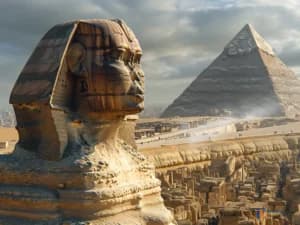

Ever wondered what life was truly like along the Nile, thousands of years ago? We often picture pharaohs and pyramids, but what about the everyday folks? The men, women, and children who built that magnificent civilization? Over here at Travel Joy Egypt, we’re all about peeling back those historical layers, not just showing you the stunning ruins, but helping you connect with the real lives that once thrived there.
And believe me, the roles people played in Ancient Egypt were far more nuanced and fascinating than you might imagine.
Forget those dusty academic texts for a moment. Let's really dig into the heart of Ancient Egyptian society and see how men, women, and children navigated their world, contributing to one of history's most enduring legacies. You might be surprised by what we uncover!
The Enduring Backbone: Men in Ancient Egypt
When you think of Ancient Egyptian men, you probably first picture the Pharaoh, right? The divine ruler, the military leader, the ultimate authority. And yes, that was the pinnacle of male power. But trickle down from there, and you find a vibrant tapestry of roles, each vital to the functioning of the state.
Most men were farmers, working the fertile lands gifted by the Nile. This wasn't just a job; it was the bedrock of the entire economy. Imagine the rhythm of their lives: the annual inundation cycle, planting, harvesting, tilling the soil under the relentless Egyptian sun. It was hard, honest work, often communal, and absolutely essential for feeding the population and sustaining the empire. Beyond farming, skilled craftsmanship was highly valued.
Think about the artisans who carved the intricate reliefs on temple walls, the goldsmiths crafting exquisite jewelry, the carpenters building boats and furniture, the potters shaping clay into everyday vessels. These weren't anonymous laborers; they were respected professionals.
And then there were the scribes. Oh, the scribes! Education was a pathway to upward mobility, and being a scribe was a prestigious position. They recorded everything – laws, taxes, religious texts, medical treatises, even personal letters. Their meticulous work is why we know so much about Ancient Egypt today. Imagine the quiet power of literacy in a largely illiterate society. Priests, soldiers, administrators – men held the vast majority of official government and religious positions.
Their duties were heavy, often involving complex rituals, warfare, or managing vast resources. They were expected to be providers, protectors, and upholders of Ma'at – cosmic order and justice.
More Than Just Homemakers: Women in Ancient Egypt
Now, this is where it gets really interesting. Ancient Egyptian women enjoyed a level of legal and social freedom that was remarkably progressive for their time, especially compared to many other ancient civilizations. This isn't to say it was a perfect utopia of equality, but their status was genuinely impressive.
Legally, women were equal to men. They could own property, inherit land, make contracts, initiate divorce, and even represent themselves in court. Think about that for a moment – thousands of years ago, women had these fundamental rights! We have countless records of women buying and selling goods, managing estates, and even running businesses. While the ideal was often for a woman to manage the household, this wasn't seen as a lesser role.
The home was the heart of the family, and her management was crucial.
Beyond the home, some women held significant public roles:
- Priestesses: Especially in the worship of goddesses like Hathor or Isis, women served as priestesses, performing rituals and holding considerable influence.
- Musicians and Dancers: These were respected professions, often associated with temple rituals, festivals, and wealthy households.
- Weavers and Brewers: Many women worked outside the home in these vital industries, contributing directly to the family income and the economy.
- Queens and Regents: Of course, we can't forget formidable figures like Hatshepsut or Cleopatra, who ruled Egypt in their own right, wielding immense political power. Their existence alone shatters any notion of women being merely subservient.
Marriage was generally monogamous, though men of higher status sometimes had secondary wives or concubines. Fidelity was expected from both partners, and love and affection were clearly valued within marriage, as evidenced by tomb inscriptions and love poetry. It truly wasn't the patriarchal cage you might expect.
See it for yourself
Trips that visit the places in this article.

This 7-day tour covers Cairo, Luxor, and Aswan, including the temples of Edfu and Kom Ombo, opening with the Giza Pyramids and Sphinx, the Valley Temple, and…

This 6-day tour combines two nights in Cairo with a three-night Nile cruise from Aswan to Luxor, connected by domestic flights, so the Nile Valley's temples…
Want a different route or length? We'll build it around you.
The Future of Egypt: Children
Children were seen as a blessing, a continuation of the family line, and essential for performing the necessary rituals for their parents in the afterlife. The desire for children, especially sons, was strong, but daughters were also cherished. Tomb art often depicts children playing, being nursed, or participating in family activities, showing a genuine affection.
Infant mortality rates were tragically high, a harsh reality of ancient life. Those who survived infancy would spend their early years in the care of their mothers or other female relatives. Play was an important part of childhood, with toys like dolls, spinning tops, and animal figures found by archaeologists. But childhood wasn't just about play.
Education wasn't universal, but boys from wealthier families would attend schools, often attached to temples or government institutions, to become scribes, priests, or administrators. They learned reading, writing (hieroglyphs!), arithmetic, and sometimes foreign languages. Girls’ education typically focused on household management, music, and dance, though some elite girls would also learn to read and write.
As they grew, children would gradually take on responsibilities within the household or assist their parents in their trades. A son would often follow in his father's footsteps, learning the family craft or farming techniques. Daughters would learn the skills needed to run a household and raise their own families. Childhood ended relatively early, with marriage often occurring in the mid-to-late teens, marking their entry into full adult life and responsibility.
Want to explore Roles of Men, Women, and Children in Ancient Egypt?
Let us design the perfect private itinerary for you. From expert local guides to seamless luxury cruises, we craft custom trips that show you the real Egypt.
Cairo ToursEgypt Tour PackagesNile CruisesFamily Tour Packages
A Society of Interdependence
What really strikes you when digging into these roles is the sense of interdependence. The farmer depended on the scribe to record his harvest, the artisan depended on the farmer for food, and the priest depended on offerings from everyone to maintain the temples and appease the gods. Men, women, and children all had their place, contributing in their own ways to the grand, continuous flow of Egyptian life.
There was a clear social hierarchy, yes, but within that structure, there was also a remarkable degree of balance and respect, particularly regarding the status of women. It challenges many of our modern assumptions about ancient societies. So, the next time you marvel at a pyramid or a temple, take a moment to think about the vibrant, complex lives of the men, women, and children who made it all possible.
Their stories, their contributions, are woven into the very fabric of Egypt's enduring magic.
Come experience it for yourself with Travel Joy Egypt. We’ll help you see beyond the stones, right into the heart of history.
Planning a trip to Egypt?
Let us handle the details. From private guides to luxury Nile cruises, we create custom itineraries that show you the real Egypt.
Customize via WhatsApp