

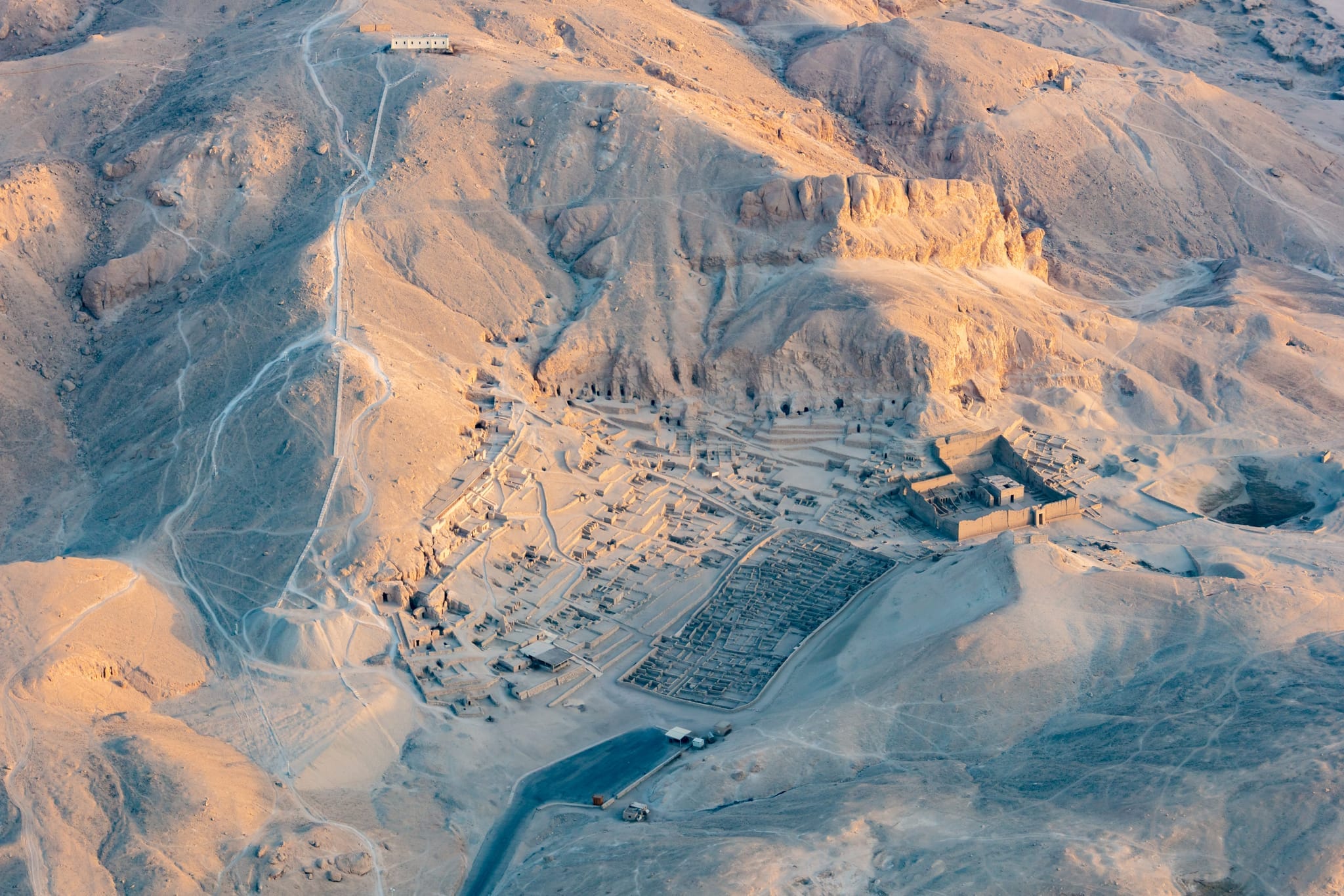
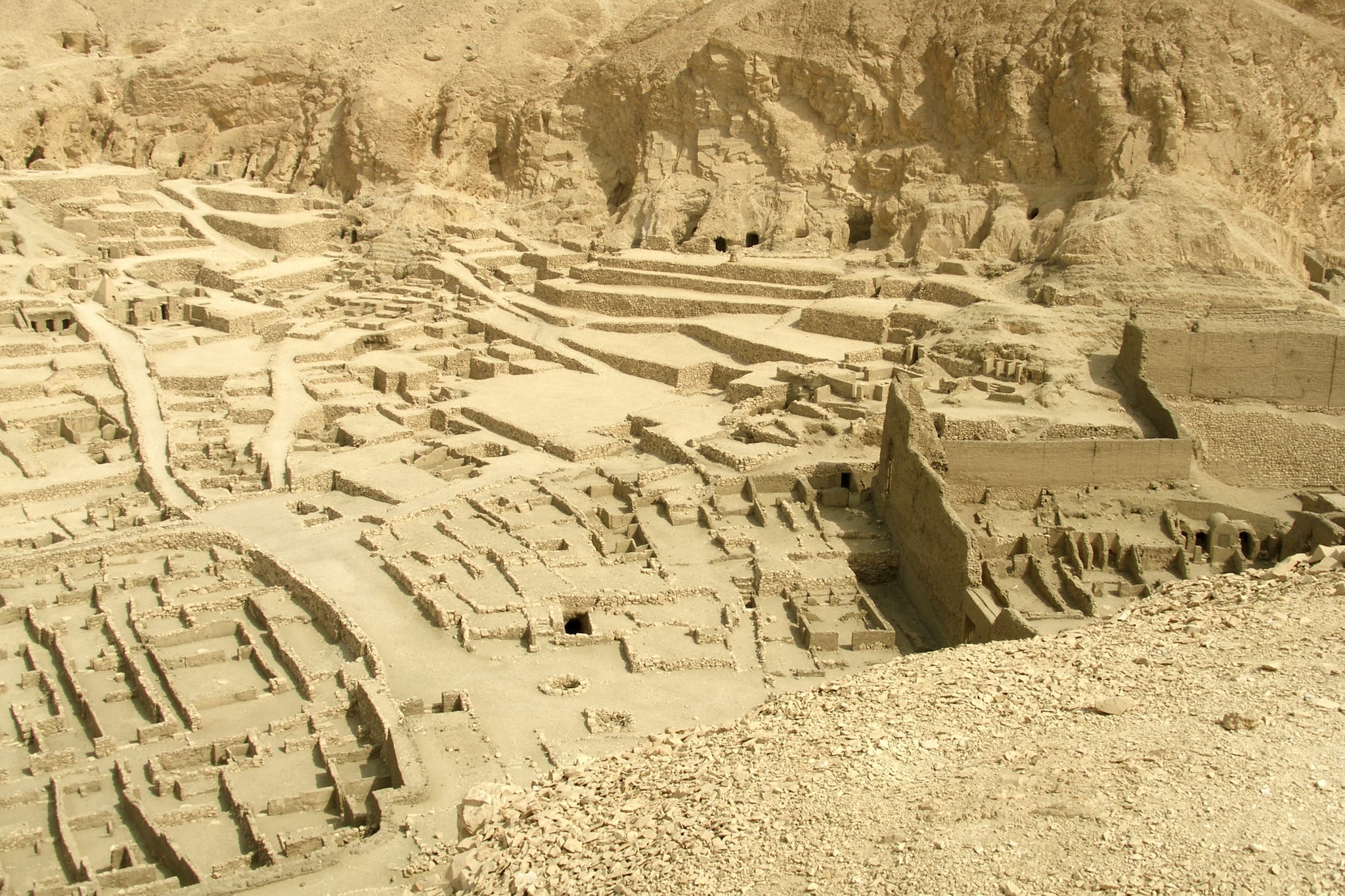
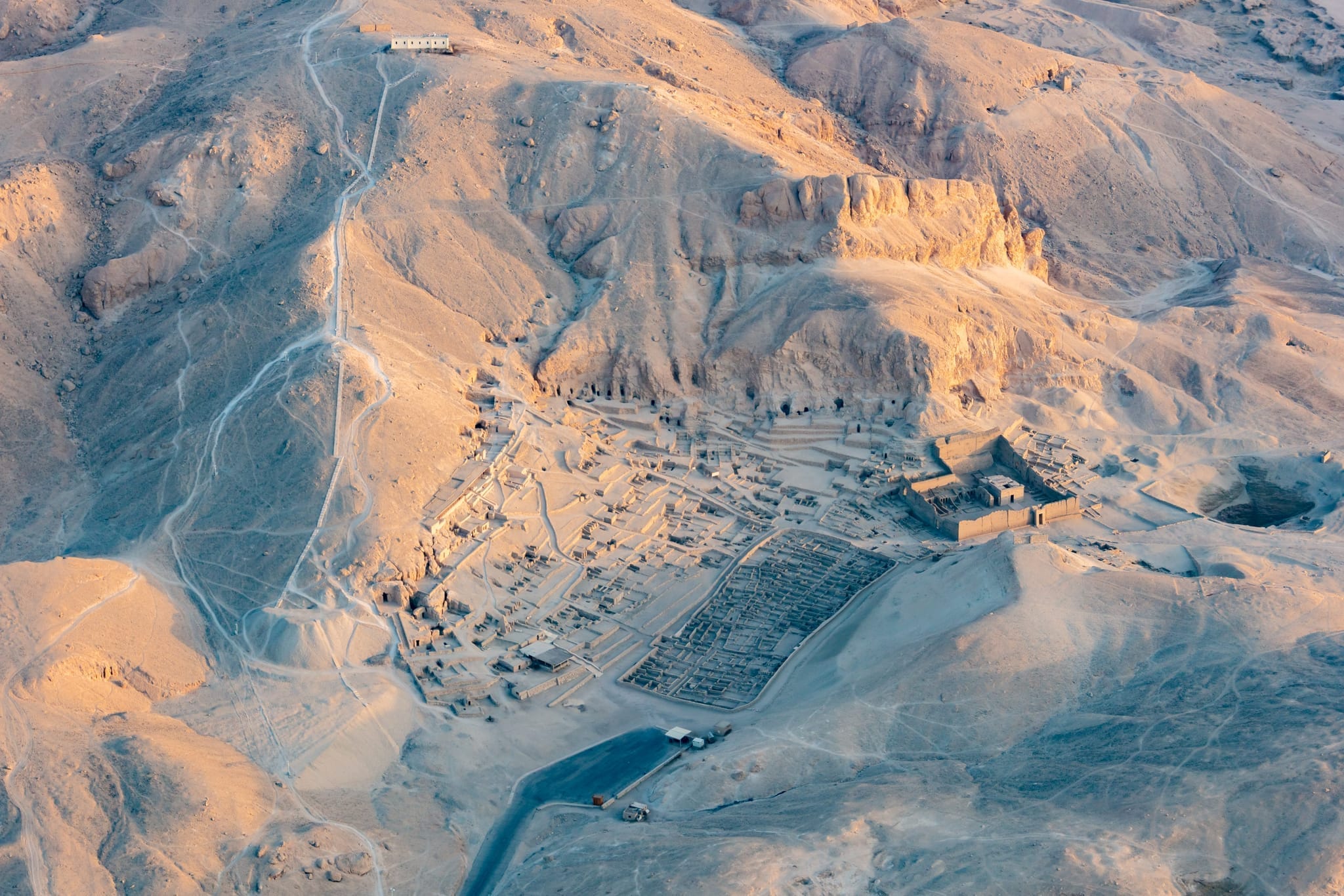
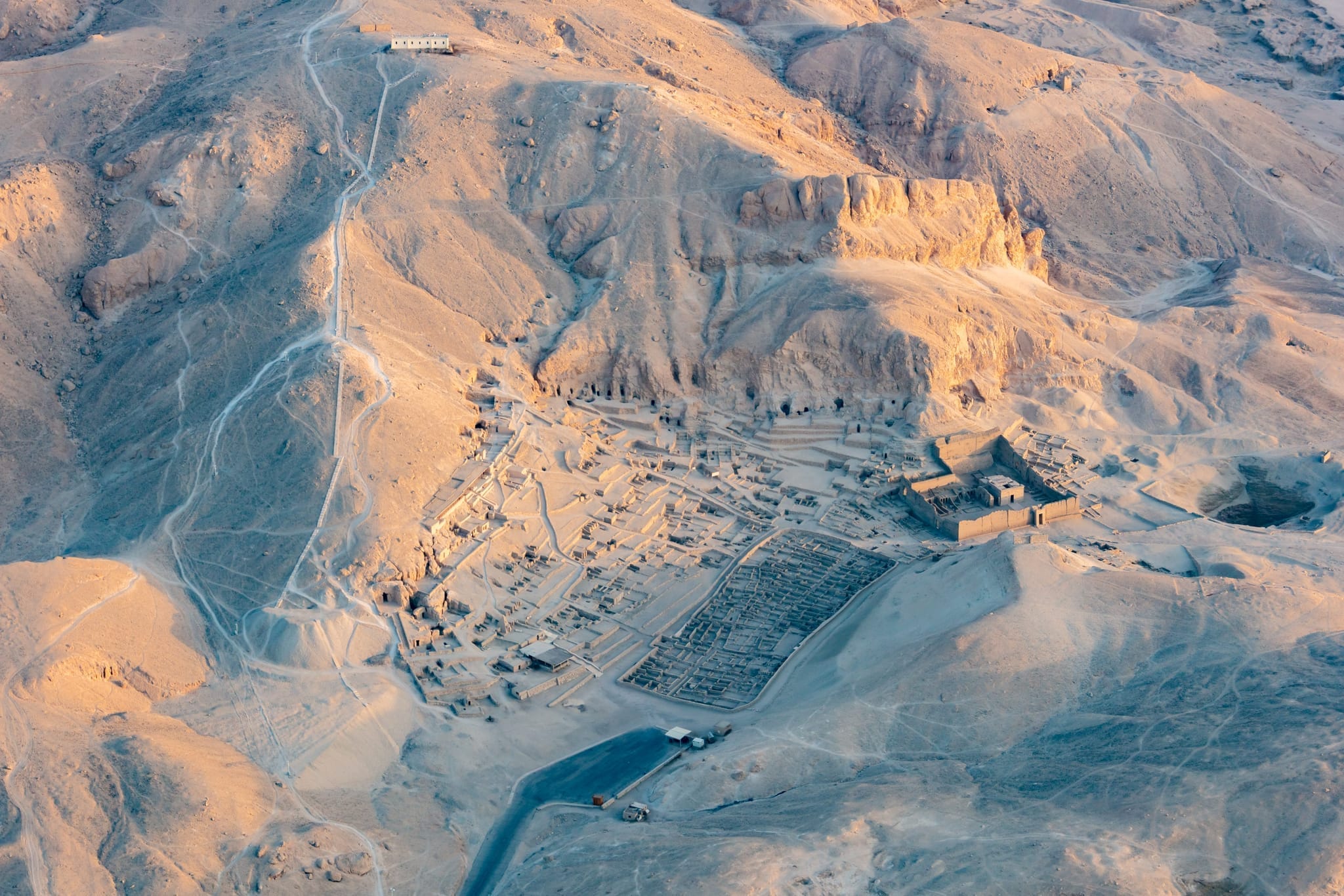
Deir el-Medina, sometimes you'll see it as Deir Al Medinah, is one of those places on Luxor's west bank that just grabs you. Instead of grand temples or royal burials, this isn't about pharaohs – it's about the people who built for them. Imagine a unique community of artists, scribes, and craftsmen, the very folks who carved and painted the royal tombs in the Valley of the Kings and Queens. This isn't your typical ancient Egyptian site; it's a window into ordinary life, family stories, and the working culture of the New Kingdom. It's one of the few spots in Egypt where you can actually walk through a real ancient village and touch the history of how highly skilled yet 'normal' people lived over 3,000 years ago.
 Deir el-Medina started way back during Pharaoh Thutmose I's reign, in the 18th dynasty. The idea was simple: house the best of the best, the elite workers entrusted with carving and decorating those secret royal tombs nearby. These weren't just any laborers; they were the top artisans in all of Egypt, sworn to secrecy to protect the royal resting places. The village thrived for about 450 years, really hitting its stride under pharaohs like Seti I, Ramses II, and Ramses III. Over centuries, houses, chapels, and tombs were added, creating a well-organized community that perfectly blended hard work with rich culture, family life, and deep religious traditions. Today, Deir el-Medina is a vital stop for anyone wanting to peek beyond the kings and temples and truly understand ancient Egyptian society. It's a deeply human story of creativity, dedication, and lives lived fully.
 The folks who lived here were known as 'The Servants in the Place of Truth,' a title that hints at their importance. They were chosen not just for their skill, but also for their unwavering loyalty.
Their daily work included:
* Carving tomb corridors and burial chambers
* Painstakingly painting and decorating walls
* Writing elaborate hieroglyphic inscriptions
* Building beautiful funerary furniture
* Crafting magical objects crucial for the afterlife journey
This vibrant community wasn't just men at work; it included:
* Master artisans at the top of their craft
* Scribes who could read and write
* Skilled stone carvers and painters
* Foremen managing projects
* Guards ensuring security
* And, of course, their families – women and children contributing to village life.
They had a structured life: eight days working intensely in the desert, sleeping in temporary shelters near the tombs, then two days back home for well-deserved rest. Their pay? Not coins, but substantial rations of food, oils, clothing, and other goods.
The folks who lived here were known as 'The Servants in the Place of Truth,' a title that hints at their importance. They were chosen not just for their skill, but also for their unwavering loyalty.
Their daily work included:
* Carving tomb corridors and burial chambers
* Painstakingly painting and decorating walls
* Writing elaborate hieroglyphic inscriptions
* Building beautiful funerary furniture
* Crafting magical objects crucial for the afterlife journey
This vibrant community wasn't just men at work; it included:
* Master artisans at the top of their craft
* Scribes who could read and write
* Skilled stone carvers and painters
* Foremen managing projects
* Guards ensuring security
* And, of course, their families – women and children contributing to village life.
They had a structured life: eight days working intensely in the desert, sleeping in temporary shelters near the tombs, then two days back home for well-deserved rest. Their pay? Not coins, but substantial rations of food, oils, clothing, and other goods.
Overview: The Village That Built Royalty
Deir el-Medina started way back during Pharaoh Thutmose I's reign, in the 18th dynasty. The idea was simple: house the best of the best, the elite workers entrusted with carving and decorating those secret royal tombs nearby. These weren't just any laborers; they were the top artisans in all of Egypt, sworn to secrecy to protect the royal resting places. The village thrived for about 450 years, really hitting its stride under pharaohs like Seti I, Ramses II, and Ramses III. Over centuries, houses, chapels, and tombs were added, creating a well-organized community that perfectly blended hard work with rich culture, family life, and deep religious traditions. Today, Deir el-Medina is a vital stop for anyone wanting to peek beyond the kings and temples and truly understand ancient Egyptian society. It's a deeply human story of creativity, dedication, and lives lived fully.
Where Exactly is This Workers' Village?
This incredible Workers' Village sits comfortably on the west bank of the Nile in Luxor. Its location was no accident – it was strategically placed near several other major archaeological gems: * The Valley of the Kings * The Valley of the Queens * Hatshepsut's Temple (Deir El Bahari) * Medinet Habu Being so close meant the workers had a reasonable commute to the tombs but were still isolated enough to keep those precious royal secrets under wraps.The People of Deir el-Medina: The 'Servants in the Place of Truth'
The folks who lived here were known as 'The Servants in the Place of Truth,' a title that hints at their importance. They were chosen not just for their skill, but also for their unwavering loyalty.
Their daily work included:
* Carving tomb corridors and burial chambers
* Painstakingly painting and decorating walls
* Writing elaborate hieroglyphic inscriptions
* Building beautiful funerary furniture
* Crafting magical objects crucial for the afterlife journey
This vibrant community wasn't just men at work; it included:
* Master artisans at the top of their craft
* Scribes who could read and write
* Skilled stone carvers and painters
* Foremen managing projects
* Guards ensuring security
* And, of course, their families – women and children contributing to village life.
They had a structured life: eight days working intensely in the desert, sleeping in temporary shelters near the tombs, then two days back home for well-deserved rest. Their pay? Not coins, but substantial rations of food, oils, clothing, and other goods.
Daily Life, Unfiltered
The site itself is a treasure trove of personal stories, one of the richest in ancient Egypt. Archaeologists unearthed thousands of ostraca – pieces of limestone or pottery used like scrap paper – that paint a vivid picture of their lives. These included: * Personal letters * Shopping lists for daily needs * Work schedules detailing their tasks * Religious texts * Jokes and romantic notes * Even records of squabbles between neighbors! These writings really show how literate, cultured, and deeply religious these villagers were. They lived simple yet organized lives, with strong family ties and active social calendars.Their Homes
The village houses were small but remarkably functional. Typically, they had: * A main living room * Sleeping areas * A compact kitchen * Storage spaces for their belongings * And often, a rooftop perfect for catching a breeze on warm evenings. Even with their small footprint, many homes were adorned with colorful items and even small, private shrines.Food & Economy
Life here ran on a ration system. Workers and their families received a regular supply of: * Bread, a staple * Dates, for sweetness and energy * Various vegetables * Oils for cooking and skin care Women played a crucial role too, grinding grain, baking bread, and crafting pottery, all essential for household survival.Religion as a Guiding Force
Religion was woven into their everyday lives. They worshipped many gods, including: * Hathor, the goddess of love and protection * Ptah, the patron god of craftsmen * Meretseger, the local goddess who guarded the Theban hills Finding small personal shrines inside so many homes really underscores just how important faith was in their world.See it for yourself
Trips that visit the places in this article.
7 Days / 6 Nights
This 7-day tour covers Cairo, Luxor, and Aswan, including the temples of Edfu and Kom Ombo, opening with the Giza Pyramids and Sphinx, the Valley Temple, and…
From$1,245
Explore
6 Days / 5 Nights
This 6-day tour combines two nights in Cairo with a three-night Nile cruise from Aswan to Luxor, connected by domestic flights, so the Nile Valley's temples…
From$1,085
ExploreWant a different route or length? We'll build it around you.
The Tombs of Deir el-Medina: Artistry Beyond Compare
 One of the absolute highlights of visiting Deir el-Medina is stepping into the private tombs of the workers themselves. Honestly, many of these are even more vibrant and intricately detailed than some you'll see in the Valley of the Kings! Since these were the very artisans who built the royal tombs, they naturally applied that same exceptional craftsmanship to their own final resting places.
Expect to see:
* Incredibly bright, almost perfectly preserved paintings
* Heartfelt scenes depicting family life
* Exquisite images of gods and goddesses
* Fascinating texts from the Book of the Dead
* Colors still popping after more than 3,000 years!
These tombs really capture the hopes, dreams, and even fears of ordinary people, offering a deeply personal and emotional connection that many travelers find truly unforgettable.
One of the absolute highlights of visiting Deir el-Medina is stepping into the private tombs of the workers themselves. Honestly, many of these are even more vibrant and intricately detailed than some you'll see in the Valley of the Kings! Since these were the very artisans who built the royal tombs, they naturally applied that same exceptional craftsmanship to their own final resting places.
Expect to see:
* Incredibly bright, almost perfectly preserved paintings
* Heartfelt scenes depicting family life
* Exquisite images of gods and goddesses
* Fascinating texts from the Book of the Dead
* Colors still popping after more than 3,000 years!
These tombs really capture the hopes, dreams, and even fears of ordinary people, offering a deeply personal and emotional connection that many travelers find truly unforgettable.
Want to explore A Glimpse into Ancient Egyptian Daily Life: Deir el-Medina, The Workers' Village?
Let us design the perfect private itinerary for you. From expert local guides to seamless luxury cruises, we craft custom trips that show you the real Egypt.
The Great Pit: An Archaeological Goldmine
Just outside the village lies a large circular pit, a true archaeological treasure chest. Here, over 20,000 ostraca were discovered – the largest collection of everyday writings from ancient Egypt anywhere. Some texts are incredibly witty, others touch on love, illness, family drama, or the gripes of a hard day's work. Put together, they paint the most comprehensive picture of daily life in any ancient civilization.The Temple of Hathor
At the entrance to the site, you'll find a charming, albeit small, temple dedicated to Hathor. It was later expanded by Ptolemy IV during the Greco-Roman period. Inside, you can still observe: * Intricate reliefs depicting ancient rituals * Scenes of musicians and dancers delighting the goddess * Offerings made to the protective goddess Hathor This temple is a testament to Deir el-Medina remaining a sacred spot long after the workers' village was eventually abandoned.Why You Absolutely Should Visit Deir el-Medina
Deir el-Medina is one of Luxor's most underrated sites, but it offers some of the richest and most authentic experiences you can have. If you're looking for something beyond the usual blockbuster royal tombs, this is it. Here's why it's a must-see: * You get to literally walk through a real ancient Egyptian village. * You'll see incredibly preserved, vibrant private tombs. * You'll finally understand how the pharaohs' workers truly lived. * You'll uncover personal stories from three millennia ago. * It's generally a quieter, less crowded archaeological site. Deir el-Medina is perfectly suited for: * Cultural travelers seeking deeper insights * History lovers who crave authentic details * Photography enthusiasts looking for unique shots * Families and educational groups yearning for real history * Anyone wanting an off-the-beaten-path Egyptian experienceTips for Your Visit
 * **Best time:** Early morning or late afternoon when the desert sun isn't so harsh.
* **Footwear:** Wear comfy shoes; some areas have uneven ground.
* **Hydration:** Bring plenty of water – shade is limited!
* **Combine your visit:** Pair it with the Valley of the Queens or Medinet Habu for a truly immersive west bank day.
Most tours include a knowledgeable guide who can bring the stories of these houses, tombs, and chapels to life.
Deir el-Medina, the famous Workers' Village, is truly an invaluable window into the everyday world of ancient Egypt. While the Valley of the Kings celebrates the distant glory of the pharaohs, Deir el-Medina champions the sheer talent, creativity, and profound humanity of the people who actually built Egypt's greatest monuments. With its vividly colored tombs, remarkably preserved homes, personal writings, and compelling human stories, this site offers travelers an unmatched blend of archaeology, culture, and authenticity. For anyone exploring Luxor, Deir el-Medina is absolutely a must-see destination that makes ancient Egypt feel closer and more real than you ever imagined.
Join our Egypt tours and Nile cruises to experience Deir el-Medina, home to the pharaohs' dedicated workers, and uncover the craftsmanship, traditions, and untold stories behind Egypt's most iconic royal tombs.
* **Best time:** Early morning or late afternoon when the desert sun isn't so harsh.
* **Footwear:** Wear comfy shoes; some areas have uneven ground.
* **Hydration:** Bring plenty of water – shade is limited!
* **Combine your visit:** Pair it with the Valley of the Queens or Medinet Habu for a truly immersive west bank day.
Most tours include a knowledgeable guide who can bring the stories of these houses, tombs, and chapels to life.
Deir el-Medina, the famous Workers' Village, is truly an invaluable window into the everyday world of ancient Egypt. While the Valley of the Kings celebrates the distant glory of the pharaohs, Deir el-Medina champions the sheer talent, creativity, and profound humanity of the people who actually built Egypt's greatest monuments. With its vividly colored tombs, remarkably preserved homes, personal writings, and compelling human stories, this site offers travelers an unmatched blend of archaeology, culture, and authenticity. For anyone exploring Luxor, Deir el-Medina is absolutely a must-see destination that makes ancient Egypt feel closer and more real than you ever imagined.
Join our Egypt tours and Nile cruises to experience Deir el-Medina, home to the pharaohs' dedicated workers, and uncover the craftsmanship, traditions, and untold stories behind Egypt's most iconic royal tombs.Ready to turn this guide into reality?
Our local experts can create a custom itinerary based on these recommendations. Just send us a quick message!
Customize via WhatsApp