
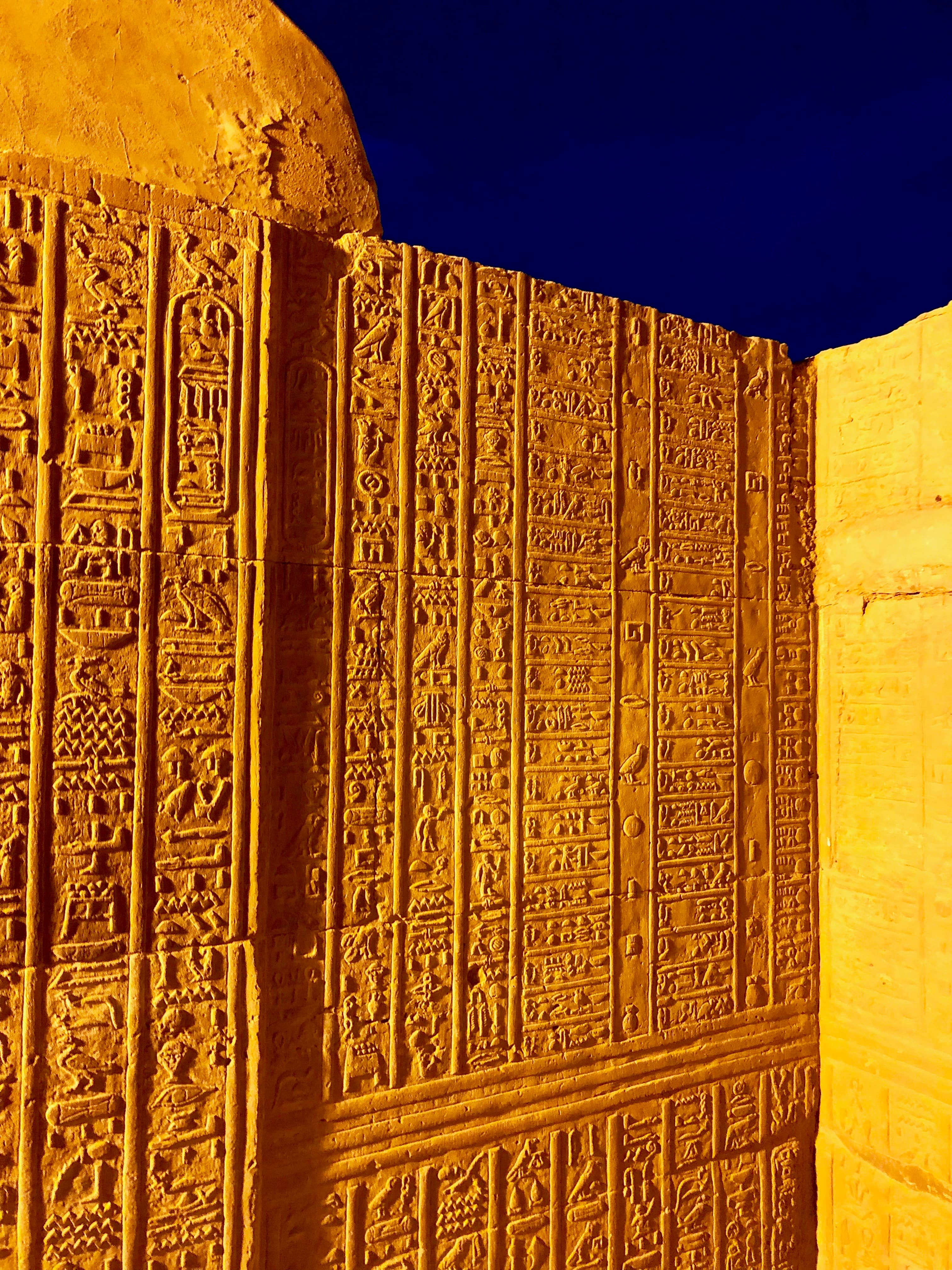

Kom Ombo, once known as Nubt, the 'City of Gold,' wasn't just another ancient Egyptian settlement. Located about 50 km north of Aswan, it was a pivotal control point for key Nile trade routes connecting Nubia and Egypt. Its real showstopper, the Kom Ombo Temple, dating back to the 2nd century BCE, became famous for something truly unique: its dedication to crocodile worship, with mummified crocodiles still chilling nearby.
But this isn't just about crocs and cults; Kom Ombo also served as a fortified garrison for the Ptolemies and Romans, and perhaps most surprisingly, features what are believed to be some of the earliest depictions of surgical instruments. Talk about a rare blend of spiritual life, military strategy, and cutting-edge (pun intended!) medical advancement!
Unveiling Kom Ombo's Twin Temple Design
Kom Ombo isn't your average ancient Egyptian temple. Built during the Ptolemaic era (180–47 BCE) and later expanded by the Romans, it's pretty much a one-off. It's the only temple from that period designed to honor two divine triads simultaneously, making it an architectural anomaly you really have to see to believe.
Why two temples in one structure?
So, why build one temple for two rival gods, Sobek (the crocodile god) and Haroeris (Horus the Elder)? Well, the ancients were clever. To sidestep any mythological drama, the temple was ingeniously designed with entirely separate, mirrored sanctuaries and layouts. This meant two distinct priesthoods could perform their rituals side-by-side, each dedicated to their own deity, without stepping on each other's toes.
This innovative design created a rare space of religious harmony, where differing beliefs coexisted within one unified, sacred complex.
Architectural symmetry and symbolism
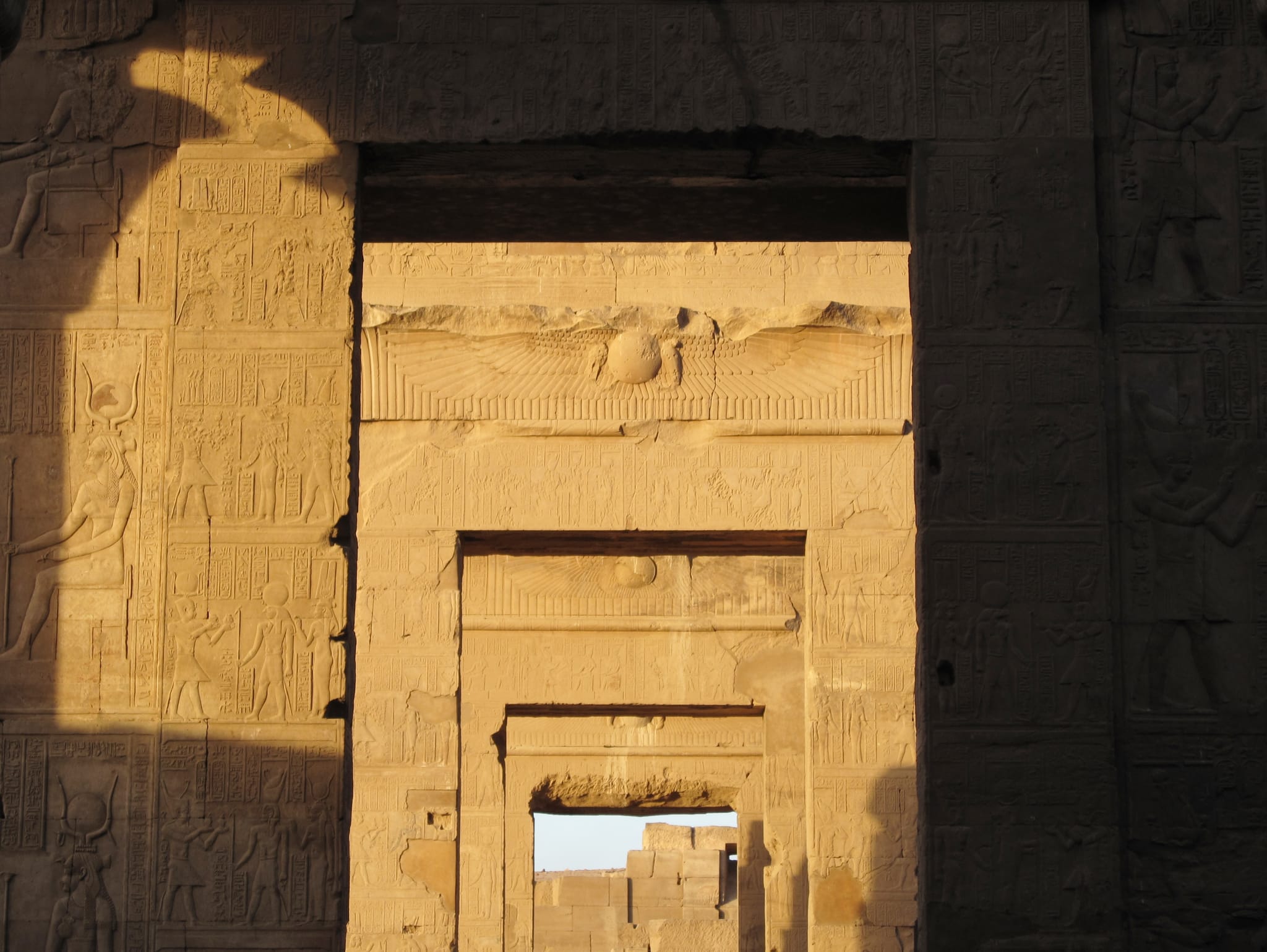
Kom Ombo's temple is a sheer masterpiece of bilateral symmetry. Think of it: mirrored entrances, courtyards, halls, and sanctuaries, all designed to perfectly reflect the balance between Sobek and Horus. This wasn't just aesthetic; it deeply symbolized the cosmic harmony of opposing forces in ancient Egyptian belief.
Take the main courtyard, for instance, with its 16 painted columns and a central granite altar—it's a physical demonstration of perfect equilibrium, turning the entire temple into an expression of divine order.
The Gods of Kom Ombo
Kom Ombo's temple uniquely paid homage to two powerful deities, each with their own sanctuary. This dual dedication wasn't just a quirk; it gave the site immense spiritual weight, allowing two distinct religious traditions to peacefully coexist within one sacred complex.
Haroeris: The falcon-headed protector
The northern sanctuary at Kom Ombo belonged to Haroeris (Horus the Elder), the majestic falcon-headed god embodying light, war, and divine authority. He's not to be confused with the child Horus you might know; Haroeris represented a triumphant, mature form of the deity, revered alongside his consort Tasenetnofret and their son Panebtawy. This sacred space, often called the 'Castle of the Falcon,' was intricately decorated with falcon imagery and inscriptions.
His cult truly flourished in the 18th Dynasty, with priests hailing him as the 'father of the gods.' Temple reliefs famously show Haroeris bestowing the sword of victory upon Ptolemy VIII.
Want to explore Kom Ombo: Egypt's Unique Double Temple and Ancient Medical Marvel?
Let us design the perfect private itinerary for you. From expert local guides to seamless luxury cruises, we craft custom trips that show you the real Egypt.
Sobek: The crocodile god of fertility
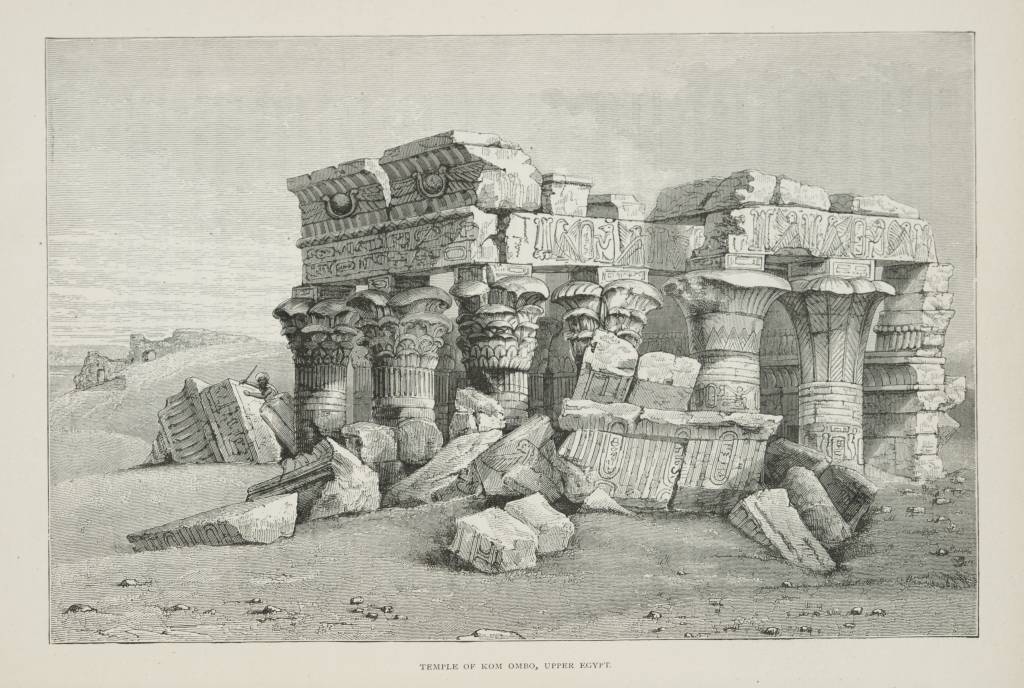
Head to Kom Ombo's southern sanctuary, and you're in the domain of Sobek, the crocodile god. He was revered as a deity of fertility, creation, and, crucially, the Nile's life-giving abundance. Despite some historical associations with Set, Sobek was largely venerated as a protector and creator, believed to command water, floods, and agriculture. His divine family included Hathor and Khonsu, and his temple, aptly named the 'House of the Crocodile,' was practically swimming in crocodile imagery.
His worship was a fascinating mix of reverence for nature's power and a practical attempt to appease a creature that posed a very real threat to daily life on the Nile. Priests even kept live crocodiles within the temple, and the many mummified crocodiles found nearby really underscore his enduring cult status. If you visit, make sure to check out the Crocodile Museum!
See it for yourself
Trips that visit the places in this article.
This day trip from Aswan covers the temples of Kom Ombo and Edfu, two of Upper Egypt's best-preserved religious sites, without requiring an overnight stay in…
This 7-day tour covers Cairo, Luxor, and Aswan, including the temples of Edfu and Kom Ombo, opening with the Giza Pyramids and Sphinx, the Valley Temple, and…
Want a different route or length? We'll build it around you.
Daily Life and Rituals in Ancient Kom Ombo
The sacred walls of Kom Ombo really witnessed centuries of vibrant activity where deep religious devotion seamlessly merged with cutting-edge medical practice. Priests meticulously performed elaborate ceremonies, while healers attended to the sick, creating a truly unique sanctuary that catered to both spiritual and physical well-being.
Priests, offerings, and temple rituals
Two distinct priesthoods, each dedicated solely to their respective deity, ran the temple's daily operations. These religious specialists expertly orchestrated essential ceremonies three times a day, carefully presenting offerings to the divine statues housed within the twin sanctuaries.
The temple calendars were incredibly precise, based on astronomical observations, dividing each year into three distinct seasons that perfectly mimicked the Nile's natural cycle: flooding (Akhet), growing (Peret), and harvest (Shemu).
Monitoring the Nile's water level was one of the priesthood's most critical duties. A circular well, known as a Nilometer, provided essential data for calculating taxes and managing grain distribution. Sacred offerings spanned everything from food and drink to clothing and fragrant ointments—each item considered a vital sustenance for the divine spirits believed to inhabit the statues.
These elaborate rituals were far more than mere symbolic gestures; they formed the very cornerstone of maintaining cosmic order (Ma'at) throughout the kingdom.
Medical instruments and healing practices
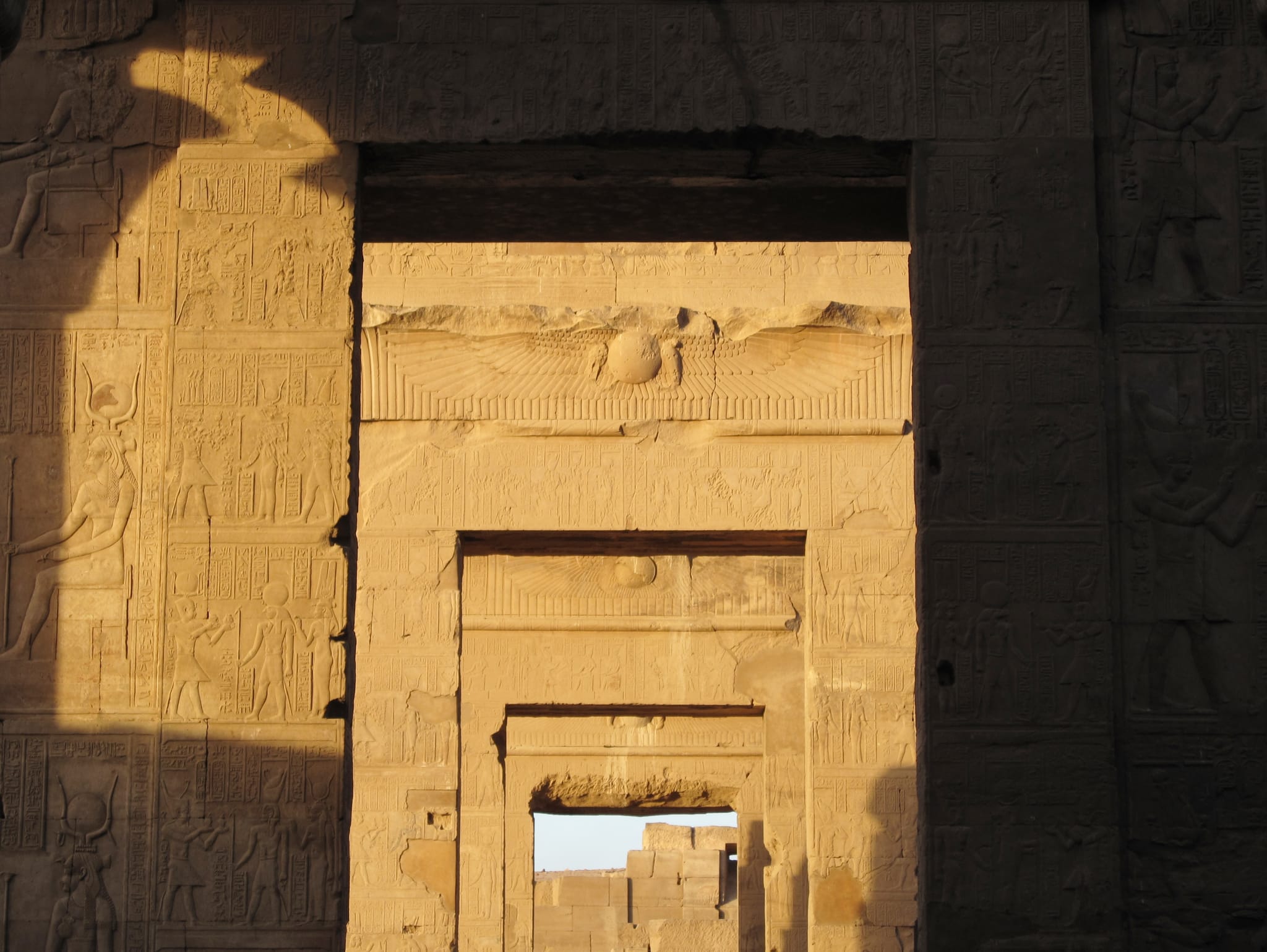
Archaeological finds reveal Kom Ombo's remarkable role as an ancient medical center. The temple walls proudly display intricate relief carvings depicting sophisticated surgical instruments, including scalpels, curettes, forceps, specula, scissors, and medicine bottles. These extraordinary artistic records, complemented by images of goddesses seated on birthing chairs, truly demonstrate that Egyptian medical knowledge was arguably miles ahead of all contemporary civilizations.
Pilgrims traveled vast distances, seeking divine healing within these sacred chambers. Priestly physicians expertly blended spiritual intervention with practical treatments, using honey for its incredible anti-bacterial properties, for example. Ancient medical texts even suggest that onion juice was an effective remedy for various eye ailments.
Dedicated healing chambers functioned as advanced medical facilities throughout the complex, where therapeutic rituals unfolded under the watchful guidance of Haroeris—often revered as the 'head of physicians.'
Want to explore Kom Ombo: Egypt's Unique Double Temple and Ancient Medical Marvel?
Let us design the perfect private itinerary for you. From expert local guides to seamless luxury cruises, we craft custom trips that show you the real Egypt.
Legacy and Preservation Today
After centuries of neglect, Kom Ombo saw an incredible archaeological revival when French explorer Jacques de Morgan began restoring the temple in 1893, focusing especially on clearing Sobek's sacred domain. This marked the beginning of Kom Ombo's modern rediscovery, laying the groundwork for decades of truly fascinating revelations.
Tourism and archaeological importance
Archaeological teams are still unearthing treasures that continue to redefine our understanding of this ancient site. 2018 was a particularly fruitful year, with excavators revealing a collection of remarkable artifacts: a sandstone sphinx with clear Ptolemaic features, a dignified bust of Roman Emperor Marcus Aurelius, and two exceptionally preserved ancient paintings.
These discoveries paint a vivid picture of Kom Ombo's rich multicultural heritage, a place where Egyptian, Greek, and Roman influences beautifully converged.
Today, the Crocodile Museum proudly houses nearly three hundred mummified crocodiles recovered from the surrounding area, offering visitors a direct tie to the ancient worship practices that once defined this sacred space. Each mummy tells a silent story of devotion to Sobek, the fearsome yet deeply revered crocodile deity.
Modern preservation science has truly stepped up to protect these irreplaceable treasures. The United States Agency for International Development (USAID) undertook an ambitious $9 million groundwater management project, completed in 2019, specifically designed to halt the rising water levels that were threatening the temple's very foundation.
This intervention is part of USAID's remarkable quarter-century commitment—a $100 million investment dedicated to safeguarding Egypt's irreplaceable cultural monuments. For travelers embarking on Egypt tours, these preservation efforts ensure that Kom Ombo Temple and other ancient landmarks remain accessible and awe-inspiring for generations to come.
The urgency of such efforts becomes incredibly clear when you consider how groundwater, salt, and heat were slowly eroding the ancient hieroglyphs carved into the temple's sandstone walls.
Modern Kom Ombo and its evolving identity
Archaeological evidence reveals an extraordinary timeline of human habitation here, stretching all the way from the Early Dynastic Period (3000-2686 BCE) right through to the early Islamic conquest (639-646 CE). Recent investigations by the Austrian Archaeological Institute, which kicked off in 2017, have even uncovered evidence of a substantial settlement covering at least three hectares during the third millennium BCE.
These findings hint that Kom Ombo's administrative importance went far beyond its religious significance.
Today's Kom Ombo presents a captivating mix of ancient heritage and thriving agricultural productivity. The town's 60,000 residents cultivate vast stretches of sugarcane and cereal crops, continuing the fertile traditions that first drew settlers to these Nile banks. The population itself is a rich cultural tapestry, including native Egyptians and Nubian communities, especially the Magyarabs who resettled here after the creation of Lake Nasser.
Future developments here promise to honor this deep legacy while embracing modern possibilities. Plans announced in 2010 envision a $700 million solar power facility generating 100 MW of clean energy, demonstrating how Kom Ombo continues to meet Egypt's evolving needs. This ambitious project symbolizes the town's enduring significance—from an ancient gold trade center to a modern renewable energy hub, always adapting while meticulously preserving its essential character.
Ready to turn this guide into reality?
Our local experts can create a custom itinerary based on these recommendations. Just send us a quick message!
Customize via WhatsApp