
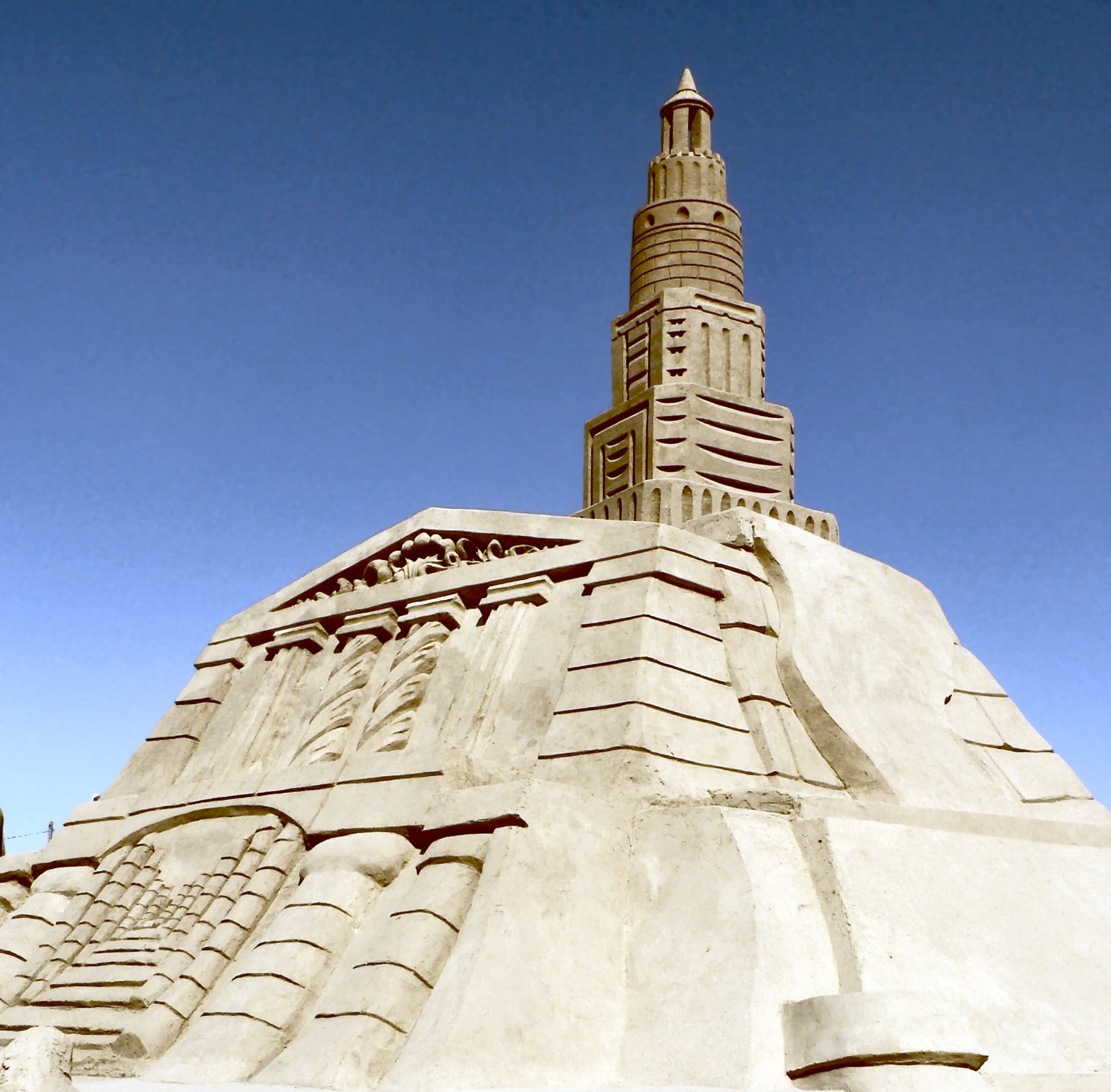

The Lighthouse of Alexandria, affectionately known as the 'Pharos', wasn't just a building; it was a beacon, a symbol, and one of the Seven Wonders of the Ancient World. For over 1,500 years, this colossal structure proudly marked Alexandria's harbor, guiding weary sailors home. It was a true marvel of ancient engineering and a testament to Egypt's Greco-Roman legacy, etched into the very fabric of the Mediterranean.
Begun under Ptolemy I Soter and finished by his son, Ptolemy II Philadelphus, around 280 BC, the Pharos was nothing short of revolutionary. Standing a breathtaking 100-130 meters (330-430 feet) tall, it was, for centuries, the tallest man-made structure after the Great Pyramid of Giza.
Imagine that light, cutting through the Mediterranean night, saving countless ships from dangerous shoals, all while announcing Alexandria's undeniable importance as the intellectual heartbeat and commercial hub of the ancient world.
Historical Context: Alexandria's Essential Maritime Gateway
Founding an Empire's Port
When Alexander the Great founded Alexandria back in 331 BC, he wasn't just building a city; he was envisioning a nexus, a bustling connection point for the Mediterranean, Egypt, and the East. It was brilliant strategical thinking, but the coastline itself? A real challenge. Dangerous limestone reefs, shifting Nile Delta currents, and sandbars made navigation a nightmare. There were no natural landmarks to guide ships in.
Despite these challenges, Alexander's vision took hold. Alexandria blossomed into the ancient world's most vital port, the capital of Ptolemaic Egypt, and a vibrant center of learning, culture, and trade. The legendary Library of Alexandria and the Musaeum drew scholars from everywhere. Meanwhile, ships brimming with grain, papyrus, and all sorts of luxury goods sailed out to ports across the Mediterranean.
The Critical Need for the Pharos
As Alexandria's maritime traffic exploded, the need for a reliable navigational beacon became paramount. Pharos Island, sitting just off the coast and linked to the mainland by that cleverly engineered causeway, the Heptastadion, was the perfect spot. Ptolemy I Soter started the project shortly before his death, but it was his son, Ptolemy II Philadelphus, who saw it through to completion around 280 BC.
The Greek architect Sostratus of Cnidus often gets the credit for this masterpiece, though historians still debate his exact role. Was he the financial patron, or did he also design it? Either way, Sostratus cleverly made sure his name would endure, reportedly inscribing it under a plaster layer dedicated to Ptolemy, knowing time would eventually reveal his true mark. A bit cheeky, but effective, right?
Architectural Marvel: Genius in Design and Construction
A Towering Three-Tiered Wonder
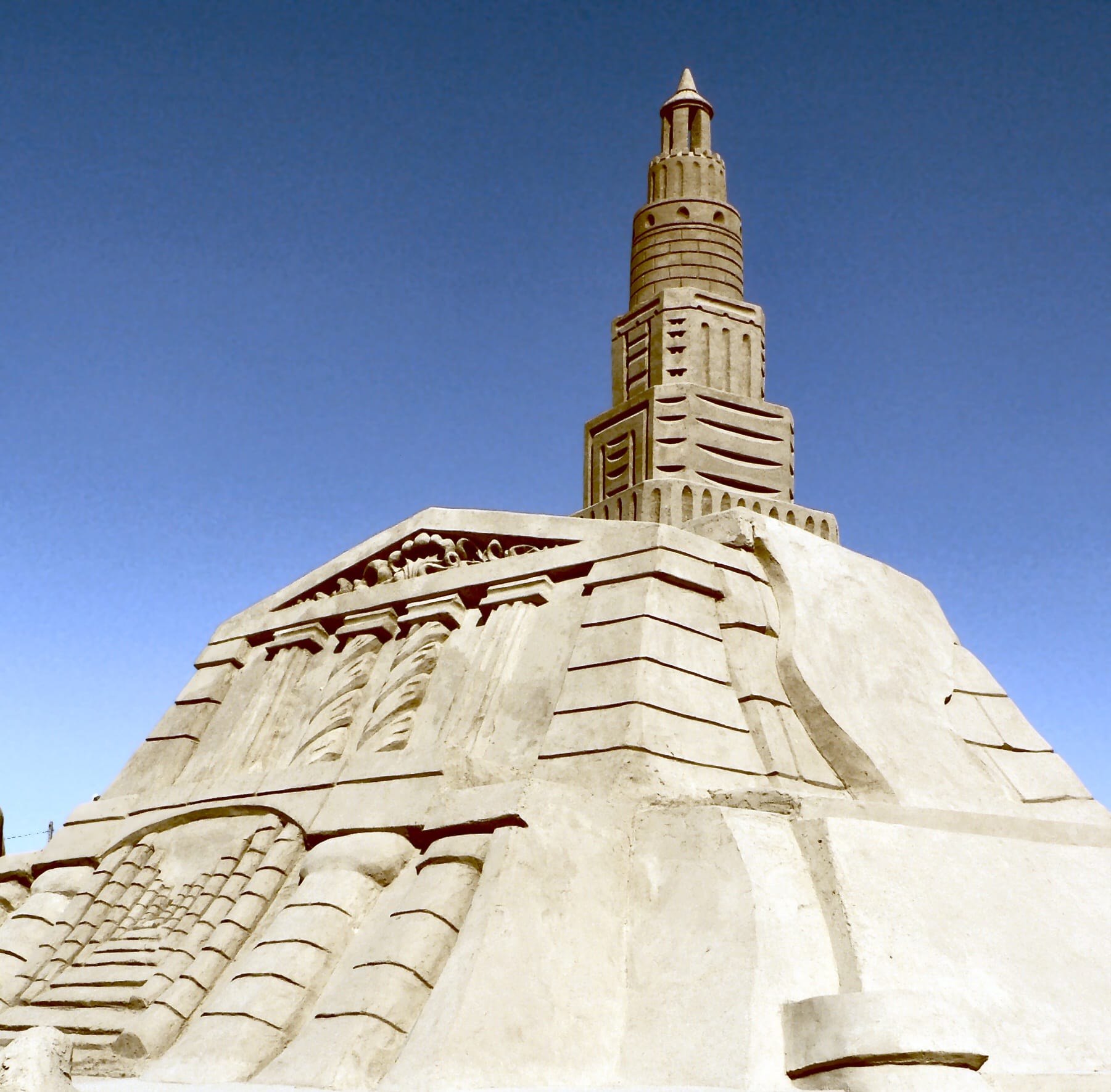
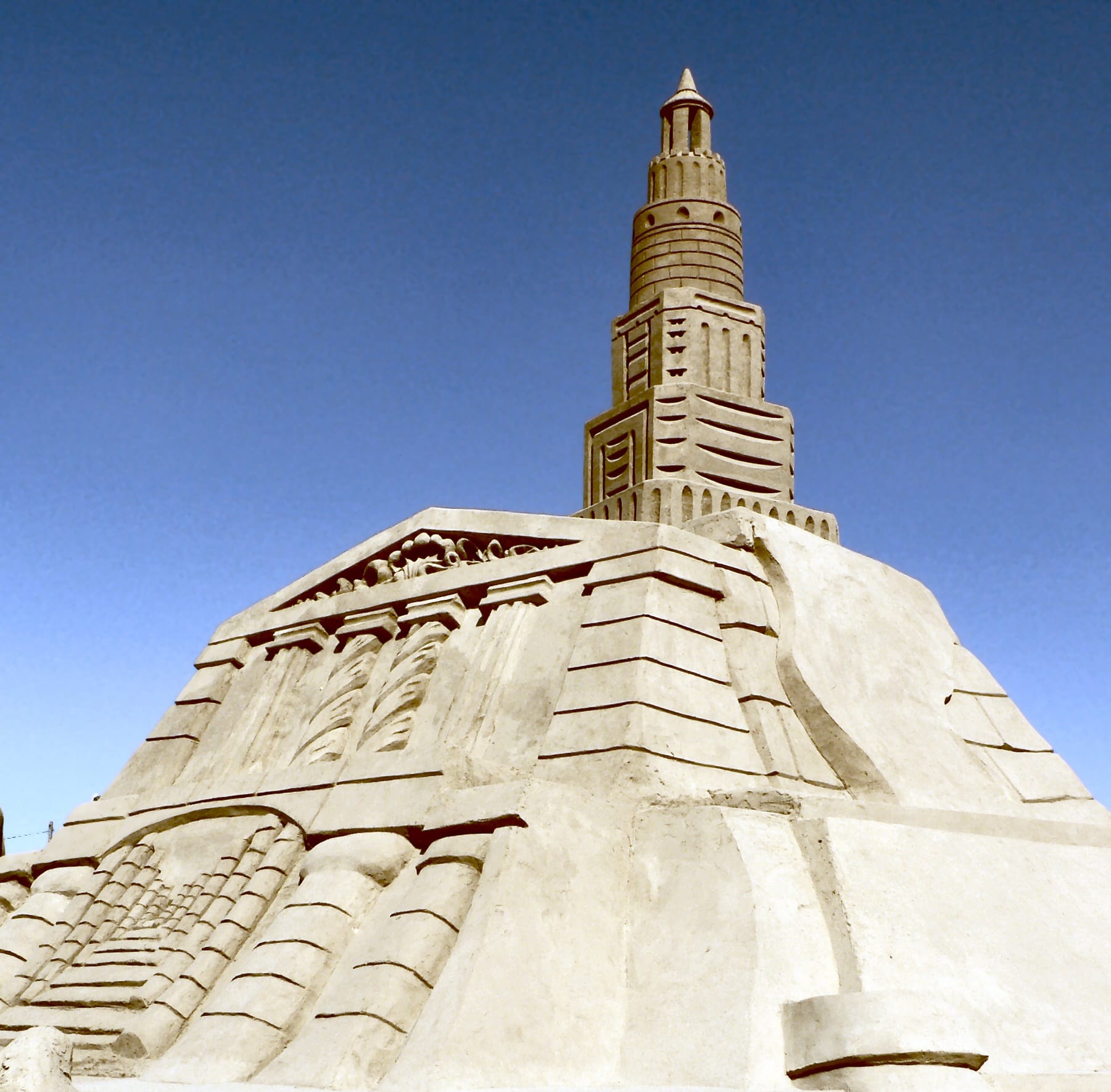
Imagine this: ancient descriptions and careful archaeological digs paint a picture of the Pharos Lighthouse as a striking three-tiered structure, each section serving a distinct purpose and boasting a unique shape.
The Square Base (First Tier): This was the mighty foundation, soaring about 55-60 meters (180-197 feet) high, with a huge square base roughly 30 meters (98 feet) on each side. Inside, there were around 300 rooms – housing for the maintenance crews, guards, and storage for the massive amounts of fuel. Picture a clever hydraulic system, likely using ramps or elevators, to heave that fuel up to the higher levels.
The materials were chosen for maximum resilience against Alexandria's harsh coastal weather: colossal limestone blocks, some weighing over 75 tons, formed the core. These were then clad in gleaming white marble, which must have reflected the sunlight for miles around, making the lighthouse visible even during the day. Some old texts even suggest they used mortar mixed with molten lead to bind the blocks, making the joints literally stronger than the stone itself!
The Octagonal Middle Section (Second Tier): This section rose another 30 meters (98 feet), skillfully transitioning to an octagonal shape. This wasn't just for looks; it likely helped distribute wind forces and added to the visual grandeur. This level probably contained more machinery and fuel storage, all vital for keeping that continuous light burning.
The Cylindrical Top (Third Tier): Topping it all off was a cylindrical tower, adding another 10-15 meters (33-49 feet). This was where the magic happened: the light chamber. Here, a massive fire burned non-stop, fed by dedicated workers constantly hauling wood and other combustibles. Then, a sophisticated mirror system—likely polished bronze, maybe even early glass—caught and amplified that firelight, projecting it powerfully far out to sea.
Want to explore The Lighthouse of Alexandria: Reclaiming a Lost Wonder?
Let us design the perfect private itinerary for you. From expert local guides to seamless luxury cruises, we craft custom trips that show you the real Egypt.
The Revolutionary Guiding Light
The sheer ingenuity of the light source itself is mind-boggling for the ancient world. While legends abound, the core technology was real. Historical accounts describe a powerful fire at the summit, amplified by a complex mirror system. Some ancient writers swore its light could be seen from an astonishing 35 miles (56 kilometers) away, though a more realistic modern estimate is about 30 miles.
These mirrors didn't just reflect; they likely focused the light into a concentrated beam, essentially an ancient searchlight!
Of course, tales grew wild. Some claimed the mirrors could spot ships beyond the horizon or even act as burning glasses to ignite enemy vessels. While entertaining, these are likely more myth than reality. Still, the fundamental idea of using mirrors to amplify light was genuinely groundbreaking.
The Crowning Glory: A Mysterious Statue
At the very pinnacle of the Pharos, there was a grand statue, though who it depicted is still a bit of a mystery. Some sources say Zeus, the king of the gods; others, Poseidon, the sea god. Helios, the sun god, or even the reigning Ptolemy himself, are also mentioned. Whoever it was, this statue, probably 5-7 meters (16-23 feet) tall, served as both a magnificent decoration and a powerful symbol of divine protection for ships entering Alexandria's famous harbor.
See it for yourself
Trips that visit the places in this article.
This 8-day tour covers Cairo, Luxor, Aswan, and Alexandria, moving between destinations by domestic flight and private vehicle to take in the Giza pyramids,…
This 11-day tour covers four distinct regions of Egypt in sequence, from Cairo and Alexandria to Luxor and finally Hurghada on the Red Sea. An evening Nile…
Want a different route or length? We'll build it around you.
Life and Continuous Operation of the Pharos
Round-the-Clock Maintenance
Running the Pharos Lighthouse was no small feat; it demanded a dedicated, round-the-clock staff. Imagine workers constantly hauling fuel up those interior ramps or elevators, tending the massive fire, meticulously cleaning and adjusting those crucial mirrors, and performing endless maintenance on the structure. The physical demands were immense – moving tons of wood and other fuel materials hundreds of feet up, every single day, required incredible organization and a sizable workforce.
Beyond the light, the lighthouse keepers also monitored the weather. They'd signal approaching storms or dangerous conditions to ships, serving as a vital early warning system for Alexandria's bustling harbor. The Pharos wasn't just a beacon; it was a sophisticated meteorological station too.
Want to explore The Lighthouse of Alexandria: Reclaiming a Lost Wonder?
Let us design the perfect private itinerary for you. From expert local guides to seamless luxury cruises, we craft custom trips that show you the real Egypt.
Strategic Importance, Far Beyond Navigation
The Pharos was far more than just a navigational aid. It served crucial military purposes. Guards stationed high in the tower could spot approaching fleets long before they reached the coast, giving Alexandria invaluable warning time. In times of conflict, this early detection system was critical, allowing the city to prepare its defenses or close the harbor to hostile forces.
Its cultural significance was equally potent. The lighthouse appeared on Roman coins, in ancient mosaics, and in countless written accounts, making it one of antiquity's most recognized landmarks. Just like modern tourists flock to famous monuments, ancient travelers journeyed to Alexandria specifically to gaze upon this engineering wonder.
An Enduring Legacy and Lasting Influence
Architectural Blueprint for the Ages
The impact of the Pharos Lighthouse on architecture, both ancient and future, is undeniable. The very word 'lighthouse' in many Romance languages, like French 'phare', Italian 'faro', and Spanish 'faro', springs directly from its name. That linguistic legacy alone speaks volumes about its cultural footprint.
Its ingenious three-tiered design became a template, influencing later lighthouse construction throughout the Roman Empire and beyond. Medieval Islamic architects subtly wove Pharos-inspired elements into their minarets, while European Renaissance architects pored over ancient descriptions, drawing inspiration for their own towers and grand monuments.
Revolutionizing Maritime Travel
Critically, the Pharos ushered in a new era of maritime safety and commercial navigation. Before its existence, night sailing near dangerous coastlines was a terrifying prospect. The lighthouse changed everything, enabling year-round, round-the-clock shipping, which dramatically boosted Alexandria's port capacity and commercial might. This groundbreaking innovation quickly spread across the Mediterranean, inspiring other coastal cities to build their own essential lighthouse systems.
Destruction and Gradual Disappearance
The Long, Slow Demise
The Pharos Lighthouse stood for an astonishing 1,500 years—a true testament to ancient engineering. But even wonders succumb to the relentless march of time and nature. Its decline was gradual:
Arab Conquest (641 AD): When Arab forces swept into Egypt, they found the lighthouse still standing and operational, though certainly showing its age. Thankfully, Arab scholars meticulously documented it, preserving much of what we know about its structure.
Earthquakes: A series of devastating quakes rocked the Mediterranean between the 10th and 14th centuries, progressively weakening the lighthouse. Major tremors in 956, 1303, and 1323 AD inflicted increasingly catastrophic damage.
Final Collapse: The truly massive earthquake of 1303 AD delivered the death blow. By 1323 AD, the structure had completely toppled. By then, Alexandria itself had lost much of its former commercial glory, and the resources needed to rebuild such an immense structure simply weren't available.
Medieval Rebirth: The Citadel of Qaitbay
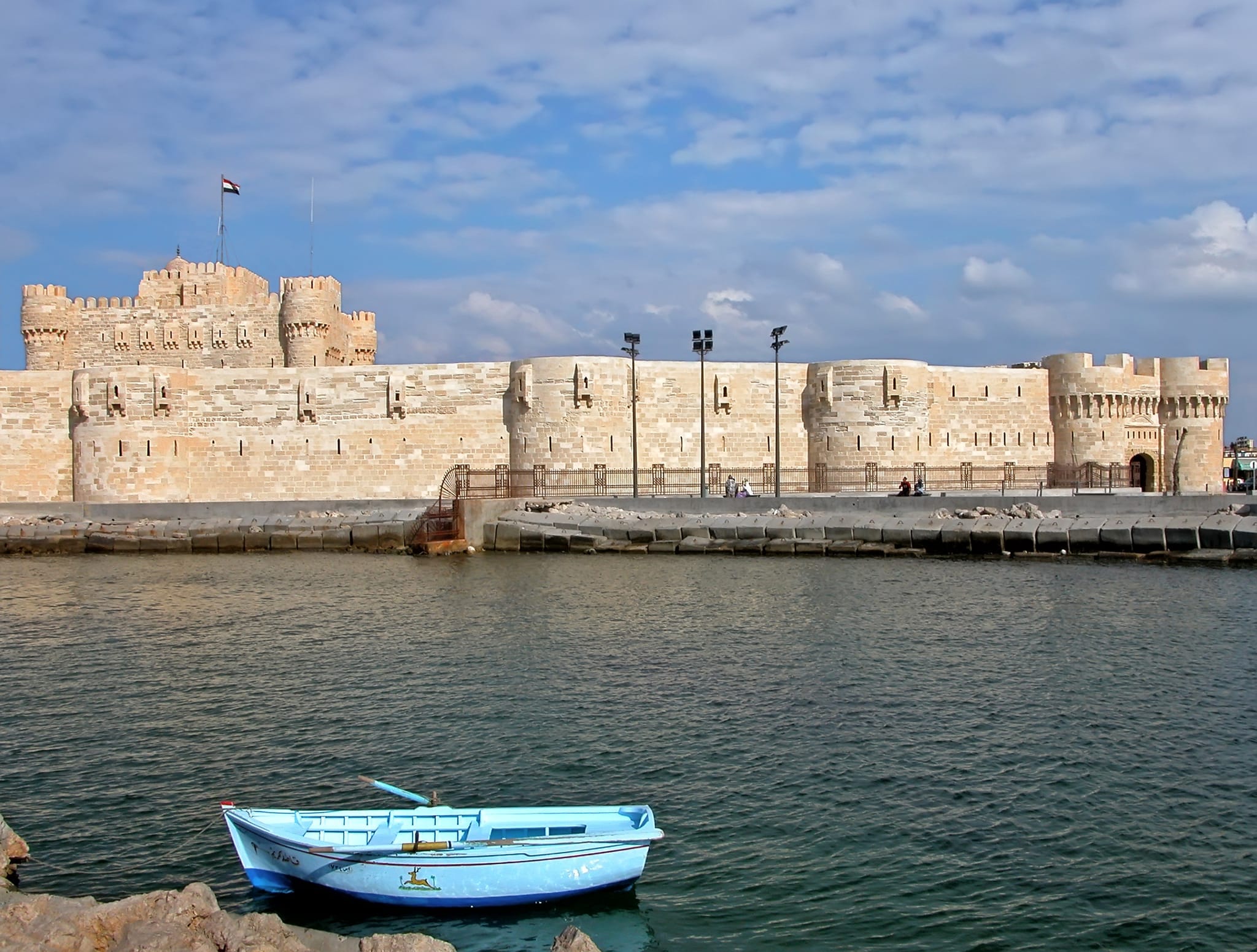
Fast forward to 1480 AD. The Mamluk Sultan Qaitbay, ever practical, used the fallen stones of the lighthouse to construct a formidable defensive fortress right on the very same site. Today, the Citadel of Qaitbay still stands, its walls literally incorporating ancient Pharos blocks – a tangible, fascinating link between a lost ancient wonder and a powerful medieval fort.
Revealing the Past: Archaeological Discoveries
Underwater Treasures
In 1994, French archaeologist Jean-Yves Empereur led groundbreaking underwater expeditions in Alexandria's Eastern Harbor. What they found was incredible: over 3,000 architectural fragments submerged near Qaitbay Fortress, including:
- Enormous stone blocks with distinctive Ptolemaic construction marks.
- Sections of columns and intricate capitals.
- Fragments of statues, potentially even pieces from that enigmatic crowning statue.
- Sphinx sculptures that might have once graced the lighthouse's terraces.
These breathtaking discoveries confirmed much of what ancient texts described, offering physical proof of the Pharos's construction methods and decorative flair. This submerged site continues to yield fascinating insights, creating an ongoing underwater archaeological adventure.
Bringing the Lost Wonder to Life
Thanks to these discoveries, combined with ancient descriptions and smart engineering analysis, archaeologists and computer scientists have meticulously created detailed 3D reconstructions. These powerful visualizations help us, modern audiences, truly grasp the unprecedented scale and sheer architectural sophistication of this lost wonder.
Visiting the Pharos Site Today
Step Inside the Citadel of Qaitbay
If you're in Alexandria, you absolutely must visit the Citadel of Qaitbay. It's built right on the exact footprint of the ancient Pharos. The fortress itself is a magnificent example of Mamluk military architecture, and as you walk its grounds, you'll be treading on history – many of its foundations are literally crafted from stones salvaged from the original lighthouse.
Standing on its sturdy walls, you can almost feel the presence of that ancient wonder that once soared skyward from this very spot.
Inside, the fortress now houses a maritime museum that delves into Alexandria's naval past, offering fascinating exhibits and reconstructions of the Pharos Lighthouse. The views from the fortress walls, sweeping across the Mediterranean, offer a direct echo of what ancient mariners would have seen as they approached Alexandria by sea.
Future Underwater Museum Dreams
There have been exciting discussions about creating an underwater museum at the Pharos site. Imagine: clear-bottomed boats, submarine viewing chambers, or even guided diving expeditions allowing visitors to witness the submerged ruins firsthand! While funding and conservation are always hurdles, these plans highlight Alexandria's deep desire to share this incredible underwater archaeological treasure with the world.
The Pharos in Our Modern Imagination
Even today, centuries after its collapse, the Pharos Lighthouse continues to capture our imaginations. You'll find it featured in:
- Historical novels and films set against the backdrop of ancient Alexandria.
- Video games that transport players to the wonders of antiquity.
- Documentary series marveling at ancient engineering feats.
- Educational curricula worldwide as a prime example of human achievement.
- Countless tourism campaigns showcasing the allure of Alexandria and Egypt.
Its Scientific and Historical Significance Endures
Unlocking Ancient Engineering Secrets
Modern engineers, poring over ancient descriptions and archaeological finds, continue to gain incredible insights into Ptolemaic construction techniques, their mastery of materials science, and their brilliant architectural problem-solving. The lighthouse's astounding longevity speaks volumes about their sophisticated understanding of foundation engineering, structural stability, and material durability – lessons that surprisingly still inform modern practices today.
More Than Just a Structure: A Cultural Icon
The Pharos represents far more than just engineering brilliance; it embodies the cosmopolitan, intellectual spirit of Hellenistic Alexandria itself. This was a city that seamlessly blended Egyptian, Greek, Jewish, and later Roman cultures, giving rise to a structure designed to guide people safely home from every corner of the known world. That universal mission of guidance and connection resonates just as powerfully across cultures and eras now as it did then.
Ready to turn this guide into reality?
Our local experts can create a custom itinerary based on these recommendations. Just send us a quick message!
Customize via WhatsApp