
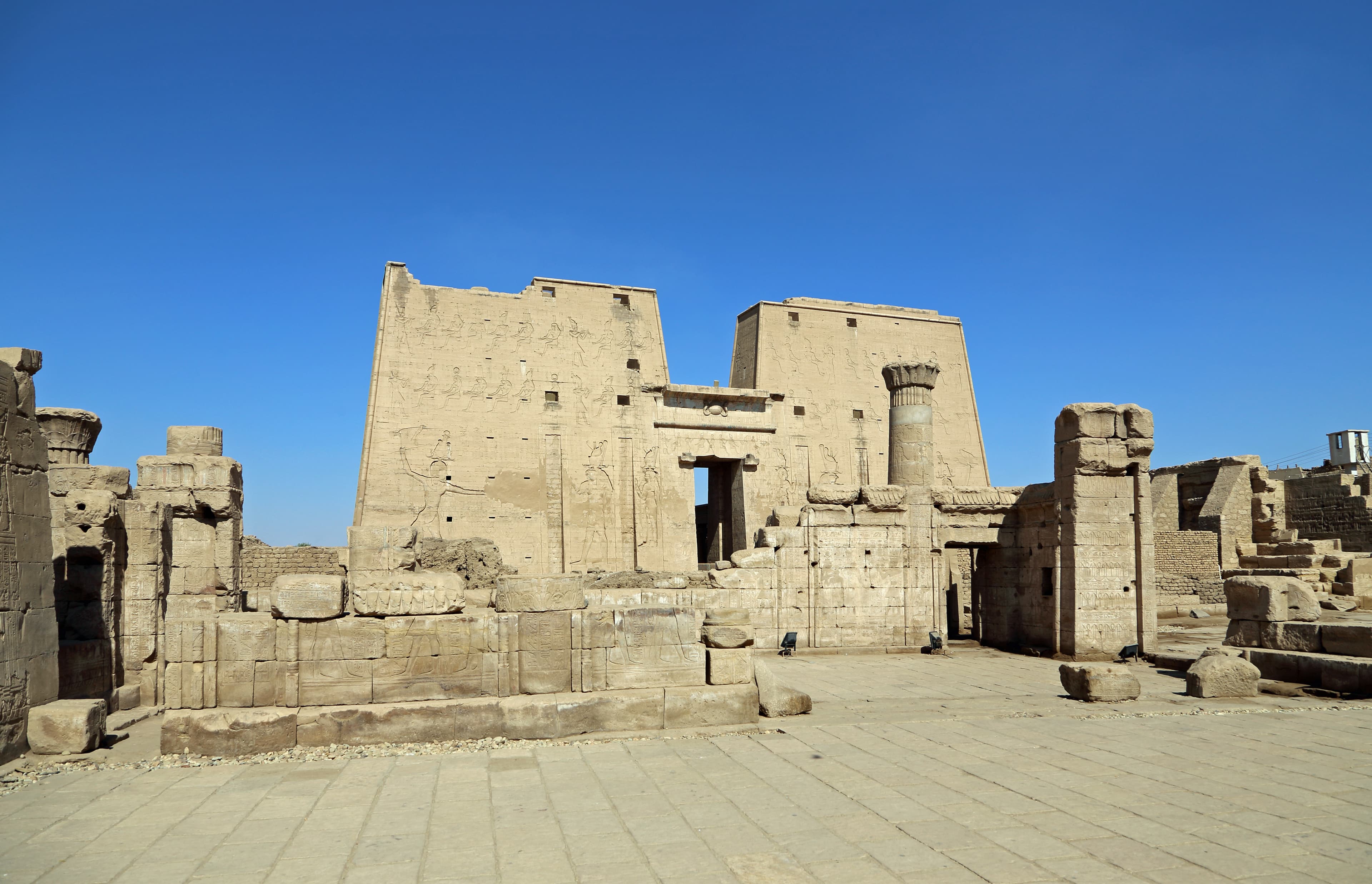

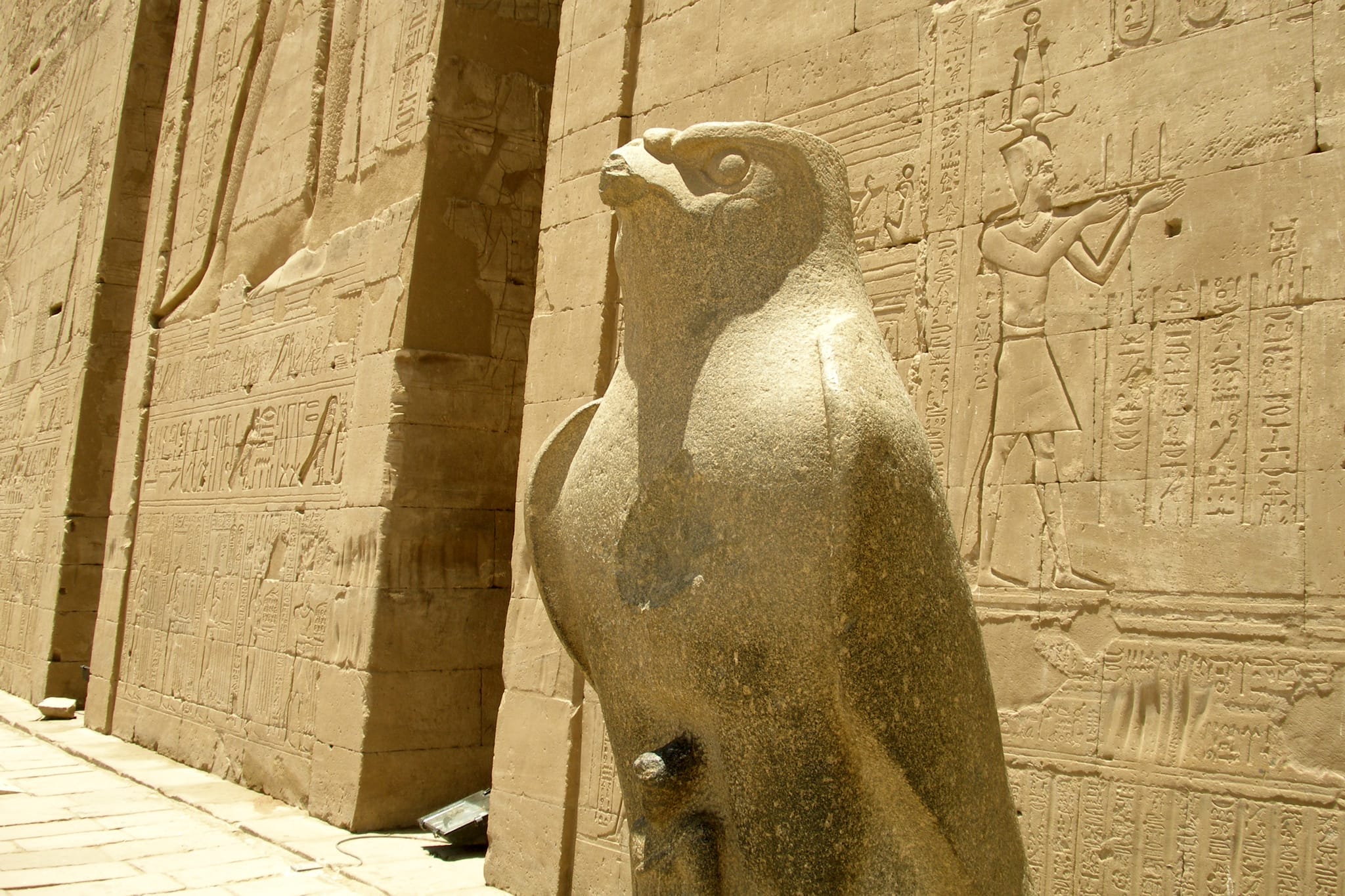
Standing serenely on the Nile's west bank, the Temple of Edfu is a true marvel, and honestly, one of Egypt's best-kept secrets when it comes to intact ancient structures. Built between 237 and 57 BC, it's not just another ruin; it's a window into the Ptolemaic era, an almost perfectly preserved piece of history that somehow managed to escape the ravages of time.
For centuries, it lay buried, protected by sand and silt, only to emerge in the modern age as a testament to ancient Egyptian artistry and devotion.
The Long History of Edfu's Temple
When you walk through the Temple of Edfu, you're stepping back into a period when Egypt was under Greek rule, yet its heart remained profoundly Egyptian. It's fascinating how even under foreign influence, the artistic and religious traditions of the pharaohs not only survived but thrived here. While records hint at even older religious structures on this spot from the Third Dynasty, the temple we see today truly began its story much later.
Built Under the Ptolemaic Dynasty
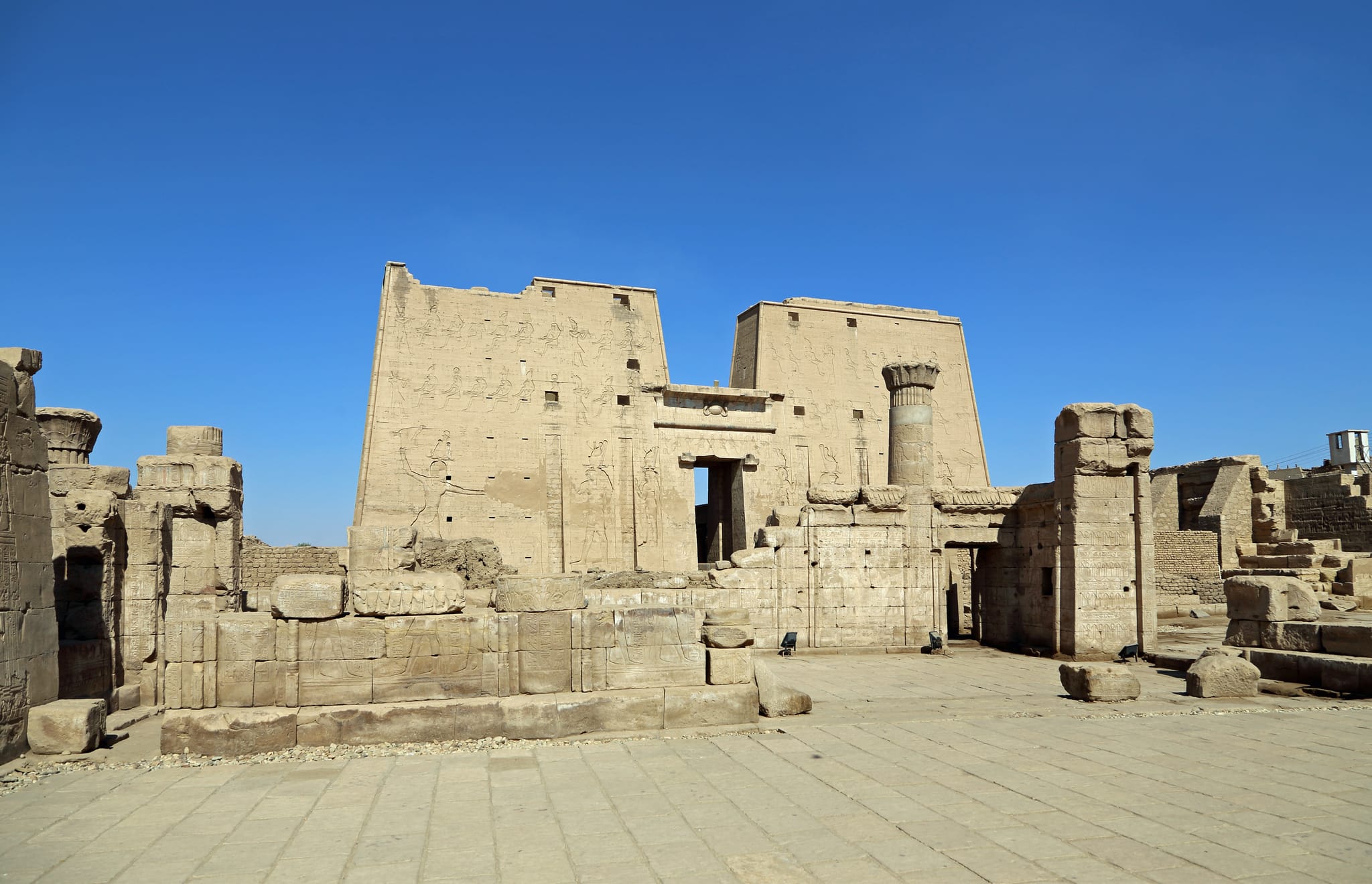
Building something this grand takes time, and Edfu's temple was certainly no exception. It took about 180 years to complete, starting modestly in 237 BCE under Ptolemy III. Life, and politics, often got in the way, causing delays. But subsequent rulers picked up where their predecessors left off. Ptolemy VIII, for example, added the protective enclosure wall and the 'birth house' – vital parts of the complex.
Eventually, it was Ptolemy XII who brought it all to completion, adding the peristyle court, the towering pylon, and the main gates. Finally, in 57 BCE, this magnificent temple stood finished.
Rediscovery and Excavation in the 19th Century
Edfu's glory days lasted until the 4th century CE, when Emperor Theodosius banned paganism, and the temple, like many others, was abandoned. Nature then took over, and over centuries, desert sand and Nile silt slowly swallowed it whole, burying it 12 meters deep. This natural tomb, ironically, became its greatest preserver. It was 'rediscovered' around 1798 during Napoleon's expedition, but it wasn't until 1860 that French Egyptologist Auguste Mariette fully excavated it.
Today, anyone can explore its remarkably intact Ptolemaic architecture and decorations, feeling like they've stumbled upon a forgotten world.
Horus: The God of The Temple and Its Symbolism
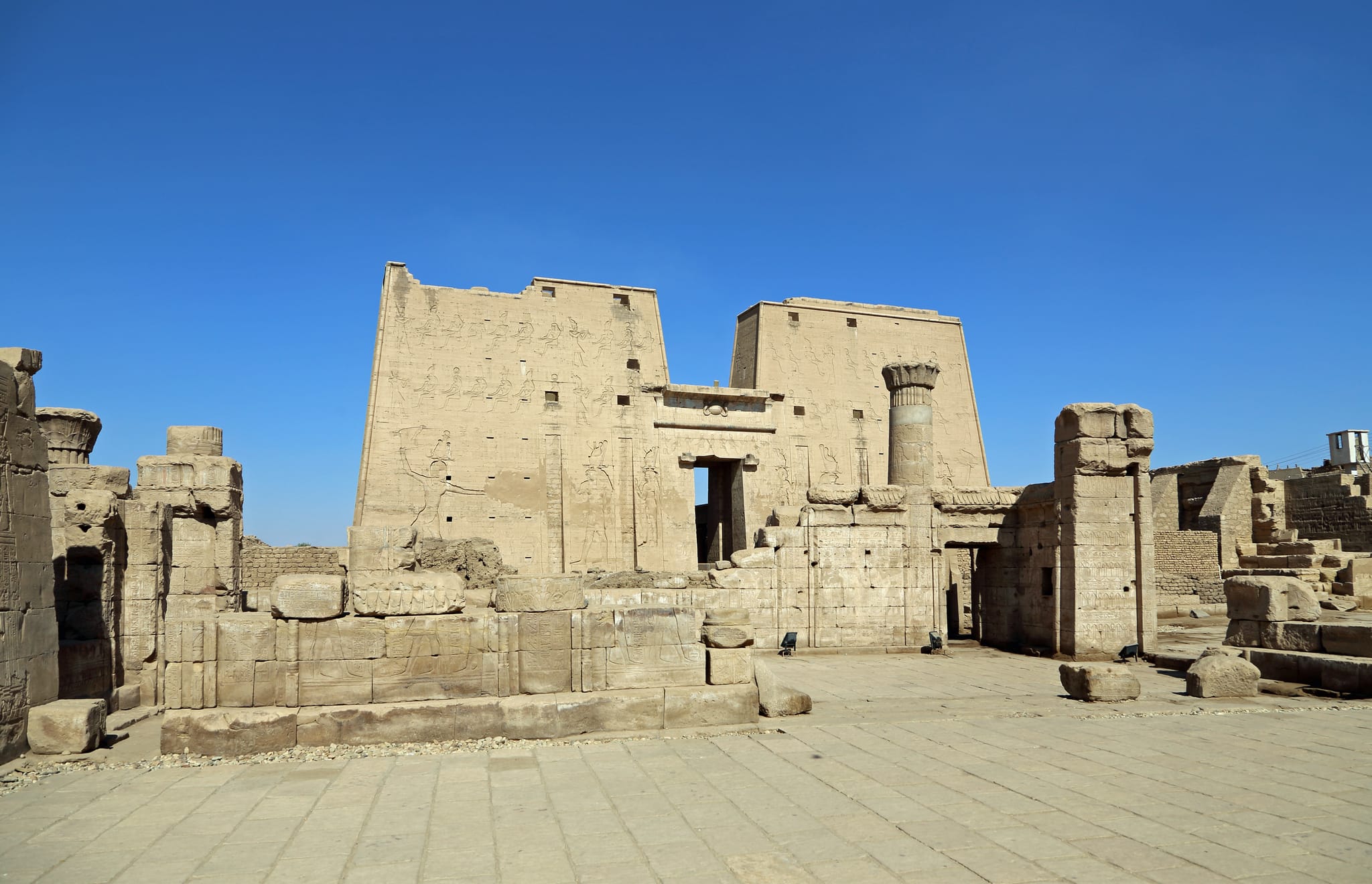
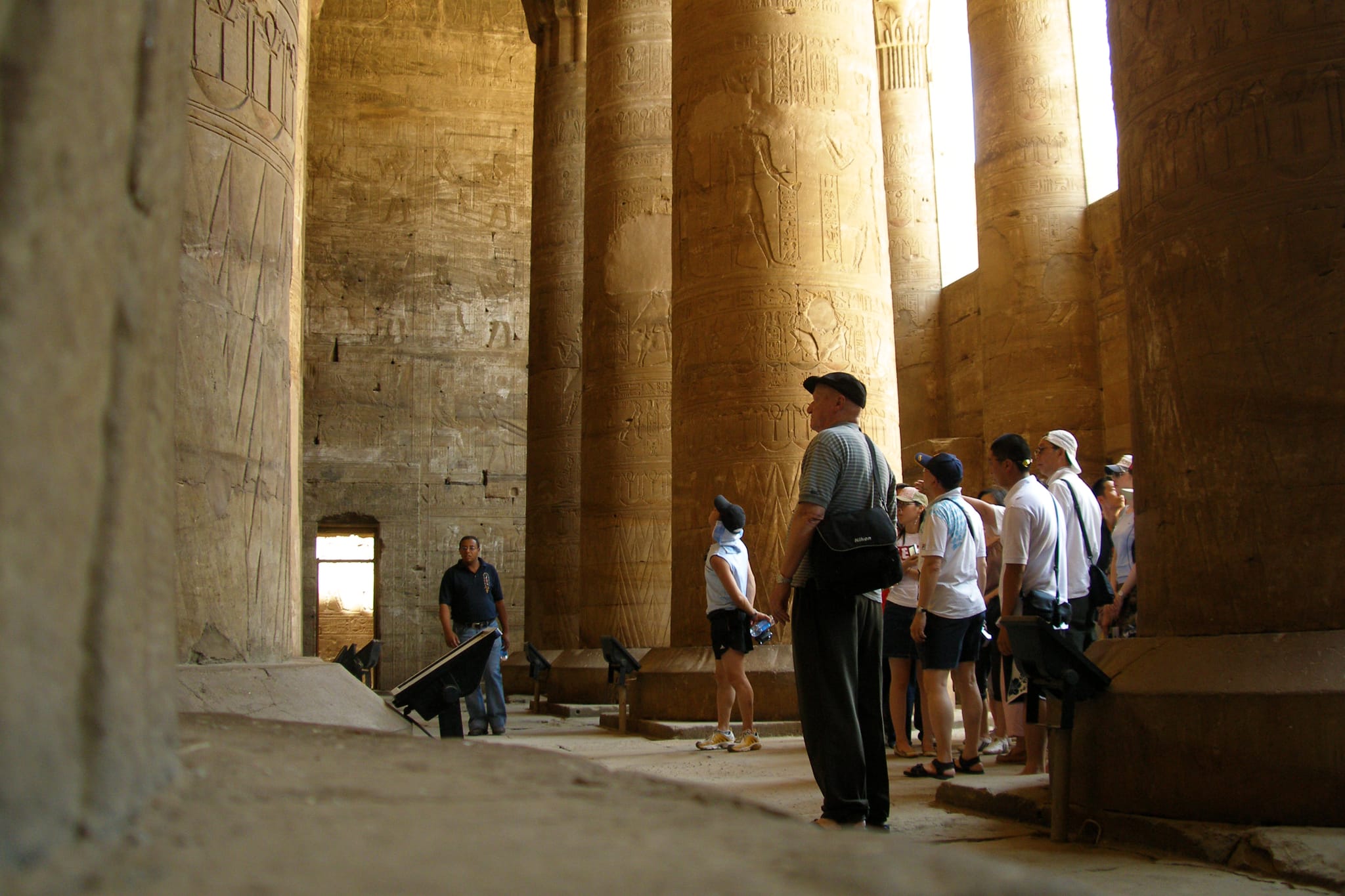
The Temple of Edfu wasn't just a building; it was living religious theater dedicated to Horus, the falcon-headed god, protector of kingship. This isn't just a casual dedication; it's deeply rooted in ancient Egyptian religious customs. Because the temple is so unbelievably well-preserved, we can truly grasp the intricate religious activities that once unfolded within its walls. It's like a history book carved in stone, but far more engaging.
Horus and Hathor: A Divine Love Story
At the heart of Edfu's religious narrative is the powerful, almost romantic, partnership between Horus and Hathor. Horus, typically depicted as a falcon or a man with a falcon's head, represented divine kingship and the eternal battle of good versus evil. He was, in essence, the ultimate protector of the pharaoh. Everywhere you look in the temple, the carvings reinforce these spiritual and political messages – it's a masterclass in ancient propaganda!
Then there's Hathor, Horus's divine partner, who came from her temple at Dendera. She was the goddess of love, beauty, music, and dance – a vibrant counterpoint to Horus's more stoic nature. Their mythological bond went beyond simple symbolism; it was tied to fertility and cosmic harmony itself.
The temple walls are filled with detailed portrayals of this divine pair, even showing Horus's triumph over his treacherous uncle Seth in the 'Hall of Victory' – a battle believed to have taken place right here at Edfu.
Want to explore Temple of Edfu: Egypt's Best-Preserved Ancient Marvel?
Let us design the perfect private itinerary for you. From expert local guides to seamless luxury cruises, we craft custom trips that show you the real Egypt.
Annual Festivals and Sacred Rituals
Life at the Temple of Edfu revolved around three major festivals, each critical to the ancient Egyptian year. First, the 'Beautiful Reunion,' a 15-day extravaganza celebrating the sacred marriage of Horus and Hathor. Imagine grand processions, blessings, and feasting – a true spectacle! Then came the 'Festival of the Living Falcon,' where priests would pick a real falcon, crown it as the living embodiment of Horus, and, in doing so, renew the pharaoh's legitimacy.
Finally, the 'Festival of Victory' was a five-day reenactment of Horus's legendary triumph over Seth, a cosmic drama that reaffirmed order and divine justice for all.
See it for yourself
Trips that visit the places in this article.
This day trip from Aswan covers the temples of Kom Ombo and Edfu, two of Upper Egypt's best-preserved religious sites, without requiring an overnight stay in…
This 7-day tour covers Cairo, Luxor, and Aswan, including the temples of Edfu and Kom Ombo, opening with the Giza Pyramids and Sphinx, the Valley Temple, and…
Want a different route or length? We'll build it around you.
Mystical Beginnings: The Temple's Origins
The ancient Egyptians were incredible storytellers, and they believed Edfu's sacred grounds marked the very spot where the world itself began. It's powerful stuff – every corner of this architectural marvel is infused with a creation narrative, giving its physical existence a profound, predictive meaning.
The Creation Myth and Horus's Role
The temple walls are like ancient scrolls, telling us that the world started in pure chaos, a silent, dark primeval ocean. Then, a small island, the 'Island of Creation,' emerged, slowly gathering debris. Two mysterious beings, 'the Great One' and 'the Distant One,' split a stick, planting half in the ground. And then, Horus, in his falcon form, landed on it, bringing the very first light, dispelling the darkness.
This single moment, described vividly in the inscriptions, marked the world's genesis.
You can see this creation myth reflected throughout the temple's design. The stone columns? They symbolize the reeds that grew around that primeval island, their bases intricately carved with marsh plants. The sanctuary's elevated floor isn't just an architectural detail; it's a direct nod to the first mythical sanctuary built on the peak of that original 'Island of Creation.'
Foundation Rituals and Divine Protection
Egyptian builders weren't just skilled masons; they were ritual practitioners. From the earliest dynasties right through the Ptolemaic period, sacred foundation ceremonies were essential. At Edfu, this included the 'stretching the cord' ceremony, where the king and the goddess Seshat would meticulously align the temple's orientation using poles and a rope.
Every step of construction was steeped in ritual. They'd dig foundation trenches, mold special corner bricks, meticulously pour sand to prevent water seepage, and place stone or metal plaques at each corner for protection. The king would then purify the temple with natron before formally presenting it to the god. Legend has it that sixty gods formed a living, protective wall around the newly consecrated temple – a vivid image of divine guardianship.
Want to explore Temple of Edfu: Egypt's Best-Preserved Ancient Marvel?
Let us design the perfect private itinerary for you. From expert local guides to seamless luxury cruises, we craft custom trips that show you the real Egypt.
Preservation and Its Significance Today
Walking through Edfu is like stepping through a time machine. This temple isn't just 'old'; it's a perfectly preserved snapshot of ancient Egyptian religious life. Its extraordinary condition really comes down to a mix of natural luck and dedicated modern conservation efforts.
Why Edfu Temple is So Well-Preserved
The temple's almost pristine state is genuinely striking. For centuries, it lay buried under 12 meters of desert sand and Nile silt. This wasn't some ancient misfortune; it was a blessing in disguise. This natural burial protected it from the harsh elements, human interference, and the erosion that eventually claimed so many other monuments. Completed in 57 BCE, it remained hidden until Auguste Mariette, a French Egyptologist, unearthed it in 1860.
Today, a German team from Julius Maximilian University is leading ongoing restoration, revealing incredible details like original paint traces and even gold gilding on deity carvings that had been hidden for millennia. They've even installed advanced dewatering systems to combat the damaging effects of groundwater on the porous sandstone – it's a truly dedicated effort.
Tourism and Cultural Heritage Today
The Temple of Edfu has deservedly become a highlight of Egyptian tourism. It's a hugely popular stop for Nile cruises and countless Egypt tours. The site saw significant upgrades in 2005, with a modern visitor center and paved parking, and in 2006, a lighting system was installed, making breathtaking night visits possible.
More than just a tourist spot, the temple serves as a vital learning hub for scholars and travelers alike, offering deep insights into ancient Egyptian religious practices, architectural innovations, and cultural traditions.
Projects like the Horus Beḥedety Project are digitally documenting the building and translating its intricate texts, bringing ancient wisdom to a new generation. When you visit with a local guide, they truly bring the place to life, explaining the architectural nuances, the incredible artwork, and deciphering those complex hieroglyphic inscriptions, making your visit truly unforgettable.
Visiting the Temple of Edfu Today
The Temple of Edfu welcomes visitors year-round and easily ranks among Upper Egypt's most impressive archaeological sites. My personal tip? Go early in the morning. Not only will you beat the crowds, but the soft morning light truly makes the carvings sing. Just remember to explore respectfully and take your time absorbing the incredible details.
Best Time to Visit
For the most comfortable experience, plan your visit between October and April. The temperatures are much milder, and as I said, getting there early in the day will help you avoid both the peak crowds and the mid-day heat.
Visitor Tips
- Wear comfortable walking shoes – there's a lot to see!
- Always bring water and sun protection. Egypt gets hot!
- Please, avoid touching the carvings and walls. They've survived millennia; let's help them survive many more.
- Follow all site guidelines. We want to preserve this monument for future generations of curious travelers like yourself.
Ready to turn this guide into reality?
Our local experts can create a custom itinerary based on these recommendations. Just send us a quick message!
Customize via WhatsApp