
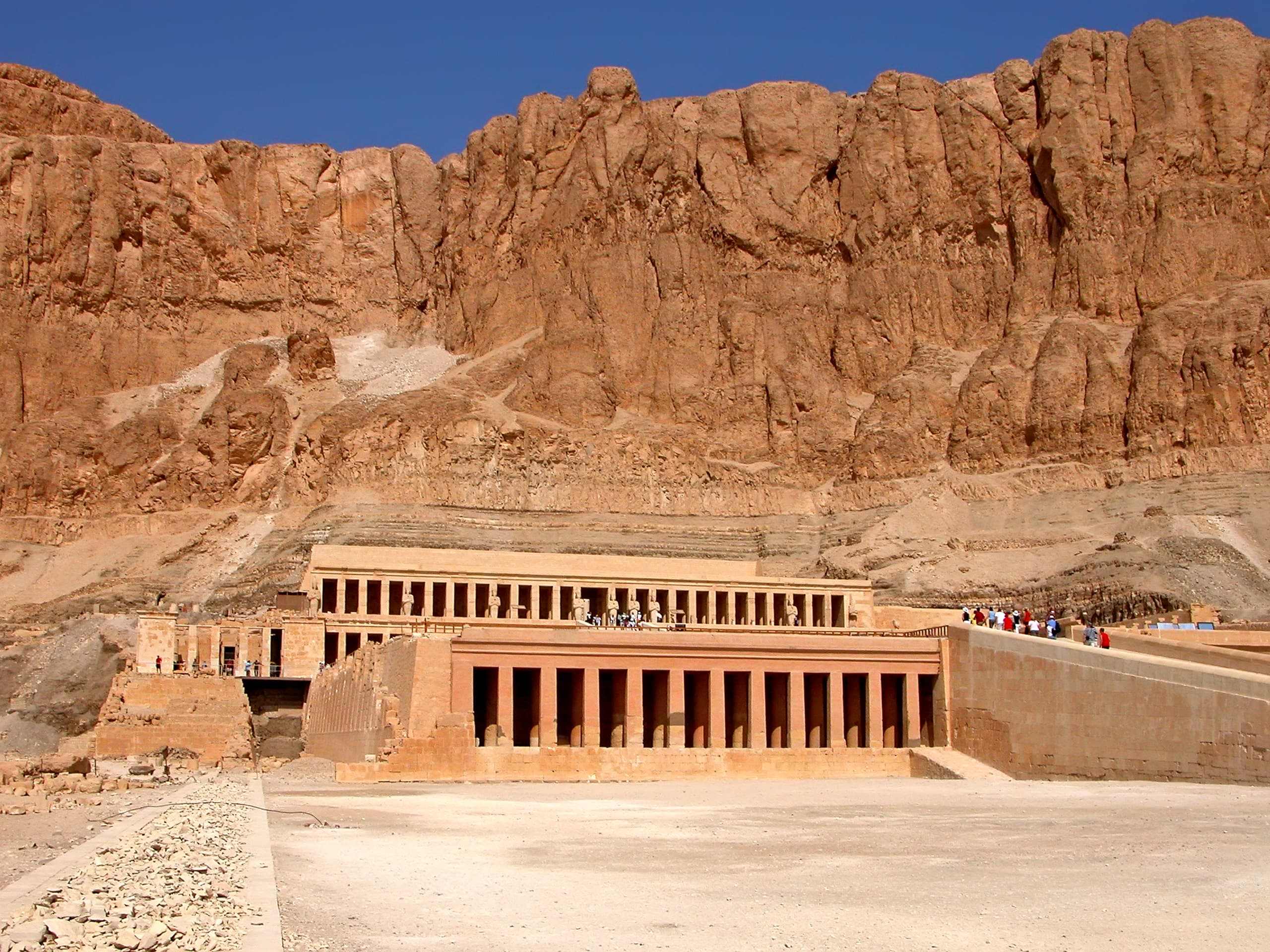

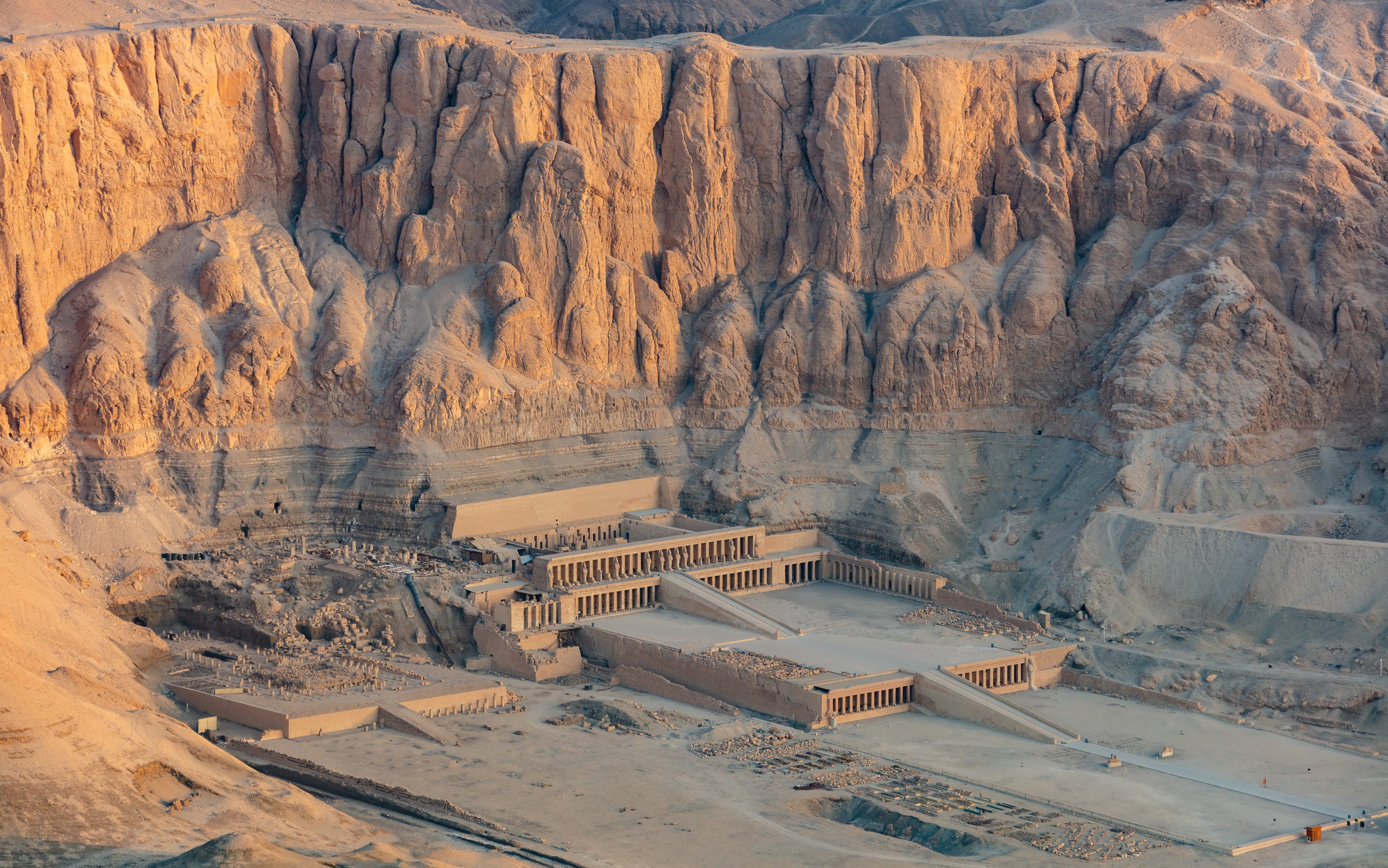
The Mortuary Temple of Hatshepsut at Deir el-Bahari really stands out among ancient Egypt's monuments. Perched dramatically against Luxor's West Bank limestone cliffs, it's not hard to see why it's considered an architectural masterpiece. Built during the 18th Dynasty, around 1473–1458 BC, this temple was dedicated to Queen Hatshepsut, Egypt's most formidable female pharaoh. It wasn't just a tomb, but a place for rituals and offerings aimed at securing her journey into the afterlife.
Its unique three-tiered design, with those graceful colonnaded terraces and ramps, blends so naturally with the landscape. It's truly unlike other traditional temples and continues to inspire awe today.
Historical Context: Hatshepsut's Remarkable Reign
Rise to Power
Hatshepsut's journey to becoming pharaoh was, to put it mildly, unprecedented. She was born to Pharaoh Thutmose I and his Great Royal Wife Ahmose, eventually marrying her half-brother Thutmose II, which was pretty standard for keeping royal blood 'pure'. When Thutmose II passed away after a short reign, his young son, Thutmose III (from a lesser wife), inherited the throne.
Initially, Hatshepsut stepped in as regent for her young stepson, a common practice back then. But about seven years into Thutmose III's reign, she made an extraordinary move: she declared herself pharaoh. She adopted all the royal titles, even depicting herself in official art wearing the traditional false beard and kilt of a male pharaoh. Imagine the stir that must have caused!
Peaceful Prosperity
Hatshepsut wasn't much for military conquests like many pharaohs. Instead, she poured her energy into boosting domestic prosperity, undertaking massive building projects, and expanding trade networks. Her reign was a period of incredible growth and stability:
- Trading Expeditions: The most famous was her expedition to the Land of Punt – likely modern-day Somalia or Eritrea. They brought back amazing luxury goods like myrrh trees, frankincense, ebony, ivory, and gold. You can see these expeditions beautifully documented in the reliefs at her temple.
- Building Programs: She commissioned temples and restoration projects all over Egypt. At Karnak, she erected two colossal obelisks (one still stands!). Her architectural legacy is huge.
- Economic Success: Egypt's coffers swelled under her rule, and trade flourished across the Mediterranean and beyond.
- Political Stability: Despite the unusual nature of a female pharaoh, Hatshepsut kept Egypt stable and secure for over two decades.
Erasure and Rediscovery
After Hatshepsut's death, her stepson Thutmose III finally took sole power. About 20 years later, he launched a systematic campaign to erase her images and names from monuments across Egypt, including her own temple at Deir el-Bahari. Historians still debate why – was it personal animosity, a political move to solidify his own reign, or perhaps religious objections to a female pharaoh?
Even with this ancient attempt to wipe her from history, enough survived for 19th-century archaeologists to piece together her incredible story. Modern excavation and restoration have done wonders, bringing much of the temple's original splendor back to light and offering us amazing insights into this remarkable woman's rule.
Architectural Marvel: Design and Construction
Want to explore Hatshepsut's Temple: A Queen's Enduring Legacy at Deir el-Bahari?
Let us design the perfect private itinerary for you. From expert local guides to seamless luxury cruises, we craft custom trips that show you the real Egypt.
The Architect Senenmut
The genius behind this innovative temple design is often attributed to Senenmut, one of ancient Egypt's most brilliant architects and Hatshepsut's most powerful official. Senenmut held a load of important titles, like Chief Steward of Amun and Overseer of All Works of the King. His close relationship with Hatshepsut, combined with his own tomb being hidden right beneath the temple's forecourt, has led many to speculate they might have been romantically involved.
We don't have definitive proof, but it's an intriguing thought.
Senenmut's brilliance was in taking inspiration from the nearby 11th Dynasty mortuary temple of Mentuhotep II and elevating it to something far more sophisticated and harmonious. Mentuhotep's temple had pretty irregular terraces; Senenmut brought in perfect symmetry and mathematical precision.
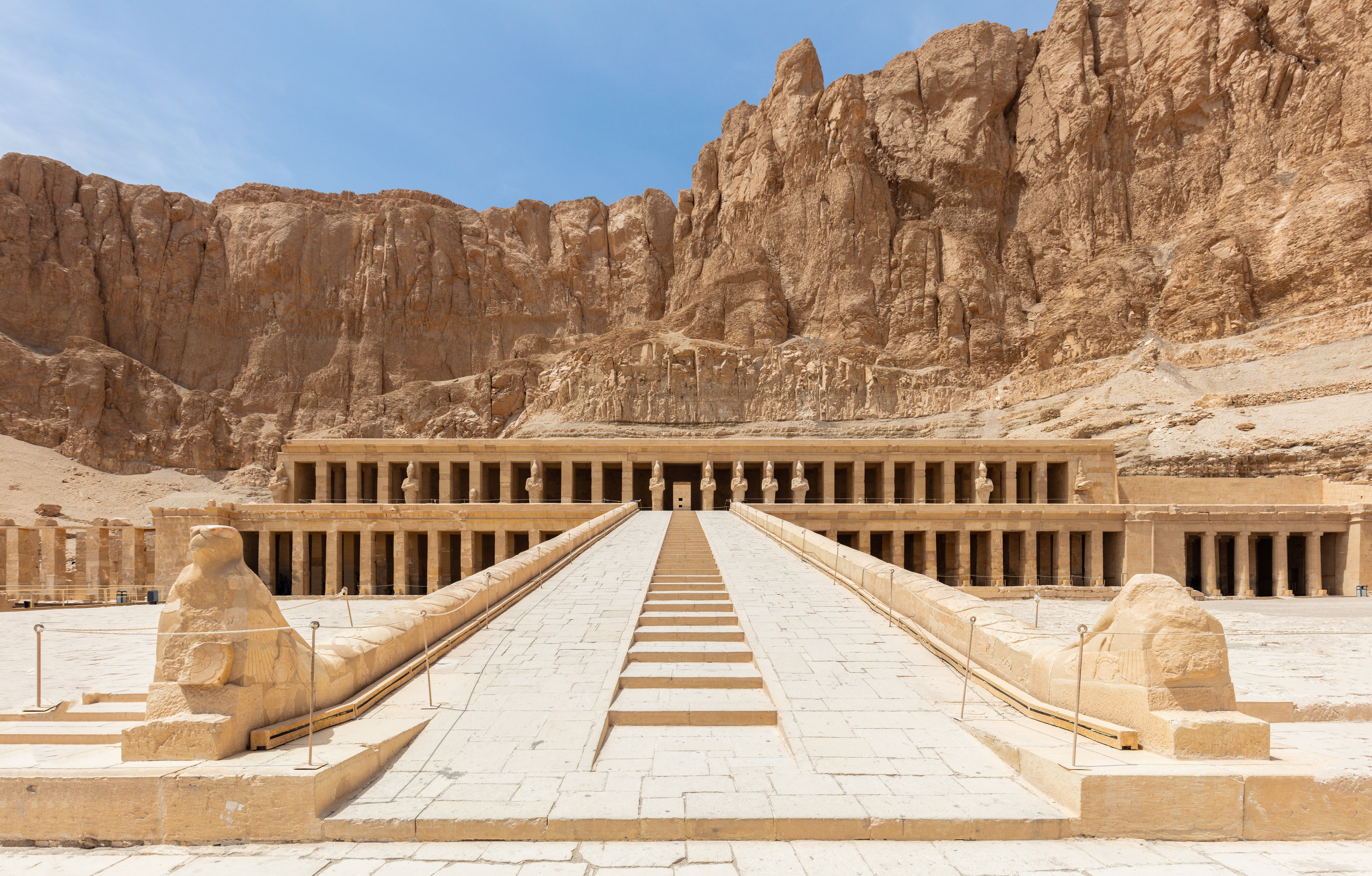
Three-Tiered Structure
- Lower Terrace: You start your visit at a massive pylon (though it's pretty ruined now) that once boasted two huge obelisks and sphinx-lined walkways. The lower terrace has a big forecourt, which was originally planted with trees from Punt and lovely garden beds. It's about 37 meters wide.
- Middle Terrace: A grand central ramp leads you up to the second terrace, flanked by colonnades on both sides. This level is home to some of the temple's most important reliefs:
- Birth Colonnade (south side): This tells the story of Hatshepsut's divine conception and birth, with the god Amun-Re visiting her mother in the form of Thutmose I. It's all about establishing her divine right to rule.
- Punt Colonnade (north side): This is truly remarkable. It details the famous trading expedition to Punt, showing ships loaded with goods, exotic animals, myrrh trees being replanted, and even the Queen of Punt herself (with fascinating physical characteristics, possibly from a medical condition like steatopygia).
- Upper Terrace: Another ramp takes you to the highest terrace, again with colonnaded porticos. This level originally featured colossal Osiride statues of Hatshepsut, portraying her as Osiris, the god of the afterlife, standing guard against the pillars. The sanctuary, carved directly into the cliff face, holds several chambers including chapels dedicated to Hatshepsut, her father Thutmose I, and the gods Amun-Re and Re-Horakhty.
Architectural Innovation
A few things make Hatshepsut's temple truly groundbreaking:
- Site Integration: The temple's horizontal design perfectly echoes the natural layers of the limestone cliff. This creates a visual harmony between human creation and the natural world that's just unmatched anywhere else in Egyptian architecture.
- Geometric Precision: This isn't just a pretty building. It uses sophisticated mathematical ratios and perfect symmetry. Modern analysis has revealed the golden ratio and other geometric principles at play, all contributing to its pleasing proportions.
- Orientation: The temple aligns perfectly with the winter solstice sunrise. On that day, the sun's first rays illuminate the sanctuary. It also aligns with Karnak Temple across the Nile, creating this sacred axis connecting the world of the living with the world of the dead.
- Material Use: Limestone, sourced locally, is the primary building material. Originally, the temple would have been incredibly vibrant with extensive color decoration (you can still see traces today) and the walls covered in painted reliefs depicting Hatshepsut's achievements and deep religious devotion.
See it for yourself
Trips that visit the places in this article.
This day tour focuses entirely on Luxor's West Bank, spending a full day on the necropolis and mortuary temples across the Nile from the modern city rather…

This 10-day tour moves through four distinct regions of Egypt, opening in Cairo, sailing the Nile between Luxor and Aswan, and finishing with beach time on the…
Want a different route or length? We'll build it around you.
Artistic Treasures: Relief Carvings and Decoration
Want to explore Hatshepsut's Temple: A Queen's Enduring Legacy at Deir el-Bahari?
Let us design the perfect private itinerary for you. From expert local guides to seamless luxury cruises, we craft custom trips that show you the real Egypt.
The Punt Reliefs
The Punt colonnade is one of ancient Egypt's most valuable historical records, period. These incredibly detailed reliefs show:
- Five Egyptian ships, complete with rigging and crews.
- The epic journey across the Red Sea.
- Their arrival in Punt, with depictions of local architecture (circular houses on stilts).
- Trading negotiations with Punt's rulers.
- Ships being loaded with exotic goods: incense trees, ebony, ivory, baboons, leopards, and more.
- The triumphant return to Egypt.
- The presentation of tribute to Hatshepsut.
These reliefs offer us invaluable information about ancient Egyptian seafaring, trade practices, and even their geographic knowledge. The detailed portrayal of Punt's landscape and people still sparks scholarly debate about exactly where this land was.
Divine Birth Scenes
The birth colonnade isn't just art; it's a political statement, designed to legitimize Hatshepsut's rule. The scenes depict:
- The god Amun-Re, taking the form of Thutmose I, visiting Queen Ahmose.
- The divine pregnancy announcement by Thoth.
- The sacred birth, attended by various gods.
- The newborn Hatshepsut being presented to Amun-Re.
- Gods bestowing divine qualities upon the child.
This narrative, while clearly propaganda, was a cleverly used theological tradition that other pharaohs also employed to emphasize divine approval for their rule.
Military and Religious Scenes
Beyond Punt and her birth, other reliefs showcase:
- Hatshepsut making offerings to various deities.
- Vibrant religious festivals and grand processions.
- The incredible feat of transporting and erecting obelisks at Karnak.
- Scenes of agricultural prosperity that reflect her reign's economic success.
- Depictions of Hatshepsut in full pharaonic regalia, asserting her authority.
Color and Gilding
It's hard to imagine now, but this temple was once bursting with color. The walls were covered in painted reliefs, using vivid blues, reds, yellows, greens, and blacks. Architectural elements, especially in the sanctuary, were gilded. While most of this original vibrancy has faded over thousands of years, protected areas still show glimpses, helping archaeologists reconstruct its former glory.
Later History and Transformations
Ancient Vandalism
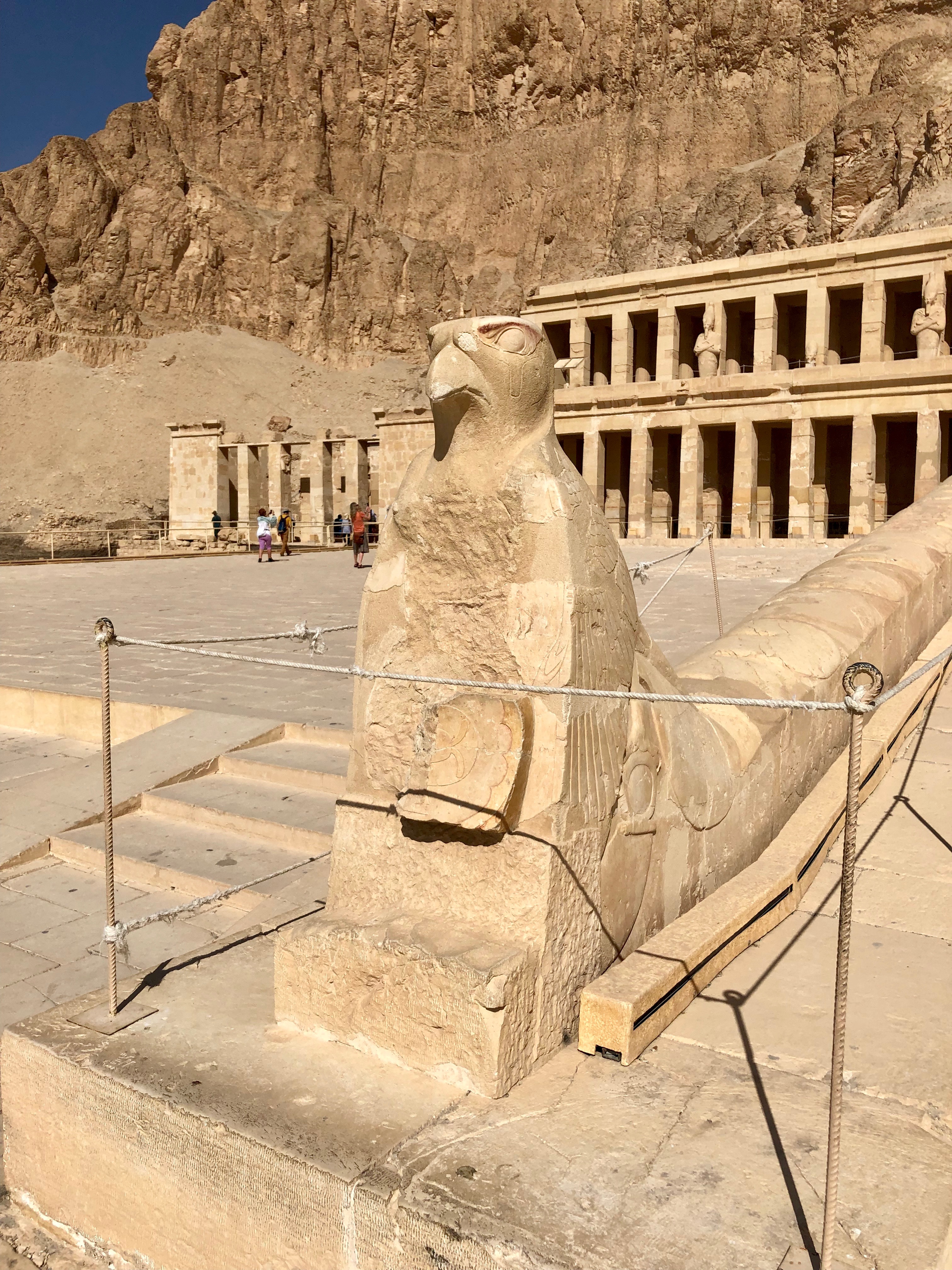
The deliberate campaign to erase Hatshepsut, likely ordered by Thutmose III, systematically removed her images and names wherever they were easily accessible. What's wonderfully ironic is that this 'damnatio memoriae' was incomplete. Many cartouches and images in hard-to-reach spots survived, which is how modern scholars were able to piece together her story.
The effort and resources put into this erasure actually highlight how important ancient Egyptians considered maintaining their historical records, even when it was politically inconvenient.
Coptic Monastery
Fast forward to Egypt's early Christian period, around the 7th century AD, and you find Coptic monks set up a monastery right within the ruined temple. That's actually where its Arabic name, 'Deir el-Bahari' (Northern Monastery), comes from. The monks added mud-brick walls, painted Christian scenes over ancient reliefs, and transformed parts into living quarters and chapels.
While this did cause some damage, the monastery's presence also, inadvertently, helped protect certain sections from further decay.
19th Century Rediscovery
European travelers started noticing the site in the 18th and 19th centuries, but serious archaeological work kicked off in 1858 with Auguste Mariette. Later, between 1893 and 1902, Polish archaeologist Édouard Naville undertook major excavations, publishing detailed studies that really put the temple on the international map.
Modern Restoration
The Polish-Egyptian Archaeological and Conservation Mission has been meticulously working at Deir el-Bahari since 1961. It's one of Egypt's longest-running archaeological projects, and their dedication has been incredible:
- They've pieced back together collapsed colonnades and other architectural features.
- They've stabilized the unstable cliff face above the temple.
- They've carefully restored damaged reliefs.
- They've created protective coverings for the more sensitive areas.
- And they've produced comprehensive documentation, which is invaluable for scholars.
Visiting the Temple of Hatshepsut
Location and Access
The temple is about 2 kilometers inland from the Nile's West Bank, smack in the middle of the Theban Necropolis and right across the river from Luxor city. Most visitors see it as part of a West Bank tour, which typically includes the Valley of the Kings, Valley of the Queens, and other mortuary temples. You have a few options for getting there:
- Organized tours (this is probably the easiest and most common way).
- Hiring a private taxi or driver.
- You can rent a bicycle on the West Bank, but be warned, it can be hot and tiring.
- Walking is possible, but again, heat and distance can be a challenge.
Nearby Attractions
Temple of Mentuhotep II
Right next door, you'll find the 11th Dynasty mortuary temple of Mentuhotep II. This is the temple that originally inspired Hatshepsut's design. It's more ruined, but it's really worth a look to see how architectural ideas evolved and how Senenmut adapted those earlier concepts.
Deir el-Medina
This is the ancient village where the artisans who built and decorated the tombs in the Valley of the Kings lived. You can explore their houses, and even their personal tombs, which are often beautifully decorated. It offers a fascinating glimpse into the daily lives of ancient Egyptians.
Sheikh Abd el-Qurna
This hill is packed with hundreds of nobles' tombs, all decorated with scenes of daily life. Many are easily accessible from Hatshepsut's temple and provide a different perspective on New Kingdom art and society.
The Temple's Historical Significance
Architectural Influence
Hatshepsut's temple left a huge mark on Egyptian architecture. Later pharaohs clearly took elements of its design and incorporated them into their own mortuary temples. Its innovative use of horizontal terraces and seamless integration with the landscape set a new benchmark for monumental architecture.
Gender Politics
This temple stands as an incredible beacon of female power in the ancient world. Hatshepsut's successful reign and the magnificent structures she commissioned are proof that women could wield power as effectively as men, even in the patriarchal society of ancient Egypt. Her story continues to spark important conversations about gender, power, and leadership even today.
Cultural Heritage
No surprise here: UNESCO declared the Theban Necropolis, including Hatshepsut's temple, a World Heritage Site in 1979. It's recognized for its universal cultural significance, representing our shared human heritage, and continues to draw scholars and tourists from every corner of the globe.
Educational Value
The temple's extensive reliefs – detailing trade expeditions, religious practices, and royal ideology – are invaluable primary sources for understanding New Kingdom Egypt. And the archaeological work still happening here keeps yielding fresh discoveries and insights, constantly expanding our knowledge.
Ready to turn this guide into reality?
Our local experts can create a custom itinerary based on these recommendations. Just send us a quick message!
Customize via WhatsApp