

Historical Context: New Kingdom Elite Society
The Role of Nobles in Ancient Egypt
Ancient Egypt ran on a strict pecking order, with the pharaoh at the very top. Just below, you had a powerful class of nobles and officials – the movers and shakers who handled everything from tax collection to temple rituals. These weren't mere bureaucrats; they were the backbone of the kingdom, holding critical roles like: * **Viziers:** Essentially the ancient Egyptian prime ministers, overseeing all government administration and justice. Hugely influential. * **High Priests:** Not just spiritual leaders, but managers of massive temple estates. Imagine an organization so rich it owned vast tracts of land and employed thousands. That was a major temple, and its high priests were titans. * **Scribes & Administrators:** The educated elite. In a world where most couldn't read or write, scribes were indispensable, managing logistics, records, and the entire state apparatus. * **Military Commanders:** Leading Egypt's armies, securing borders, and managing campaigns that stretched Egypt's influence far and wide. * **Architects & Engineers:** The masterminds behind the iconic temples, tombs, palaces, and irrigation systems. They shaped the very landscape. * **Treasury Officials:** Guardians of the royal coffers, overseeing foreign trade, mining, and collecting tribute from vassal states. * **Estate Managers:** Running the huge agricultural estates that fed the kingdom. These positions brought not just immense wealth and prestige, but also the resources to commission the very tombs we're about to explore – ensuring their legacy and afterlife needs were met. The bigger and more beautiful the tomb, the more important the owner. Simple as that.Why They Chose the Theban Hills
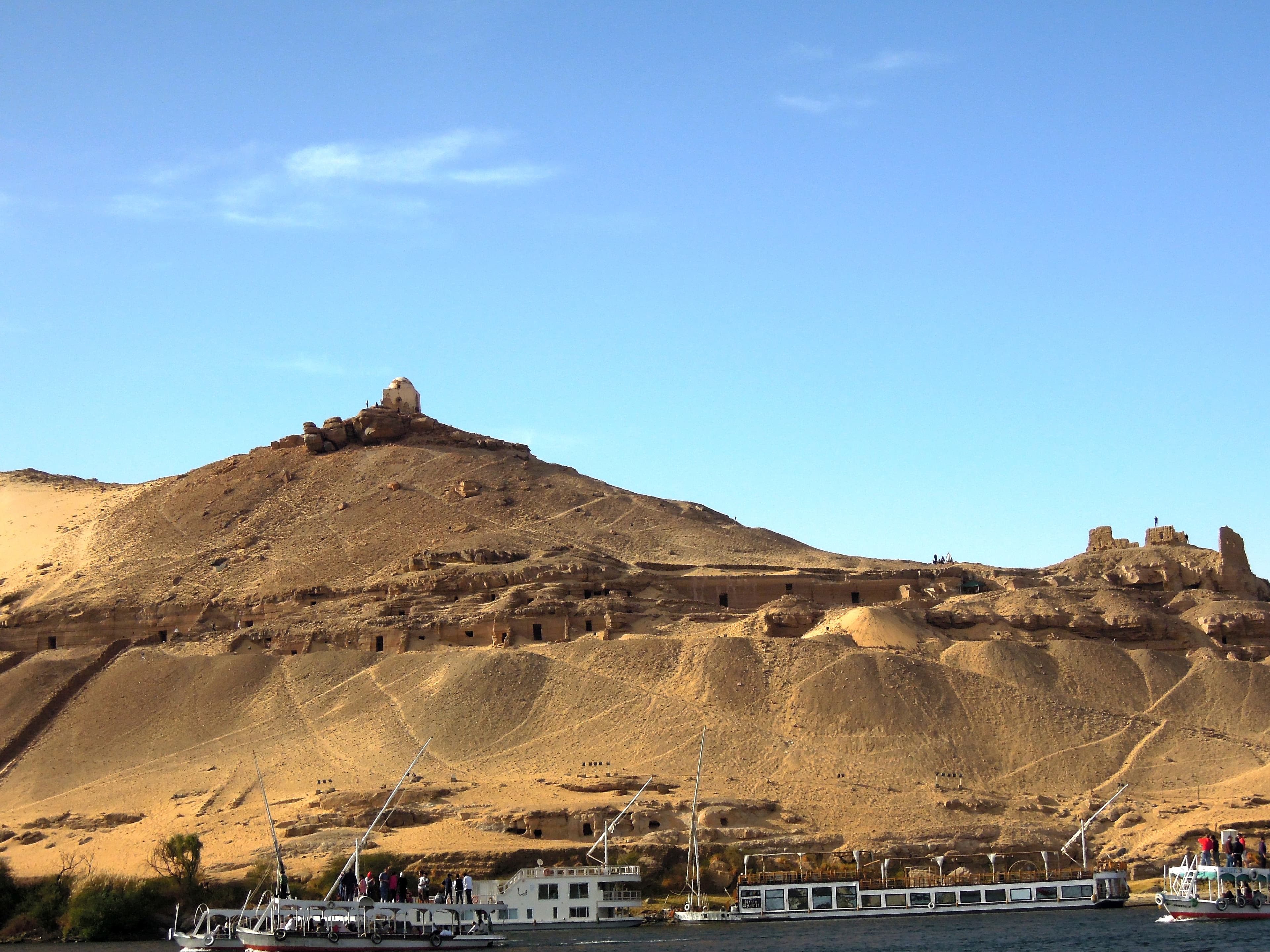
The nobles weren't just picking a nice spot for their eternal rest; there was a deep-seated reason for choosing the hillsides of Luxor's West Bank. In Egyptian cosmology, the West was where the sun 'died' each evening, making it the perfect landscape for the realm of the dead – a necropolis. Beyond the symbolism, the practicalities were clear: the limestone hills offered perfect rock for carving tombs, and they were conveniently close to Thebes (modern-day Luxor), the New Kingdom capital where these officials lived and worked. Being near the royal necropolises, like the Valley of the Kings, also lent an air of prestige. Think of it as ancient Egypt's most exclusive cemetery, with prime real estate overlooking the Nile Valley, towards the vibrant East Bank where their cults would be maintained. Different hillside areas became home to different social strata, forming distinct neighborhoods within the grand necropolis.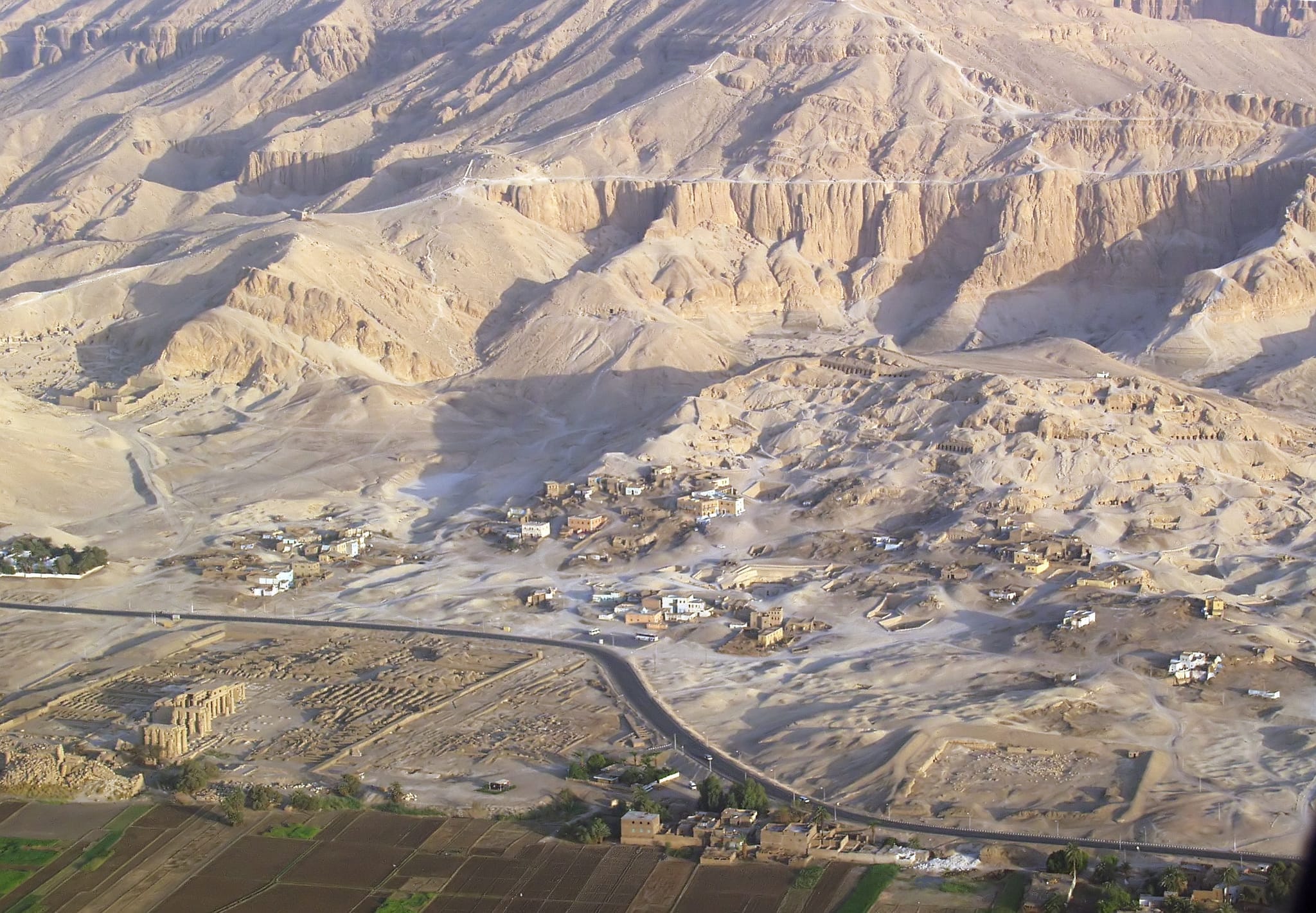
Key Tomb Areas and Districts
Sheikh Abd el-Qurna
This is the big one, folks. Sheikh Abd el-Qurna is the largest and arguably most important necropolis for nobles' tombs, boasting over 150 decorated tombs from the 18th to 20th Dynasties. It's an incredible sight, with the hillside dramatically honeycombed with tomb entrances. If you only visit one area, make it this one. Here, you'll find the tombs of the highest-ranking officials – viziers, high priests of Amun, royal stewards, the whole shebang. The most famous, and frequently visited, include the tombs of Sennofer (TT96), Ramose (TT55), Rekhmire (TT100), Nakht (TT52), Menna (TT69), and Userhat (TT56). It's a genuine treasure trove.Want to explore The Tombs of the Nobles: Journey into Ancient Egypt's Daily Life?
Let us design the perfect private itinerary for you. From expert local guides to seamless luxury cruises, we craft custom trips that show you the real Egypt.
Dra Abu el-Naga
Just north of Sheikh Abd el-Qurna, Dra Abu el-Naga is a bit older, with tombs mainly from the 17th and early 18th Dynasties. You'll even find some royal tombs from the 17th Dynasty mixed in with the nobles' here. Its tombs often feature a 'saff-style' architecture – a row of pillars across the facade – which is characteristic of earlier periods. While not as bustling as Sheikh Abd el-Qurna, it's a fascinating area if you have extra time or a keen interest in archaeology.Qurnet Murrai
Heading south, Qurnet Murrai stretches from the Middle Kingdom right through to the Late Period. It's less crowded, which can be a plus for some, and houses several beautifully decorated tombs. If you're looking for a slightly more tranquil experience, this area is worth exploring.Khokha and Assasif
These are smaller necropolis areas, but don't let their size fool you – they contain some very important tombs. Khokha holds tombs from the 18th Dynasty, while Assasif is home to some of the largest and most elaborate tombs from the Late Period (around 600 BC). The Assasif tombs, in particular, are architecturally distinct, with massive courtyards and complex layouts that are quite different from the New Kingdom designs.
See it for yourself
Trips that visit the places in this article.
This 7-day tour covers Cairo, Luxor, and Aswan, including the temples of Edfu and Kom Ombo, opening with the Giza Pyramids and Sphinx, the Valley Temple, and…

This 6-day tour combines two nights in Cairo with a three-night Nile cruise from Aswan to Luxor, connected by domestic flights, so the Nile Valley's temples…
Want a different route or length? We'll build it around you.
My Top Picks: Most Important Tombs to Visit
If you're wondering where to start, here are some absolute must-sees that truly showcase the artistry and historical richness of the Tombs of the Nobles.Want to explore The Tombs of the Nobles: Journey into Ancient Egypt's Daily Life?
Let us design the perfect private itinerary for you. From expert local guides to seamless luxury cruises, we craft custom trips that show you the real Egypt.
Tomb of Sennofer (TT96) - 'The Tomb of Vineyards'
Oh, Sennofer! He was the Mayor of Thebes, and his tomb is simply captivating. Its nickname, 'The Tomb of Vineyards,' is no exaggeration. Step inside the burial chamber, and you'll gaze up at a ceiling completely covered in painted grapevines, leaves, and clusters. It's like sitting under a pergola, but 3,400 years old. What's even cooler is how the artists cleverly used the irregular rock surface, painting each natural bump as a distinct grape. Genius! The walls are equally stunning, with Sennofer and his wife, Merit, in scenes of offerings, purification, and their journey to the afterlife. The colors – bright yellows, reds, blues, greens – are astonishingly vivid. The intimate scale and exquisite detail of Sennofer's tomb often make it a favorite for visitors, and I can certainly see why.Tomb of Ramose (TT55)
Ramose was a power player, serving as Vizier under both Amenhotep III and Akhenaten. His tomb is a fascinating historical document, literally showing two distinct artistic styles side-by-side. You'll see beautiful traditional Theban art with intricate raised relief carvings, then an abrupt shift to the more naturalistic style of the Amarna Period, with its focus on the Aten sun disk. It's a visual metaphor for the dramatic religious and artistic upheaval of Akhenaten's reign. The entrance hall boasts some of the finest relief carving in ancient Egypt. Look closely at the faces of Ramose and his wife; there's an individuality and naturalism rarely seen elsewhere, subtly suggesting bone structure. It's a testament to incredible skill. Sadly, the tomb was never finished. Ramose likely followed Akhenaten to his new capital, Amarna, and was buried there. But its incomplete state is actually a gift to us, offering insights into the ancient Egyptian artistic process itself.Tomb of Nakht (TT52)
Nakht was a scribe and astronomer, and though his tomb is small, it contains some of the most famous and beautiful paintings in the Theban Necropolis. You've probably seen images from here before! The most celebrated scenes depict a banquet, with female musicians playing harps, lutes, and oboes, while graceful dancers perform. The delicacy and attention to detail in their dresses, jewelry, and expressions are truly stunning. These images are iconic, appearing in countless books and documentaries. Other scenes show agricultural life – harvesting grain, treading grapes for wine, and tending livestock. The paintings here are light and elegant, with subtle color gradations. While sometimes conservation means restricted access, if it's open, Nakht's tomb is a non-negotiable.Tomb of Menna (TT69)
Menna, a Scribe of the Fields, has a tomb celebrated for its exceptional agricultural scenes. Seriously, you get a full education on ancient Egyptian farming here! Paintings show plowing, sowing, harvesting, and transporting crops, all in meticulous detail. You'll grasp exactly how the ancient Egyptians managed to feed their massive civilization. Beyond farming, there are classic marsh hunting scenes of Menna spearing fish and birds from a papyrus boat. Interestingly, Menna's figure was deliberately damaged in antiquity – his face and body systematically defaced. Historians aren't sure why, but it hints at some ancient scandal or fall from grace, adding a layer of mystery. The colors, especially the yellows and golds of the grain fields, are incredibly vibrant. This tomb's artistic quality and wealth of agricultural detail make it a must-see.Tomb of Userhat (TT56)
Userhat was a royal scribe, and his tomb showcases beautifully executed paintings covering both official duties and personal life. The most striking scenes are of hunting in the desert and marshes, rendered with amazing detail in the flora and fauna. Gazelles, hyenas, hares – it's all there, captured in motion. The marsh scenes are vibrant with life: birds, fish, papyrus thickets. It's a masterclass in depicting the natural world. One particularly touching scene shows Userhat and his wife, seated before an offering table piled high with food. Their affectionate pose, with her arm around him, brings a personal warmth often missing in more formal Egyptian art. The paintings here are a prime example of the sophisticated artistic techniques of the 18th Dynasty.Tomb of Rekhmire (TT100)
Rekhmire was *the* Vizier, the highest administrative position in Egypt, second only to the pharaoh. So, naturally, his tomb documents his official duties extensively. His famous 'craftsmen scenes' are incredible – they show workshops full of artisans creating furniture, statues, jewelry, pottery, and more. These detailed depictions give us our best evidence for ancient Egyptian manufacturing techniques. Goldsmiths, carpenters, sculptors – you see them all, meticulously plying their trades. Other scenes document tax collection and tribute from foreign lands. You'll see delegations from Nubia, Syria, Crete, each depicted with their characteristic features, clothing, and goods. It's an invaluable record of Egypt's international relations during its New Kingdom peak. Architecturally, this tomb is unique: its corridor slopes dramatically upward, creating a soaring space over 8 meters high. This might have been a way to compensate for Rekhmire not being allowed a pyramid-capped tomb, a privilege reserved for royalty back then.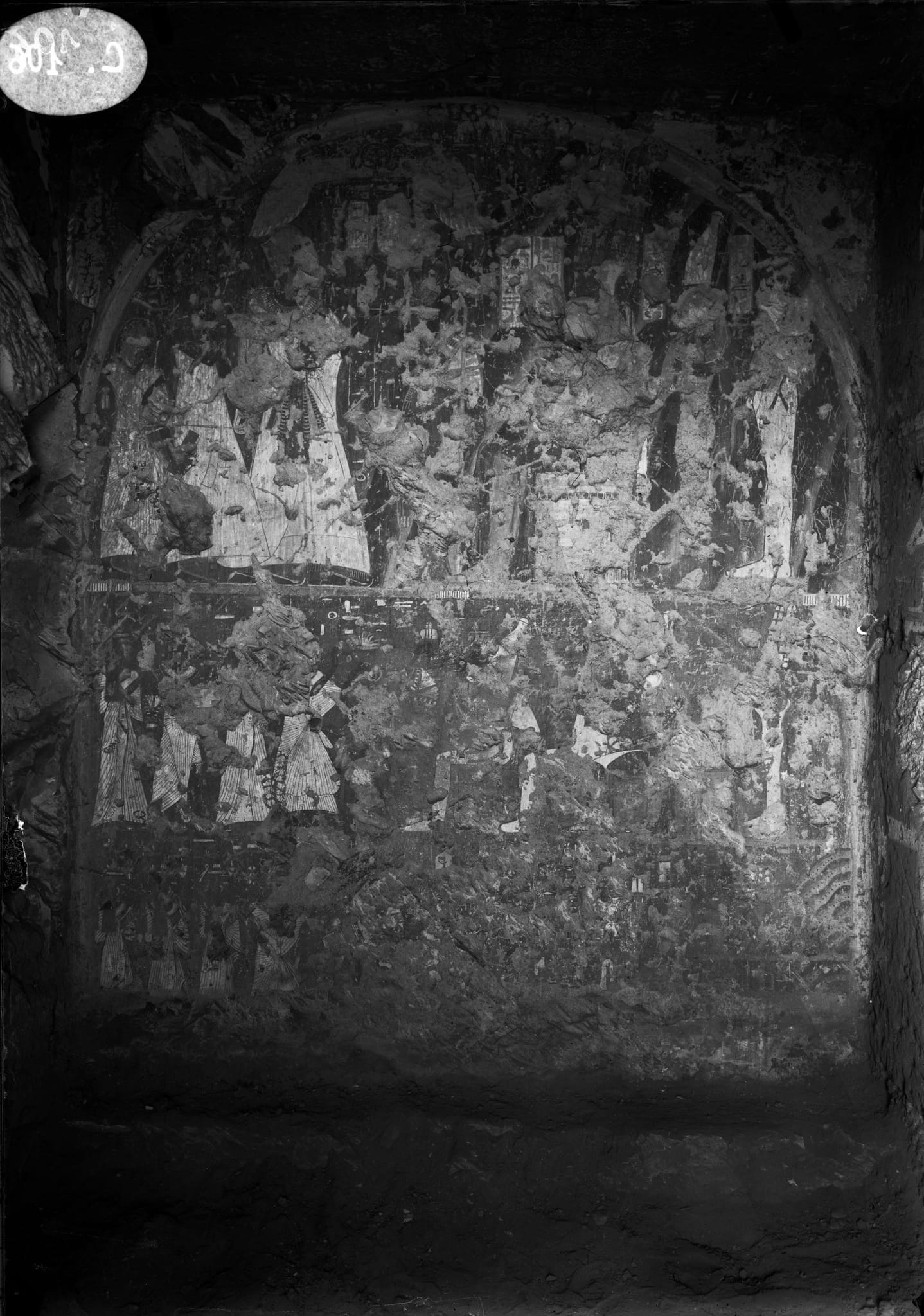
Artistic Styles and Techniques
Painting Methods
The vibrant murals in these tombs aren't just pretty pictures; they're the result of sophisticated ancient Egyptian painting techniques refined over centuries. It all started with meticulous wall preparation: smoothing the rough limestone with gypsum plaster, then applying a thin, fine white layer to serve as the canvas. Artists worked methodically from preliminary sketches (sometimes still visible!), with master artists drawing outlines and key figures, and apprentices filling in details. The iconic Egyptian composite view – head in profile, eye frontal, torso frontal, legs in profile – was their signature. They used natural mineral and organic pigments mixed with water and binders: black from charcoal, red and yellow from ochre, blue from azurite, green from malachite. This explains why, after thousands of years, these colors remain so incredibly vivid, especially when protected from light and moisture into the tombs. They used brushes made from palm fiber or reeds, layering colors and finishing with precise black or red outlines to define figures.Regional and Period Variations
Artistic tastes evolved, even in ancient Egypt! Early 18th Dynasty tombs show stiffer, more formal figures. By the mid-18th Dynasty, you get the classic period: graceful figures, elegant proportions, and complex compositions. Then came the Amarna Period (Akhenaten's reign), which shook things up with more naturalistic anatomy and informal poses. Ramose's tomb (TT55) is brilliant for showing this transition. After Amarna, artistic styles generally returned to traditional forms, but often with more elaborate details, reflecting the increasing wealth and ambition of subsequent reigns.Color Symbolism
Colors weren't just decorative; they were imbued with meaning. Black represented fertility and the underworld, white signified purity, red symbolized life and vitality, yellow meant gold and eternity, blue was the heavens and water, and green stood for regeneration and new life. Understanding this 'color language' helps to truly appreciate the narratives within the tomb paintings. For example, the green skin of Osiris (god of the afterlife) isn't just a choice; it screams resurrection and eternal life.
Scenes of Daily Life: A Social Encyclopedia
These tombs are an anthropologist's dream. They offer an unparalleled, intimate look into all aspects of ancient Egyptian daily life.Agricultural Activities
Egypt's lifeblood was the Nile and its agriculture, and these tombs are an agricultural manual painted on stone. You'll see detailed scenes of plowing with oxen after the annual flood, farmers broadcasting seeds, harvesting grain with sickles, and transporting it. They show the threshing process – cattle or donkeys separating grain from stalks – and winnowing, where grain is tossed to let the wind carry away the chaff. Even the measuring and recording of harvests for tax purposes are depicted. And then there's viticulture! Grape cultivation, pressing grapes with bare feet, and storing precious wine in amphorae. Wine was a luxury, and these displays were a clear statement of the tomb owner's wealth and refined lifestyle.Banquets and Entertainment
Ever wondered what an ancient Egyptian party looked like? These banquet scenes provide fantastic glimpses into elite social life. You'll see elaborately dressed guests, often enjoying music from female musicians playing harps, lutes, and oboes, while professional dancers entertain. Servants circulate with food, wine, and flowers. The guests wear elaborate wigs and cone-shaped perfume cones on their heads (though whether these were always worn or just symbolic is still debated!). The menus are equally impressive: bread, beef, poultry, fish, fruits like figs and dates, cakes, beer, and wine. These scenes likely depicted both real celebrations and the idealized feasting the deceased hoped to enjoy eternally.Hunting and Fishing
Hunting scenes are more than just sport. They symbolized the tomb owner's mastery over chaos and showcased their physical prowess. You'll see desert hunts with the tomb owner in a chariot, bow drawn, pursuing gazelles, hyenas, and other game, aided by strikingly rendered dogs. Marsh hunting, often in papyrus skiffs, shows spearing fish or bringing down birds. The marsh scenes are vibrant ecosystems, teeming with fish, birds, crocodiles, and hippos – a beautiful depiction of the natural world. These scenes connected to religious symbolism (the marsh symbolizing primordial creation) but also captured the leisure activities of the wealthy.Craftsmen and Workshops
Tombs like Rekhmire's are essentially ancient Egyptian industrial reports. They show: * **Carpentry:** Sawing, planing, joining wood to create furniture, boats, and architectural elements. * **Metalworking:** Goldsmiths melting gold, hammering sheet metal, and crafting intricate jewelry. * **Sculpting:** Carving stone statues, applying paint, and achieving a smooth finish. * **Pottery:** Potters on hand-turned wheels, decorating ceramics, and firing them in kilns. * **Leather working:** Stretching, cutting, and sewing leather for sandals and other goods. These scenes aren't just celebrations of wealth; they're priceless records of ancient Egyptian technology and the incredible skill of their artisans.Family Life
While so much Egyptian art is formal, nobles' tombs often offer more intimate family scenes. You'll see the tomb owner with their wife, sometimes in affectionate poses – embracing, holding hands, or sitting close. It's a humanizing element that reveals emotional bonds. Children sometimes appear, although less frequently, playing games or respectfully near their parents. These family scenes reinforced religious beliefs about provisions in the afterlife and showcased the tomb owner's proper fulfillment of social roles, reminding us that family was just as central to ancient Egyptians as it is to us today.The Historical Value of Nobles' Tombs
Archaeological Significance
The Tombs of the Nobles are irreplaceable primary sources for understanding New Kingdom society. They document: * **Economic systems:** From tax collection to trade and manufacturing. * **Social structure:** Relationships between classes, gender roles, and family organization. * **Technology:** The tools and techniques used in daily life, agriculture, and construction. * **Foreign relations:** Depictions of tribute and interactions with other civilizations. * **Religious practices:** Glimpses into personal devotions beyond the state religion. * **Cultural practices:** Fashion, entertainment, food, and leisure activities. This is information that often *isn't* found in royal monuments, making these tombs uniquely valuable for reconstructing ancient Egyptian life beyond the pharaonic propaganda.Complementing Royal Tombs
Think of it this way: royal tombs tell us about the pharaohs' divine journeys and official state ideology. Nobles' tombs bring us right down to earth, grounding our understanding in the practical realities of daily life for the elite. Together, they provide a much richer, more balanced perspective on ancient Egyptian civilization. The contrast highlights the social hierarchies – pharaohs as living gods versus the respected, but fundamentally human, nobles.Ongoing Archaeological Work
Archaeology here is a living, breathing field. New discoveries and insights are constantly emerging from the Tombs of the Nobles. Teams are busy with: * **Digital documentation:** Creating 3D scans and models for preservation and virtual study. * **Epigraphic studies:** Analyzing hieroglyphic texts to uncover new historical details. * **Conservation science:** Developing cutting-edge techniques to preserve these delicate paintings. * **Tomb restoration:** Opening previously inaccessible tombs and restoring damaged art. * **Historical research:** Reconstructing biographical details and tracing connections between tomb owners. Modern technology allows us to study these tombs in ways previous generations could only dream of, continually expanding our knowledge of this incredible civilization.Ready to turn this guide into reality?
Our local experts can create a custom itinerary based on these recommendations. Just send us a quick message!
Customize via WhatsApp