
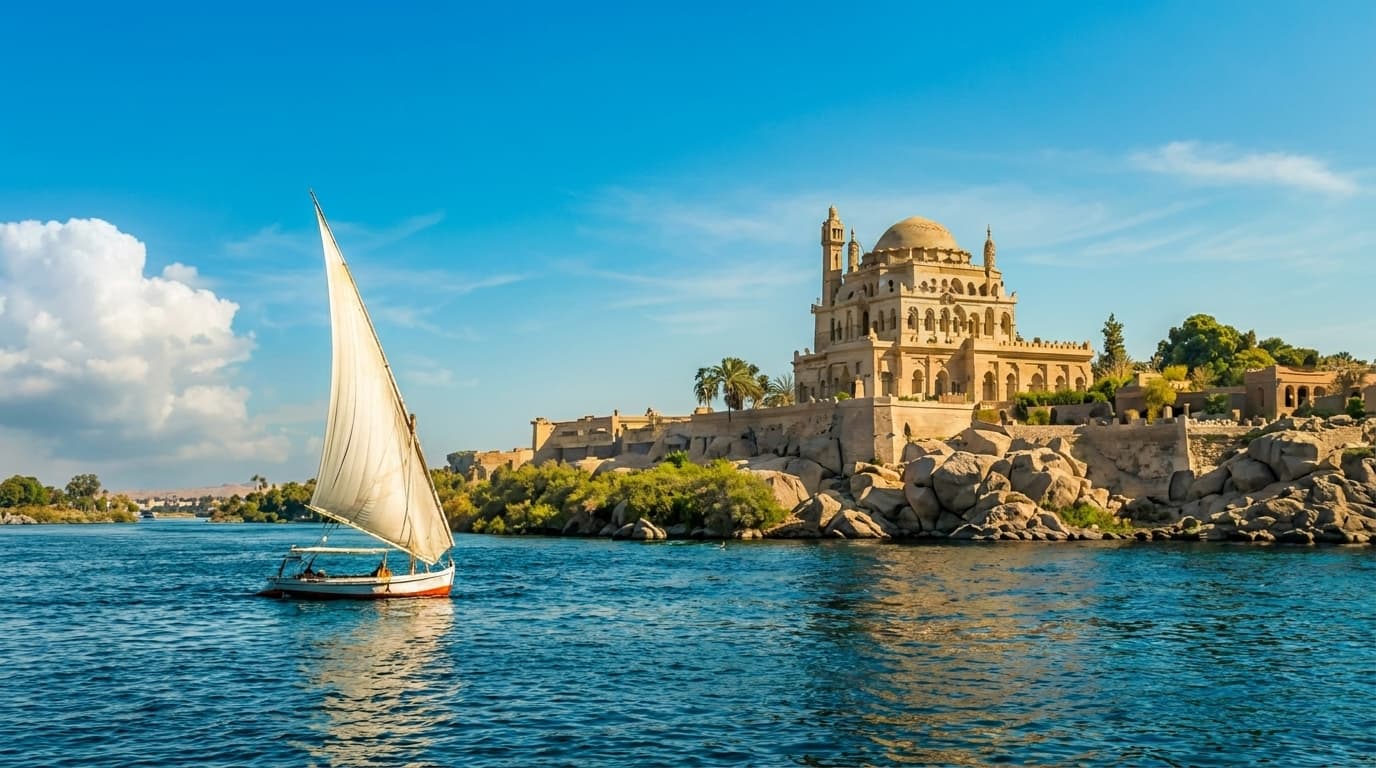

The best things to do in Aswan are sailing a felucca around Elephantine Island at sunset, visiting the island-set Philae Temple of Isis, standing atop the High Dam, seeing the colossal Unfinished Obelisk in its ancient granite quarry, wandering a colorful Nubian village, and taking a day trip south to Abu Simbel.
Aswan is Egypt's relaxed, scenic south — a slower river town where the Nile splits around granite islands, the desert glows amber at dusk, and the pace is a welcome contrast to bustling Cairo. Most highlights sit close together, so two full days covers the essentials comfortably.
Philae Temple, the High Dam & the Unfinished Obelisk
These three sit on Aswan's classic half-day circuit and are usually combined in a single morning tour, since they're all within a short drive of the city.
- Philae Temple: Dedicated to the goddess Isis, this graceful Ptolemaic temple was painstakingly relocated stone by stone to Agilkia Island after the dams threatened it. You reach it by a short motorboat ride — the approach across the water is half the magic. Allow about 1.5–2 hours including the boat.
- The High Dam (Aswan High Dam): One of the 20th century's great engineering feats, it created Lake Nasser, one of the world's largest reservoirs. The viewpoint over the dam and lake is a quick but worthwhile stop, usually 30–45 minutes.
- The Unfinished Obelisk: Lying in its ancient granite quarry, this enormous obelisk cracked during carving and was abandoned — leaving a rare window into how ancient Egyptians shaped these monuments. It would have been the largest ever raised. Plan around 30–45 minutes.
A licensed Egyptologist guide makes a real difference here, turning weathered stone into a story. You can book this circuit through Aswan tours or as part of a wider Egypt tour package.
Sail a Felucca Around the Islands at Sunset
No visit to Aswan is complete without a felucca — the traditional lateen-sailed boat that has plied the Nile for millennia. The river here is at its most beautiful, threading between granite boulders and palm-fringed islands.
The classic late-afternoon sail loops around Elephantine Island, with its ancient ruins and Nubian villages, and past Kitchener's Island (the Aswan Botanical Garden), planted with exotic species from across Africa and Asia. As the sun drops, the desert dunes on the west bank turn gold and rose — Aswan's signature sunset. A felucca sail typically runs 1–2 hours and is wonderfully relaxing. It's an easy add-on to a half-day of sightseeing or a perfect standalone day tour.
See it for yourself
Trips that visit the places in this article.

This 10-day tour moves through four distinct regions of Egypt, starting in Cairo, continuing by domestic flight and first-class train to Aswan and Luxor, and…
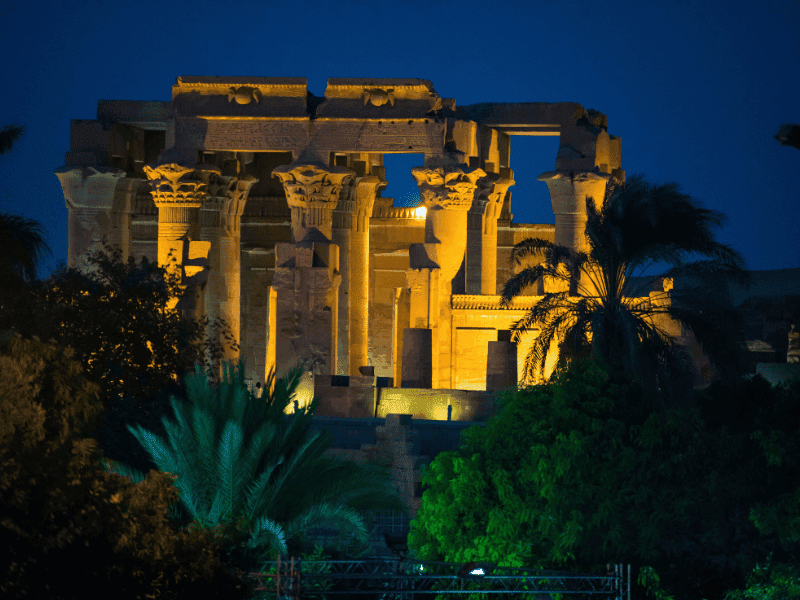
This 4-day, 3-night Nile cruise sails from Aswan to Luxor, covering the river's most-visited temples and tombs at an unhurried pace aboard a five-star ship…
Want a different route or length? We'll build it around you.
Nubian Villages & the Nubian Museum
Aswan is the heart of Nubian culture, and engaging with it is one of the region's highlights.
A Nubian village
Reached by motorboat across the Nile (often via the west bank near Gharb Soheil), Nubian villages are famous for vivid blue-and-ochre painted houses, warm hospitality, hibiscus tea, and henna. It's colorful, friendly, and very photogenic — a window into a distinct culture with its own language and traditions.
The Nubian Museum
This excellent, award-winning museum tells the story of Nubia — its ancient kingdoms, its monuments, and the communities displaced when Lake Nasser was created. Well laid out and air-conditioned, it's an ideal stop during the hottest part of the day, and a great primer before visiting the villages or Abu Simbel. Budget around 1–1.5 hours.
Want to explore 15 Best Things to Do in Aswan, Egypt?
Let us design the perfect private itinerary for you. From expert local guides to seamless luxury cruises, we craft custom trips that show you the real Egypt.
Abu Simbel as a Day Trip
The twin temples of Abu Simbel, built by Ramses II, are among the most spectacular monuments in all of Egypt — four colossal seated statues guard the facade, and the entire complex was famously relocated to higher ground to save it from the rising lake.
Abu Simbel lies roughly 280 km (about 3 hours each way) south of Aswan, near the Sudanese border. Most travelers visit on a long day trip by road, departing very early to beat the heat; short flights are also available. Allow a full day for the round trip. It's a long journey, but seeing those colossi up close is unforgettable. Many visitors pair it with their Aswan stay or build it into a Nile cruise itinerary that ends in the south.
Why Aswan Is the Relaxed, Scenic South
Where Cairo is intense and Luxor is dense with temples, Aswan is calm, golden, and unhurried. The Nile is wide and island-studded, the air is dry and clear, and the town invites you to slow down — sip tea on a riverside terrace, drift on a felucca, or watch the sunset paint the dunes. Winter (roughly November to March) brings near-perfect warm, dry days, making it Egypt's premier cool-season escape.
Aswan also works beautifully as a gateway: it's the southern terminus of most Luxor–Aswan Nile cruises and a launch point for Abu Simbel and Lake Nasser. Travel Joy Egypt, a private operator with licensed Egyptologist guides and around 13 years of experience, can weave Aswan into a seamless multi-city trip.
How to Plan Your Aswan Days
A practical two-day rhythm: Day 1 — morning circuit of the High Dam, Unfinished Obelisk and Philae Temple, the Nubian Museum midday, then a sunset felucca around Elephantine and Kitchener's Island. Day 2 — a full-day excursion to Abu Simbel, or a relaxed Nubian village visit and free time by the river.
Aswan connects to Cairo and Luxor by daily flights and overnight train, so it slots neatly into a wider itinerary. Private guiding keeps the long Abu Simbel run comfortable and the temple visits informed. For a tailored route, explore tailor-made Egypt tours or browse the full Egypt travel guide. As with most premium private experiences in Egypt, expect per-day private touring to vary widely by season, group size and inclusions — always confirm a quote for your dates.
Ready to turn this guide into reality?
Our local experts can create a custom itinerary based on these recommendations. Just send us a quick message!
Customize via WhatsApp