
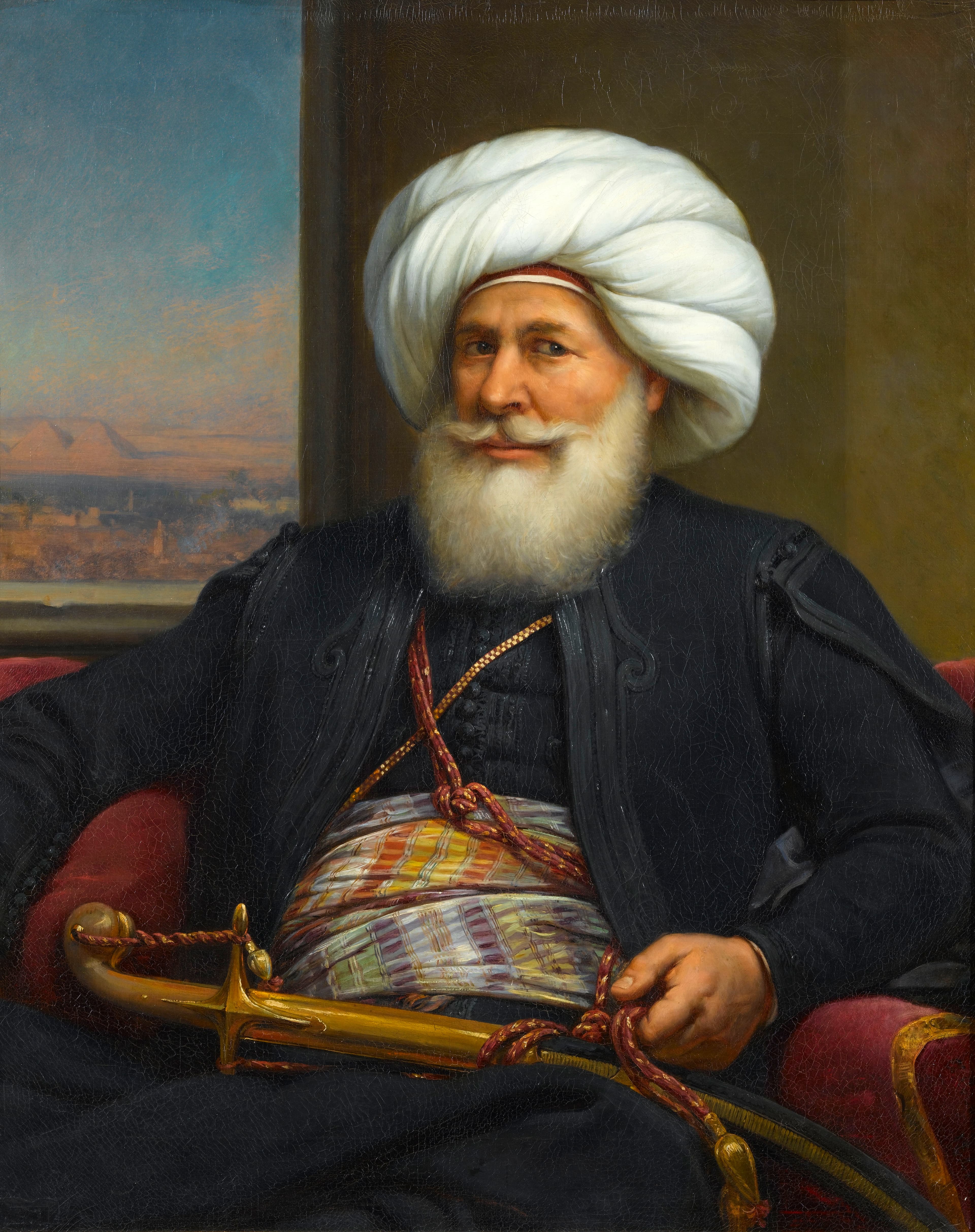

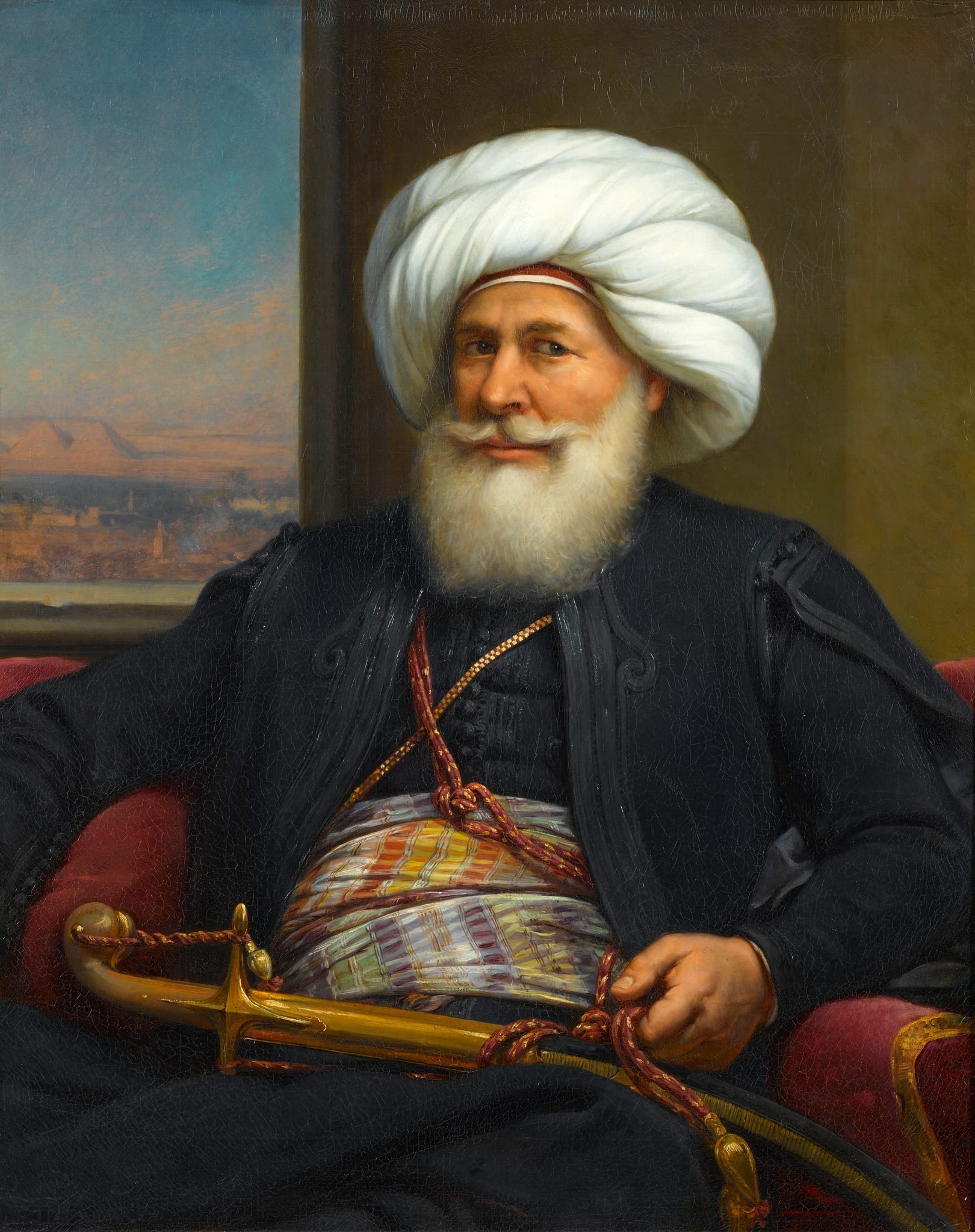
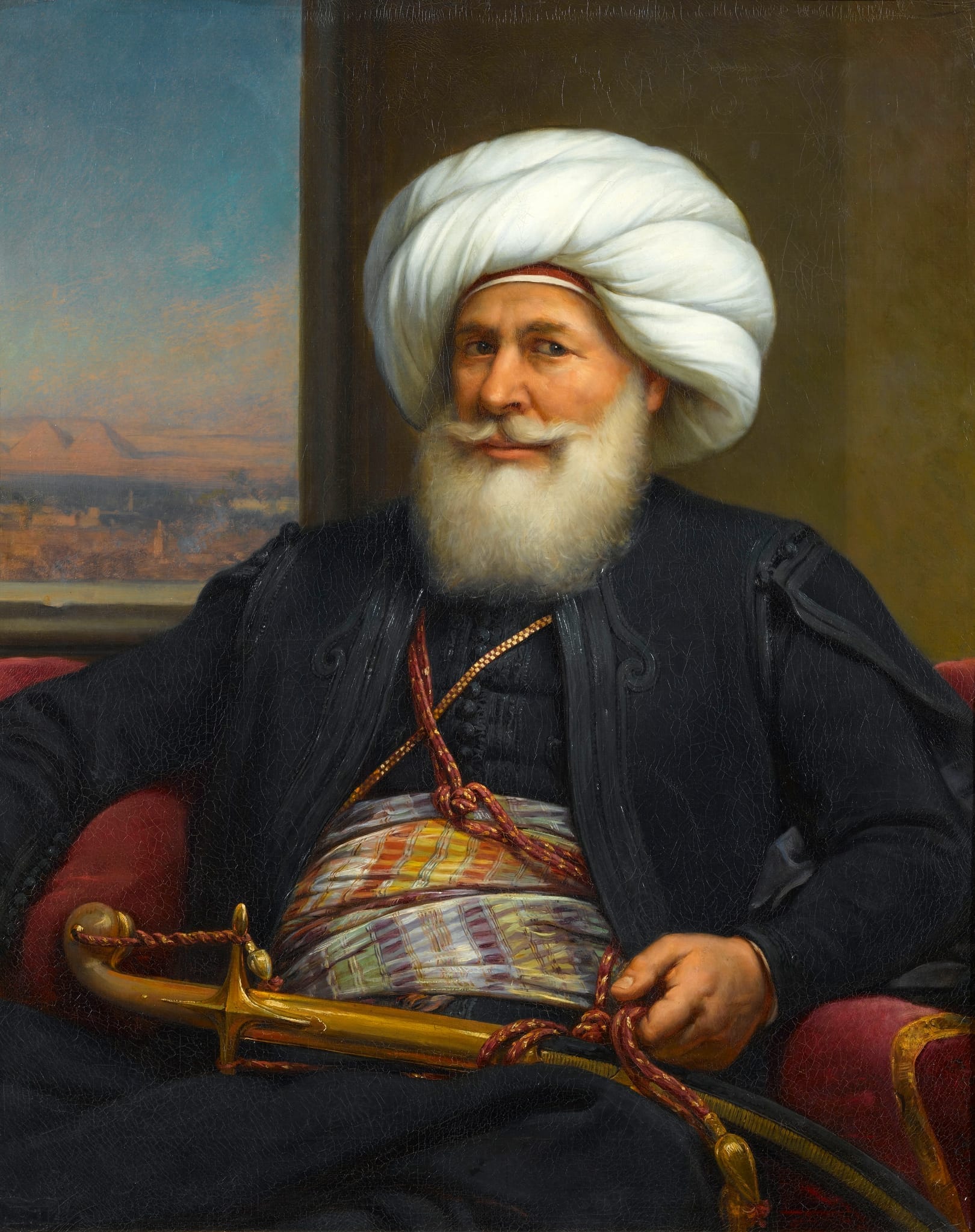
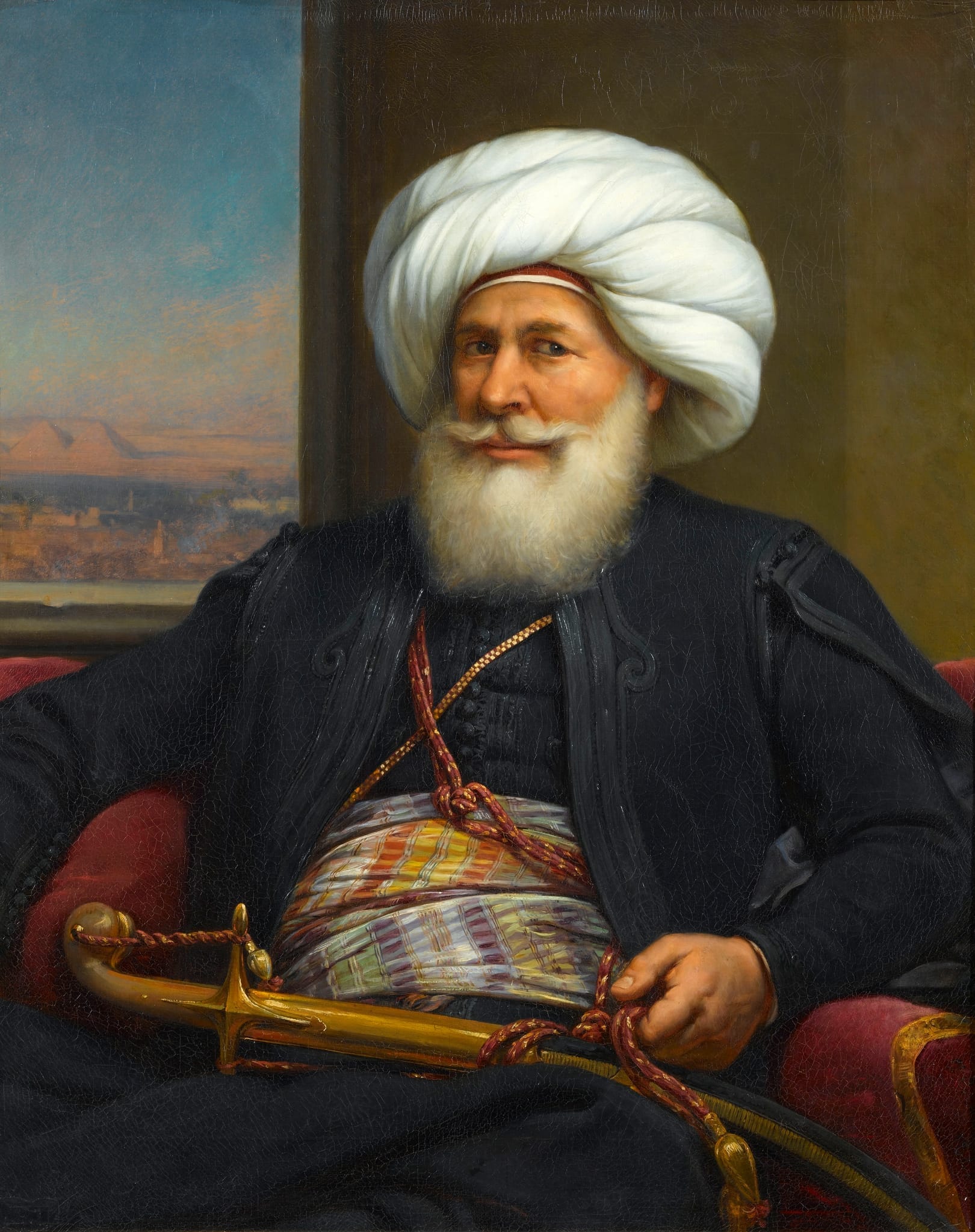
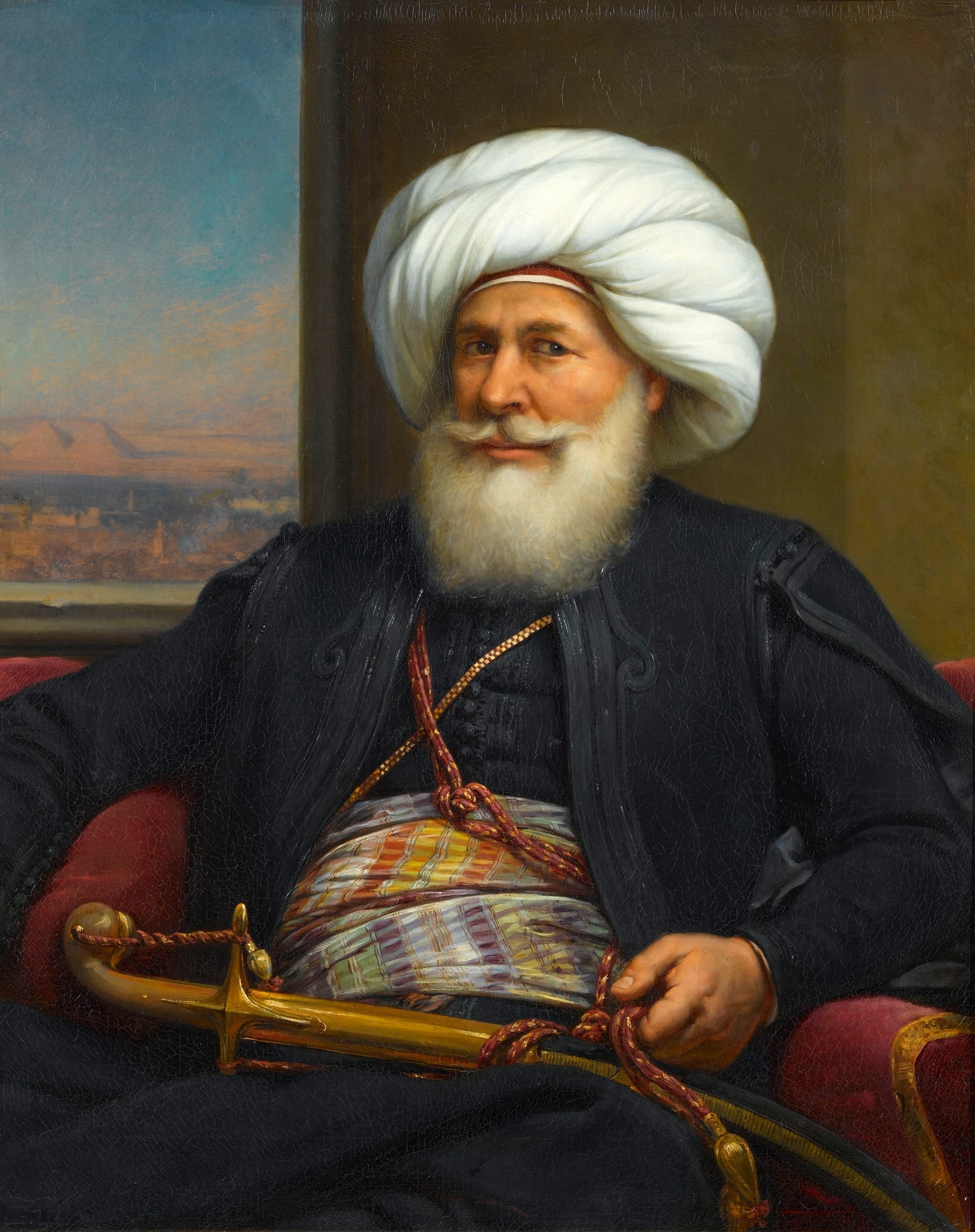
Mohamed Ali, often hailed as the 'Father of Modern Egypt,' wasn't just another ruler. He was an Ottoman Albanian commander from humble beginnings who managed to establish a dynasty that profoundly changed Egypt for over a century. His time in power was all about radically transforming the country's military, economy, and society.
You see, his legacy is packed:
- From Merchant to Ruler: He started as a tobacco merchant's son in Kavala, but through sheer will and political skill, he became an autonomous ruler, deftly sidestepping Ottoman control.
- Building an Empire: By 1840, his reach was massive. His empire stretched far beyond Egypt's borders, grabbing Sudan, the Hejaz, the Levant, Crete, and parts of Greece.
- Laying the Foundation for a New Egypt: He's credited with kicking off one of the 19th century's biggest modernization efforts in the Middle East. Essentially, he built the scaffolding for what we now know as the modern Egyptian state.
His Early Life and Road to Power in Egypt
Growing Up in Kavala, and His Path to Cairo
Born on March 4, 1769, in Kavala—which is in modern-day Greece but was Ottoman territory back then—Mohamed Ali came from an Albanian family. His father, Ibrahim Agha, was a military commander and also a merchant dealing in tobacco and shipping. When his father died while Mohamed Ali was young, his uncle, Husain Agha, stepped in to raise him alongside his cousins.
Mohamed Ali's early career involved collecting taxes in Kavala. He was good at it, apparently, showing enough efficiency and administrative chops to get noticed and move up the ranks. His uncle even rewarded his promising work with the title 'Bolukbashi,' which really set the stage for his military career. All that early experience in managing things and collecting money? It turned out to be incredibly useful when he later took charge of governing Egypt.
Napoleon's Invasion and Mohamed Ali's Arrival
The turning point for Mohamed Ali's story, the real game-changer, was Napoleon Bonaparte's invasion of Egypt in 1798. That French occupation, though relatively short (1798-1801), completely shook up the old power structures and laid bare just how weak the Mamluk rulers, who'd dominated Egypt for centuries, really were. When the British finally pushed Napoleon out in 1801, Egypt was left with a massive power vacuum. That chaos, surprisingly, created incredible opportunities for ambitious military leaders.
Mohamed Ali himself landed in Egypt in 1801. He was the second-in-command of just a 300-man Albanian regiment, part of the Ottoman force sent to reclaim control after the French left. The four years that followed, from 1801 to 1805, were pure political turmoil. Ottoman forces, Mamluk factions, and even British interests were all scrambling for influence. But through it all, Mohamed Ali showed a remarkable knack for politics.
How He Became Governor: Smart Moves and Public Backing
Mohamed Ali didn't just smash his way to power with military might. He was clever. He meticulously built relationships with different groups and, importantly, cultivated popular support among Egypt's religious leaders and the general public. He struck up an alliance with the influential Egyptian leader Umar Makram and even got the nod from al-Azhar's Grand Imam, basically Egypt's top religious authority. By 1805, a powerful coalition of prominent Egyptians, led by Islamic scholars (the ulama), formally demanded that the Ottoman Sultan replace the current governor, Hurshid Pasha, with Mohamed Ali. The Ottoman government, facing such unified pressure, gave in. Just like that, Mohamed Ali was officially named Wāli (governor) of Egypt, and even given the rank of Pasha—the highest honorific title in the Ottoman Empire.
The Citadel Massacre: Cementing His Power
Want to explore Mohamed Ali: The Founder of Modern Egypt?
Let us design the perfect private itinerary for you. From expert local guides to seamless luxury cruises, we craft custom trips that show you the real Egypt.
Customize via WhatsAppWiping Out the Old Guard
To truly solidify his absolute power, Mohamed Ali orchestrated a brutal political purge. He needed to get rid of the Mamluks, the old ruling class, who were a constant threat to his authority.
- The Setup: He invited around 470 Mamluk leaders to the Cairo Citadel. The occasion? A celebration for his son, Tusun Pasha. A cunning trap, essentially.
- The Ambush: As the Mamluks began to leave through the Citadel's narrow passageways, Mohamed Ali's Albanian troops sprang the ambush. They were trapped and massacred.
- The Aftermath: This horrific act effectively ended centuries of Mamluk domination in Egypt, leaving Mohamed Ali's control unchallenged. It was a stark demonstration of his 'ruthless pragmatism' in governance.
Groundbreaking Reforms: Forging a Modern Egypt
An Agricultural Boom and Economic Overhaul
Economic Boost: Farming and Factories
Mohamed Ali's whole modernization plan was built on a clever loop: agricultural profits would bankroll industrial growth.
- Farming Changes: He famously nationalized land, turning it into state-controlled tax farms, and put a lot of effort into improving irrigation. His biggest move, though, was introducing long-staple cotton, which quickly became a super valuable export.
- Industrial Leap: All that money from cotton? It went straight into building state-owned industries. We're talking textile factories, shipyards, and even weapons manufacturing. These were mostly there to supply his military and kickstart Egypt's very first industrial base.
Building a Powerful Military, European-Style
At the core of Mohamed Ali's vision for Egypt was creating a modern, European-style military. He wanted an army that could project power far beyond Egypt's borders. He completely overhauled the military. This meant introducing systematic conscription, drafting Egyptian fellahin (peasants) into regular army service – a truly revolutionary move, considering previous armies relied on enslaved soldiers and mercenaries.
Mohamed Ali, being the forward-thinker he was, brought in European military advisors, especially French officers, to train his troops in modern warfare. He set up military schools, arsenals, and training centers. The result was the *nizam al-jadid* (new order), a disciplined, European-style army that proved capable of conquering vast territories and even challenging the Ottoman Sultan's own forces.
Want to explore Mohamed Ali: The Founder of Modern Egypt?
Let us design the perfect private itinerary for you. From expert local guides to seamless luxury cruises, we craft custom trips that show you the real Egypt.
Customize via WhatsAppRethinking Education and Administration
Mohamed Ali knew that true modernization needed educated people behind it. So, he completely revolutionized the education system inside Egypt. He founded secular schools, teaching subjects like engineering, medicine, military sciences, math, and foreign languages, particularly French. This was a huge shift from traditional religious education and, importantly, it created a whole new class of skilled professionals and bureaucrats.
He also made sure to send educational missions to Europe, particularly France and Britain. Young Egyptians went to study advanced sciences, languages, technologies, and government systems. These students didn't just come back with degrees; they returned as teachers, translators, administrators, and technical experts, becoming the very backbone of his modernized state.
There was even a government printing press set up in Bulaq, churning out textbooks, technical manuals, and translations of European works into Arabic. This pushed knowledge forward and fostered intellectual growth. Honestly, these educational reforms dramatically boosted social mobility in Egypt, a society that had been pretty much stuck in a feudal-like system for centuries.
Military Ambitions and Campaigns
Conquering Sudan and Pushing South
Mohamed Ali's ambitions weren't limited to just Egypt's borders; he wanted an empire. Between 1820 and 1821, his forces invaded and took over Sudan, bringing that entire region under Egyptian control. This conquest changed everything for Sudan – reshaped its political structures, rerouted trade, and transformed its cities. Sadly, the invasion also fueled slave raids, capturing thousands of Sudanese people, many of whom were forced into Mohamed Ali's army or made to work in his new industries.
Arabia and the Wahhabi Conflict
At the Ottoman Sultan's request, Mohamed Ali dispatched expeditions to Arabia to put down the Wahhabi revolt in the Hijaz region. His son, Tusun Pasha, and later Ibrahim Pasha led these campaigns, successfully bringing the holy cities of Mecca and Medina back under Ottoman control. These victories really boosted Mohamed Ali's standing within the Ottoman Empire and showcased just how capable his military was.
Syrian Campaigns and Clashes with the Ottomans
Mohamed Ali's most audacious military moves were direct challenges to Ottoman authority itself. In 1831, he launched an invasion of Syria, quickly conquering the Levant and pushing deep into Anatolia. His forces, expertly commanded by his son Ibrahim Pasha, repeatedly defeated Ottoman armies and even put Constantinople (Istanbul), the Ottoman capital, directly under threat.
Naturally, this aggression freaked out the European powers, especially Britain and Russia, who worried about the regional balance of power. European diplomatic intervention forced Mohamed Ali to stop his advance. But when the Ottoman Sultan tried to invade Syria in 1839 to reclaim the territory, Ibrahim Pasha once again crushed the Ottoman forces.
The 1840 Crisis and the Peace Treaty
Mohamed Ali's continued hold on Syria and his open defiance of Ottoman sovereignty sparked a major international crisis in 1840. The European powers, with Britain leading the charge, intervened both militarily and diplomatically. Facing immense international pressure and the very real threat of British warships bombarding Egyptian coastal cities, Mohamed Ali finally agreed to a negotiated settlement in 1841.
Under the Treaty of London, Mohamed Ali had to pull his forces out of Syria, the Levant, and Arabia. However, he secured hereditary rule over Egypt and Sudan for his dynasty. His military was capped at 18,000 troops during peacetime, and he made significant trade concessions to European powers. While this agreement curbed his imperial dreams, it cemented his family's long-term control over Egypt.
The Muhammad Ali Mosque: His Timeless Legacy
An Architectural Gem in Cairo's Citadel
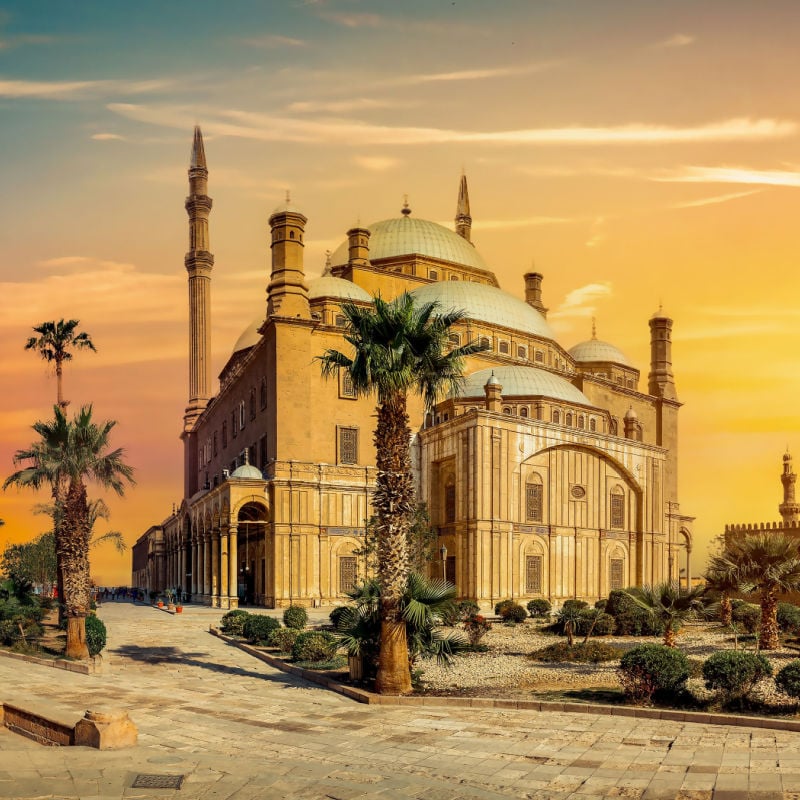
Built between 1830 and 1848, this mosque isn't just any building; it's the most prominent physical symbol of Mohamed Ali's entire reign. Perched at the highest spot of the Citadel of Saladin, it absolutely dominates the Cairo skyline.
- Architectural Style: Designed by Yousif Boushnaq from Istanbul, it's a pure example of Ottoman imperial architecture, clearly inspired by Istanbul's famous Blue Mosque.
- Its 'Alabaster' Look: People often call it the 'Alabaster Mosque' because it's covered extensively in gleaming marble panels. It truly shines.
- The Minarets: It boasts twin minarets that shoot up 84 meters, making them the tallest in all of Egypt.
- The Grand Dome: A massive central dome is gracefully supported by four semi-domes, creating an incredibly vast and airy interior prayer hall.
A Tribute to Tusun Pasha
Mohamed Ali actually commissioned this magnificent mosque as a memorial to his beloved son, Tusun Pasha, who passed away tragically young in 1816. The sheer grandeur of the mosque reflects both Mohamed Ali's profound grief and his burning ambition to leave behind an architectural legacy that could stand shoulder-to-shoulder with those of the great Ottoman sultans. Mohamed Ali himself was laid to rest in the mosque after his death in 1849, ensuring his final resting place would be in one of Cairo's most iconic locations.
Visiting the Muhammad Ali Mosque Today
These days, the Muhammad Ali Mosque is one of Cairo's absolute top tourist attractions. Tucked inside the Citadel of Saladin, it's about a 15-25 minute drive from downtown Cairo and offers truly breathtaking panoramic views across Islamic Cairo. You'll also spot a distinctive copper clock tower in the outer courtyard, a gift from King Louis Philippe of France in 1845. Fun fact: it was meant to be a reciprocal gift for the Egyptian obelisk that now proudly stands in Paris's Place de la Concorde.
The Human Cost of Progress
The Heavy Toll on Egyptian People
Look, while Mohamed Ali undeniably brought about amazing modernization, it came with a really heavy human cost. The agricultural reforms, the military conscription, the industrial labor drafts—these weren't easy on Egypt's peasant population. Farmers lost their traditional land rights, got hit with higher taxes, and were often forced into labor. Young men were often drafted into the military or made to work in factories, tearing apart families and disrupting farming.
Mortality rates were high, especially for conscripted soldiers and laborers, particularly during harsh military campaigns in places like Sudan and Arabia. The plague epidemic of 1834-1835 devastated Egypt's population, including many enslaved Africans, which, tragically, led to even more slave raiding to replace the lost workforce.
Re-evaluating History
Modern historians are taking a much closer look at the more troubling aspects of Mohamed Ali's rule. They're trying to balance his real achievements in modernization against the suffering he inflicted on ordinary Egyptians and Sudanese. Sure, he undeniably transformed Egypt's economy, military, and government, setting the stage for it to become a modern state. But, let's be honest, these changes mostly benefited his own dynasty and the new elite, not so much the average person.
A Dynasty That Lasted Until 1952
Securing Hereditary Rule
The 1841 agreement with the Ottoman Empire basically cemented it: Mohamed Ali's descendants would be the hereditary rulers of both Egypt and Sudan. This dynasty would go on to govern Egypt for over a century, with their titles evolving from Wali to Khedive, and eventually Sultan and King. Mohamed Ali's successors did continue his modernization efforts, though with varying degrees of success and, notably, increasing European interference.
Key Figures in the Mohamed Ali Dynasty
Several of Mohamed Ali's descendants really left their mark on Egyptian history. Khedive Ismail (1863-1879), for example, pushed forward with ambitious modernization projects, including the Suez Canal, but ended up racking up massive debts that ultimately led to British occupation. King Farouk (1936-1952), the very last ruler of the dynasty, was overthrown by the Free Officers Movement, led by Gamal Abdel Nasser, in 1952. That event ended monarchical rule and ushered in the Egyptian Republic.
Mohamed Ali's Enduring Influence
The 'Father of Modern Egypt' Title
Even with all the debates around his methods and the human cost of his policies, Mohamed Ali is still widely recognized as the 'Father of Modern Egypt.' His complete overhaul of Egyptian society, economy, and government laid the essential groundwork for the modern Egyptian state. The institutions he created—the military, the administrative bureaucracy, the education system, and even the industrial infrastructure—became the very foundation for future Egyptian leaders to build upon.
Still Relevant in Egyptian Identity
Mohamed Ali continues to hold a really important spot in Egypt's historical memory and national identity. He represents a leader who, despite being foreign-born, truly adopted Egypt as his home and worked tirelessly to make it a powerful, independent nation. You'll still see his statue proudly standing in Alexandria's main square, and his name graces streets, institutions, and businesses all over Egypt.
Lessons for Leaders and Modernization Efforts
Mohamed Ali's reign offers some profound lessons about what it takes to be a political leader, the challenges of modernization, and just how complex historical legacies can be. His story beautifully illustrates how determined leadership, a clear strategic vision, and comprehensive reforms can absolutely transform societies. At the same time, it also highlights the difficult ethical dilemmas that come with rapid, top-down modernization, especially when state power seems to take precedence over the well-being of its people.
Ready to turn this guide into reality?
Our local experts can create a custom itinerary based on these recommendations. Just send us a quick message!
Customize via WhatsApp