
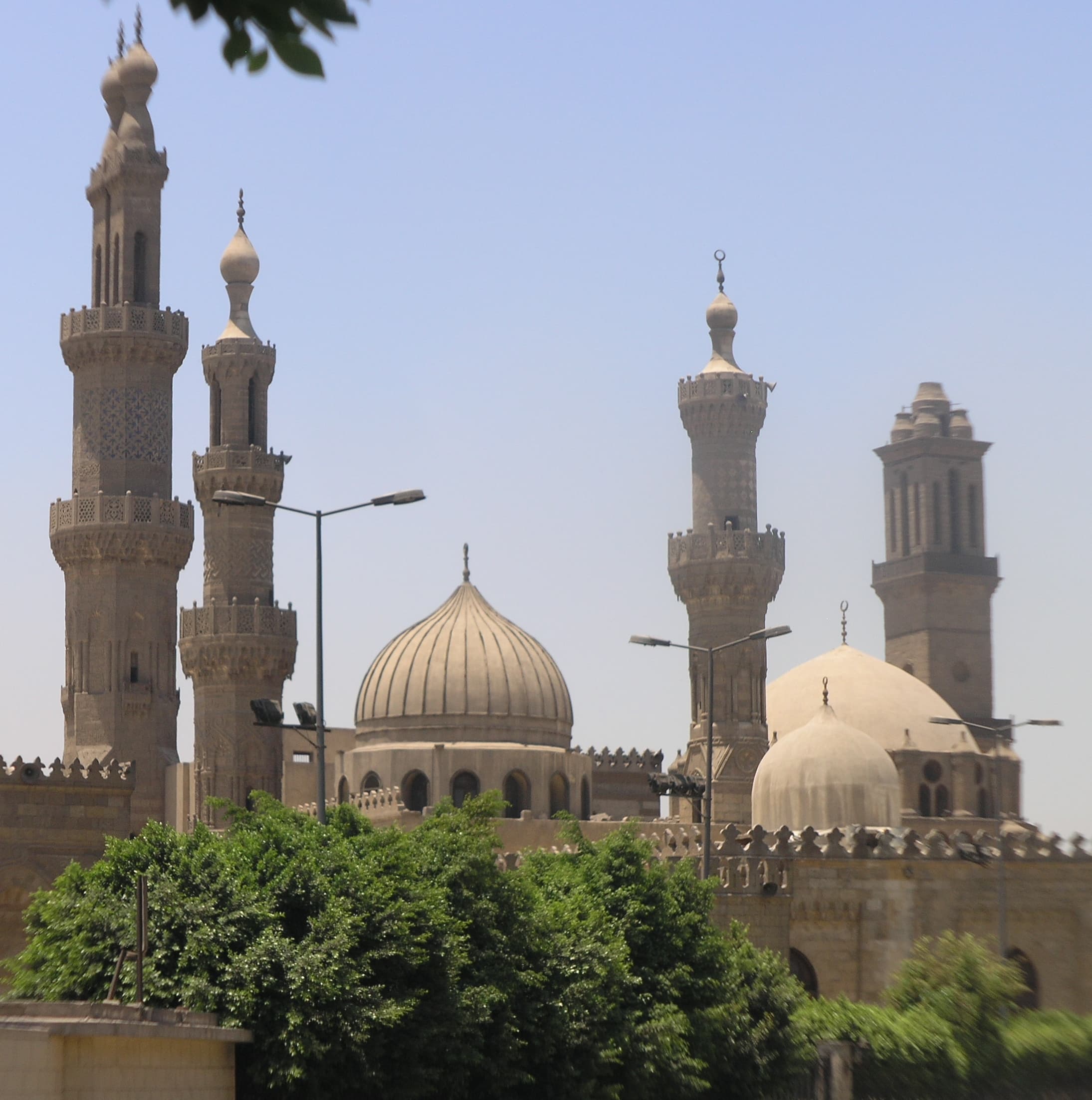

When you walk through the doors of Al-Azhar Mosque in Cairo, you're not just entering a centuries-old building; you're stepping into a living story that's unfolded for over a thousand years. This place is so much more than 'just' Cairo's oldest university; it's a vibrant testament to enduring Islamic scholarship, a true heart of the city that has seen dynasties rise and fall, yet consistently shaped Islamic thought across the globe. From its Fatimid beginnings as a Shi'ite institution to its transformation into a leading center of Sunni learning, Al-Azhar has shown an incredible ability to adapt, grow, and inspire through centuries of political and religious shifts.
The Birth of Al-Azhar: A Fatimid Dream Takes Root
The tale of Al-Azhar begins back in 969 CE, right after the Fatimid dynasty, led by General Jawhar al-Siqilli, swept through Egypt. They decided to build a brand new capital, Cairo (which means 'the Victorious' – not subtle at all!), designed to be the very core of their burgeoning empire. Construction on what would become Cairo's first mosque kicked off on April 4, 970 CE. Just a couple of years later, in June 972 CE, the first Friday prayers echoed through its halls. This wasn't just any new building; it was a powerful symbol of a fresh political and religious order taking hold in Egypt, strategically placed within the royal enclosure – a spiritual beacon and an undeniable declaration of Fatimid power.
Why 'Al-Azhar' Anyway?
The name 'Al-Azhar' itself emerged during the reigns of the Fatimid caliphs al-Mu'izz and al-Aziz Billah. It comes from the word 'azhar,' meaning 'most radiant.' And here's the beautiful part: it's tied directly to 'zahra,' an epithet lovingly associated with Fatima al-Zahra, the cherished daughter of the Prophet Muhammad. Since the Fatimids claimed direct descent from Fatima and Ali, naming their grand mosque in her honor was a way to truly cement their religious and dynastic legitimacy. A beautiful tribute, don't you think?
Spreading Their Vision: Fatimid Education
While the mosque's initial role was a simple one – a place for congregational prayers – Al-Azhar very quickly evolved into a hub for spreading the Fatimid Isma'ili Shi'a doctrine. The first class was held in the mosque in 975 CE, and by 988 CE, it was officially established as a university! Imagine, 37 scholars already teaching Islamic jurisprudence. Classes were remarkably inclusive, held in both the caliph's palace and the mosque, even some for women. The curriculum initially leaned heavily on Isma'ili teachings, designed to train 'da'i' (preachers) who would then go forth and disseminate Fatimid beliefs across the Islamic world. So, Al-Azhar became this fascinating blend: a spiritual center and a political powerhouse for the Fatimid state.
Al-Azhar Through the Ages: Dynasties and Transformations
It's incredible to think that over its millennium-long history, Al-Azhar Mosque has constantly shifted and changed with Egypt's ruling dynasties. Each one, in its own way, left an indelible mark on the mosque's structure, its core purpose, and its influence.
Ayyubid Era: A Brief Pause, Then a Sunni Shift
The fall of the Fatimid Caliphate in 1171 was a definite game-changer. Saladin, the founder of the Ayyubid dynasty, looked at Al-Azhar with a fair bit of suspicion, given its Shi'ite roots. He promptly banned Friday congregational prayers and stripped away symbols of Fatimid rule. Sadly, many of the mosque's precious books were destroyed, and its library – once among the grandest in the Islamic world – was dismantled. Even though Saladin pivoted focus to newly built Sunni madrasas, private lessons at Al-Azhar somehow managed to continue, keeping its intellectual flame alive.
Want to explore Al Azhar Mosque: Cairo's Enduring Heart of Islamic Scholarship?
Let us design the perfect private itinerary for you. From expert local guides to seamless luxury cruises, we craft custom trips that show you the real Egypt.
Customize via WhatsAppMamluk Resurgence and Architectural Splendor
Under the Mamluks (1250–1517), Al-Azhar began to truly flourish again. Sultan Baibars, in 1266, restored congregational prayers and brought back stipends for scholars and students. The Mamluks expanded the mosque with incredible architectural detail, turning it back into Cairo's premier center for Islamic learning. Significant additions during this period include the Madrasa al-Taybarsiyya (1309), the Madrasa al-Aqbughawiyya (1340), Sultan Qaytbay's iconic main gate and minaret (1469–1477), and Sultan al-Ghuri's distinctive double-finial minaret in the early 1500s. These are some of the elements that give Al-Azhar its unique character today.
Ottoman Era: Intellectual Growth, Less Renovation
Even after the Ottoman conquest in 1517, Al-Azhar held onto its prominence. Sultan Selim I himself famously attended Friday prayers there. While the Ottomans didn't invest as much in physical renovations as the Mamluks, Al-Azhar's intellectual sphere grew tremendously. It became the most prestigious center for Sunni Islamic studies, and its curriculum began to embrace philosophy, logic, and even science – fields that had previously taken a backseat to theology.
Modern Transformations Post-1952
The Egyptian Revolution of 1952 ushered in another pivotal era. By 1955, Al-Azhar began expanding into a more modern campus. Then, in 1961, under President Gamal Abdel Nasser, it was formally recognized as a full-fledged university, introducing secular faculties like medicine, engineering, and economics alongside its traditional religious studies. This modernization sparked a massive increase in student enrollment – from under 90,000 in the 1970s to over a million by the early 2000s. Al-Azhar had not only adapted to the modern age but thrived, all while safeguarding its rich religious heritage.
Architectural Story: A Thousand Years in Stone
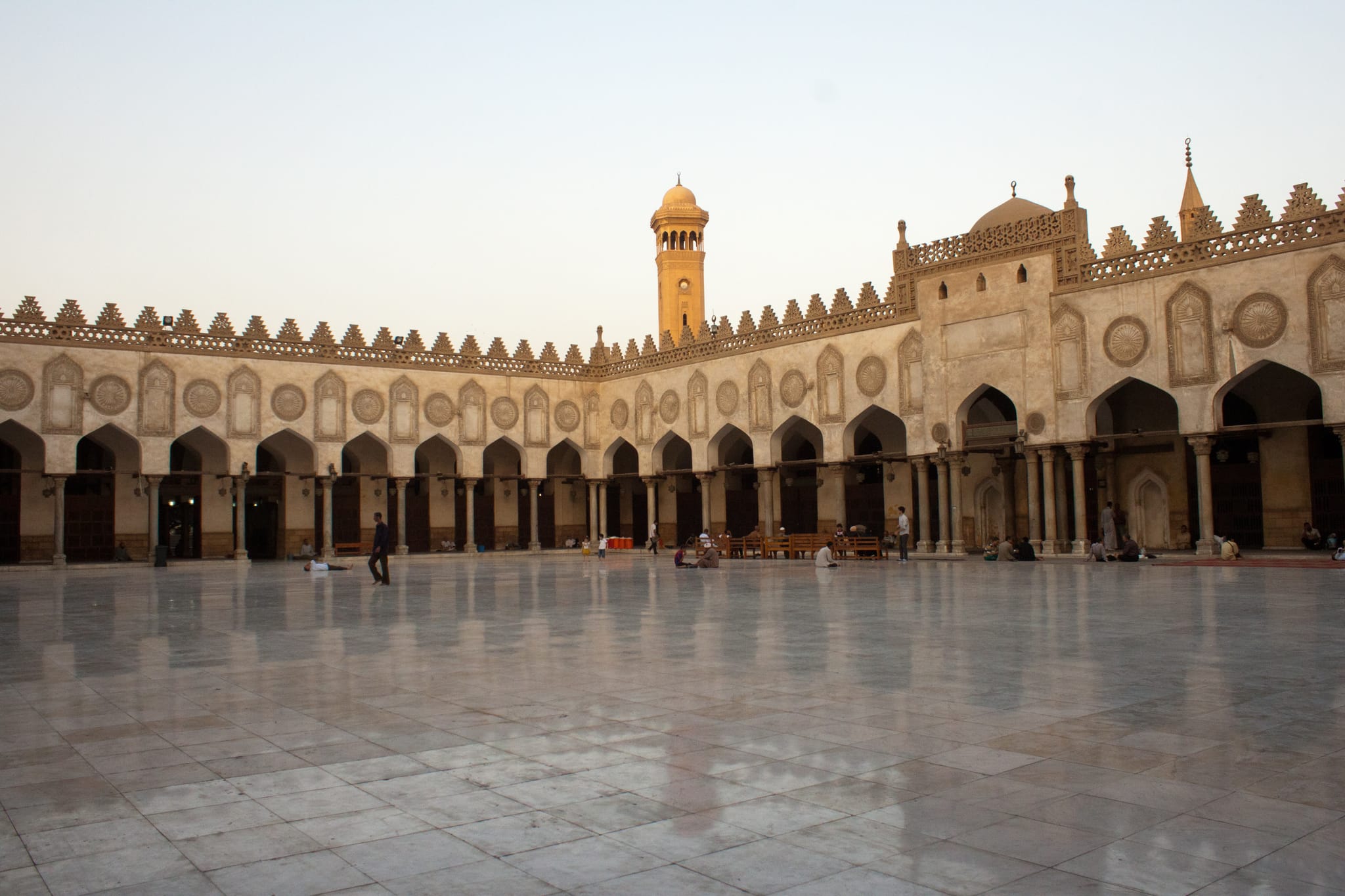
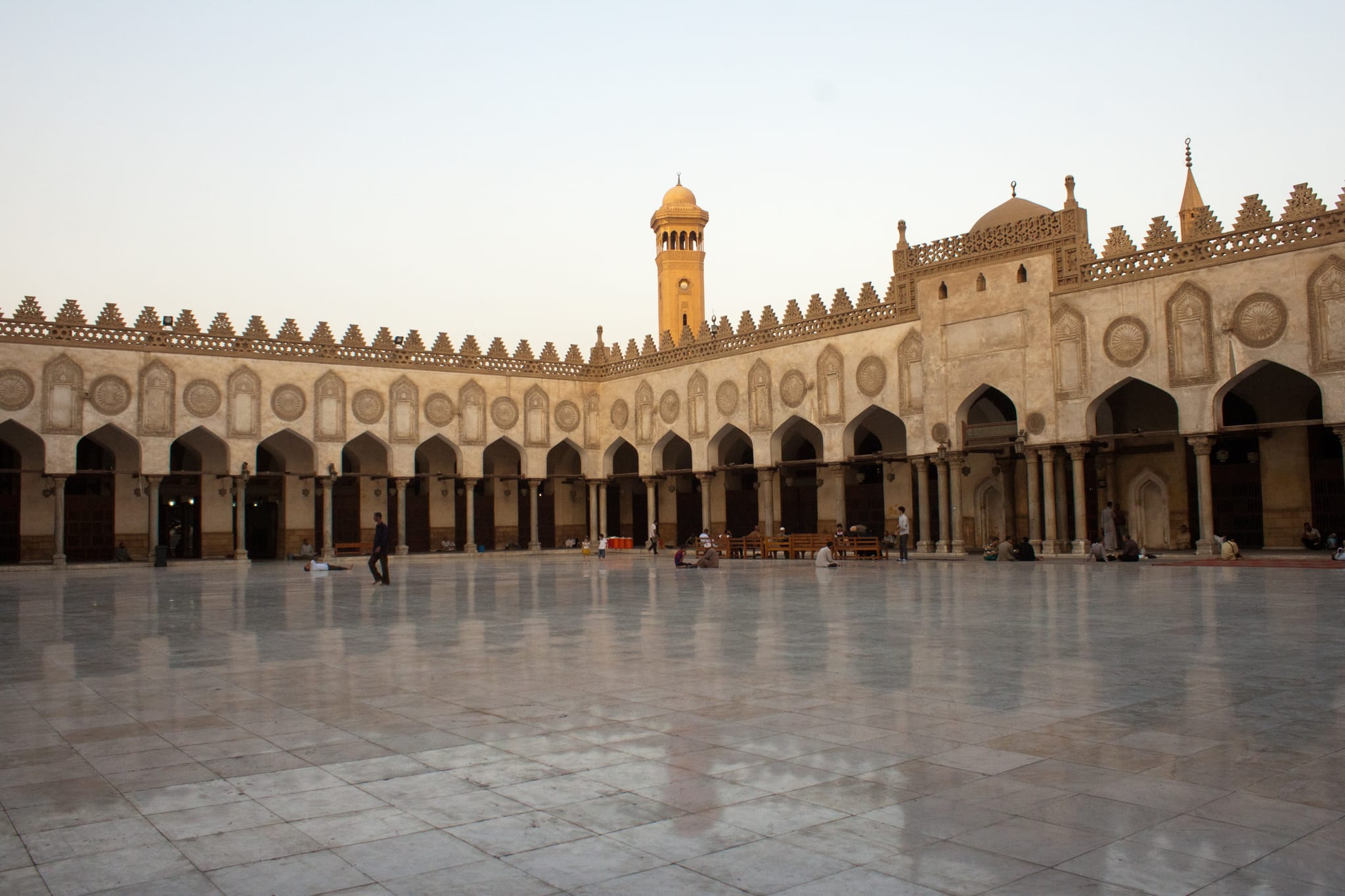
The original Fatimid mosque was a rather straightforward rectangular shape, roughly 70 by 85 meters. Picture an open courtyard surrounded by arcades, with a larger eastern portico (the main prayer hall) facing the qibla (the direction of Mecca). What's really cool is that Al-Azhar was the first Egyptian mosque to feature a transept aisle – that's a high-ceilinged section running perpendicular to the qibla wall – beautifully adorned with Kufic inscriptions and intricate floral motifs.
Want to explore Al Azhar Mosque: Cairo's Enduring Heart of Islamic Scholarship?
Let us design the perfect private itinerary for you. From expert local guides to seamless luxury cruises, we craft custom trips that show you the real Egypt.
Customize via WhatsAppMamluk Minarets and Madrasas: A Touch of Grandeur
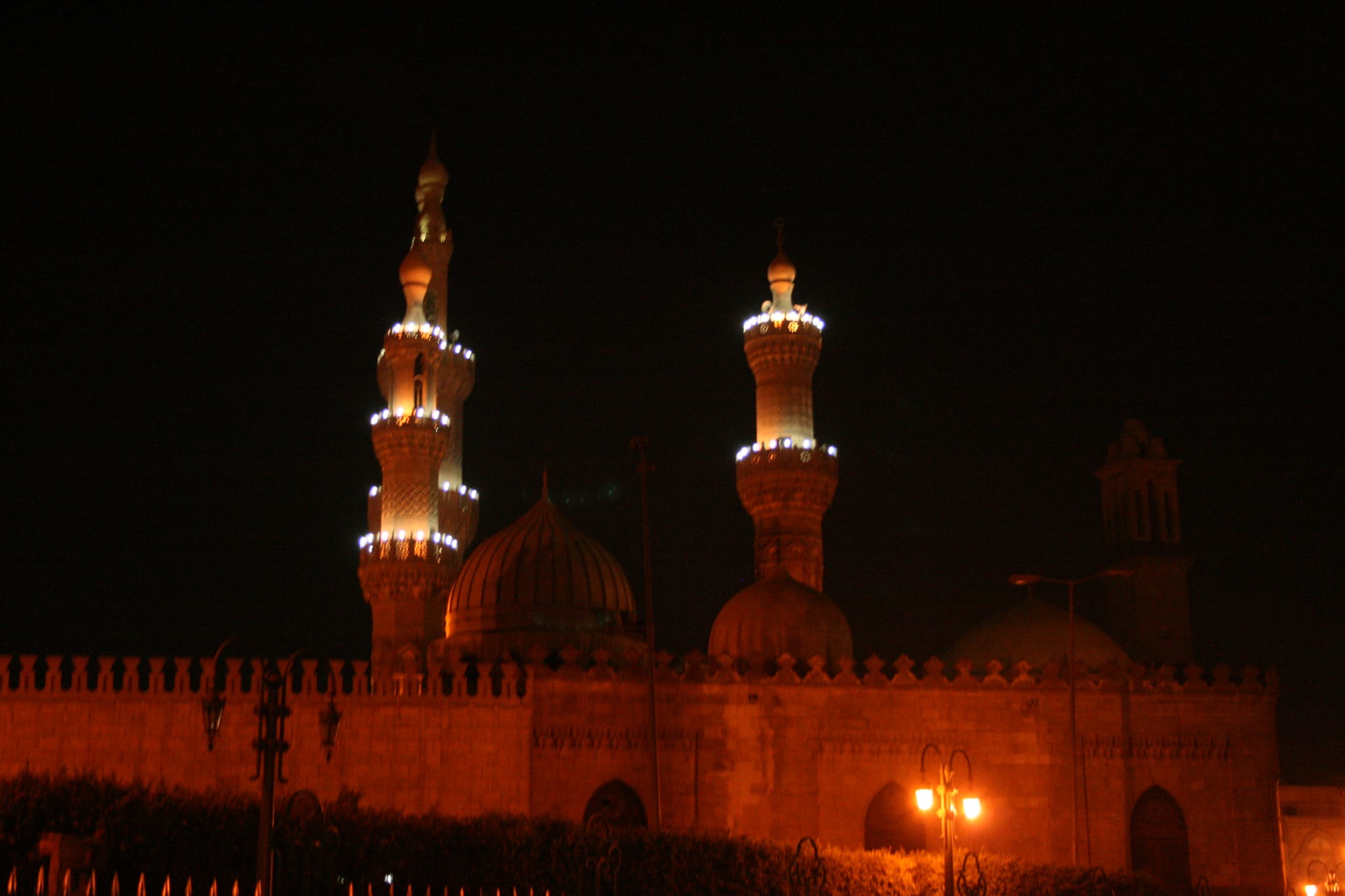
During the Mamluk period, Al-Azhar's architecture truly hit its stride. The mosque welcomed two significant madrasas: al-Taybarsiyya and al-Aqbughawiyya. Their stunning mihrabs, vibrant colored marble, and ornate domes set new benchmarks for Islamic architecture. But perhaps the most iconic features we recognize today – those elegant, slender minarets – were added under Sultan Qaytbay and Sultan al-Ghuri. Their designs, with intricate carvings and those distinctive double finials, are still celebrated as some of Cairo's most admired architectural masterpieces.
Ottoman Gates and Domes: Expanding the Sacred Space
The 18th century, under Ottoman influence, saw major expansion thanks to Abd al-Rahman Katkhuda. He added three monumental gates – Bab al-Muzayinin (the Barbers' Gate), Bab al-Sa'ayida, and Bab al-Shurba – and extended the prayer hall southward, effectively doubling its capacity. His renovations were thoughtful, bringing together the various Mamluk additions into one harmonious whole.
Modern Restorations: Preserving a Legacy
Fast forward to 2014, when a massive restoration project, generously funded by Saudi Arabia's King Abdullah bin Abdulaziz, brought Al-Azhar fully into the modern era. This wasn't just a quick patch-up; it involved advanced surveying, structural reinforcement, and painstaking restoration of stonework, intricate wood carvings, and inscriptions. Modern systems like lighting, fire safety, and drainage were seamlessly integrated without ever compromising the mosque's historic integrity. Honestly, Al-Azhar Mosque today is a true marvel – a fully functioning house of worship and an exquisite architectural chronicle spanning over a thousand years of Islamic art and innovation.
The Ascent of Al-Azhar University: More Than Just a School
From Humble Beginnings to a Global Institution
It's fascinating to trace how what started as small circles of scholars teaching under the mosque's arches blossomed into one of the world's oldest and most influential universities. By 989 CE, Al-Azhar was already offering a diverse curriculum, from jurisprudence and grammar to astronomy and philosophy. It wasn't until 1961 that it earned its formal designation as a university, which allowed it to become a modern institution, yet still beautifully preserve its religious character. Today, Al-Azhar attracts tens of thousands of students from over 100 countries, an incredible testament to its ongoing legacy as a beacon of Islamic education.
Curriculum Evolution: Beyond Theology
While originally focused on theology and Arabic studies, Al-Azhar's curriculum expanded quite a bit over time. During medieval periods, subjects like philosophy and medicine were introduced, then sometimes removed, only to be reintroduced in the 19th century. The 1961 reforms were a huge leap, adding faculties in science, medicine, agriculture, engineering, and commerce, creating a truly holistic educational model. And, to show its commitment to accessible education, a Women's College was established in 1962 – quite progressive for its time!
Global Influence and Islamic Jurisprudence
Al-Azhar remains one of the most authoritative voices in Sunni jurisprudence today. Its scholars issue fatwas (religious edicts) and guide religious practice across the globe. What's even more impressive is how its educational model has been replicated in countless places – Syria, Sudan, Malaysia, and beyond – spreading its balanced, scholarly approach to Islamic education far and wide.
Al-Azhar's Integral Role in Egyptian Politics and Society
A Hub of Resistance During French Occupation
When Napoleon's forces swept into Egypt in 1798, Al-Azhar wasn't just a place of worship; it became a powerful center of national resistance. Its scholars fearlessly led revolts, issued religious decrees condemning the occupation, and transformed the mosque into a crucial rallying point for Egyptian identity. It truly shows how deeply ingrained it is into the fabric of the nation.
Navigating Rulers: A Delicate Balance
Throughout its long history, Al-Azhar has always had a delicate, often complex, relationship with Egyptian rulers. Under Muhammad Ali, it lost some of its independence but gained modern subjects in its curriculum. Later monarchs, including King Farouk, often sought the institution's religious legitimacy to bolster their reigns, recognizing its immense moral authority.
Post-Revolution: Integration and Enduring Influence
After 1952, the Egyptian state brought Al-Azhar under more official control, with the government gaining the power to appoint the Grand Imam. Despite this shift, the mosque never lost its moral and religious influence, continuing to act as a significant, moderate voice within the wider Islamic world.
Modern Relevance: Guiding Islamic Thought
Today, Al-Azhar’s crucial role in guiding Islamic thought continues. Its scholars tackle contemporary issues – everything from extremism and ethics to finance – providing well-reasoned interpretations firmly rooted in centuries of tradition. It remains an extraordinary institution, a heartbeat in Cairo that resonates across the globe.
Ready to turn this guide into reality?
Our local experts can create a custom itinerary based on these recommendations. Just send us a quick message!
Customize via WhatsApp