

Alright, let's talk about the Temple of Abydos. This isn't just another ancient ruin; it's a real gem, particularly the part dedicated to Pharaoh Seti I. Built back in the 13th century BC, it's one of those places that genuinely makes you feel connected to a past many millennia removed. Crafted from limestone and sandstone, it's got this distinctive L-shaped layout, seven ceremonial entrances, and a forest of 24 papyrus columns.
What I find really cool is that it honored six major deities, plus Seti I himself. Even though some bits were left unfinished when Seti passed, the reliefs are still stunning, and yes, it's home to those legendary Abydos inscriptions we'll dive into.
The Genesis of Abydos: Seti I's Grand Vision
Construction on the Temple of Abydos kicked off around the 13th century BC, right when Seti I was calling the shots in Egypt (around 1290 to 1279 BCE). The ancients had a grand name for it: 'Menmaatre Happy in Abydos.' This place wasn't just a building; it was one of the very first big projects of the 19th Dynasty, a real statement piece.
Why Seti I Built It: Power, Piety, and a New Dynasty
Seti I had a clear vision for this temple. He wanted to pay homage to the pharaohs who came before him and, crucially, to the main gods of the Egyptian pantheon. This was a critical move to consolidate the Ramessid dynasty's power, especially after the religious upheaval caused by Akhenaten. You know, bringing things back to basics. Seti even made his son, Ramesses, a regent during his own reign, taking the young prince on campaigns to teach him the ropes of kingship firsthand. Smart guy, Seti.
Ramesses II's Touch: Finishing What His Father Started
Sadly, Seti didn't get to see his masterpiece completed. That task fell to his son, Ramesses II. One of the first things Ramesses did as sole ruler, on his way to Thebes, was stop at Abydos to recommence work on his father's temple. He didn't just pick up where Seti left off; he put his own stamp on it. Ramesses added his own inscriptions, decking out the courtyards with scenes from the Battle of Qadesh.
He even sealed all but one of the original seven gates that led into the first hypostyle hall. Every pharaoh wants to leave their mark, right?
Stone and Structure: An Architectural Marvel
The L-shaped ground plan of this temple really sets it apart from the typical rectangular temples you see everywhere else. Most of it's gleaming white limestone, with a few sandstone bits thrown in. An old inscription on the outer south wall even spells out the materials for us: 'made of beautiful white stone of Ayan, with doorways of granite, doorleaves of copper wrought with inlaid figures of real electrum, and a sanctuary of pure alabaster roofed with granite.' Seriously, read that again.
Copper, electrum, alabaster – they didn't skimp!
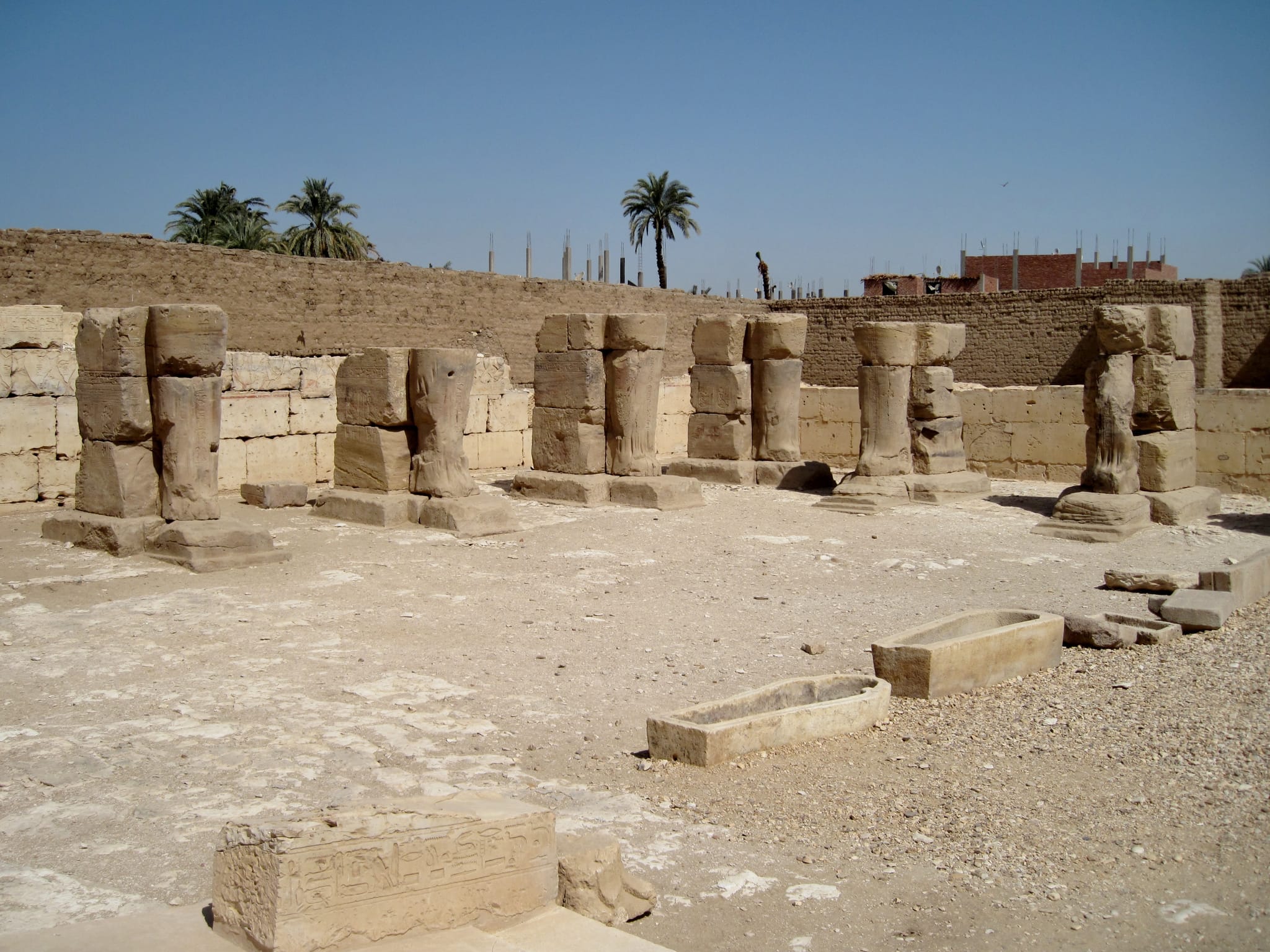
The basic layout follows what you'd expect: two open courts, a pillared portico, two hypostyle halls, and seven chapels. These chapels were dedicated to Seti I and six of the big-name deities. The first hypostyle hall sports twelve pairs of sandstone papyrus columns with bud capitals. The second hall has thirty-six similar columns. These halls were the gateway to those seven sacred chapels, which were actually finished before Seti's death. Talk about a race against time.
Journey Through Sacred Spaces and Architectural Wonders
Stepping inside the Temple of Abydos is like entering a completely different world. The interior spaces are nothing short of spectacular, showcasing some of Egypt's finest craftsmanship. As you move deeper in, you’ll notice the sacred chambers become progressively holier, each designed for specific religious functions. It's a journey into the ancient Egyptian spirit.
Want to explore Uncovering the Enigmas of Abydos: A Deep Dive into Seti I's Temple?
Let us design the perfect private itinerary for you. From expert local guides to seamless luxury cruises, we craft custom trips that show you the real Egypt.
Hypostyle Halls: A Forest of Columns
The first hypostyle hall greets you with 12 pairs of papyrus columns. These were added by Ramesses II after his father's passing. While perhaps not quite as refined as Seti's own work, the reliefs here are still superior to some of Ramesses' later pieces. Originally, seven doorways connected this hall to the second, but Ramesses, in his wisdom, decided to keep only the central one open.
The second hypostyle hall, built under Seti I himself, features 36 columns arranged in three rows, creating a sense of vastness. The walls and columns here are adorned with incredibly fine carvings of Seti performing rituals for the gods—these are some of the last decorations completed during his reign, and they are exquisite.
The Seven Barque Chapels: Divine Residences
One of the most striking features of Seti I's temple at Abydos is its seven barque chapels. These were dedicated to Seti I, Osiris, Isis, Horus, Amun-Re, Re-Horakhty, and Ptah. The first three obviously honor Abydos’s primary deities, while the others represent important religious centers across Egypt. Imagine, ceremonial barques used to exit each chapel for grand processions! Though Ramesses II later sealed those doorways.
Look up and you'll see starry vaulted ceilings, cartouches, and false doors everywhere – except in the Osiris chapel, which opens up to even deeper, more mysterious chambers. It makes you wonder what went on in there.
The Osiris Chapel and Its Enigmatic Fetish
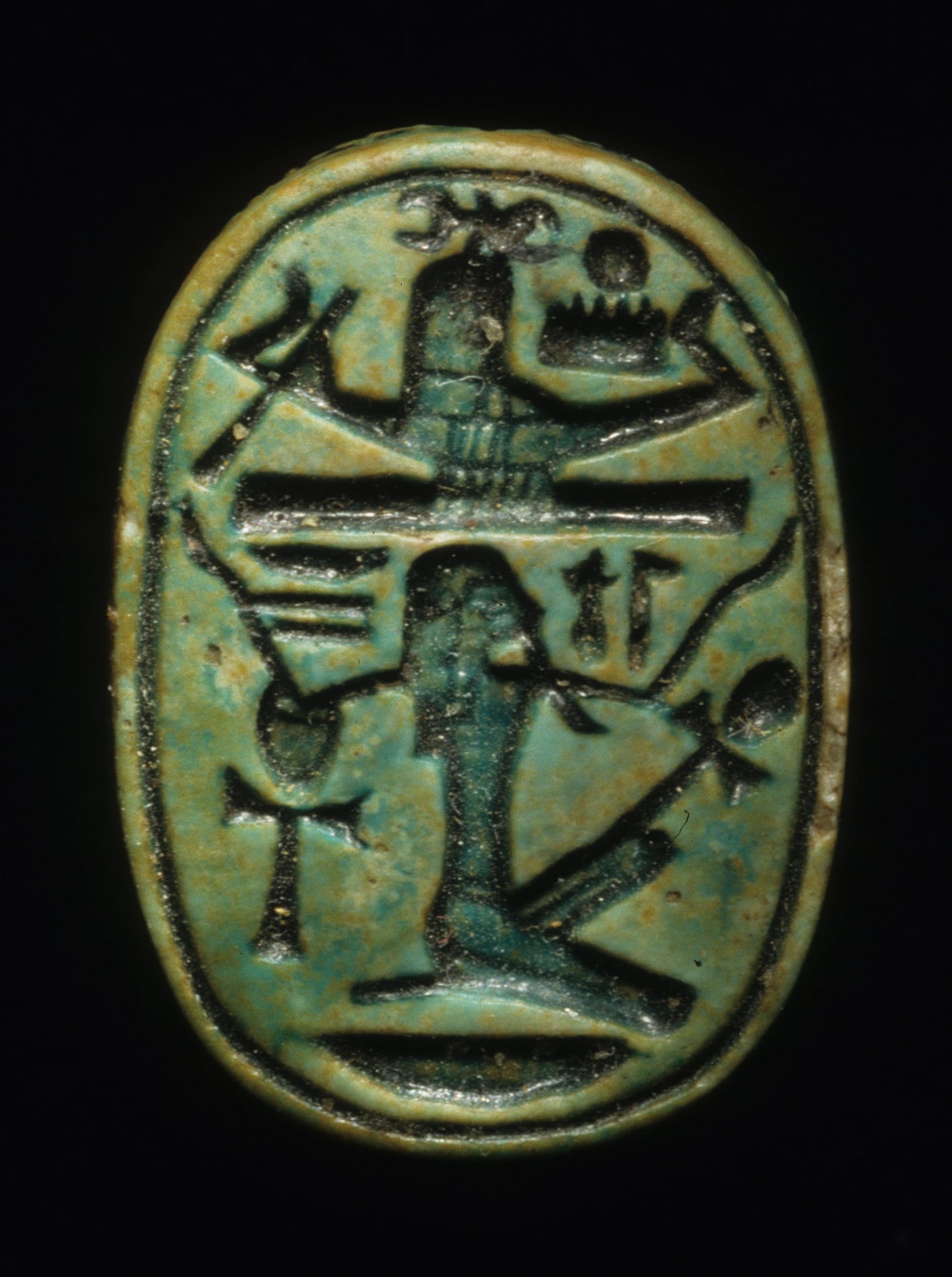
The Osiris chapel is your gateway to an area truly given over to the Osiris cult. It features two halls and two sets of chapels. The colorful reliefs here depict Seti making offerings to Osiris and carrying out various rituals. On the chapel's south wall, you'll spot the famous Osiris Fetish, a fascinating symbol connecting solar imagery with Osiris. You might even see lions, possibly linked to the god Aker, representing the horizons, sunrise, and sunset.
To the right of the first Osiris hall are three small chambers, sanctuaries for Horus, Seti I, and Isis. And then, there’s this mysterious room behind them, seemingly without an entrance. The common belief is that it served as a secure vault for the temple's most sacred treasures. Spooky, right?
The Gallery of Kings and the Abydos King List
Ah, the celebrated Abydos King List. You'll find this on the west wall of the passage between the second hypostyle hall and the Slaughterhouse. Seti's depicted on the left, blue crown on his head, shendyt kilt, holding a censer as he gestures to his son Ramesses, who's shown with a youth's sidelock and pleated kilt. It's a poignant family portrait, really.
The list itself is a historical goldmine: 76 royal cartouches laid out chronologically over three rows. The top two rows feature ancestral kings, while the third repeats Seti's throne and birth names. It starts all the way back with Menes (Dynasty I) and wraps up with Seti I. What's interesting is who's missing: rulers considered illegitimate, like the Hyksos, Hatshepsut, and the Amarna kings. History, written by the victors, as always.
Want to explore Uncovering the Enigmas of Abydos: A Deep Dive into Seti I's Temple?
Let us design the perfect private itinerary for you. From expert local guides to seamless luxury cruises, we craft custom trips that show you the real Egypt.
The Slaughterhouse: Ritual and Practicality
Feeding the gods was serious business in temple worship. The Slaughterhouse here is a testament to ancient ingenuity, designed to allow animals in from outside while keeping the sacred meat offerings safely separate from everyday areas. It's got an open court for ventilation, rooms for preparing the animals, and special features to ensure ritual purity. This court connects to the temple via the Gallery of Kings corridor.
A five-meter skylight provides light and air, and a screen wall cleverly blocks direct views into the slaughtering area. This three-part screen—base, body, and corniche—actually became a standard feature in later Egyptian temples. Functional and aesthetically pleasing, even in a slaughterhouse.
See it for yourself
Trips that visit the places in this article.

This full-day private tour travels from Luxor to two temple sites north of the city: the Temple of Hathor at Dendera, known for its artwork and celestial…

Dendera, with its remarkably preserved Hathor complex, is where we begin your extraordinary two-day private tour from Safaga Port. We'll then journey to…
Want a different route or length? We'll build it around you.
The Osireion: A Subterranean Mystery
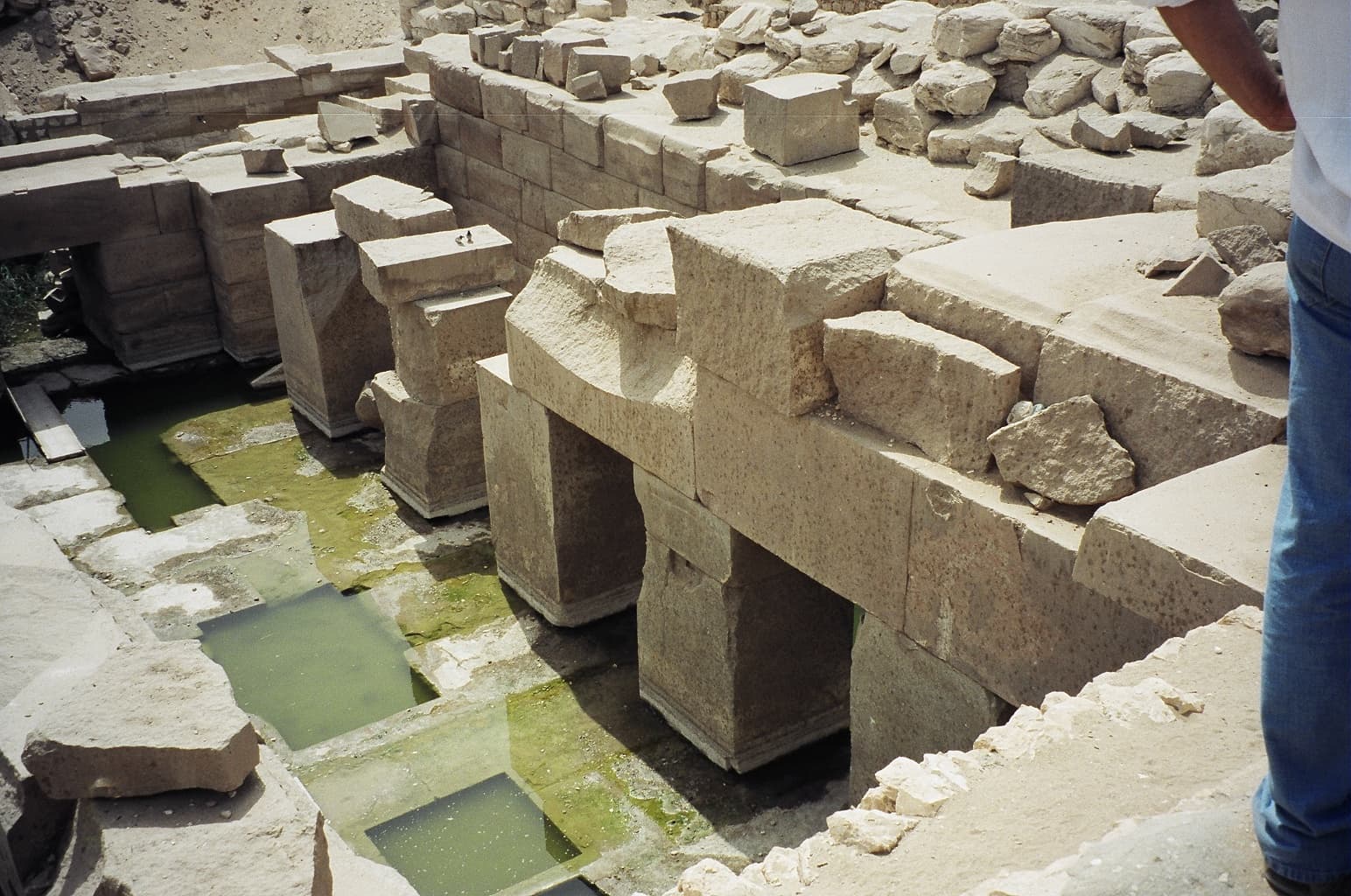
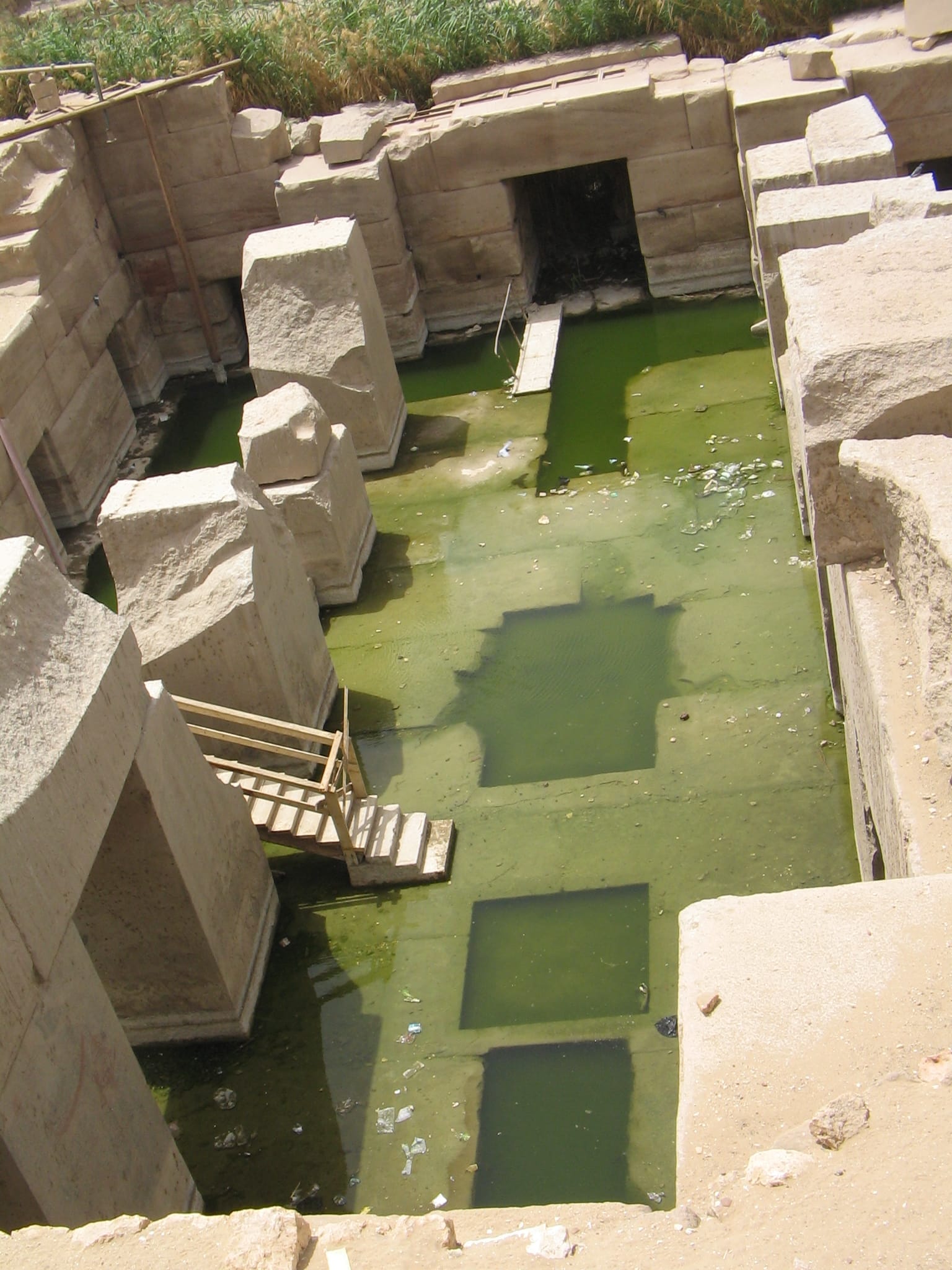
Now, let's talk about something truly mysterious: the Osireion. This incredible subterranean structure lies hidden behind Seti I's temple, a unique underground marvel dating back to the same 13th century BC. Ancient writers like Strabo even called it the 'well' or 'fountain' of Abydos. It was definitely part of Seti I's construction project, adding another layer of intrigue to the site.
Osiris's Symbolic Resting Place
The Osireion wasn't a traditional tomb, but a cenotaph – a symbolic tomb for Osiris, the ruler of the netherworld. Abydos itself was one of the most sacred pilgrimage sites in ancient Egypt, with many believing it held Osiris's actual head or other body parts. This cenotaph absolutely cemented Abydos's status as the principal center for Osiris worship, drawing pilgrims from all over.
Design and Spiritual Resonance
At its core, the structure features a central rectangular hall, roughly 30 by 20 meters. What's mind-blowing are the water channels surrounding this hall, creating an island-like setting. Imagine huge granite pillars supporting massive monolithic architraves. Inside that central chamber, there was a dummy sarcophagus, encircled by floodwater. Some evidence suggests that barley might have been grown here as part of resurrection rituals.
Seventeen smaller chambers interlock around this central space, adding to its complex, almost labyrinthine feel.
Resurrection Rituals and the Island of Flame
The Osireion's unique design wasn't arbitrary; it was a direct representation of the 'Island of Flame' from Osirian mythology. This place was central to rituals aimed at transforming deceased kings into Osiris. The annual Abydos Festival brought pilgrims from every corner of Egypt, eager to participate in ceremonies re-enacting Osiris's death and resurrection. The belief was that their participation would guarantee their own rebirth. Pretty powerful stuff if you ask me.
Passages to the Afterlife: Texts and Entrances
Getting to the Osireion wasn't just a simple stroll. There were two main access routes: one through the Osiris chapel in Seti I's temple, and another external entrance beyond the temple walls. A 420-foot-long underground passage connects to the structure, adorned with crucial religious texts from the Book of the Dead and the Book of Caves, completed by Seti's grandson, Merenptah.
Even the granite architraves display the Litany of Re, further strengthening the monument's deep connection to death and the afterlife. It's a truly immersive experience, meant to evoke the mysteries of existence itself.
Abydos: An Economic Powerhouse and Cultural Hub
Beyond its spiritual role, the Temple of Abydos was a serious economic force. It held sway over resources far beyond its religious duties, strategically placed in one of Upper Egypt's most fertile regions, with an alluvial plain stretching a good 25.5 to 17.3 kilometers wide. This wasn't just a place of worship; it was a central pillar of the local economy.
A Virtual Bank: Temples and Resource Control
Think of the major temples in ancient Egypt as something akin to modern reserve banks. They held vast stores of excess grain and, in turn, supplied bread and beer to the community. During the New Kingdom, temples like Abydos were crucial for agricultural production and state organization. Naturally, the temple needed significant funding to support its priests and keep everything running smoothly. We even have documents from the Middle Kingdom (specifically P. Berlin 10005 = P.
Cairo JE 71580) showing that temple staff received regular, systematic payments. It was a well-oiled machine.
Gold Mines and the Nauri Decree: Economic Might
Abydos's economic reach extended deep into mineral resources, thanks to special mining permissions. The temple had the rights to extract gold from both the Eastern Desert at Wadi Mia and all the way down in Nubia at Nauri. Seti I was shrewd; he protected these incredibly valuable assets by issuing the famous Nauri Decree, carved right into a cliff face. This decree explicitly stated that all temple property – gold mines, boats, goods, workers – belonged exclusively to the temple.
Records indicate that these temples were pulling in about 5½ kg of gold annually from the Eastern Desert and a whopping 26½ kg from Nubia! And if anyone dared interfere? They faced harsh punishments: beatings, mutilation, or forced labor. This wasn't a game.
Trade, Workshops, and Temple Ships: A Network of Wealth
At the center of the temple's trade operations was its protected fleet of ships. Temple staff exchanged goods for things like sesame oil and supplied resources to livestock keepers, cloth makers, and papyrus producers. Near Abydos, production facilities processed agricultural output on an industrial scale. Imagine, the temple's brewery could churn out about 22,000 liters per batch—enough beer to provide daily rations for over 8,800 workers! That's no small operation, folks.
Whispers from the Past: Later Inscriptions and Graffiti
What's really fascinating is how much of the temple's interior is covered with Coptic, Greek, and Latin graffiti of historical importance. The Coptic inscriptions are particularly striking because most were written or commissioned by monastic women. Some researchers initially thought this meant the temple served as a women's monastery in late antiquity. But newer analysis suggests these inscriptions likely came from ritual visits rather than permanent residents.
Archaeologists also discovered a Roman-era pottery workshop in the nearby village of Banaweet, which later became a burial ground by the seventh century. It just goes to show how history keeps layering itself, even in seemingly quiet corners.
So, the Temple of Abydos, or the Temple of Seti I, is truly one of Egypt's best-preserved sacred sites. Its unique L-shaped design, the incredibly detailed reliefs, and that iconic Abydos King List make it irreplaceable for anyone wanting to understand ancient Egyptian religion and history. With its chapels to major gods and that deep, compelling connection to the Osireion, this temple isn't just a ruin; it's a living beacon into the mysteries of Ancient Egypt. Go see it. Seriously.
Ready to turn this guide into reality?
Our local experts can create a custom itinerary based on these recommendations. Just send us a quick message!
Customize via WhatsApp