

The Story Begins: 9th-Century Cairo's Ambition
Before we dive into the architecture, let's set the scene. The mosque's story starts with a man named Ahmad ibn Tulun. He was born the son of a Turkish slave, but he climbed the ranks in the Abbasid court, eventually becoming governor of Egypt in 868 CE. Now, Ibn Tulun wasn't content just being a governor; he wanted real independence from the powerful Abbasid Caliphate, and he achieved it, founding the Tulunid dynasty. His ambition led him to build a brand-new capital city, al-Qata'i, just northeast of Fustat, and it was quite the project. Al-Qata'i was designed to be impressive, a model city inspired by Samarra, which was the Abbasid capital in Iraq at the time. It had everything: administrative buildings, bustling markets, a hospital, and even a hippodrome. And right at its core? Ibn Tulun's grand mosque, which was cleverly connected directly to his palace through a private door. This wasn't just convenience; it was a powerful symbol of how deeply intertwined religion and governance were in his vision.Why This Spot? Gebel Yashkur's Ancient Roots
So, why did he pick this particular place? The mosque was built on Gebel Yashkur, or Mount Yashkur, a limestone hill chosen specifically because it was high up, safe from the Nile's notorious floods and even earthquakes. Local legends swirl around this spot – some say it's where Noah's Ark landed after the big flood, while others tie it to stories of Moses and Abraham. Regardless of the exact tale, it clearly held significant, almost divine, meaning for people. Ibn Tulun did something really practical, too: he leveled the hill to create a super solid foundation for his massive project. And here's a cool detail: the architect was a Christian Egyptian named Al-Nasrani, who was literally released from prison just to take on this task. His design would go on to become one of Egypt's most cherished architectural masterpieces.Survival Against All Odds: When Al-Qata'i Fell
Fast forward a bit. The Abbasids eventually regained control in 905 CE and, as punishment for the Tulunids' rebellion, they destroyed al-Qata'i. Horrible, right? But incredibly, the mosque was spared. Most likely, it was out of sheer respect for its sanctity and its sheer beauty. Because of that, it's the only remaining structure from Ibn Tulun's capital, standing today as Egypt's oldest mosque still in its authentic, original form. That's quite a legacy.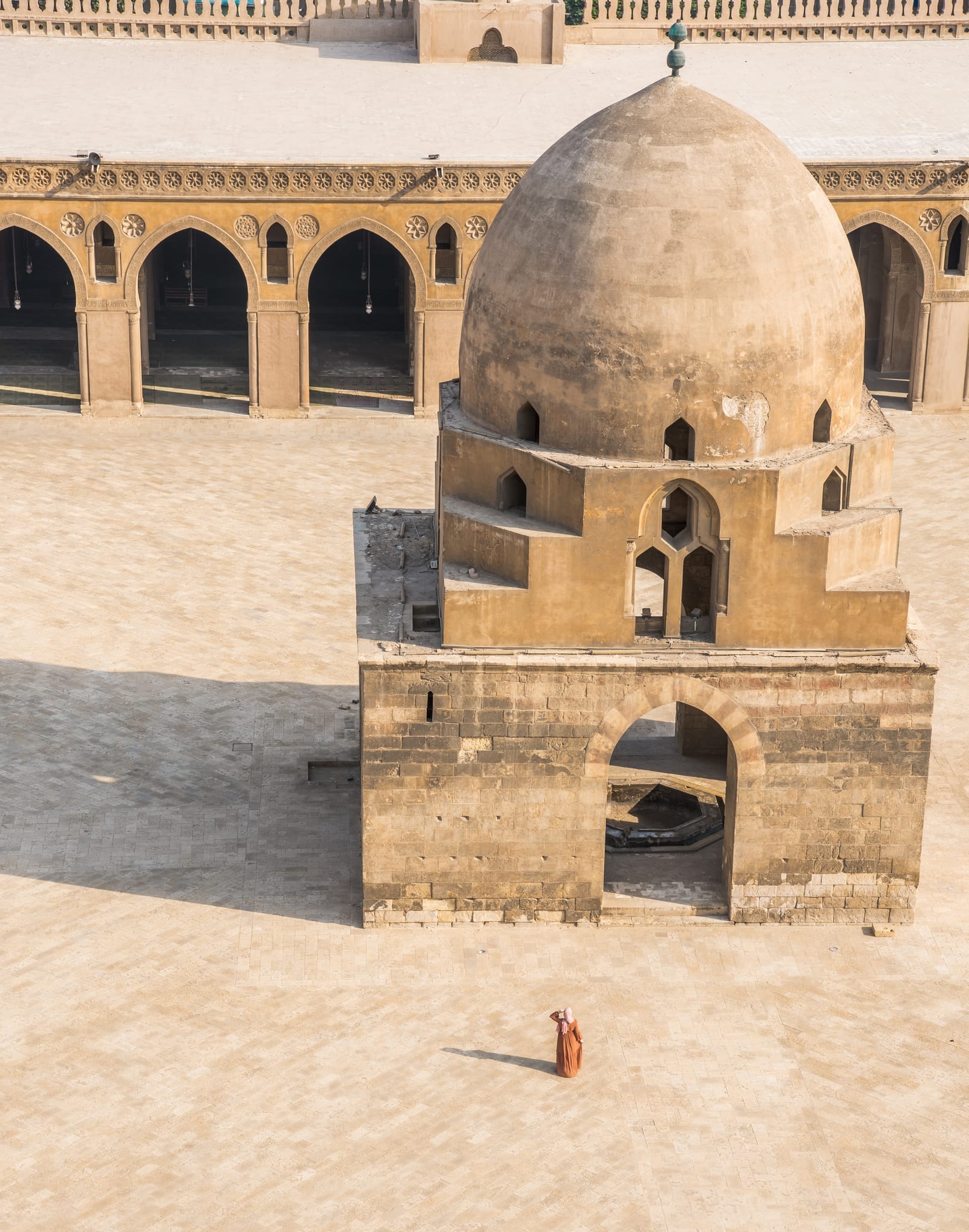
A Look at the Design: Form and Function
The Hypostyle Plan and That Huge Courtyard
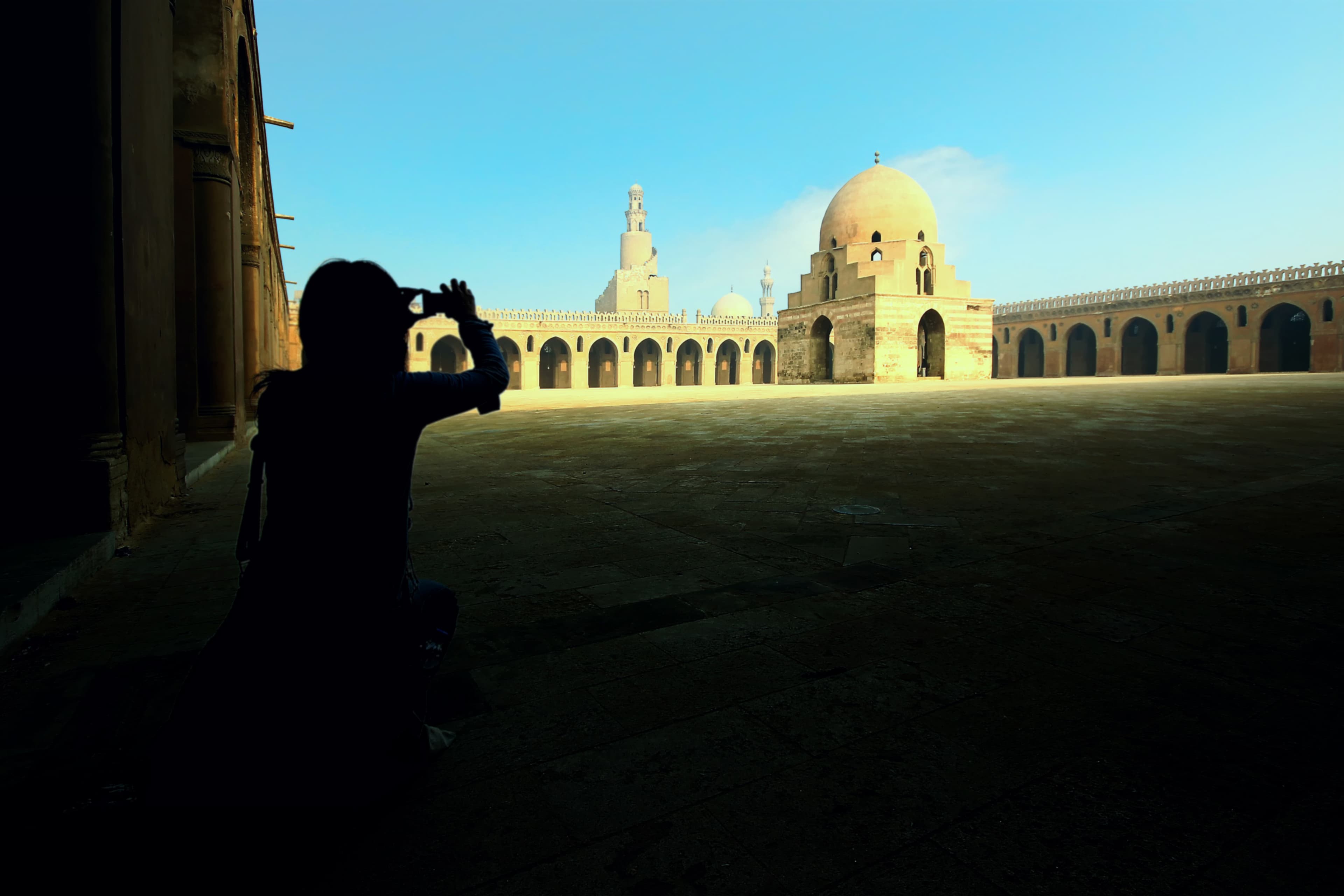
This mosque is seriously big, covering more than 26,000 square meters, making it one of the largest in Egypt. It follows what's called a hypostyle plan, which is a classic early Islamic layout featuring rows of arches and columns. At its very heart is this enormous open courtyard, surrounded by arcades on all four sides. It's calm, it's serene, and it reflects the mosque's dual purpose: a place for worship and for quiet contemplation. The main prayer hall is on the southeastern side, facing Mecca, and it's got five parallel aisles. You'll notice small windows in the arches that cleverly let in natural light and airflow, which is a blessing in Cairo's heat.Want to explore Ahmed Ibn Tulun Mosque: Cairo's Oldest Intact Marvel?
Let us design the perfect private itinerary for you. From expert local guides to seamless luxury cruises, we craft custom trips that show you the real Egypt.
Brick, Stucco, and Wood: Materials and Artistry
What's interesting is that unlike many mosques of its era built with stone, Ibn Tulun's was mainly constructed from baked red brick. This material was not just durable and affordable, but it was also easier to shape into those incredibly detailed designs you'll see. The walls and arches are covered in really intricate stucco decorations—a classic sign of Abbasid architecture. Every pattern features geometric and floral designs, clearly inspired by Iraqi artistry. And keep an eye out for the wooden corbels and beams; they're strong and beautiful, a perfect blend of a strong structure and artistic craftsmanship.The Ziyada: The Outer Buffer Zone
A really distinctive feature here is the ziyada, an outer enclosure that wraps around three sides of the building. This wide buffer zone does exactly what it sounds like: it separates the sacred space from the busy urban area outside. Back in the day, it also housed ablution areas and other facilities. It's within this enclosure that you'll find the mosque's famous spiral minaret, located on the northwest side. The crenellated walls and its square layout show clear influences from the architectural styles of Samarra, again emphasizing Ibn Tulun's Iraqi heritage.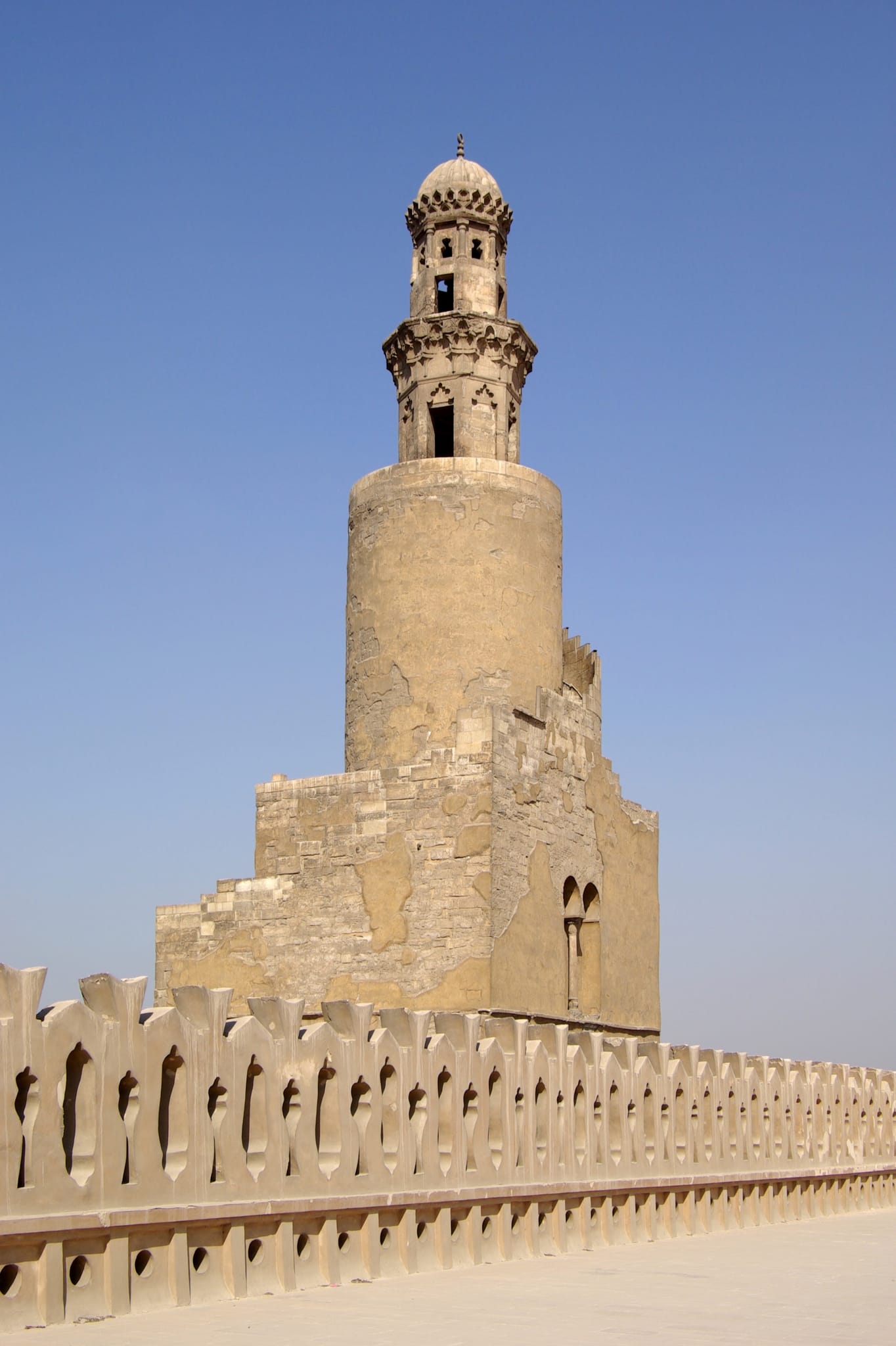
See it for yourself
Trips that visit the places in this article.

This 10-day tour moves through four distinct regions of Egypt, starting in Cairo, continuing by domestic flight and first-class train to Aswan and Luxor, and…

This 11-day tour moves between Cairo, a Nile cruise from Aswan to Luxor, and a final stretch in Hurghada, connecting each leg by domestic flight so the pace…
Want a different route or length? We'll build it around you.
Little Secrets and Details Inside
Stucco Carvings and Elegant Kufic Script
Step inside and take your time. You'll be able to admire 192 unique stucco window grilles, each one featuring a different geometric design. The craftsmanship is truly something else—you really won't find two patterns that are identical. Look up, and along the upper walls of the prayer hall, there's a continuous band of Kufic inscription with verses from the Quran. The sharp, angular Arabic script looks stunning against the more flowing arabesque decorations that frame it.Want to explore Ahmed Ibn Tulun Mosque: Cairo's Oldest Intact Marvel?
Let us design the perfect private itinerary for you. From expert local guides to seamless luxury cruises, we craft custom trips that show you the real Egypt.
Six Mihrabs, Six Stories
This mosque is unique in having six mihrabs (those prayer niches), and each one reflects a different historical period. The central mihrab is from Ibn Tulun's original construction, featuring those signature Samarra-style stucco carvings. But you'll spot others added in later centuries, like a beautiful Fatimid-era one with more elaborate designs. Each tells a layer of Egypt's rich story.The Dikka and the Minbar: Mamluk Touches
Later, during the Mamluk period, a new minbar (the pulpit) and dikka (a raised platform) were installed. The minbar, made of finely carved wood, has these intricate geometric inlays that are typical of Mamluk artistry. The marble-and-wood dikka, which was used for reciting prayers, stands gracefully in the center of the hall. What's amazing is how these later additions blend so harmoniously with the mosque's original Abbasid foundations.
That Spiral Minaret: Stories and Structure
The Parchment Legend
Everyone loves a good story, and there's a popular legend about the spiral minaret. Supposedly, Ibn Tulun himself designed it after playfully twisting a piece of parchment around his finger during a meeting. True or not, it certainly paints a picture of his direct involvement and creative spark behind the mosque.Architectural Echoes from Samarra
The minaret's striking spiral staircase, wrapping around the exterior, is incredibly similar to the Malwiya Tower in Samarra, Iraq. This unique design choice really connects the mosque back to its Abbasid roots and sets it apart from most other minarets in Egypt, which usually have interior staircases.Was It Original? The Minaret Debate
Historians still debate whether this minaret is truly the one from Ibn Tulun's time or if it was rebuilt later. Many believe it was actually reconstructed by the Mamluk Sultan Lajin back in 1296 CE, who then added new architectural flair, like that distinctive lantern-shaped top. Others argue that underneath those later renovations, you can still find elements of the original structure. Either way, it's a fascinating piece of history with a great view from the top if you're brave enough to climb it!Ready to turn this guide into reality?
Our local experts can create a custom itinerary based on these recommendations. Just send us a quick message!
Customize via WhatsApp