
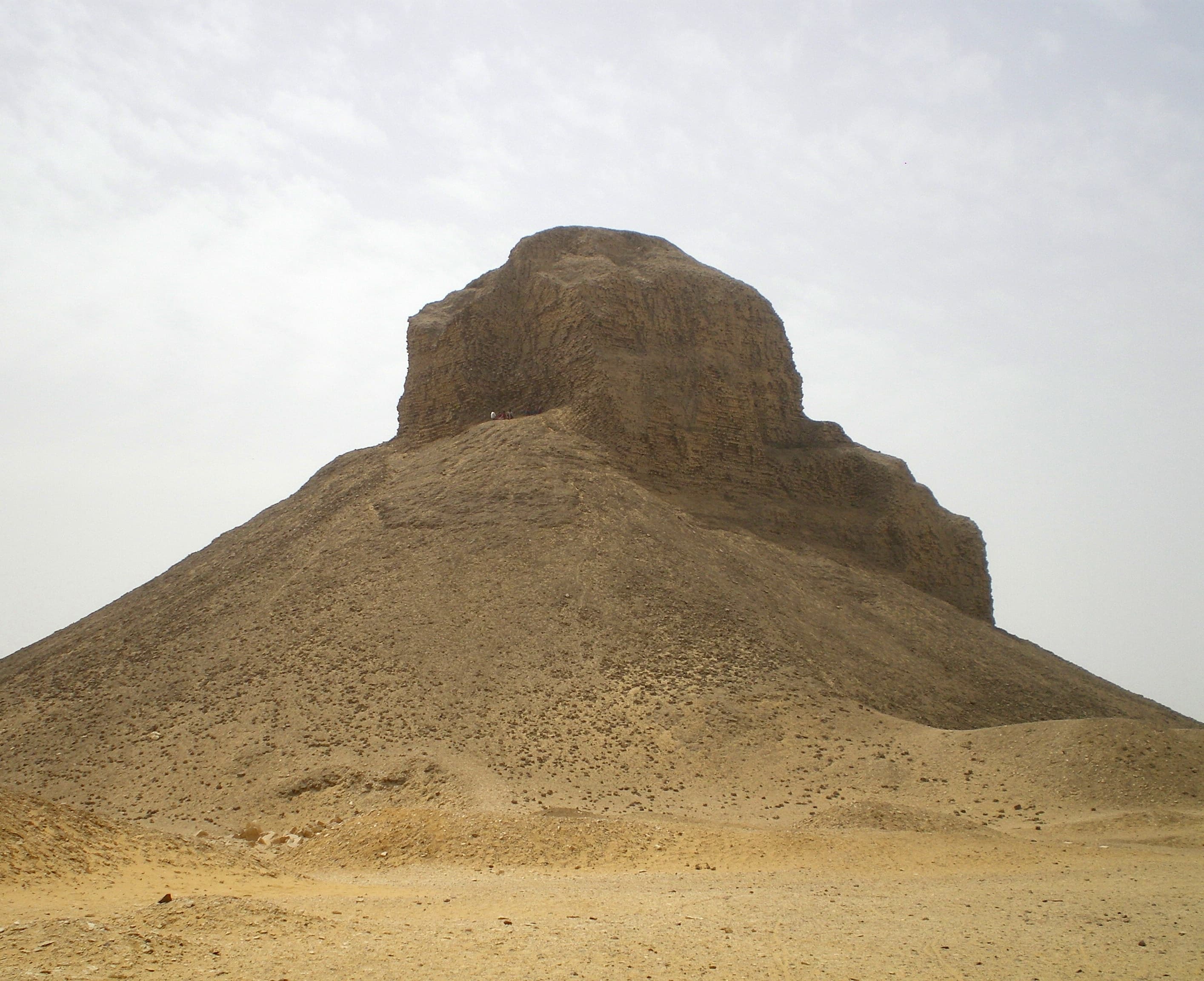

Just a short ride, about 40 kilometers southwest of Cairo, you'll stumble upon one of Egypt's most incredible archaeological secrets: the Dahshur pyramid complex. These aren't just any old structures; they're some of the oldest, biggest, and most remarkably preserved pyramids you'll ever see, their limestone surfaces etched with over four thousand years of desert winds.
It was King Sneferu's ambitious reign (around 2613-2589 BC) that brought these architectural wonders to life, each stone block a testament to the moment ancient Egyptian pyramid-building went from experimental fumbles to pure mastery.
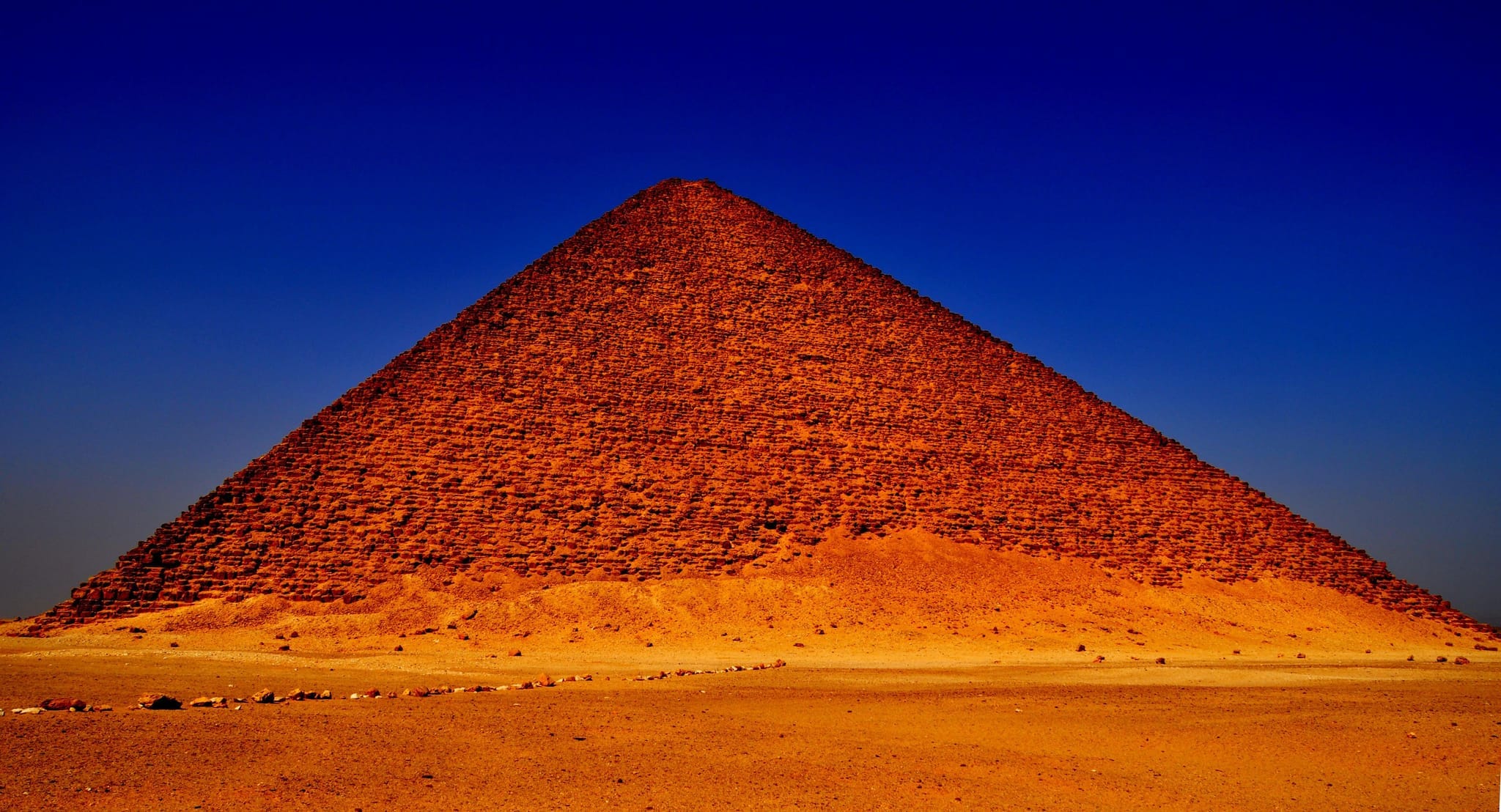
Two titans really stand out in this ancient necropolis: the mysterious Bent Pyramid and the magnificent Red Pyramid. The Red Pyramid, especially, just commands attention. Standing at a towering 341 feet (104 meters), it proudly holds the title of the third-largest pyramid ever built—only Khufu's and Khafre's legendary monuments at Giza are bigger.
But get this: that same Red Pyramid is also the world's oldest true pyramid, its flawlessly smooth sides marking humanity's very first successful crack at the classic pyramid shape over 4,500 years ago. Pretty mind-blowing, right?
Now, while Giza's famous monuments often feel swarmed with tourists, Dahshur offers something far more precious: pure solitude among these ancient giants. Here, you can wander ancient paths, truly unimpeded by crowds or any commercial hustle and bustle. You get to experience the profound silence of the desert, just as royal courtiers and ancient pilgrims once did.
This UNESCO World Heritage Site gives you an unfiltered, real encounter with Egypt's monumental past, all for the incredibly modest sum of 60 EGP (that's about $2.50). Honestly, that price seems almost absurd considering the archaeological treasures waiting to be discovered.
The Evolution of Egyptian Engineering at Dahshur
From Mastabas to Perfection: A Royal Story
Dahshur isn't just another ancient site; it holds a genuinely distinguished spot in Egypt's architectural story. It's a crucial part of the sprawling Memphis necropolis, anchoring a majestic sweep of sovereign land that stretches from the Giza plateau, through Saqqara, and right down to this southern gateway.
This spectacular archaeological territory is home to some of Egypt's very first complex monumental stone structures, showing us the incredible journey royal burial sites took, from basic 'mastaba' foundations to the sublime, smooth-sided pyramid design we all recognize.
Sneferu’s Grand Vision: Building the First 'True' Pyramid
Pharaoh Sneferu, the visionary founder of the 4th Dynasty, truly put this rocky plateau on the map, choosing it as his eternal resting place. His construction projects between 2613 BCE and 2589 BCE weren't just buildings; they were watershed moments in human engineering. Seriously, incredible stuff!
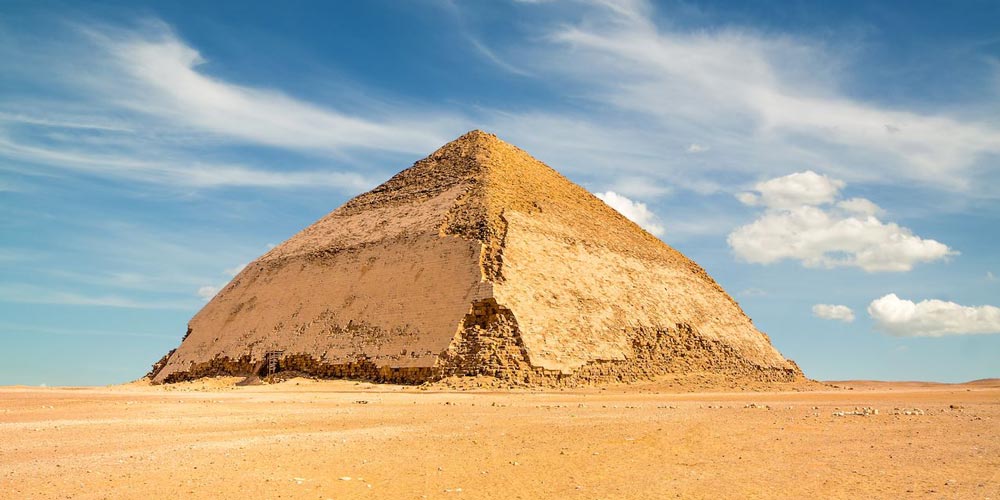
- The Bent Pyramid: Sneferu's first go at Dahshur resulted in that unique, unmistakable silhouette. They ran into some structural issues with the initial 54-degree slope, so builders had to switch gears and adjust the angle to 43 degrees halfway up. That's how it got its famous 'bent' look.
- The Red Pyramid: But Sneferu wasn't one to settle for 'almost perfect.' He promptly commissioned the Red Pyramid nearby. And this one? A triumphant success! It's the world's first successful smooth-sided pyramid, heralding the shift from the 'stepped' style of the 3rd Dynasty to the iconic geometric precision we now associate with Giza.
See it for yourself
Trips that visit the places in this article.
This 10-day tour threads together Cairo's ancient sites, a run of Upper Egypt temples, and a stretch of unstructured time on the Red Sea coast at Hurghada.…
This 11-day tour joins Egypt's classic Nile route with a run through Jordan, covering Cairo, a Nile cruise from Aswan to Luxor, and Petra and Wadi Rum before…
Want a different route or length? We'll build it around you.
A Middle Kingdom Revival: Dahshur's Second Act
Dahshur's historical importance didn't end with the Old Kingdom. The necropolis saw a pretty spectacular comeback during the 12th Dynasty (roughly 21st–17th centuries BCE). Pharaohs like Amenemhat II, Senusret III, and Amenemhat III chose to return to this sacred ground to build their own eternal monuments. Unlike the solid stone behemoths of their predecessors, these Middle Kingdom structures were primarily built from mudbrick, then beautifully adorned with fine limestone casings.
Today, they might look like eroded mounds, but they tell a fascinating story of evolving mortuary customs and how the Egyptian state managed its resources.
Senusret III’s Innovative Complex: Design Breakthroughs
Senusret III, one of Egypt's most formidable warrior-kings, erected an imposing pyramid complex that unveiled some really radical architectural shifts. While his monument once soared 62 meters into the sky, millennia of stone quarrying and natural erosion have heartbreakingly reduced it to a 21-meter hillock today. But the real genius of the complex lies in its two-phase construction:
- Phase I: Kicking off with standard Old Kingdom square blueprints.
- Phase II: Expanding into an elongated, rectangular masterpiece, complete with cleverly hidden galleries and intricate subterranean chambers. All designed to outsmart those pesky tomb robbers, of course.
Want to explore Dahshur Pyramids: Unveiling Egypt's Ancient Wonders Beyond the Crowds?
Let us design the perfect private itinerary for you. From expert local guides to seamless luxury cruises, we craft custom trips that show you the real Egypt.
Life and Death in the Shadow of Kings: Private Burials
Archaeological digs have revealed that Dahshur was much more than just a royal playground; it was a vast city of the dead, encompassing over thirty-eight pyramids and a staggering nine thousand rock-hewn tombs.
Back in 1894, Jacques de Morgan's excavations uncovered that the private burial chambers surrounding the royal monuments actually offer some of the most profound historical insights. These tombs belonged to the high-ranking officials who were essentially keeping the wheels of the empire turning.
- Biographical Blueprints: The hieroglyphic inscriptions here are a treasure trove, spilling the beans on names, official positions, and even military histories, like expeditions into the Levant.
- The Treasure of Queens: In the 19th century, archaeologists made incredible finds in the pristine burials of princesses like Sithathor and Mereret. They unearthed some of the finest Middle Kingdom jewelry ever discovered, pieces that are now proudly displayed in the Egyptian Museum.
Decline, Desecration, and Repurposing: A Cycle of Change
Dahshur's story is a mix of glory and ruin. After its Middle Kingdom golden age, the site suffered significantly during the Hyksos period (around 1600 BCE). But the most devastating destruction came during the Ramesside Period, when the pyramids were shamefully treated as stone quarries for New Kingdom building projects.
By the Late Period, this once-grand landscape was repurposed for more modest, lower-class burials, as the local population sought to be interred near the revered 'sacred ancestors.'
UNESCO Recognition and Modern Wonders
Fast forward to 1979, and Dahshur rightfully gained UNESCO World Heritage status as part of the wider Memphis necropolis. This recognition is absolutely crucial for preserving a site so vital to our understanding of human architectural innovation. And here's the cool part: contemporary excavations are still unearthing gold. As recently as 2024, teams discovered a mudbrick mastaba belonging to Seneb-Neb-Af and his wife Idet (from the late 5th/early 6th Dynasty).
The tomb is stunning, embellished with sophisticated frescoes depicting:
- Daily Life: Scenes of grain processing and vibrant marketplace bartering.
- The Nile: Images of river navigation and ceremonial offerings.
These recent findings truly cement the idea that Dahshur wasn't just a graveyard. It was a living, breathing archive of Egyptian life, status, and that eternal human quest for immortality. It's a place that keeps on giving!
Ready to turn this guide into reality?
Our local experts can create a custom itinerary based on these recommendations. Just send us a quick message!
Customize via WhatsApp