

Sultan Al Mansur Qalawun Mosque isn't just another old building in Cairo; it's a profound, often-overlooked architectural treasure. Tucked away amidst the vibrant chaos of the Islamic Quarter, this 13th-century complex is so much more than a simple place of worship. While most visitors flock to Cairo's more famous landmarks, this Mamluk masterpiece quietly holds some of Egypt's most exquisite Islamic craftsmanship, telling stories that genuinely resonate if you just take the time to listen.
The Sultan Who Built a Legacy
Sultan Al Mansur Qalawun rose to power during the Mamluk era, a time when Egypt wasn't just a regional player, but a bona fide cultural and political powerhouse. Qalawun had this grand vision: he wanted to cement Cairo's identity, both architecturally and civically. So, he built his massive complex right in the heart of Bayn al-Qasrayn, an incredibly prestigious area historically dotted with royal palaces and religious institutions. This wasn't just practical; it was symbolic.
By building there, Qalawun seamlessly connected his own legacy to the grandeur of earlier Islamic dynasties. The complex wasn't merely for prayer; it was a powerful statement, reinforcing his sway over both the city and the broader empire.
Building on a Grand Scale: Speed, Labor, and Controversy
A Project Rushed to Completion
It's genuinely astounding: the Qalawun complex was finished in a mere 13 months, between 1284 and 1285. Think about that for a second. The hospital was up first, then the mausoleum and madrasa. All three were cleverly linked by a long central corridor, showcasing some truly remarkable planning and architectural ingenuity for the time.
The Human Cost of Ambition
Amir Alam al-Din al-Shuja’i oversaw the project, and his determination was key to its rapid completion. But let's be real, his tactics? They were controversial. To hit those tight deadlines, he resorted to forced labor, even using Mongol prisoners of war. He essentially commandeered nearly every builder in Cairo and diverted them to this single project. Landowners were evicted, their property seized to make way for this ambitious new structure.
Whispers of Discontent
These coercive methods didn't exactly sit well with everyone. Religious scholars, in particular, voiced their concerns, questioning the moral legitimacy of a religious complex built on forced labor and seized land. There were even calls for a boycott. Yet, funny how things turn out: once completed, the sheer beauty and grandeur of the complex largely silenced the critics, transforming initial resentment into a lasting sense of awe and reverence.
Want to explore Sultan Al Mansur Qalawun's Masterpiece: A Deeper Look into Islamic Cairo's Hidden Gem?
Let us design the perfect private itinerary for you. From expert local guides to seamless luxury cruises, we craft custom trips that show you the real Egypt.
See it for yourself
Trips that visit the places in this article.

This full-day tour covers Islamic Cairo, the city's medieval mosques, madrasas and citadels, as a focused alternative to the pharaonic sightseeing circuit.…

This 10-day tour moves through four distinct regions of Egypt, starting in Cairo, continuing by domestic flight and first-class train to Aswan and Luxor, and…
Want a different route or length? We'll build it around you.
More Than a Mosque: A Visionary Civic Hub
A Place for Everything
The design of the Qalawun complex was groundbreaking for its era. It wasn't just a mosque; it integrated a madrasa (religious school) and a hospital, creating a truly multifunctional civic space. This place took care of a community's spiritual, educational, and medical needs all under one roof. You'd enter through this elegant arched portal, and from there, you could head to the madrasa on one side or the mausoleum on the other, all connected by that thoughtful central corridor.
And that hospital? It was tucked away at the back, serving as one of Cairo's most advanced medical institutions for more than half a millennium.
The Central Artery
That central passage truly formed the backbone of the complex, seamlessly linking all three sections. Above, you'd find apartments and student quarters, creating a bustling, lively environment where scholars, patients, and worshippers all coexisted. It was a brilliant example of spatial organization, balancing religious purpose with practical, everyday use.
Where Knowledge Met Healing
The madrasa here didn't just teach the usual religious studies; it also offered instruction in medicine. Students got hands-on experience at the adjacent hospital, which was incredibly progressive for its time. The hospital had everything: proper wards, storage rooms, even mortuaries. Their policy was radical: free care for everyone, no matter their social standing or background. Patients were treated, clothed, and often even given financial aid when they were discharged.
It really wasn't just a religious center; it was a shining model of medieval social welfare.
Want to explore Sultan Al Mansur Qalawun's Masterpiece: A Deeper Look into Islamic Cairo's Hidden Gem?
Let us design the perfect private itinerary for you. From expert local guides to seamless luxury cruises, we craft custom trips that show you the real Egypt.
Architectural Glories and Unexpected Influences
The Dome's Grandeur and Octagonal Splendor
Without a doubt, the complex's most eye-catching feature is its octagonal mausoleum, crowned by a truly magnificent dome. Supported by eight Corinthian columns, the space subtly echoes the sacred geometry of Jerusalem's Dome of the Rock. Historically, it was more than just a burial site; it was a ceremonial ground where new emirs would be formally invested with their power.
The Mihrab: A Masterpiece in Stone
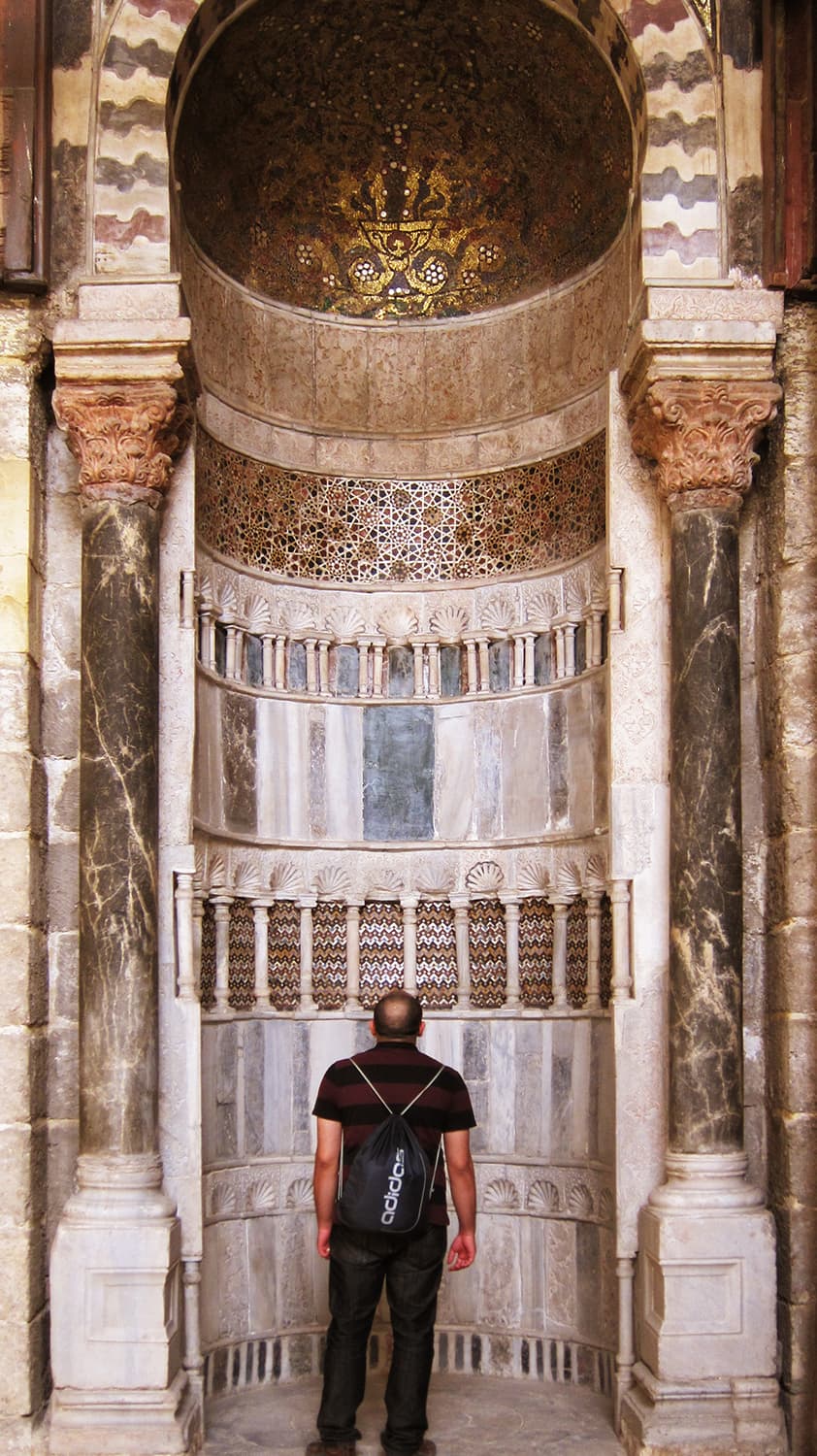
Step inside, and the mausoleum's mihrab will take your breath away. It's one of the largest and most ornate in all of Egypt, featuring this stunning horseshoe arch framed by marble columns. It's adorned with intricate mosaics and delicate mother-of-pearl inlays. The patterns, a dance of stars and polygons, represent the pinnacle of Mamluk decorative art.
Gothic Touches and Mamluk Innovation
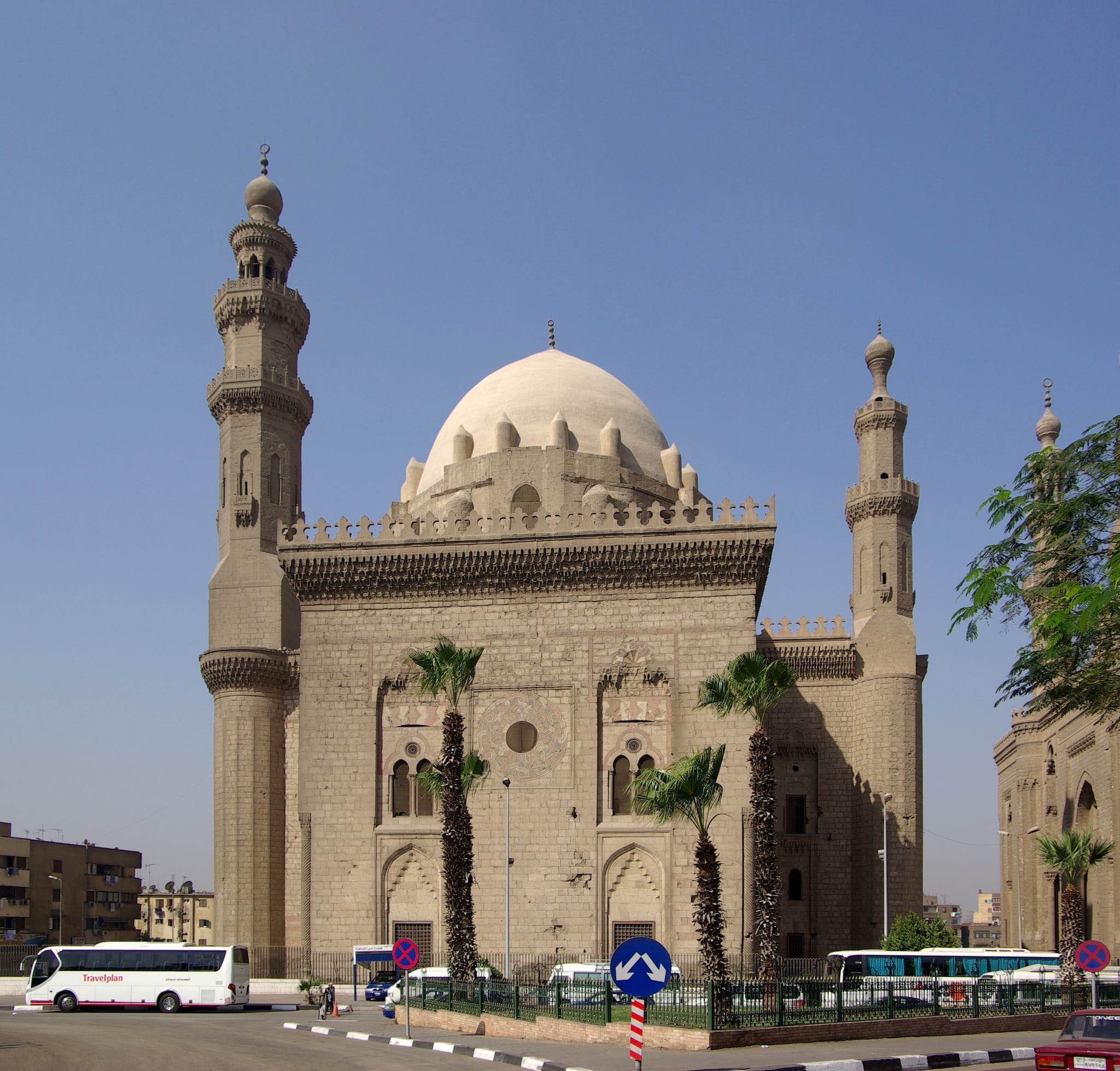
The interior walls are a testament to artistry, lined with marble panels, carved stucco, and gilded wooden ceilings. But what really gets me is the exterior: a Gothic-inspired facade, with its pointed arches and ornamental stonework, hints at the influence of European Crusader architecture. It's an unexpected but harmonious blend of styles. And those two minarets? Their fluted domes and zigzag carvings were revolutionary, among the very first of their kind in Egypt.
Their innovative design introduced architectural elements that would go on to become standard in Mamluk construction for centuries to come.
A Living Legacy: Restoration Through the Ages
Resilience After Disaster
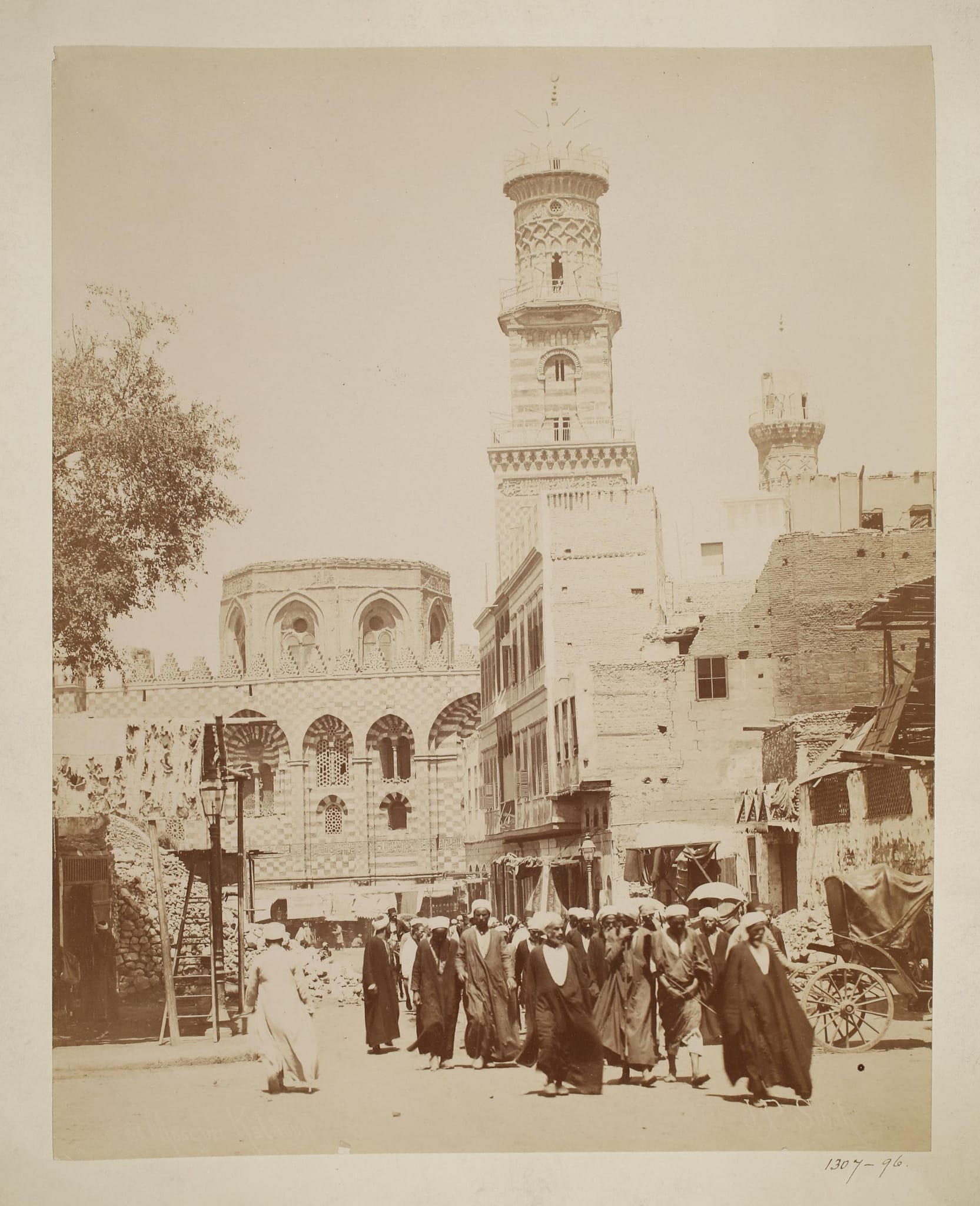
Life in medieval Cairo wasn't easy, and after an earthquake in 1302, Sultan Qalawun's son, Al-Nasir Muhammad, spearheaded major restoration efforts. He rebuilt damaged sections, ensuring the complex's integrity and its continued use for generations.
From Ottoman to Today
Centuries later, in the 18th century, Ottoman Governor Abdul-Rahman Katkhuda kept the legacy alive with further repairs and even added a public fountain across from the mosque. Fast forward to today, modern restoration work in the 20th and 21st centuries has focused on structural reinforcement, waterproofing, and diligently restoring those intricate, delicate decorations.
Still Standing Tall
Today, the Sultan Qalawun Mosque and its surviving structures are still a vibrant centerpiece of Islamic Cairo. Visiting means stepping into a living museum, offering a glimpse into medieval Egyptian art, architecture, and civic life. It's not just a religious site; it's a testament to enduring vision and incredible craftsmanship, waiting for you to discover its stories.
Ready to turn this guide into reality?
Our local experts can create a custom itinerary based on these recommendations. Just send us a quick message!
Customize via WhatsApp