

Islamic Cairo, founded way back in 969 AD by the Fatimids, isn't just some old district; it's a sprawling, living piece of history right in the heart of the city. We're talking a UNESCO World Heritage Site with over 600 monuments, all telling a story spanning a thousand years of Islamic architecture. Picture this: narrow, winding streets, grand mosques reaching for the sky, bustling bazaars overflowing with life, and workshops where crafts are still made the old-fashioned way. It's like stepping into a medieval city that's still very much awake, where living, praying, and working happen in the same rhythms they have for centuries. Honestly, every corner holds a surprise, from intricately carved doors to those ornate minarets—it's easily the largest and most incredible medieval Islamic city you'll find anywhere.
Now, let's get a feel for this place.


Understanding Islamic Cairo
What Even *Is* Islamic Cairo?
When we say 'Islamic Cairo,' we're really talking about this historic, medieval city that was built up by various Islamic dynasties between the 7th and 19th centuries. It's not one neat little package; it actually covers several districts, including Al-Qahira (that was the royal Fatimid city, founded in 969 AD), Fustat (the very first Arab-Islamic capital, going back to 641 AD), and other areas that later dynasties added on. Think of it stretching from the imposing Citadel of Salah El-Din in the south, northwards to those ancient medieval gates, and then from Al-Azhar Park in the east, all the way to the edge of modern downtown Cairo in the west. Literally, within this buzzing zone, you'll find the highest concentration of medieval Islamic monuments on the planet.Layers Upon Layers of History
Islamic Cairo's architecture isn't just one style; it's a rich tapestry woven from several key periods: * **Fustat (641–969 AD):** This was the starting point, founded by Amr ibn al-As as Egypt's first Islamic capital. It's home to the Amr ibn al-As Mosque, Egypt's very first mosque. * **Fatimid (969–1171 AD):** This dynasty put Cairo on the map as a royal city and a vibrant cultural center. They built the Al-Azhar Mosque, the city walls, and those famous gates. Their style? Intricate stucco, distinctive keel-arched niches, and some seriously smart urban planning. * **Ayyubid (1171–1250 AD):** This is when Saladin, the legendary leader, ramped up Cairo's defenses, building the Citadel and reinforcing the city walls. Think military might and architecture. * **Mamluk (1250–1517 AD):** Ah, Cairo's golden age! This era gave us those lavish mosques, madrasas, and fountains with their sky-high minarets, unbelievably detailed stonework, and groundbreaking designs. Honestly, most of the iconic Islamic Cairo monuments you'll see date from this period. * **Ottoman (1517–1914 AD):** Development continued, now with clear Turkish influences. Look for the slender minarets and Anatolian-inspired buildings they added.Why It's Such a Big Deal
Islamic Cairo isn't just old; it represents one of humanity's greatest urban accomplishments. For centuries, this was one of the world's biggest, richest, and most sophisticated cities. The architecture, the way they planned everything out, the cultural institutions that sprang up here—they all had a massive impact on Islamic civilization, stretching from Morocco all the way to Indonesia. Today, Islamic Cairo holds an irreplaceable value. So many other Islamic cities lost their medieval cores to modernization, war, or demolition. Think Baghdad, Damascus, and others. But Islamic Cairo? It survived, remarkably intact, preserving the urban fabric and monuments that simply vanished elsewhere. Walking these streets is a rare and profound way to connect with medieval Islamic urban life.Must-See Mosques and Monuments
Want to explore Islamic Cairo: A Timeless Journey Through Medieval Grandeur?
Let us design the perfect private itinerary for you. From expert local guides to seamless luxury cruises, we craft custom trips that show you the real Egypt.
Customize via WhatsAppAl-Azhar Mosque
Founded in 970 AD, Al-Azhar Mosque is quite literally one of the world's oldest universities and a powerhouse of Islamic learning. The Fatimid Caliph Al-Muizz kicked it off, and over the centuries, it kept expanding with Fatimid, Mamluk, and Ottoman additions. You'll see ancient columns, grand courtyards, and those signature twin minarets. It's still a buzzing place of worship, and traditional religious education continues within its walls. Non-Muslims are welcome to visit outside of prayer times (just remember to dress modestly!). Give yourself about 45–60 minutes to explore its vast courtyard and layered architecture; entry is free.Sultan Hassan Mosque and Madrasa
Built between 1356–1363 by the Mamluk Sultan Hassan, this mosque is often lauded as Egypt's finest example of Mamluk architecture—truly one of the country's greatest Islamic monuments. Its entrance alone, soaring to 37.7 meters, is breathtaking. The cruciform layout with four iwans and that intricately decorated prayer hall really showcase the medieval engineering and artistry. It sits right below the Citadel, offering a fascinating contrast between military and religious architecture, with the adjacent Ar-Rifa'i Mosque perfectly complementing its design. It's open daily 8 AM–5 PM, and entry is 220 EGP (often bundled with the Citadel). Budget 1–1.5 hours here. For the best photos, aim for the morning or late afternoon light.Ibn Tulun Mosque
Standing strong since 876–879 AD, the Ibn Tulun Mosque is Cairo's oldest mosque that's still in its original form. It boasts an enormous 26,000 m² courtyard and a really unique spiral minaret, supposedly inspired by Samarra. Its simple, elegant, proportion-focused design actually influenced later architecture, even European Gothic. Right next door, you'll find the Gayer-Anderson Museum, a beautifully restored Ottoman house that gives you a peek into traditional Islamic domestic life, complete with mashrabiya screens and antique furnishings. Entry is around 100 EGP; it's open daily 9 AM–5 PM. Dedicate about an hour for the mosque and an extra hour if you want to explore the museum. Oh, and climbing the minaret? The views of Islamic Cairo from up there are absolutely spectacular.Al-Muizz Street
This historic street, (and you really should check out our dedicated article on it), is the absolute backbone of Islamic Cairo. Running about a kilometer from Bab al-Futuh in the north down to Bab Zuweila in the south, Al-Muizz is packed with over 30 major monuments, all within easy walking distance. Much of it is pedestrianized, effectively creating the world's largest open-air museum of Islamic architecture. Along Al-Muizz, you'll find colossal city gates (Bab al-Futuh and Bab Zuweila), the Al-Hakim Mosque (1013 AD), the incredible Qalawun Complex (1284-85 AD), Al-Nasir Muhammad Madrasa (1304 AD), and the Barquq Complex (1384-86 AD). Walking from one end to the other without stopping might take 30-40 minutes, but seriously, give yourself 3-4 hours to truly enter the buildings and soak in all the amazing details.Want to explore Islamic Cairo: A Timeless Journey Through Medieval Grandeur?
Let us design the perfect private itinerary for you. From expert local guides to seamless luxury cruises, we craft custom trips that show you the real Egypt.
Customize via WhatsAppThe Citadel of Salah El-Din
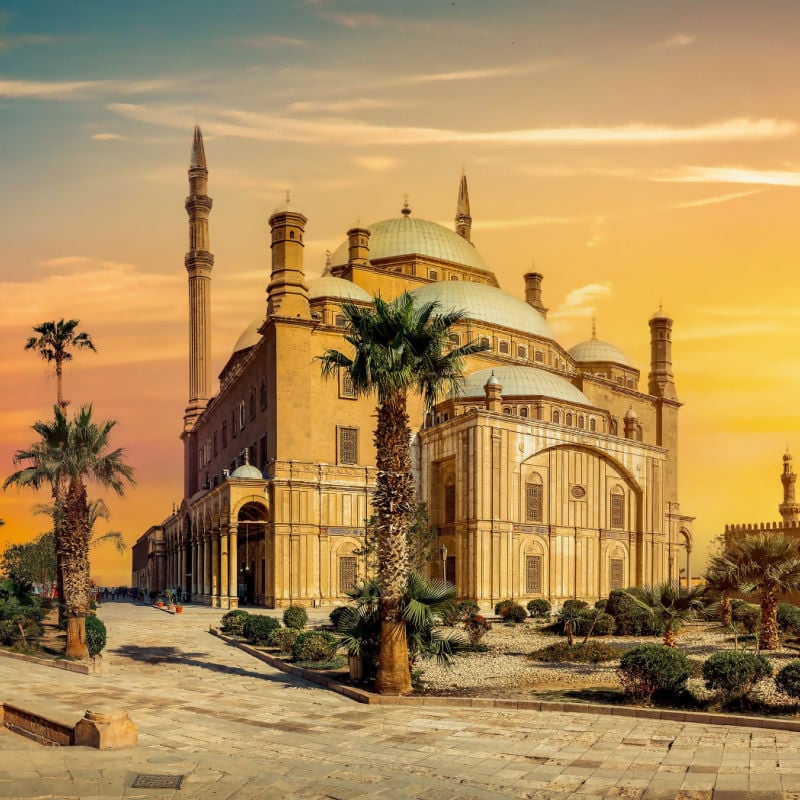
Perched majestically on the Mokattam Hills, the Cairo Citadel served as Egypt's seat of government for a whopping 700 years. Salah El-Din built it in 1176 AD to defend against the Crusaders. The complex itself is huge, housing several mosques—most notably the Muhammad Ali Mosque with its Ottoman domes and towering minarets—plus museums, medieval walls, and those unbeatable panoramic city views. Entry is 220 EGP; it's open daily 8 AM–5 PM in winter or 8 AM–6 PM in summer. Set aside 2–3 hours, and consider pairing it with a visit to the Sultan Hassan Mosque to really appreciate the architecture and the views over Islamic Cairo.
Khan el-Khalili: Cairo's Legendary Bazaar
The Grand Bazaar Experience
Established in 1382 AD by Emir Djaharks el-Khalili, Khan el-Khalili isn't just Cairo's most famous bazaar; it might just be the most famous in the entire Arab world. This sprawling, chaotic, and utterly mesmerizing maze of narrow alleyways, shops, workshops, and little cafés has been running continuously for over 640 years. Stepping into Khan el-Khalili is like time-traveling straight into medieval commercial life, a world that, honestly, hasn't changed all that much in centuries.What to Hunt For
* **Spices:** You'll find Egyptian and international spices sold by weight. Think saffron, cumin, cardamom, dried hibiscus (karkade), and so many others, usually at much better prices than back home. * **Perfumes:** Traditional Egyptian perfume oils sold by the bottle. Don't be shy; try lotus, jasmine, or amber, or even get a custom blend. Many shops can even whip up copies of famous Western perfumes. * **Brass and Copper:** Look for traditional metalwork like trays, lamps, coffee pots, and decorative pieces. While some things are machine-made imports, you can definitely find genuine handcrafted pieces if you look carefully. * **Jewelry:** Gold and silver are sold by weight, plus a craftsmanship charge. You'll see classic Egyptian motifs like cartouches, scarabs, and hieroglyphic designs. Sterling silver Bedouin jewelry offers fantastic value. * **Textiles:** Cotton galabeyyas (those traditional Egyptian robes), beautiful silk scarves, intricately embroidered items, and all sorts of traditional fabrics.Historic Cafés
* **El Fishawi Café:** This place? It's been operating since 1773! El Fishawi is absolutely the most atmospheric spot in Khan el-Khalili. Sit surrounded by mirrors and brass lamps, exactly as patrons have done for two-and-a-half centuries. Literary giants like Nobel Prize-winning novelist Naguib Mahfouz were regulars here. Order a mint tea or a traditional coffee and just let the timeless ambiance wash over you. It's open 24 hours, which is pretty wild. * **Naguib Mahfouz Café:** Named after Egypt's own literary giant, this café offers a slightly more upscale setting with lovely traditional décor. They do good food too (classic Egyptian mezze and grilled meats) and shisha (water pipes). It's a bit less chaotic than El Fishawi but still wonderfully authentic.Practical Tips for the Khan
* **Best Times:** Try early morning (9-11 AM) before the huge crowds and heat build up, or early evening (after 7 PM) when locals come out and the atmosphere gets truly magical. Just try to avoid Friday mornings (prayer time) and the middle of the day (it gets intensely crowded and hot). * **Getting There:** Khan el-Khalili rubs shoulders with Al-Azhar Mosque and directly connects to Al-Muizz Street. The easiest way to get there is via Al-Azhar Street. The closest metro is Ataba Station, about a 15-minute walk. Taxis generally know 'Khan el-Khalili.' * **Safety:** It's generally safe, but keep an eye on your belongings in the crowds; pickpockets exist everywhere. Women might experience some persistent touting, but a firm 'no thank you' usually works. Stick to the main areas, especially after dark. * **How Long to Stay:** Give yourself at least 2-3 hours for a quick shop and soak in the atmosphere. Honestly, a full afternoon or evening can easily disappear as you wander the alleys, haggle for treasures, and sip tea in the cafés.
Hidden Gems and Lesser-Known Sites
Bayt al-Suhaymi
This isn't just an old house; it's a beautifully restored Ottoman residence right on Al-Muizz Street (built in 1648, expanded in 1796). It's a fantastic window into traditional Islamic residential architecture. You'll see a central courtyard, those iconic mashrabiya screens, separate quarters for men and women, grand reception halls, and lovely rooftop terraces. The furnished rooms and cool, shaded courtyard really give you a sense of historic Cairene daily life, plus how they used clever passive cooling techniques. It's open daily for a small fee; a visit usually takes 30–45 minutes and is often included in Al-Muizz Street tours.Wikala of al-Ghuri
Al-Ghuri's 16th-century caravanserai (a 'wikala') on Al-Muizz Street is a brilliant example of medieval trade in action. Imagine ground-floor shops, with merchant accommodations above, and storage below—it was a bustling hub! Today, it's a vibrant cultural center, hosting artisan workshops and, famously, those mesmerizing traditional Tanoura whirling dervish performances on select evenings. The shows usually run for 30–45 minutes, with tickets around 60–80 EGP. Arrive early to snag the best seats.Al-Azhar Park
Now, for a bit of green. Al-Azhar Park, created in the early 2000s on what used to be a rubble site, is this amazing green oasis overlooking Islamic Cairo. It's got beautifully landscaped gardens, walking paths, playgrounds, and even restaurants. Funded by the Aga Khan Foundation, it completely revitalized the area and, interestingly, even uncovered a restored section of the Ayyubid city wall. It's open daily for a modest fee, and it's especially lovely in the late afternoon or evening. It pairs perfectly with nearby historic sites, offering stunning sunset views and a peaceful escape from the city's hustle.Practical Information for Visiting Islamic Cairo
Getting There and Around
* **Metro:** Ataba Station (Line 2) is your closest metro stop to the heart of Islamic Cairo. From there, it's about a 10-15 minute walk to Al-Azhar Mosque and Khan el-Khalili. * **Taxi/Uber:** This is usually the most convenient option. Just tell your driver 'Al-Azhar' or 'Khan el-Khalili,' or your specific destination. From downtown or Zamalek, expect a 10-20 minute ride, costing roughly 30-60 EGP. * **Walking:** Once you're *in* Islamic Cairo, walking is truly the only way to experience it properly. The medieval street layout wasn't made for cars! So wear comfortable shoes—you'll be covering a good bit of ground on those uneven surfaces.What to Pack
* **Essentials:** Seriously, comfortable walking shoes are non-negotiable! Also, bring sun protection (a hat, sunscreen), a water bottle (you can buy refills from vendors to stay hydrated), some modest clothing for mosque visits, small bills for purchases and entry fees, offline maps on your phone, and a camera for all the incredible photos you'll want to take. * **Optional but Useful:** A good guidebook or detailed info about the monuments, a few basic Arabic phrases, a small backpack for any purchases, a power bank for your phone, and a pack of tissues (bathrooms often don't have toilet paper).Dress Code
* **For Mosques:** Make sure your shoulders and knees are covered (applies to both men and women). Women should definitely bring a scarf to cover their hair—some mosques might offer them, but it's always best to have your own ready. Remember to remove your shoes before stepping into prayer areas. Dressing modestly isn't just about showing respect; it also ensures you'll be allowed into all the sites. * **For the Streets:** While Islamic Cairo is religiously conservative, as a tourist, you're not expected to wear traditional attire. However, modest clothing (covering shoulders and knees, avoiding anything too tight or revealing) helps reduce unwanted attention and is a sign of cultural respect.Ready to turn this guide into reality?
Our local experts can create a custom itinerary based on these recommendations. Just send us a quick message!
Customize via WhatsApp