
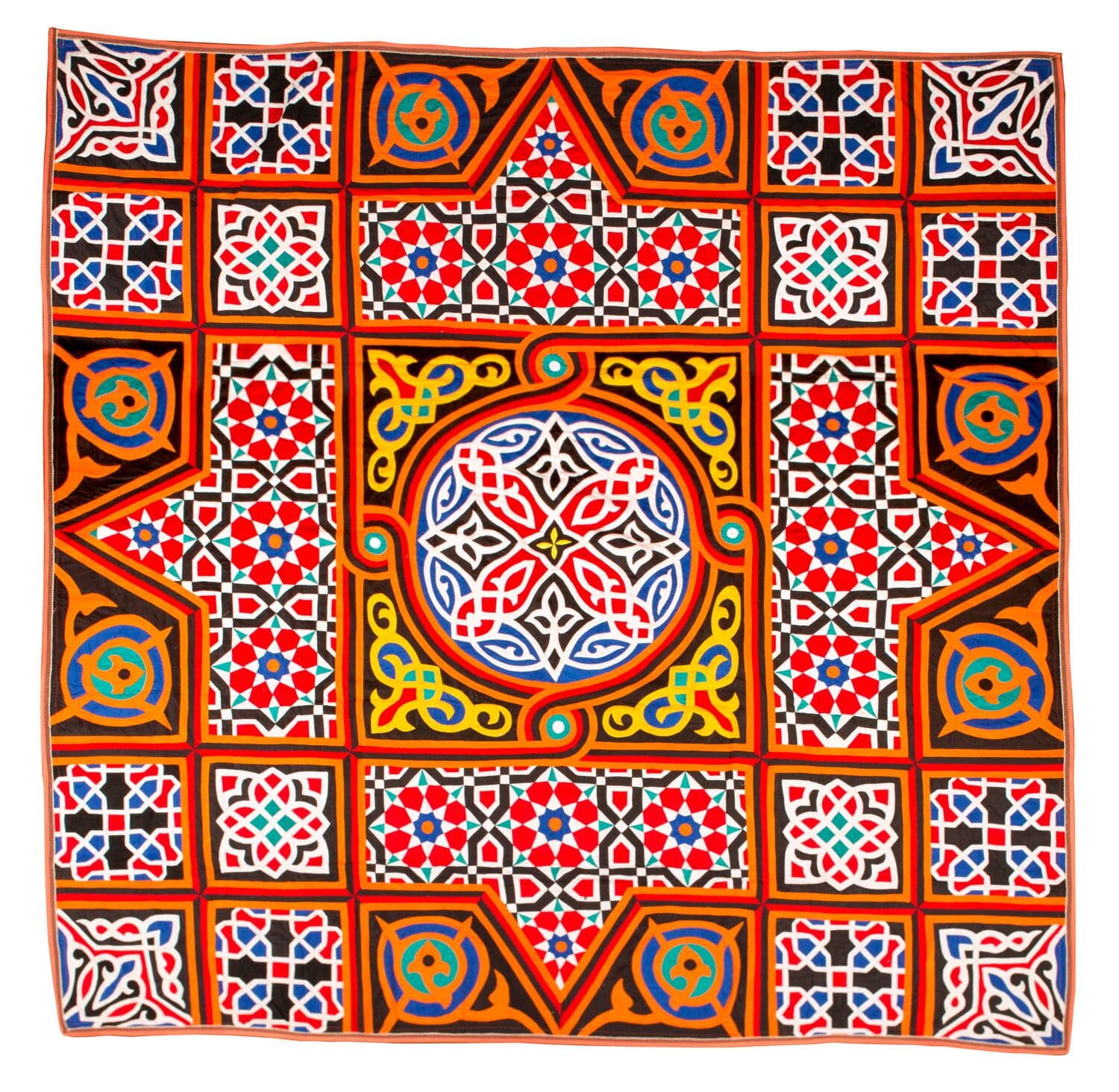

Souk Al-Khayamiya, tucked away near Bab Zuweila in Islamic Cairo, isn't just another market; it's practically a time capsule. This is Cairo's last traditional covered souk, a truly rare peek into medieval market culture that's managed to hang on in the modern world. They call it the Tentmakers Bazaar, and for good reason—it’s where the centuries-old art of khayamiya, that incredible appliqué textile craft, is still alive and kicking. Originally, these gorgeous fabrics were all about decorating ceremonial tents for weddings and big religious bashes. Today, you can still find skilled artisans working away in open workshops, offering an authentic glimpse into historic Cairo and, at the same time, helping keep this beautiful, endangered craft from fading away.


Fatimid Cairo and Medieval Markets
Islamic Cairo's Commercial Roots
Islamic Cairo really took shape during the Fatimid Period, roughly from 969 to 1171 AD. The Fatimids were the ones who founded Al-Qahira, building up mosques, grand gates, palaces, and, of course, these fantastic covered markets that became the backbone of the city's medieval vibe. These souks weren't just for trade; they were social hubs, places where merchants in the same trade clustered together, operating within regulated, protected spaces. It was all about commerce, community, and identity. Just south of Bab Zuweila—the impressive southern gate of Fatimid Cairo, finished way back in 1092 AD—Souk Al-Khayamiya bloomed as a vital center for all sorts of textile and tent-making artisans. For generations, these folks supplied Cairo with its ceremonial fabrics.The Enduring Khayamiya Craft
The khayamiya appliqué tradition in Egypt goes deep, stretching back centuries. Some folks even see hints of Pharaonic textile arts, but the specific techniques and that iconic aesthetic we see today really blossomed during the Islamic eras. The craft is all about taking colored cotton or often silk fabrics, cutting them into precise geometric shapes, arabesques, floral patterns, or even elegant calligraphic designs. Then, with incredible skill, these cut pieces are painstakingly hand-stitched onto a backing fabric to create those stunning, decorative panels. Traditionally, khayamiya mostly adorned ceremonial tents. Think weddings, funerals, moulids (those vibrant religious festivals celebrating saints), circumcision celebrations, and all sorts of other important events. Wealthy Egyptian families would rent or commission these elaborate tents, with the decorations themselves speaking volumes about the event's importance and the family's standing. The most prestigious gatherings? They'd feature tents with mind-blowing geometric patterns, Quranic verses in exquisite calligraphy, and complex color palettes that required nothing less than master craftsmen. But it wasn't just tents. Khayamiya also brought life to domestic interiors—think wall hangings, cushion covers, bedspreads, and curtains. They added a burst of color, pattern, and visual flair to homes, showcasing both aesthetic refinement and cultural sophistication. This craft was a critical artistic tradition, beautifully linking Egypt's Islamic heritage with everyday life, sustained by guilds of exceptionally skilled artisans who passed their secrets from masters to apprentices, generation after generation.
The Bazaar's Unique Architecture
A Glimpse into Medieval Covered Markets
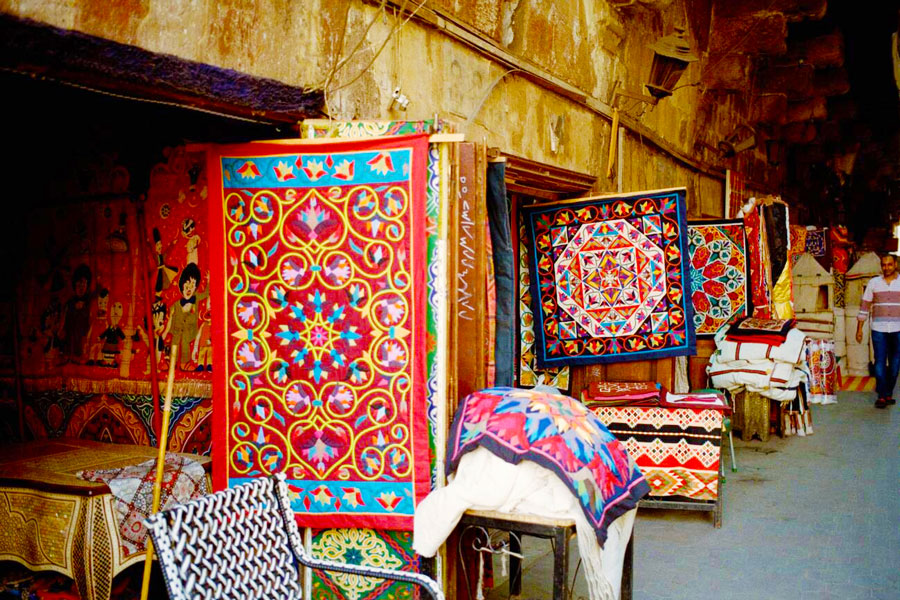
What makes Souk Al-Khayamiya so special architecturally is how it preserves that classic medieval covered market design—something you just don't see much of in modern Cairo anymore. The bazaar is basically a narrow street, about 200 meters long, entirely covered by a high roof. This creates a continuous, shaded passageway. The roof, supported by arches and columns, isn't just solid; it's designed with sections that are solid for shade, interspersed with openings that let in natural light and allow for ventilation. It's an elegant, practical solution, keeping the space cool and bright enough for all that detailed handwork. This covered passageway creates its own little microclimate. It's cooler than the open streets in the scorching summer, warmer than exposed areas in the chillier winter, and consistently protected from dust, harsh sun, and rain all year round. This controlled environment was crucial, not just for protecting valuable textiles from degradation but also for providing comfortable working conditions for the craftsmen who spent long hours bent over their detailed needlework. On either side of this central path, small shops open right onto the walkway. These shops, typically pretty compact (maybe 2-4 meters wide and 3-5 meters deep), serve a dual purpose: they're both workshops and retail spaces. The craftsmen often work right out front where passersby can watch, turning the whole market into a living theater of traditional craft production. Finished khayamiya pieces hang from every wall and ceiling, transforming these shops into an explosion of color—brilliant reds, deep blues, vibrant greens, golden yellows, and rich purples all creating a kaleidoscope that just begs you to look closer.Want to explore Khayamiya Tentmakers Bazaar: Cairo's Hidden Gem?
Let us design the perfect private itinerary for you. From expert local guides to seamless luxury cruises, we craft custom trips that show you the real Egypt.
Customize via WhatsAppCurrent State and Preservation Efforts
While Souk Al-Khayamiya has managed to survive, it's definitely facing ongoing challenges when it comes to preservation. The medieval structure needs regular upkeep to keep it from falling apart. Thankfully, both Egyptian heritage authorities and some international organizations have stepped in, backing conservation projects to stabilize the roof, restore damaged sections, and generally improve the infrastructure while ensuring its historical authenticity isn't compromised. The bazaar's very survival also hinges on its continued commercial viability. As long as craftsmen can make a living practicing khayamiya and merchants can keep their shops open, the market will continue to thrive as a piece of living heritage, rather than just becoming a dusty museum piece. Tourism certainly brings in important income, but maintaining authentic craft production and, crucially, serving local Egyptian customers, is what truly anchors the market's cultural authenticity.
The Art of Khayamiya
Traditional Techniques You Won't Believe
Making high-quality khayamiya demands a blend of exceptional skill, endless patience, and a truly artistic eye. The entire process unfolds in several delicate stages: * 'Design Planning': Traditionally, master craftsmen worked from memory or just a few simple sketches. They had internalized entire repertoires of geometric patterns, arabesques, and core compositional principles over years of dedicated practice. Today, some artisans might use paper patterns for the really complex designs, but they still lean heavily on that deep, traditional knowledge. * 'Fabric Selection': Oh, quality here is everything. The traditional khayamiya was made using Egyptian cotton or even imported silk, always with rich, colorfast dyes. Modern pieces might use a mix of natural and synthetic fabrics, but the best craftsmen will absolutely insist on high-quality cotton that keeps its vibrant colors and stands up to handling and washing. * 'Cutting': With super-sharp scissors, the craftsmen cut out fabric pieces according to their patterns. Precision is paramount—even a millimeter off can throw the entire final pattern out of whack. This takes incredibly steady hands, sharp eyes, and that deep, intuitive experience of understanding how fabric behaves when cut and stitched. * 'Arrangement': Once cut, the pieces are carefully arranged on the backing fabric, exactly as the design dictates. Patterns usually start with simple elements that build up into astonishingly complex compositions—individual triangles, squares, circles, crescents, and flowing arabesques all come together to form intricate geometric designs or beautifully flowing floral patterns. * 'Hand-Stitching': Every single piece is meticulously hand-stitched to the backing using matching thread. The stitching has to be strong enough to secure the pieces permanently but also practically invisible from the front. Really good khayamiya will show almost no visible stitching on the front surface, and on the reverse, you'll see neat, consistent, beautiful handiwork. * 'Finishing': Once a panel is complete, it goes through final quality checks, pressing, and sometimes backing reinforcement. Larger pieces, like those old tent panels, might have grommets or loops added for hanging and easy installation.The Rich Design Language
Traditional khayamiya draws from a truly rich Islamic artistic vocabulary, which includes: * 'Geometric Patterns': These are complex, interlocking shapes—stars, polygons, interlacing lines—that create mathematically sophisticated designs. They symbolize things like divine order and the infinite complexity underlying creation. * 'Arabesques': Think flowing, curving forms inspired by plants—stylized vines, leaves, flowers—all representing the beauty of nature and organic growth. * 'Calligraphy': This is Arabic text, often Quranic verses or sacred phrases (like 'Bismillah' or 'Mash'Allah'), beautifully integrating sacred language into decorative art. Calligraphic khayamiya requires artists with an especially high skill level, capable of rendering incredibly elegant lettering. * 'Color Symbolism': Traditional color choices weren't random; they carried specific meanings. Green often symbolized Islam or paradise, blue represented heaven or eternity, red stood for life or passion, white for purity, and gold/yellow for light or splendor. While contemporary work uses a broader palette, these traditional associations still carry a lot of weight.
Want to explore Khayamiya Tentmakers Bazaar: Cairo's Hidden Gem?
Let us design the perfect private itinerary for you. From expert local guides to seamless luxury cruises, we craft custom trips that show you the real Egypt.
Customize via WhatsAppVisiting Khayamiya Bazaar
Location and How to Get There
Souk Al-Khayamiya is right on Sharia al-Khayamiyya (which literally translates to 'Tentmakers Street'), immediately south of the Bab Zuweila gate in Islamic Cairo. It's about 500 meters south of the Al-Azhar Mosque and roughly 2 kilometers east of the much busier Khan el-Khalili bazaar. 'Getting There': You can easily grab a taxi (just tell them 'Souk Al-Khayamiya' or 'Bab Zuweila'). A private car or one of those organized Islamic Cairo walking tours will also get you there. Some folks enjoy walking from Khan el-Khalili, which is a pleasant 15-20 minute stroll along Al-Muizz Street, passing through Bab Zuweila. If you're tackling the Metro, the closest stations are Ataba or Bab el-Shaaria, about a 15-20 minute walk away. 'Nearby Landmarks': What's great is that the bazaar is surrounded by incredible sites. Bab Zuweila itself is an impressive medieval gate, and Al-Muizz Street is often called Cairo's finest street for Islamic architecture. You're also close to the Sultan Hassan Mosque, Ibn Tulun Mosque, and the magnificent Citadel of Saladin, making it super easy to weave into any Islamic Cairo itinerary.What to Expect on Your Visit
The bazaar itself stretches for about 200 meters, with roughly 20-30 shops lining both sides. Many of these are still family businesses, with several generations working side-by-side—grandfathers overseeing, fathers cutting and stitching, sons learning the ropes, and sometimes even daughters helping with simpler tasks or chatting with customers. Visiting here feels incredibly intimate and genuine. Unlike the often-packed Khan el-Khalili, Khayamiya Bazaar sees fewer tourists. This creates a really relaxed atmosphere where the craftsmen are usually more than happy to demonstrate their techniques, explain their designs, and share their knowledge without any aggressive sales pressure (though, yes, they're definitely hoping you'll buy something!). Watching a master craftsman at work is a truly fascinating education. The precision in their cutting, the speed and accuracy of their stitching, and their ability to conjure complex patterns without even needing templates—it all speaks to a level of skill that only comes from years, often decades, of dedicated practice. Many of them genuinely welcome questions and love telling interested visitors about their craft.Shopping for Khayamiya
Khayamiya pieces make for truly wonderful souvenirs and unique decorative art. You'll find wall hangings in all sorts of sizes, cushion covers and pillows, table runners, placemats, bags, pouches, small decorative panels, and occasionally, for serious collectors or those planning Egyptian-themed events, even full tent panels. 'Distinguishing Quality': * 'Handmade vs. Machine-made': Handmade pieces will show those slight, beautiful irregularities in stitching and cutting, and you'll see visible hand-stitching on the reverse side. The fabrics will feel substantial and high-quality. Machine-made pieces, on the other hand, will have perfectly uniform stitching, machine patterns on the reverse, and often thinner fabrics. * 'Fabric Quality': The best pieces use robust cotton, vibrant, colorfast dyes, and have perfectly finished edges. * 'Design Complexity': The more intricate the design—fine details, super precise geometric patterns, or complex calligraphy—the higher the skill level involved and, usually, the higher the value. * 'Stitching Quality': Always check the reverse side. Consistent, neat hand-stitching is a hallmark of true craftsmanship. 'Bargaining': Yes, it's absolutely expected and part of the culture here. Initial asking prices typically start at two or three times what the merchants realistically expect to get. Respectful bargaining is a key part of the transaction. Aim to pay roughly 50-70% of the initial asking price. For truly exceptional, master-crafted pieces, prices might be a bit less flexible, as these represent significant time and rare skills. 'Fair Pricing': Remember, quality handmade khayamiya involves a substantial amount of skilled labor. A medium-sized wall hanging, for example, could easily take 10-20 hours of work. While you should bargain, it's good to keep in mind that a fair price adequately compensates these artisans for their incredible skill and dedication.Cultural Significance Beyond Shopping
Souk Al-Khayamiya is so much more than just a tourist attraction or a place to buy things. It embodies a living cultural heritage. Here, traditional crafts, the old-world merchant culture, and community connections continue to thrive in ways that would be instantly recognizable to merchants from centuries past. The bazaar provides livelihoods for families who have been practicing these crafts for generations. It preserves a space where traditional skills are passed directly from masters to apprentices. It safeguards architectural heritage that's becoming increasingly rare in Cairo. And crucially, it still serves local Egyptian customers who continue to commission khayamiya for their weddings, religious celebrations, and to decorate their homes. The bazaar's very existence proves that traditional crafts can remain economically viable in our modern world, especially when quality, authenticity, and cultural meaning are kept at their core. Tourism provides extra income, but it's the craft's continued relevance to local Egyptian life that truly sustains it as a living tradition, not just a performance for visitors.Ready to turn this guide into reality?
Our local experts can create a custom itinerary based on these recommendations. Just send us a quick message!
Customize via WhatsApp