

You can't empty Egypt's big sights, but you can avoid crowds in Egypt's busiest places by arriving in the first hour after the gates open, going on a weekday, and reversing the order the tour buses and cruise ships follow. Each site has its own pinch point: the Tutankhamun galleries at the Grand Egyptian Museum, the mid-morning cruise wave at Karnak and the Valley of the Kings, the shared arrivals at Abu Simbel. Below is the best window for each, and the order that keeps your day moving.
How to avoid crowds in Egypt: why sights fill up when they do
Giza, Karnak and Abu Simbel are never empty. The realistic aim is the quietest hour, not solitude.
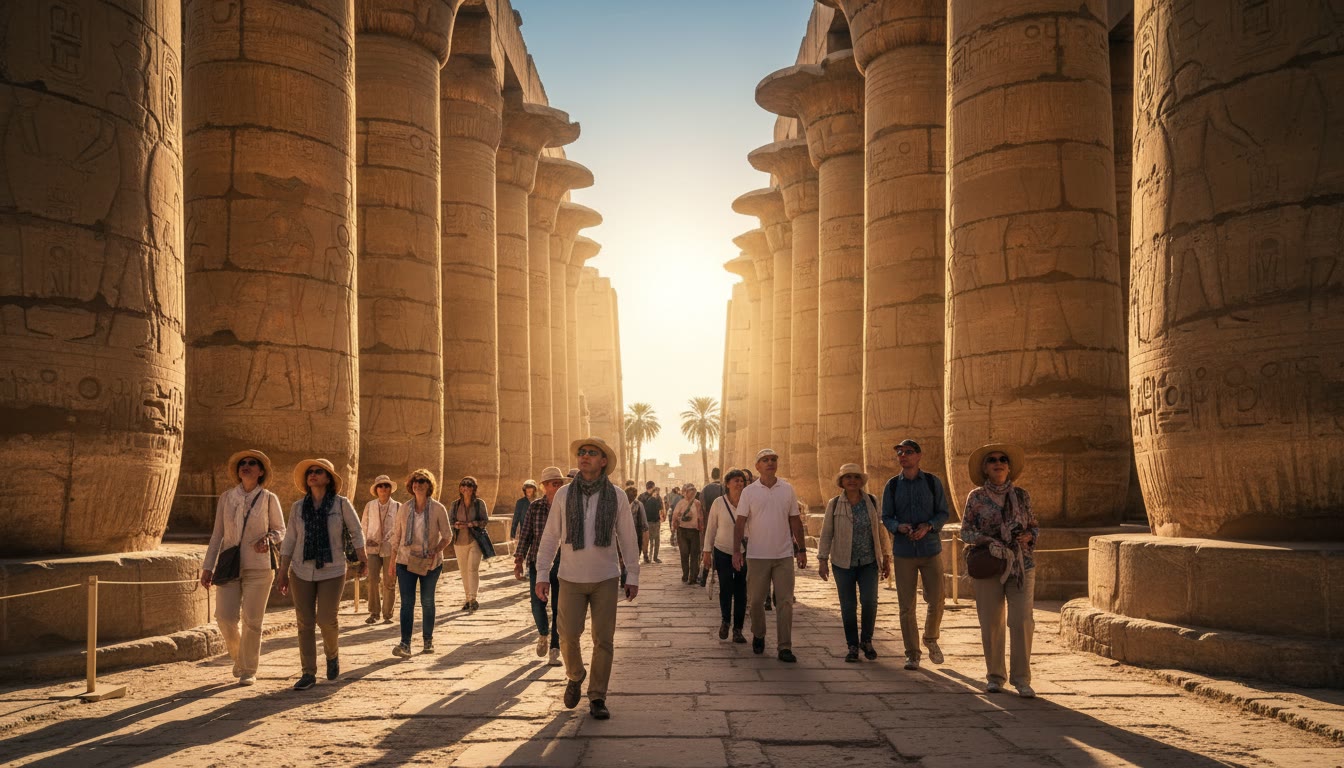
Crowds follow schedules more than seasons. Coaches leave the Cairo and Luxor hotels at similar times, Nile cruise ships run fixed excursion programmes, and flight groups reach Abu Simbel together. The result is a wave in the middle of the morning at most sites, and it's predictable once you know to look for it.
The week has a pattern too. Friday and Saturday are the Egyptian weekend, so Giza and the Grand Egyptian Museum see more local families, and weekdays are generally calmer. Public holidays are busy everywhere, so confirm dates before you book.
Season adds another layer. October to April is the best period, and the busiest stretch inside it is around Christmas and New Year. Early November and the weeks after the New Year rush are noticeably easier. June to August thins the crowds, but Luxor and Aswan often pass 40°C, so the trade-off is real. Our guide to the best time to visit Egypt covers weather and seasons in more detail.
Pyramids of Giza and the Grand Egyptian Museum: one day, in the right order
A Giza day is the Pyramids and the Grand Egyptian Museum, nothing else. Don't squeeze Saqqara, Memphis or Dahshur into it. Rushing is what turns a manageable day into a crowded one.
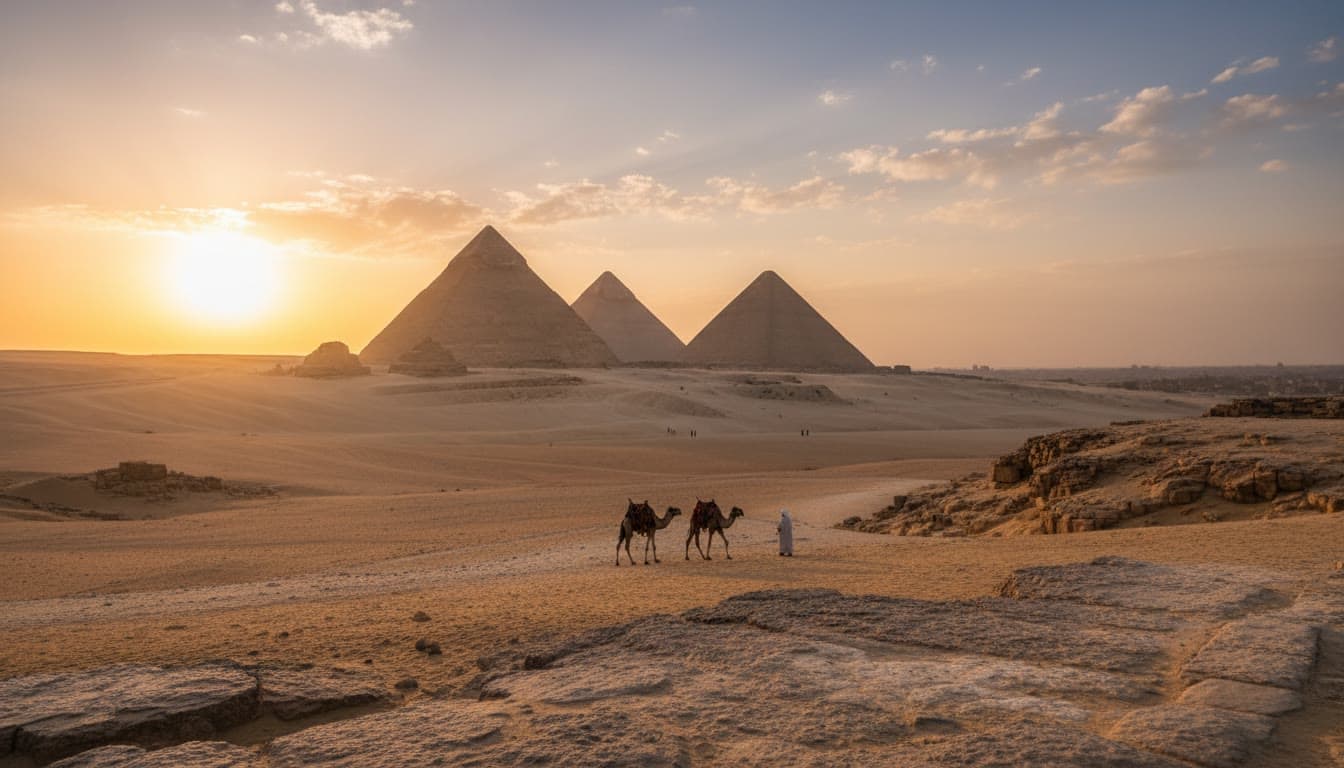
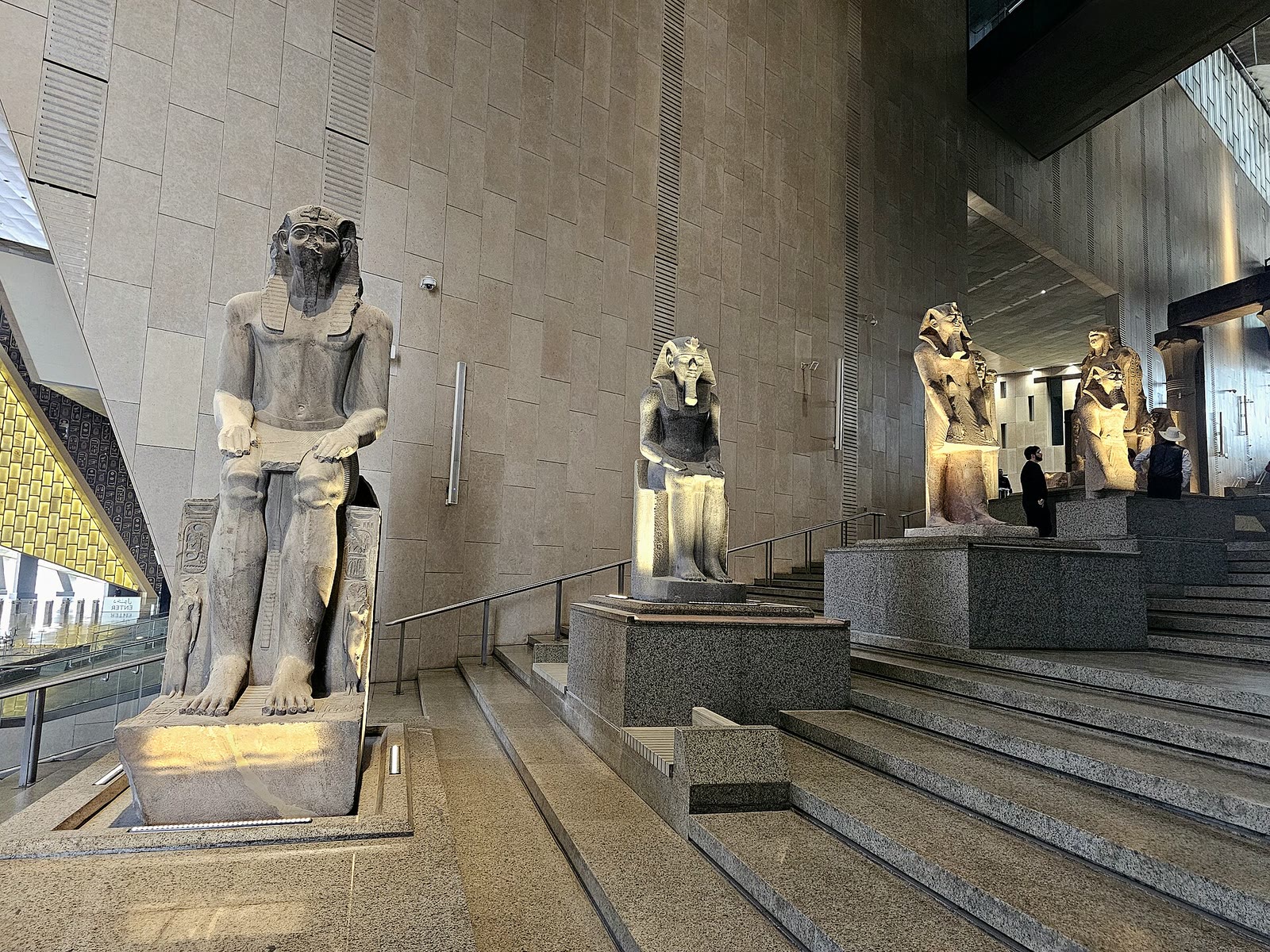
Go to the Pyramids first, in the first hour after the plateau opens. The air is cooler, the light is softer and the coaches haven't arrived. Check the current opening time when you book rather than trusting an old guidebook. The worst slot, especially in warm months, runs from late morning to early afternoon.
The museum comes in the afternoon, when you'll want shade and air conditioning anyway. It has been fully open since November 2025, Tutankhamun galleries included, and our Grand Egyptian Museum tour follows exactly this order.
Choose a weekday over Friday or Saturday. Interest in the museum is still high since the full opening, so the first weeks of the winter season can be busy and it's worth fixing your date early.
Inside, see the Tutankhamun galleries first or last, not at midday when everyone drifts there. A guide who knows the layout saves you the backtracking that creates most of the queuing.
At the plateau gates, ignore the camel and horse touts. Having a driver and guide meet you at the entrance removes most of the hassle.
Karnak Temple: early or late, never in the middle
Karnak is big enough to absorb people, but the Great Hypostyle Hall and the approach from the avenue of sphinxes bunch up when cruise and coach groups arrive mid-morning. The quietest times are the first hour after opening and the last couple of hours before closing. Late afternoon also warms the stone and gives you softer light for photographs.
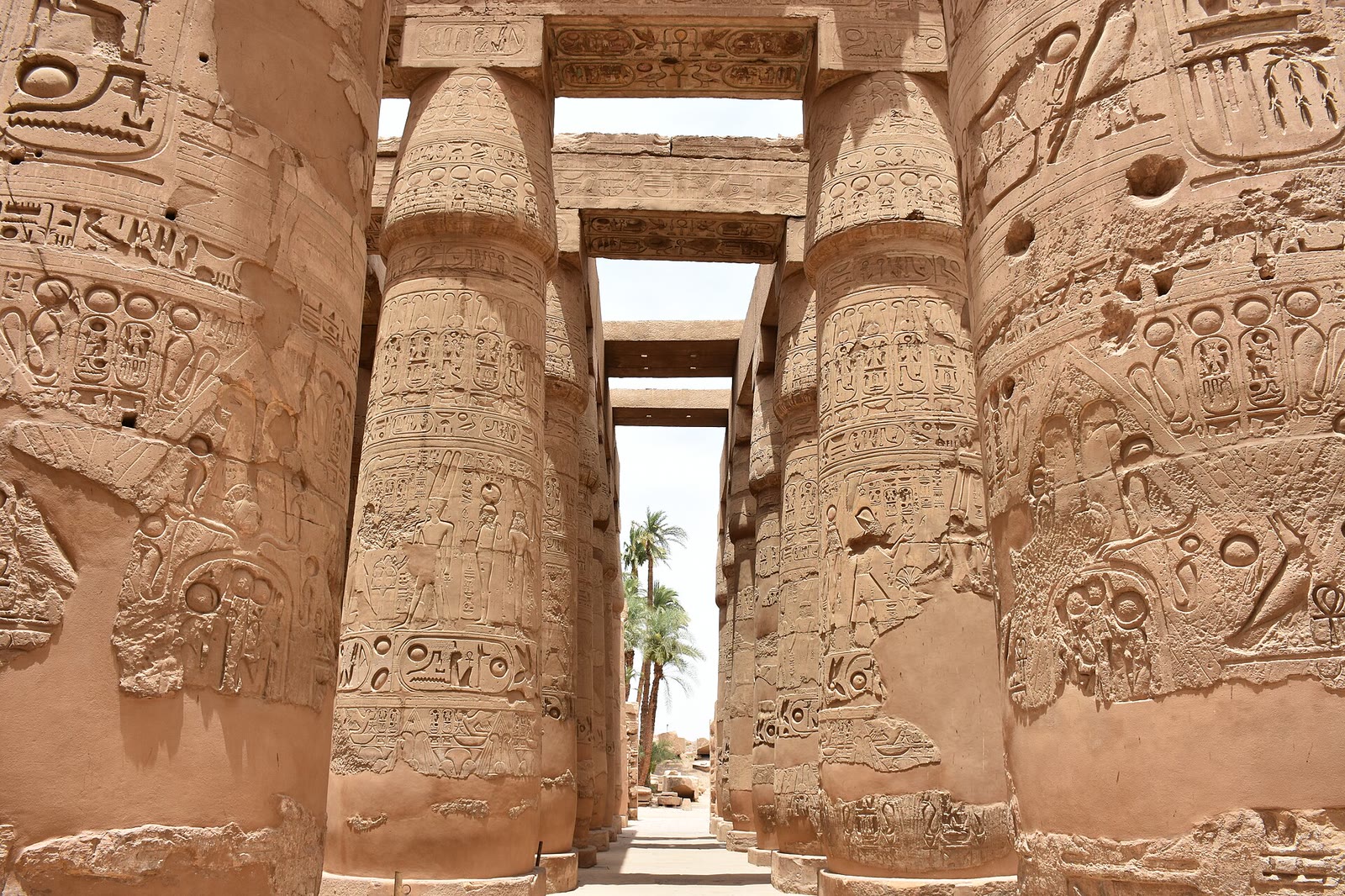
Walk straight to the Hypostyle Hall while it's empty, then work back through the outer courts and the sacred lake. Most groups go the other way round, which is the point.
Luxor Temple is the better use of the evening. It's lit after dark and tends to be calmer then than Karnak is at midday. Dinner nearby makes an easy end to the day.
Shade is scarce, so bring a hat, water and sturdy shoes for the uneven stone. Time of day matters far more here than the day of the week.
Valley of the Kings: how to avoid the crowds on the West Bank
Be at the gate when it opens. The tombs are narrow corridors, so a handful of groups at once feels like a queue, and cruise and coach parties typically arrive from mid-morning onwards.
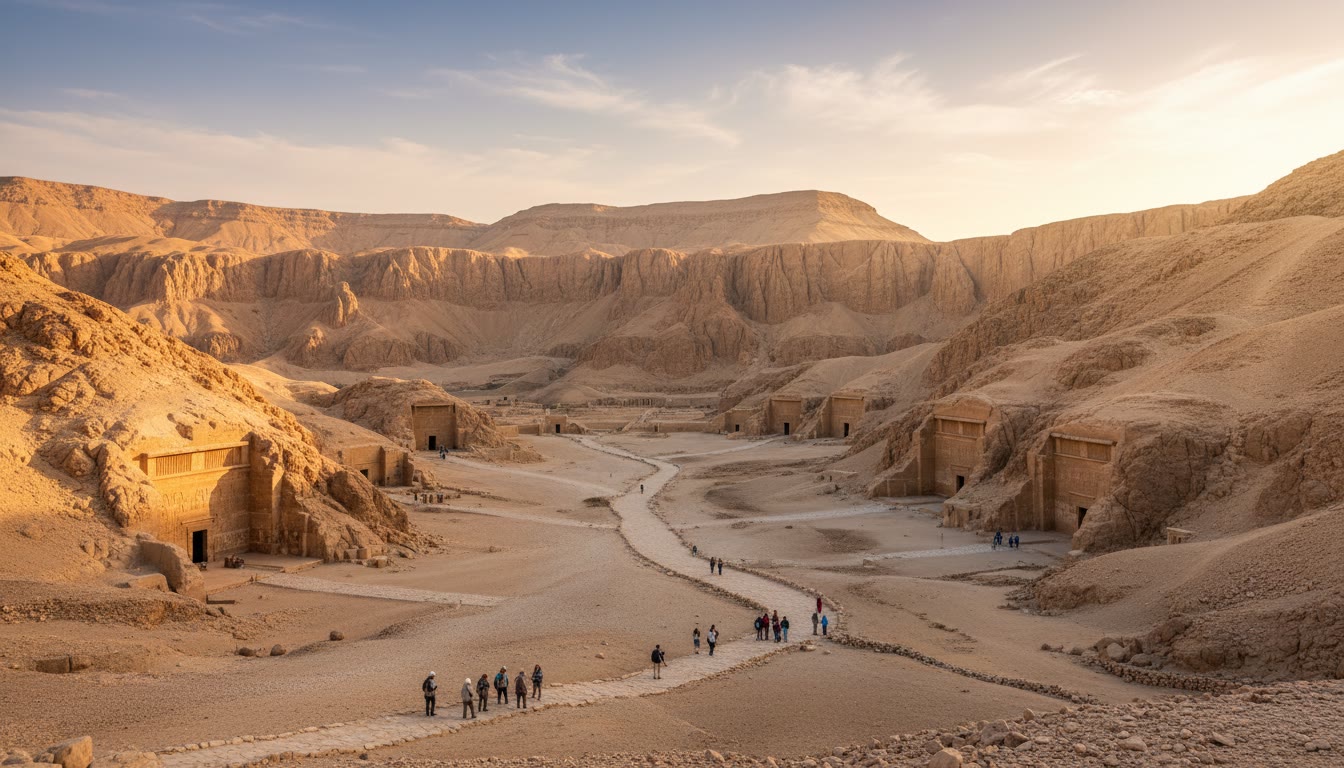
Don't join the rush for the tomb every group visits first. Pick less-visited ones and let your guide read the day: if one is jammed, move on and come back. Our Valley of the Kings tours sequence the West Bank this way.
Do the Valley first, then the Temple of Hatshepsut and Madinet Habu, with the Colossi of Memnon as a short roadside stop. Many groups start at Hatshepsut, so you're reversing them. A dawn hot-air balloon flight shows you the West Bank before the crowds arrive, and you can still reach the Valley early afterwards.
Tutankhamun's tomb needs a separate ticket and stays extra. It's small, and worth adding mainly if you have time to spare, because the main display of his treasures is in the galleries at the Grand Egyptian Museum.
In summer the Valley is often above 40°C, so going early isn't optional. Wear light long layers and closed shoes, and ask your guide about photography rules before you raise a camera. The Valley sits inside the area covered by UNESCO's listing for Ancient Thebes with its Necropolis, along with Karnak.
See it for yourself
Trips that visit the places in this article.
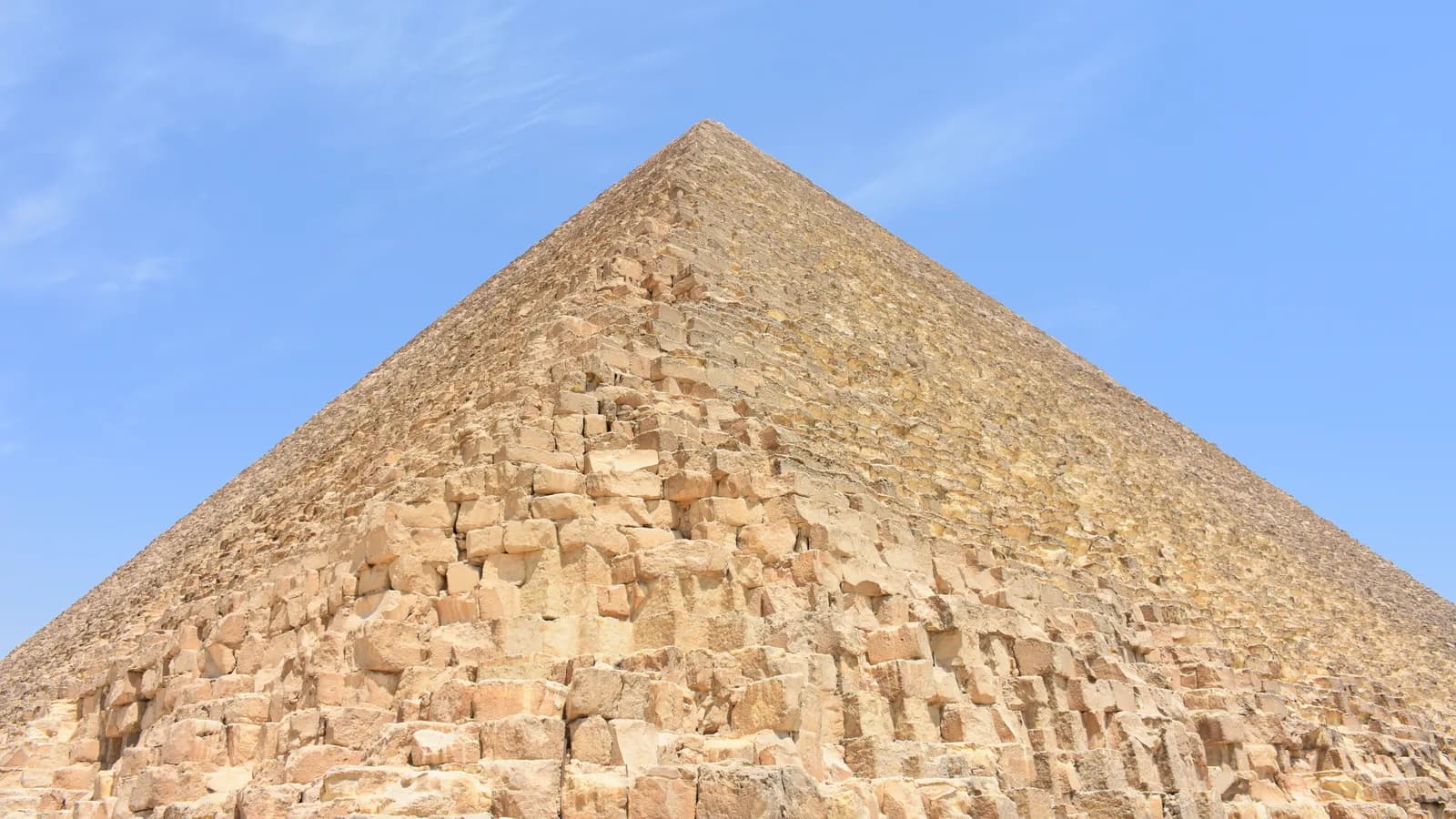
Travel Joy Egypt's private 7 days Egypt tour takes you through Cairo, Luxor, Aswan and Abu Simbel, with 6 hotel nights, an Egyptologist guide and 2 domestic…

Travel Joy Egypt's 6 days Cairo and Nile cruise package covers 2 nights in Cairo and 3 nights on a Nile cruise from Aswan to Luxor, with domestic flights…
Want a different route or length? We'll build it around you.
Abu Simbel: timing the day trip from Aswan
Abu Simbel is a day trip from Aswan: 3.5–4 hours by road each way, or about 45 minutes by air. The crowd comes from arrival timing. Road groups that leave Aswan very early reach the temples together in the morning, and flight groups land together too. The site is compact, and the interior of the Great Temple is tight.
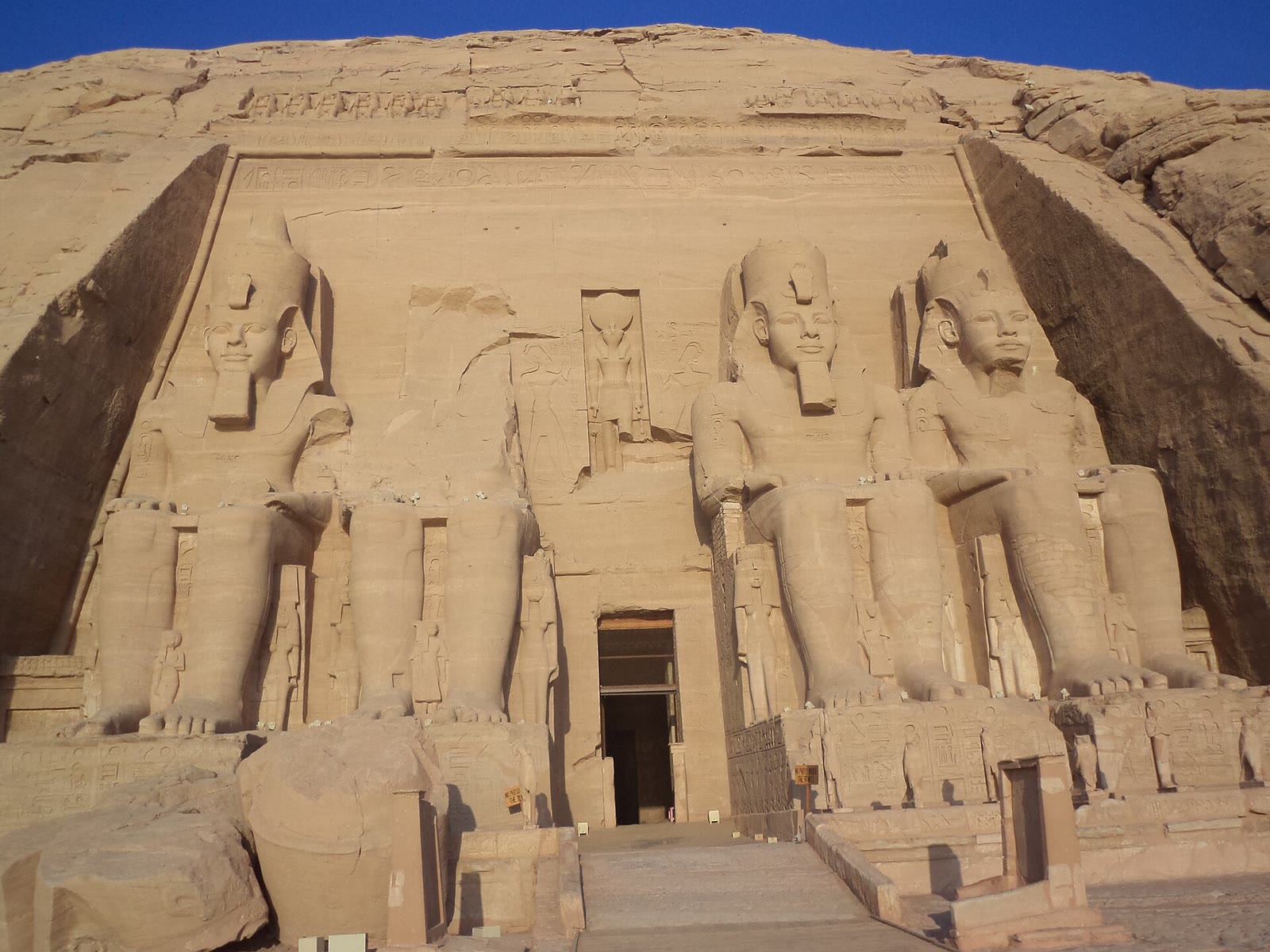
Choose the departure that puts you there ahead of the main wave or well after it. Spend your first minutes inside the Great Temple, then move to the exterior and the Temple of Hathor. Your guide can time all of this around the groups.
Avoid the sun festival dates, around 22 February and 22 October, unless the event is the reason you're going. The site is far busier then.
The road gives you flexibility on timing, while the flight saves hours and heat. It's hot here for most of the year, so take water and a hat. For background on the site, see UNESCO's listing for the Nubian Monuments from Abu Simbel to Philae.
Want to explore How to Avoid the Crowds in Egypt: Best Times for Top Sights?
Let us design the perfect private itinerary for you. From expert local guides to seamless luxury cruises, we craft custom trips that show you the real Egypt.
Best time to visit each sight at a glance
| Sight | Best window | Calmer days | Pinch point to dodge |
|---|---|---|---|
| Pyramids of Giza | First hour after opening | Weekdays | Late-morning coaches and midday heat |
| Grand Egyptian Museum | Early or late in the day; afternoon after the Pyramids on a Giza day | Weekdays rather than Friday and Saturday | Tutankhamun galleries at midday |
| Karnak Temple | First or last hours | Weekdays, slightly | Mid-morning cruise and coach wave |
| Valley of the Kings | At opening | Weekdays | Mid-morning group arrivals in the small tombs |
| Abu Simbel | A departure that lands ahead of or after the main wave | Any day outside the festival dates | The shared arrival wave |
Opening hours at every site can change, and our team confirms them when you book.
Sequencing your whole trip, and where a private guide helps most
Do Giza and the museum on a weekday near the start, then fly to Luxor (about 1 hour) and continue to Aswan, which is about 3–3.5 hours by road.
Nile cruise direction affects crowds. Luxor to Aswan takes 4 nights, and Aswan to Luxor takes 3 nights, with the first night moored in Aswan. A round trip of 7 nights is also possible. Ships follow similar excursion programmes, so ask which times your ship uses for Karnak and the Valley, then arrange to visit before or after that slot with a private guide.
A private Egyptologist guide earns their place in two spots above all: reading the crowd in real time inside the Valley's tombs and the Tutankhamun galleries, and timing Abu Simbel. Fewer decisions at the gate also means less hassle from touts at Giza.
At quieter sites such as the Temple of Hatshepsut, a guide matters more for context than for crowd control, and independent travellers can still use every timing tip here.
In winter, book popular dates early and keep one flexible morning free in Luxor in case of weather or tiredness. If you already have dates, send them to us on WhatsApp at +20 106 023 3393 and we'll work out the order.
Frequently asked questions
What is the best time of day to visit the Pyramids?
The first hour after the plateau opens. The air is cooler, the light is softer and the coaches haven't arrived. Late morning to early afternoon is the busiest and, in warm months, the hottest stretch. Weekdays are calmer than Friday and Saturday. Check the current opening time when you book, since hours can change.
Want to explore How to Avoid the Crowds in Egypt: Best Times for Top Sights?
Let us design the perfect private itinerary for you. From expert local guides to seamless luxury cruises, we craft custom trips that show you the real Egypt.
When is the quietest time to visit the Grand Egyptian Museum?
Weekdays, either early or late in the day, rather than Friday or Saturday. On a Giza day, see the Pyramids first and the museum in the afternoon. Inside, visit the Tutankhamun galleries first or last instead of at midday.
How do you avoid the crowds at the Valley of the Kings?
Arrive when the Valley opens, before cruise and coach groups reach the narrow tombs. Choose less-visited tombs and let your guide adjust if one is jammed. Do the Valley before Hatshepsut and Madinet Habu. Tutankhamun's tomb is a separate ticket and stays extra.
Is it better to visit Abu Simbel by road or by air to avoid crowds?
Both put groups at the temples at similar times, so departure timing matters more than transport. The road, 3.5–4 hours each way from Aswan, gives you timing flexibility. The flight, about 45 minutes, saves hours and heat. Choose a slot ahead of or after the main wave and avoid the festival dates around 22 February and 22 October.
Is Egypt less crowded in summer, and is it worth it?
Crowds thin from June to August, but Luxor and Aswan often pass 40°C, which limits sightseeing to early mornings. October to April is the best season. The peak is around Christmas and New Year, while early November and the weeks after the New Year rush are easier.
Planning a trip to Egypt?
Let us handle the details. From private guides to luxury Nile cruises, we create custom itineraries that show you the real Egypt.
Customize via WhatsApp