
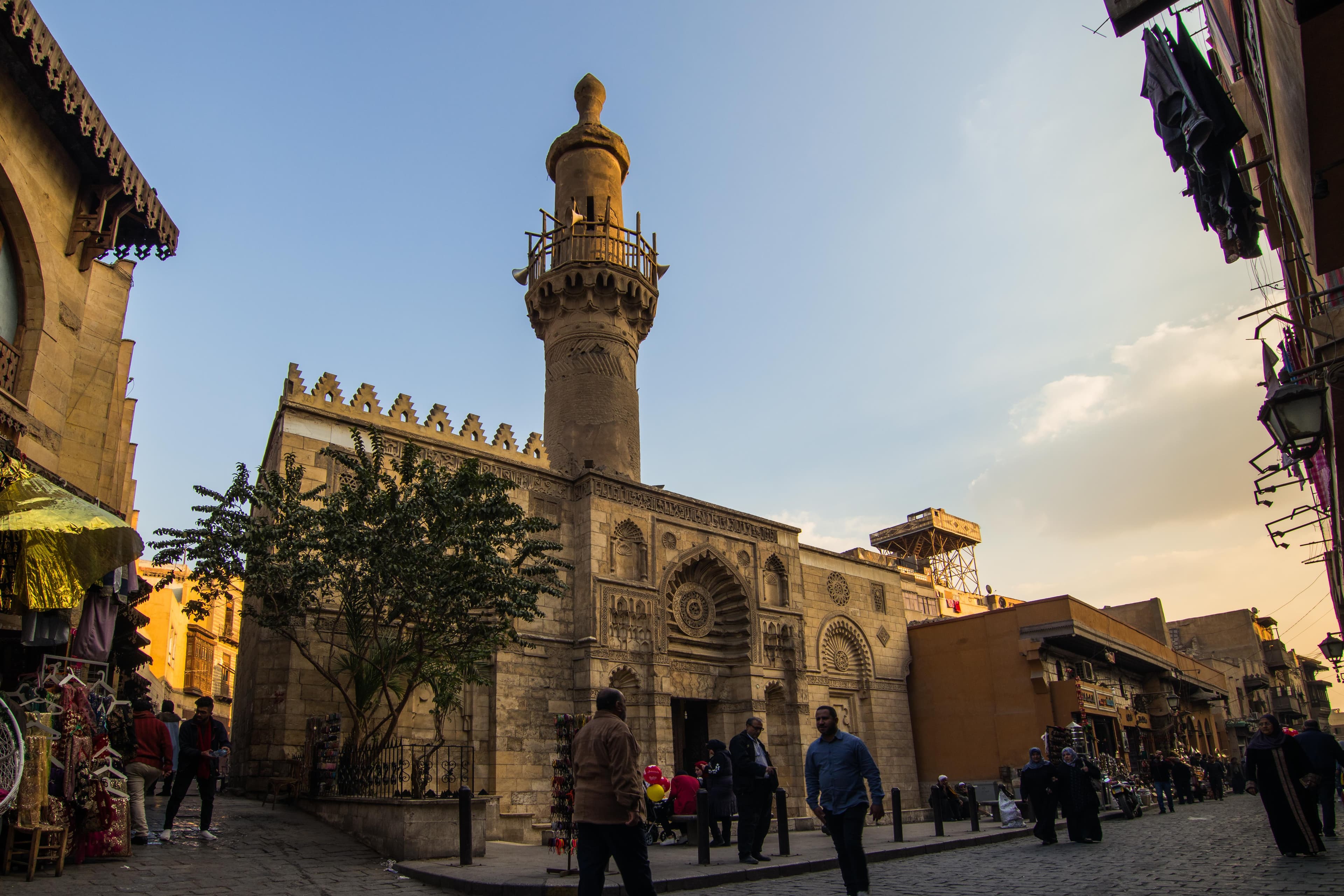

A Glimpse into Fatimid Cairo
The Dynasty that Shaped Cairo
To really 'get' Al Aqmar, you need a quick rewind to the Fatimids. These guys, originally from Tunisia, rolled into Egypt in 969 AD and basically founded Cairo (then called Al-Qahira) as their new capital. They were Shi'a Muslims, which meant they brought a fresh perspective – both theological and architectural – to the region. They reigned until Saladin took over in 1171 AD, but in their time, Cairo blossomed. Think palaces, mosques, and public buildings galore. They literally built the core of what we now call Islamic Cairo, with Al-Muizz Street as its bustling spine, stretching from Bab al-Futuh in the north to Bab Zuweila in the south.Born During Al-Amir's Rule
Al Aqmar Mosque came to life under the watchful eye of al-Ma'mun al-Bata'ihi, who was the vizier (a kind of chief minister) to the Fatimid Caliph al-Amir bi-Ahkam Allah. The year was 1125 AD (or 519 AH, if you prefer the Islamic calendar), right in the middle of a golden age for Fatimid architecture. Now, there's a little historical chatter about whether it might have started earlier, under Caliph al-Mustansir, but most folks agree that 1125 AD, during al-Amir's reign, is the solid date. This mosque wasn't just a place to pray; it was a strong statement of Fatimid power and their sophisticated taste. It showed their dedication to both architectural innovation and religious patronage, even as the Fatimid state was facing its own set of challenges, which would eventually lead to its downfall.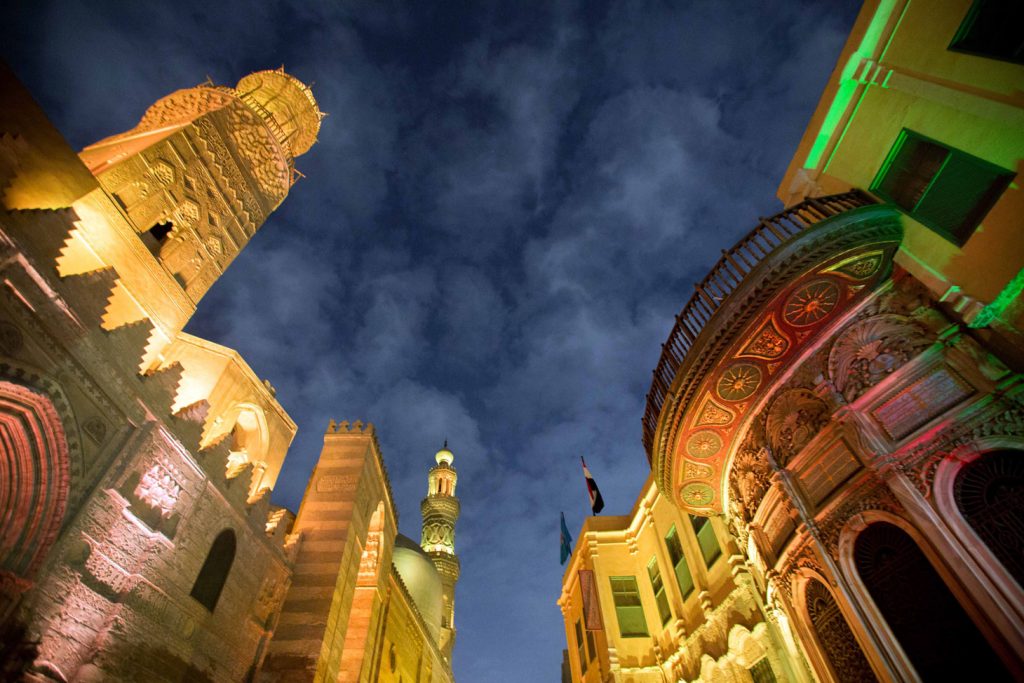
Architectural Genius: What Makes it Special?
The Offset Facade: A Game Changer
Here's where Al Aqmar truly shines. It was the very first mosque in Cairo to use an *offset facade*. Imagine the challenge: you want your mosque to look grand and symmetrical on the street, but inside, the prayer hall *has* to face Mecca (the qibla). Before Al Aqmar, mosques either looked awkward from the street or compromised the prayer direction. This mosque's facade aligns perfectly with Al-Muizz Street, but the interior? It subtly turns to face Mecca. This ingenious solution became a blueprint. It was copied throughout Cairo for centuries, showing how you can be smart with urban planning without sacrificing religious requirements. Pretty clever, right?Want to explore Al Aqmar Mosque in El Muizz Street: Cairo's Moonlight Gem?
Let us design the perfect private itinerary for you. From expert local guides to seamless luxury cruises, we craft custom trips that show you the real Egypt.
A Facade Worth Staring At
Just look at the facade! It's one of the best examples of Fatimid stone carving in all of Cairo. You'll spot three distinctive fluted hoods over the entrance – one directly above the doorway, and one on each side. These shell-like niches aren't just pretty; they show off the Fatimids' skill in creating three-dimensional decorative art. Every inch is covered in intricate inscriptions: Kufic and Naskh Arabic calligraphy, Quranic verses, historical notes about the mosque, and poetic dedications. The craftsmanship is just remarkable – geometric patterns, floral motifs, and calligraphic bands that create a visually rich surface. Seriously, take your time examining it. This facade wasn't just beautiful; it set a trend. Later Cairo mosques would take inspiration from these patterns. It’s a perfect example of how the Fatimids blended structure, function, and pure beauty.The 'Hanging' Mosque: An Urban Marvel
Al Aqmar also earned its stripes as one of Cairo's first 'hanging mosques' because it was originally built *above* street level. Picture this: it sat on top of shops and a souk (marketplace), with the prayer hall elevated. This wasn't just about looking cool; it maximized valuable city space and made money for the mosque's upkeep through rent from the shops below. Of course, centuries of Cairo's urban layers piling up – debris, new construction, you name it – have slowly raised the street level. So today, it looks like the mosque sits right on the street. But if you look closely, you can still see hints of its original, elevated perch. It’s a neat way to see how Cairo has literally grown up around its historic buildings.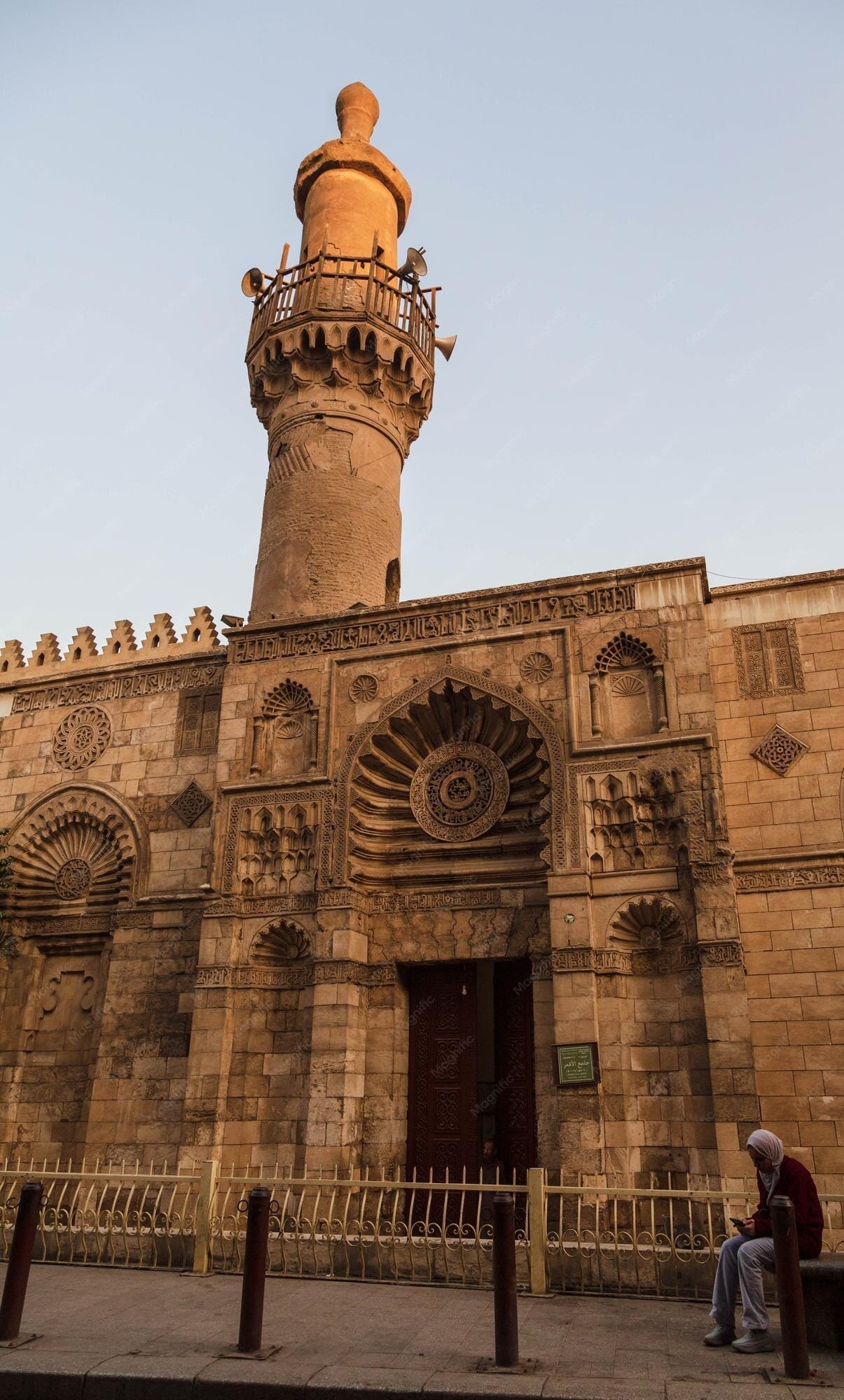
See it for yourself
Trips that visit the places in this article.

This 10-day tour moves through four distinct regions of Egypt, starting in Cairo, continuing by domestic flight and first-class train to Aswan and Luxor, and…

This 11-day tour moves between Cairo, a Nile cruise from Aswan to Luxor, and a final stretch in Hurghada, connecting each leg by domestic flight so the pace…
Want a different route or length? We'll build it around you.
Inside Al Aqmar: Simplicity and Serenity
The Prayer Hall
Step inside, and you'll find a striking contrast to the elaborate facade. The interior of Al Aqmar is a simple, peaceful space meant for contemplation. Given its role as a neighborhood mosque for the Fatimid elite, not the whole city, it's quite modest compared to Cairo's larger congregational mosques. Look up, and you'll see a flat wooden ceiling – a common feature in Fatimid mosques. Though some historians think the current ceiling might be a Mamluk-era addition, given some of the decorative styles. But one thing you'll definitely notice is the fantastic natural breeze. The architects knew their stuff; they designed it for circulation, a lifesaver in Cairo's heat!Want to explore Al Aqmar Mosque in El Muizz Street: Cairo's Moonlight Gem?
Let us design the perfect private itinerary for you. From expert local guides to seamless luxury cruises, we craft custom trips that show you the real Egypt.
The Courtyard
Like most traditional Islamic mosques, Al Aqmar has a small open courtyard (the sahn) next to the prayer hall. It lets in natural light and offers extra space during busy prayer times. Its size, again, speaks to its neighborhood function – it wasn't built for massive Friday congregations. This intimacy just adds to Al Aqmar's charm, making it a more personal experience than the monumental courtyards of other Cairo mosques.Mamluk Touches and Enduring History
Yalbugha al-Salimi's Renovations
Fast forward to the Mamluk period! Al Aqmar got some serious love from Amir Yalbugha al-Salimi in the 14th century. Even though the Mamluks had different religious interpretations, they respected Cairo's Fatimid heritage. Yalbugha al-Salimi's renovations patched things up structurally and made updates, all while keeping the mosque's original Fatimid character intact. Some experts even credit these Mamluk renovations for certain features we see today, like parts of the ceiling that show techniques not typical of the Fatimid era. This layering of architectural periods just makes Al Aqmar's story even richer, showing how important it remained through different dynasties.Adapting Through the Ages
Like many ancient buildings in Cairo, Al Aqmar has been tweaked and modified over its almost 900-year life. Earthquakes, wear and tear, you name it – rulers throughout history have stepped in to fix things. These interventions, while altering some original bits, are precisely why the mosque is still standing today. It’s not just a relic; it’s an active place of worship. That means ongoing maintenance and updates are essential to keep it functioning, balancing modern needs with historical authenticity.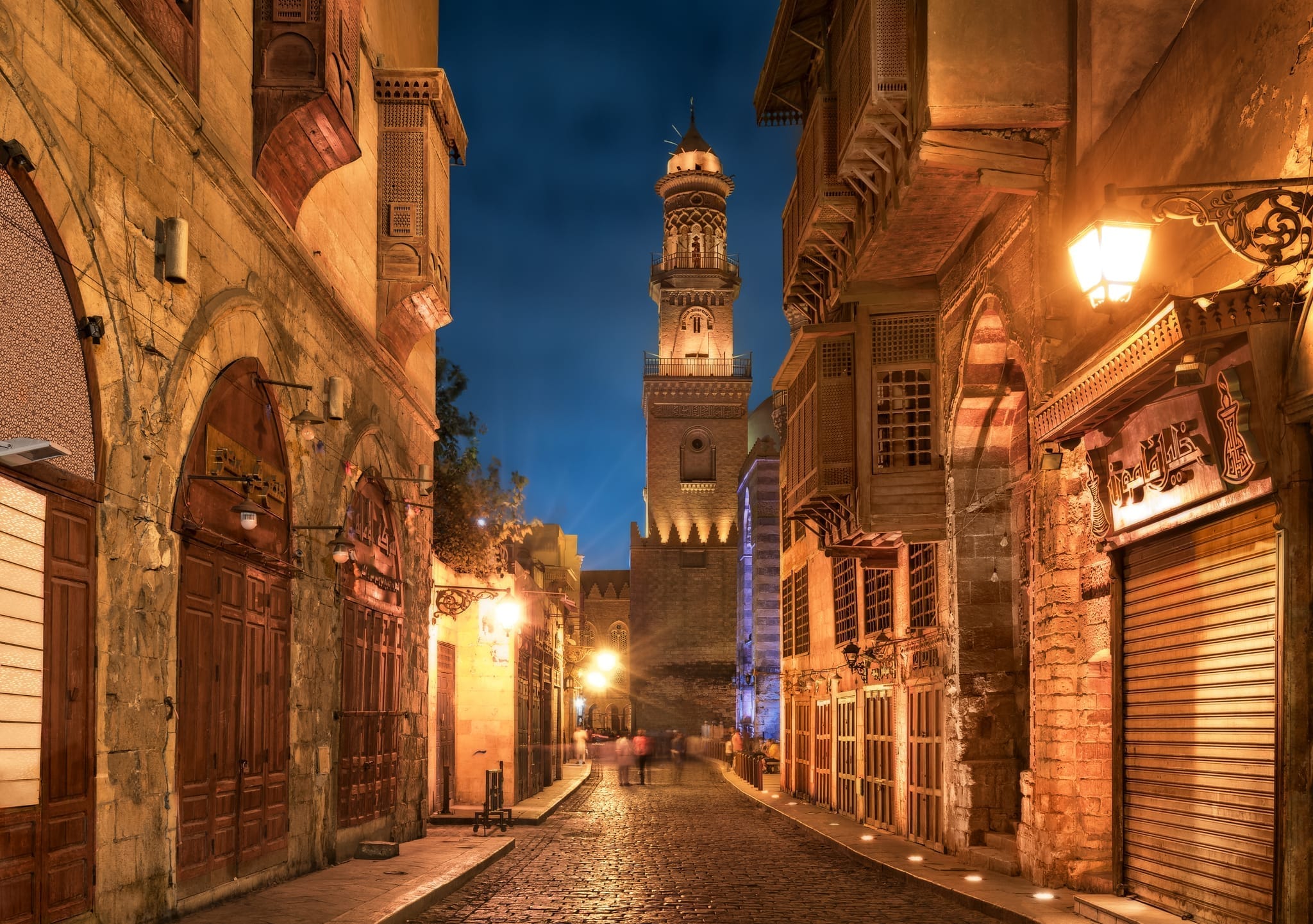
Al Aqmar on Al-Muizz Street: A Perfect Setting
The Beating Heart of Islamic Cairo
Al Aqmar Mosque couldn't ask for a better spot. It’s right on Al-Muizz li-Din Allah Street (usually shortened to Al-Muizz Street), which is essentially the main artery running north-south through historic Islamic Cairo. Named after the Fatimid Caliph who founded Cairo, this street was the city's ceremonial road, buzzing with commerce and lined with mosques, schools, palaces, and markets. The northern section of Al-Muizz Street, where Al Aqmar stands, got a massive facelift in the early 21st century. Facades were restored, infrastructure updated, and it was made pedestrian-friendly. Now, it’s honestly one of Cairo’s most stunning and photograph-worthy historic areas.Neighbors with History
Surrounding Al Aqmar are some of Cairo’s most iconic Islamic monuments. The striking Qalawun Complex, a Mamluk masterpiece from the late 13th century (housing a hospital, mausoleum, and madrasa), is just a stone's throw away. And just a short walk south, you'll find the legendary Al-Azhar Mosque and University, founded by the Fatimids in 970 AD – one of the oldest continuously operating universities globally. This density of history means Al-Muizz Street is ideal for soaking up Islamic Cairo's architectural legacy. You can effortlessly hop from Al Aqmar to other sites, getting a fantastic overview of Cairo's Islamic architectural evolution from the 10th to the 19th centuries.The 'Moonlight Mosque': A Name with a Story
Why 'Moonlight'?
The name Al Aqmar translates to 'the Moonlight Mosque' or 'the Moon Mosque,' and it's such a fitting, poetic title. The pale gray limestone facade, with all its intricate carvings, has this luminous quality. It truly glows under direct sunlight and, even more dramatically, by moonlight. The stone feels like it has an inner radiance, which totally justifies the evocative name. Some academics muse that the name might also link to Shi'a Islam and the Fatimid dynasty's reverence for Ali, who sometimes had lunar imagery tied to him in Islamic poetry. But honestly, the simplest explanation is often the best: it just looks stunning under the light.Its Unique Charm
'Moonlight Mosque' perfectly sums up Al Aqmar's special place among Cairo's Islamic landmarks. While many mosques here impress with sheer size – think the Citadel mosque of Muhammad Ali or the minarets of Sultan Hassan – Al Aqmar captivates with its refined decoration and more intimate scale. Photographers love how the light changes its appearance throughout the day. Shadows enhance the carved details, and the stone's color shifts from warm golds in the sun to cool, silvery grays in the shade. It's a photographer's dream.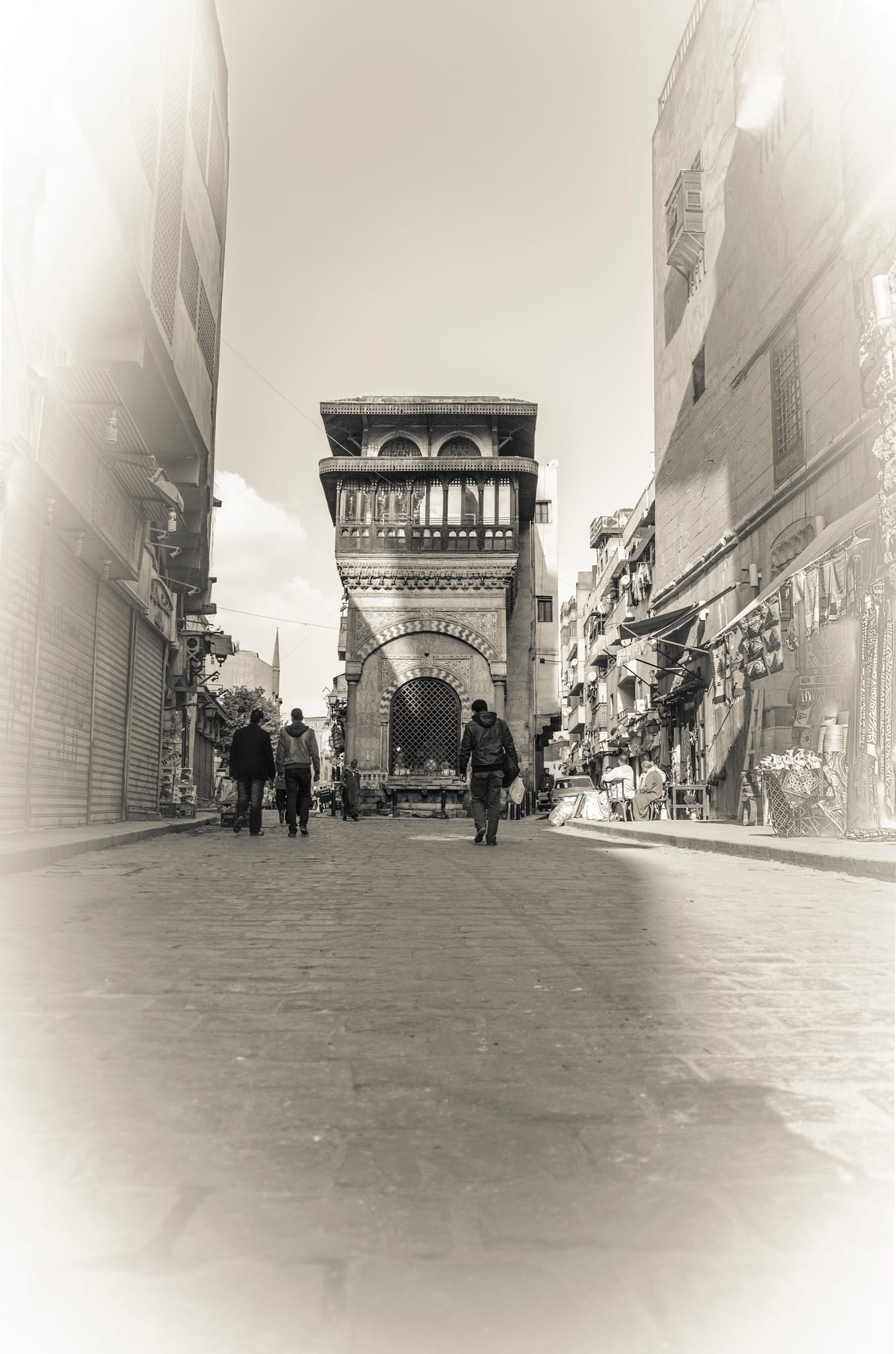
Visiting Al Aqmar Today
Planning Your Trip to Islamic Cairo
Al Aqmar Mosque happily welcomes visitors most days, but just remember that like any active mosque, it closes during prayer times, especially for Friday congregational prayers. Dress respectfully – for women, that means covered shoulders and knees, and it’s wise to bring a headscarf. You'll need to take off your shoes before heading into the prayer hall. Its location on the pedestrianized Al-Muizz Street makes it super easy to explore on foot as part of a larger Islamic Cairo tour. Many visitors combine Al Aqmar with other nearby monuments, making for a truly spectacular architectural stroll.What to Spot During Your Visit
When you're there, really focus on the intricate stonework of the facade, especially those three fluted hoods and the calligraphy. Once you step inside, you’ll notice the clever offset angle between the facade and the prayer hall – see how the entrance subtly shifts? That’s the genius at work. Inside, appreciate the simple, calming beauty of the prayer hall and that lovely natural ventilation. While it’s not as decorative as the exterior, this simplicity creates a serene space, perfect for prayer and quiet reflection. Generally, photography is fine outside the mosque. Just be courteous; always ask before snapping pictures of people praying or those right around them.Al Aqmar: A Cornerstone of Cairo's Islamic Heritage
Its Lasting Architectural Mark
Al Aqmar Mosque’s architectural breakthroughs, particularly that clever offset facade, truly influenced mosque design not just in Cairo but across the Islamic world. Countless mosques that followed adopted similar strategies to tackle the challenge of aligning with both the street and the qibla. The facade’s detailed decoration also set a high bar for elaborate stone carving on mosque exteriors, a tradition that hit its peak in stunning Mamluk buildings like the Sultan Hassan Mosque and the Qalawun Complex. The way function and beauty merge here became a signature of Cairo’s Islamic architecture.Protecting a Priceless Past
As one of Cairo’s oldest surviving Fatimid buildings, Al Aqmar is an irreplaceable link to Egypt’s medieval Islamic history. Conservation efforts have focused on keeping the structure sound, protecting its delicate carvings from the elements and pollution, and maintaining its historic essence while ensuring it can still serve as a vibrant mosque. The larger restoration of Al-Muizz Street has done wonders for the area around Al Aqmar, reducing traffic, cutting down on pollution, and creating a more harmonious setting for these ancient monuments. Thanks to these efforts, future generations will continue to enjoy this architectural gem.Exploring More of Islamic Cairo
Beyond Al Aqmar: Other Fatimid Gems
If you're fascinated by Fatimid architecture, there's more to see! The Al-Azhar Mosque (from 970 AD) is a much grander (though heavily modified) example. The Al-Hakim Mosque (finished in 1013 AD) near Bab al-Futuh also retains significant Fatimid elements despite later restorations. Don't miss the gates of Fatimid Cairo – Bab al-Futuh, Bab al-Nasr, and Bab Zuweila. These massive stone gates, built by Armenian architects in the late 11th century, still dominate the skyline and offer incredible views over Islamic Cairo. They're military architecture at its finest.The Whole Islamic Cairo Experience
To truly immerse yourself, explore monuments from all the major Islamic dynasties that ruled Egypt. Think Ayyubid sites like the Citadel of Saladin, Mamluk masterpieces like the Sultan Hassan complex and the Madrasa of Qaitbay, and Ottoman-era buildings such as the Muhammad Ali Mosque. Each tells a piece of Cairo's story as one of the Islamic world's greatest cities. And, of course, round out your trip with a wander through the Khan el-Khalili bazaar, a visit to Coptic Cairo's ancient churches, or a deep dive into the Museum of Islamic Art. Together, these places offer an unparalleled look into the artistic, architectural, and cultural achievements of Islamic civilization. It’s an experience you just can’t replicate anywhere else.Ready to turn this guide into reality?
Our local experts can create a custom itinerary based on these recommendations. Just send us a quick message!
Customize via WhatsApp